

The Cost Of A New Aloha Stadium Is Now Up To $650 Million
Utilities and infrastructure are expected to add millions more but stadium developers would be expected to pay for those costs.
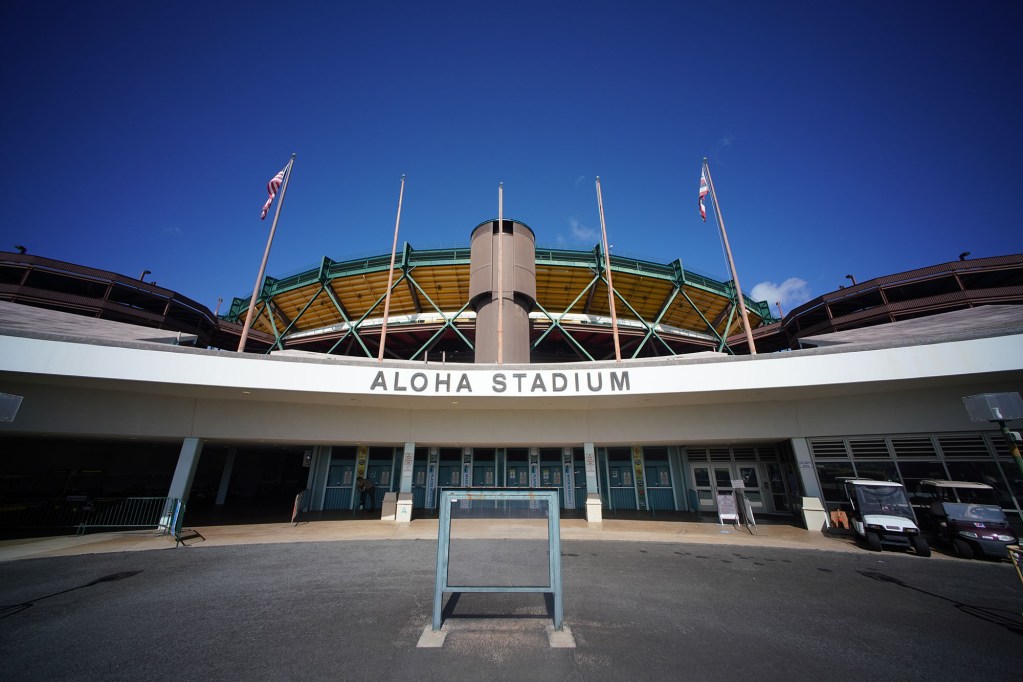
Developers of a new Aloha Stadium district now say a replacement for the aging facility could cost as much as $650 million, nearly double what lawmakers first allocated to the project six years ago.
Stanford Carr, one of the leaders of a partnership attempting to build the new stadium and a surrounding entertainment district in Hālawa, said in an interview Thursday that the $350 million set aside for the new facility in 2019 is a “stale number from years ago.”
Carr has proposed two revenue streams to make up for the stadium costs that wouldn’t saddle taxpayers with the additional financial burden. One of those sources depends on a Senate bill that’s scheduled for a hearing Friday. Another would require county approval in the future.
A separate proposal to get the stadium additional funding via a casino in Hālawa is dead for the session.
Although funding is still uncertain, one thing is clear: Lawmakers and stadium officials don’t want to spend one penny more on a project that has trudged along for the last six years.
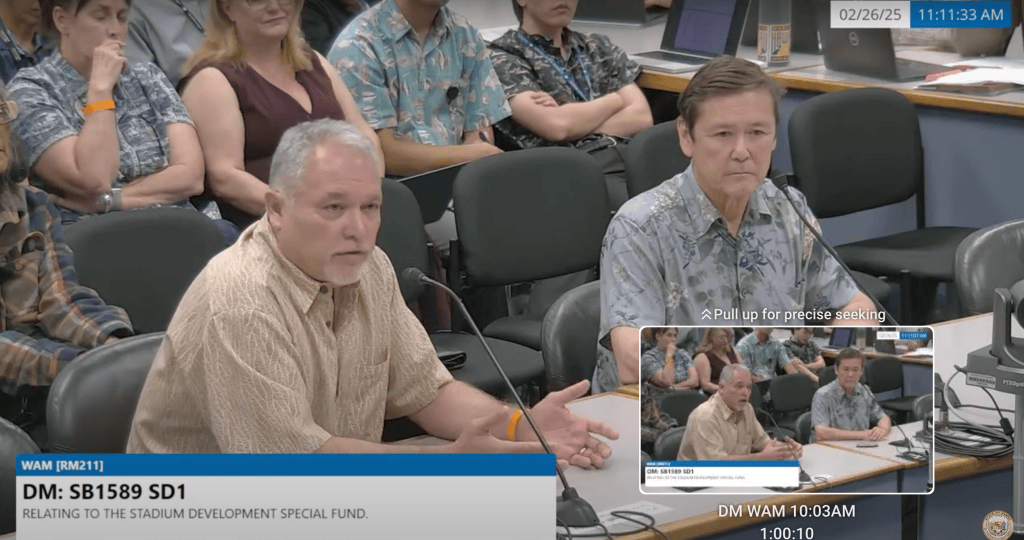
Earlier this week, state senators used a hearing on a relatively minor piece of stadium legislation to grill project leaders on the stadium’s costs and its finances.
“You’re pulling at straws,” Sen. Donna Kim told officials at a Ways and Means Committee hearing Wednesday. “Can you get a casino? Can you get money here? There? The reality is: Can you build us a $350 million stadium?”
Carr said that obtaining an additional $300 million is necessary to fund his vision of a stadium that would not only be the home of University of Hawaiʻi football but could also attract professional rugby and soccer competitions.
Brennon Morioka, chairman of the Stadium Authority that oversees the development, said that a stadium that costs $650 million is “the aspirational stadium.”
“He’s targeting the aspirational,” Morioka said. “In our conversations, we’re trying to focus in on the basic stadium.”

The final cost and design of the stadium is still being determined, Carr said.
Preliminary site work is also expected to add costs.
Relocating utilities surrounding the stadium is expected to cost about $32 million, while new infrastructure, including roads, sewers and electric lines, would cost another $147 million, according to Carr.
The developers would be required to cover those costs, Morioka said Thursday.
Carr insisted that building out the entertainment district surrounding the stadium is necessary for the project to be financially viable. The stadium on its own is “a black hole,” he said.
“You need to develop a stadium at a scale that will attract more venues, entertainers and bring people in for concerts and so forth,” he told lawmakers.
While the state has put up money to pay for a portion of the stadium construction, the developers would be responsible for funding construction of the rest of the district and attracting tenants.
Carr has told lawmakers that the stadium development proposal contemplates using tax increment financing to help fund the buildout of the new stadium and the district.
A TIF — as it’s also known — is common in stadium district developments and is essentially a subsidy for the developer. With a TIF, a portion of future property taxes generated from development is used to pay for infrastructure costs.
A joint Senate committee plans to take up a measure, Senate Bill 534, that includes a provision on tax increment financing on Friday.
Senate Bill 534 deals with the Office of Hawaiian Affairs’ attempt to build residential towers on land it owns in Kakaʻako. But tucked in the bill is language that would give the Hawaiʻi Community Development Authority power to negotiate tax increment districts with the City and County of Honolulu for lands the authority controls on Oʻahu, which includes the land the stadium sits on. The bill language doesn’t limit those tax increment districts to Kakaʻako.
The Honolulu City Council would also need to approve the TIF district. The council has introduced a resolution to explore the city’s use of those districts, but it hasn’t been scheduled for a hearing yet.
Carr also said that he plans to pursue a Community Facilities District, which would levy a tax on property owners in the stadium district to fund improvements in that district. Such a proposal would also require council approval.
Gov. Josh Green has floated the idea of courting private donors to help pay for the stadium’s added costs. The Senate Ways and Means Committee on Thursday voted to set guardrails on how that money could be used.
But Carr said he isn’t factoring it in to the development team’s financial plans.
“Whether that comes to fruition remains to be seen. We’re not counting on it,” he said. “But that’d sure be nice. It could take a lot of pressure off of us.”
Meanwhile, House lawmakers are trying to kill the stadium project.
The House will vote next week on a measure that would yank funding for the stadium and instead allocate up to $350 million to the University of Hawaiʻi to expand Clarence T.C. Ching Field.
A similar proposal died last year in the Senate.
Correction: This story has been updated to reflect the correct spelling of Morioka’s name.

