

Is 2025 Last Chance For OHA’s Big Development Plans At Kakaʻako Makai?
After years of futility, the Office of Hawaiian Affairs has new support for its plans to build affordable housing and a hotel on 30 acres of the Honolulu waterfront.
The Office of Hawaiian Affairs is making a last-ditch effort to build a new district in Kakaʻako Makai that would feature two 400-foot towers, a hotel and condos along the waterfront of Kewalo Basin.
The office’s previous efforts to develop Kakaʻako Makai — the area on the ocean side of Ala Moana Boulevard — have failed in the Legislature, which has imposed a ban on residential development in the area.
This time around, a new group of OHA trustees has shifted strategies, proposing to reserve most of the planned units for affordable “workforce housing” to make the plan more palatable to state lawmakers. And unlike previous rounds, a bill to lift the ban has backing from labor organizations, housing advocates and other prominent groups, including the state Department of Hawaiian Home Lands and Kamehameha Schools.
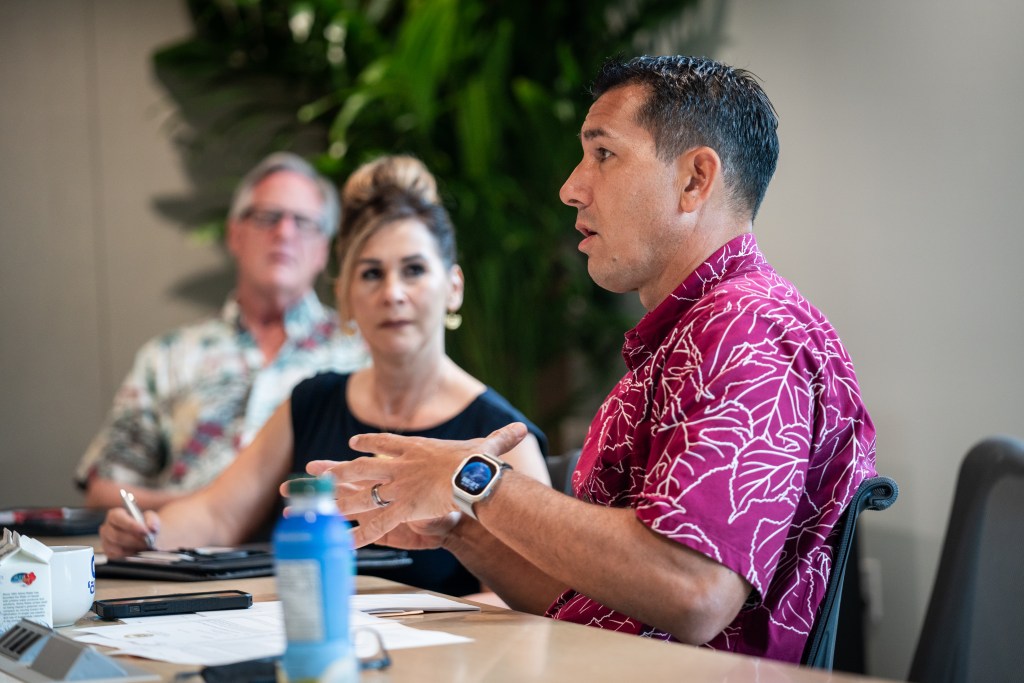
Past proposals for OHA to develop market-rate units — which likely could sell for more than $1 million each — were “not politically feasible at the Legislature, let alone in alignment with our goals as an organization,” Kai Kahele, chair of the Office of Hawaiian Affairs Board of Trustees, said in an interview last week.

OHA was created in 1978 and charged with improving the condition of Native Hawaiians. The office and its nine trustees control a trust fund that includes land and assets valued at nearly $600 million.
The proposal, in the form of Senate Bill 534, cleared its first round of committee hearings on Monday. It still faces more hearings and must pass a vote by the full Senate before going to the House for consideration, where Kakaʻako Makai bills in the past have died.
But times have changed. Former House Speaker Scott Saiki, a powerful opponent to previous iterations of OHA’s plans, lost his reelection campaign in November. Kahele, a former state senator and U.S. congressman, has made developing Kakaʻako Makai one of his top priorities and plans to lean on his relationships in the Legislature.
OHA owns about 30 acres in the Kakaʻako area. If OHA is successful, two of its parcels would be transformed into two 40-story workforce housing towers along Ala Moana Boulevard. A hotel would go on land next to the Children’s Discovery Center, while market-rate units are planned for the area along the harbor’s waterfront near the site of the old Fisherman’s Wharf.
In all, OHA’s plan would add 1,500 to 2,000 housing units over time, a major development in a neighborhood that has already absorbed sweeping redevelopment.
OHA Says Residential Development Is Essential
Kakaʻako Makai has a history of failed development projects.
In 2006, Alexander & Baldwin, one of Hawaiʻi’s largest real estate companies, proposed high-rises in the area. After neighborhood residents, park users and surfers rose up in opposition, lawmakers banned residential development on land makai of Ala Moana Boulevard.
The ban kept one of the last oceanfront areas in the urban core free from development. Since then, high-rises have sprung up just across the street.
In 2012, the state settled a decades-old dispute over how much it owed OHA for use of public land by transferring several Kakaʻako Makai parcels. The settlement amount, and the presumed value of the land, came out to about $200 million.
Over the years, OHA has insisted that it can’t capitalize on the value of those lands without residential development.
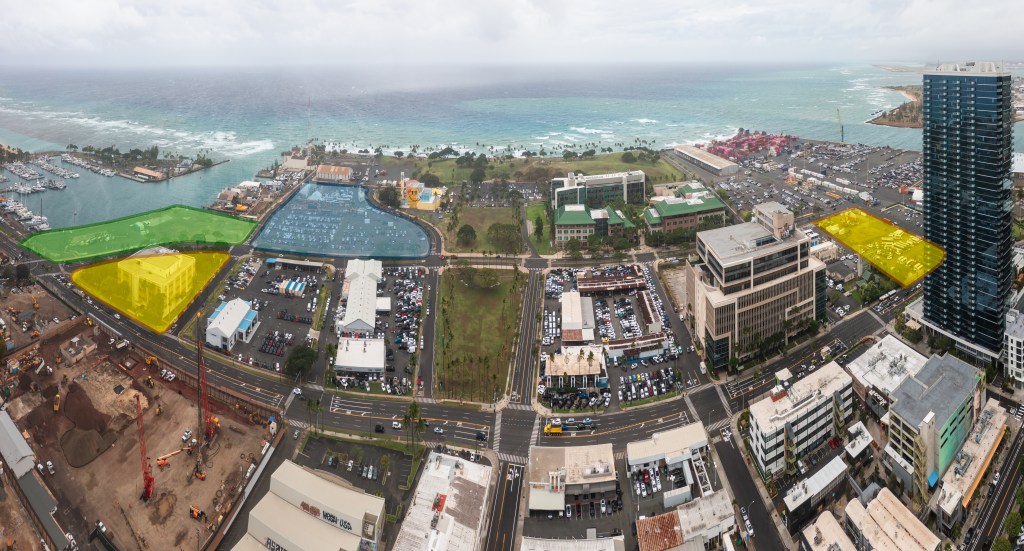
To do so, Kahele said that the office is considering a partnership with the Department of Hawaiian Home Lands, a state agency responsible for housing Native Hawaiians. Its waitlist is now over 29,000 applicants, and a partnership with OHA would set aside a certain number of units. Another option would be to give one of the parcels entirely to the home lands department to construct a residential tower for those on its waitlist.
OHA could also pursue development on its own in partnership with a developer.
Outreach Could Cost $1 Million
Any of OHA’s development options would need to win approval from the Hawaiʻi Community Development Authority, a state agency in charge of most large construction projects in Kakaʻako and several other areas of the state.
Craig Nakamoto, director of the Hawaiʻi Community Development Authority, thinks more community input is needed before OHA pursues any option. Outreach efforts, anticipated to cost $1 million, are set to begin later this year.
“I don’t necessarily disagree or oppose residential or other uses like a hotel,” Nakamoto told lawmakers at a hearing last Wednesday. “We disagree or differ on how we get there.”

Nakamoto’s office also has flagged hazards. Parts of Kakaʻako Makai are built over an old municipal landfill, and the soil likely contains lead, arsenic, mercury and other contaminants. And the development site is in a flood zone.
“We disagree or differ on how we get there.”
Craig Nakamoto, director of the Hawaiʻi Community Development Authority
Kahele acknowledged that OHA would likely need to truck out contaminated soil, and it would have to comply with Federal Aviation Administration restrictions because of the site’s proximity to the Daniel K. Inouye International Airport.
But Kahele balked at the idea of another round of community meetings. “More conversations, more community planning meetings are going to put us in the same place as now,” he told lawmakers.
Affordable Housing Draws Backing
During the measure’s first Senate hearing on Wednesday, written testimony supporting the bill outweighed opposition 2-to-1.
Ala Moana resident Ilima DeCosta said OHA’s latest proposal may be the best shot the state has at building affordable housing in an area surrounded by condos that often sell for $1 million or more. Most of OHA’s planned units would be reserved for those earning up to 140% of the area median income — about $168,000 for a family of four — with preference given to workers in health care, hospitality, education, law enforcement, civil service and construction.
“I want to live independently, but I can barely do that,” DeCosta said during the hearing.
Ron Iwami, president of the group Friends of Kewalos, which has opposed attempts to lift the residential ban in the last few years, echoed the development authority’s concerns over environmental issues. He also believes more community input is needed.
“If the people want residential there, I will be the first to step away and say let it be,” Iwami said in an interview. “Who am I to step in the way of what the people want?”
On Monday, lawmakers amended the development bill to require OHA to conduct extensive environmental studies and community outreach efforts before it brings development proposals to the state’s community development authority.
“Who am I to step in the way of what the people want?”
Ron Iwami, president of Friends of Kewalos
Under the latest draft of the bill, housing units would be held at affordable rates in perpetuity. Lawmakers also inserted provisions that would allow OHA to develop more units on its lots than would typically be permitted on similar properties across Oʻahu, and to collect an association fee to fund improvements in the area and programs for its Native Hawaiian beneficiaries.
In the past, Kakaʻako Makai bills were virtually dead on arrival in the House under Saiki, the former speaker who represented Kakaʻako. Rep. Kim Coco Iwamoto, the new representative for the area, said she isn’t necessarily opposed but wants to hear more from area residents before deciding if she’ll vote to lift the ban.
“It’s not my place to tell OHA how to do anything,” she said.
Who Will Control Development?
OHA has already spent more than $10 million in the last decade on efforts to lift the ban in Kakaʻako Makai, according to estimates from OHA real estate consultant Peregrine Realty Partners.
A report from the state auditor in 2023 said that OHA was “treading water on development of Kakaʻako Makai” and that its planning efforts had gone nowhere. It called for a more coordinated real estate strategy.
The office and its trustees have implemented new real estate strategies in the last year, including setting revenue benchmarks and requiring training for asset managers. But they have not decided how to develop Kakaʻako Makai moving forward.
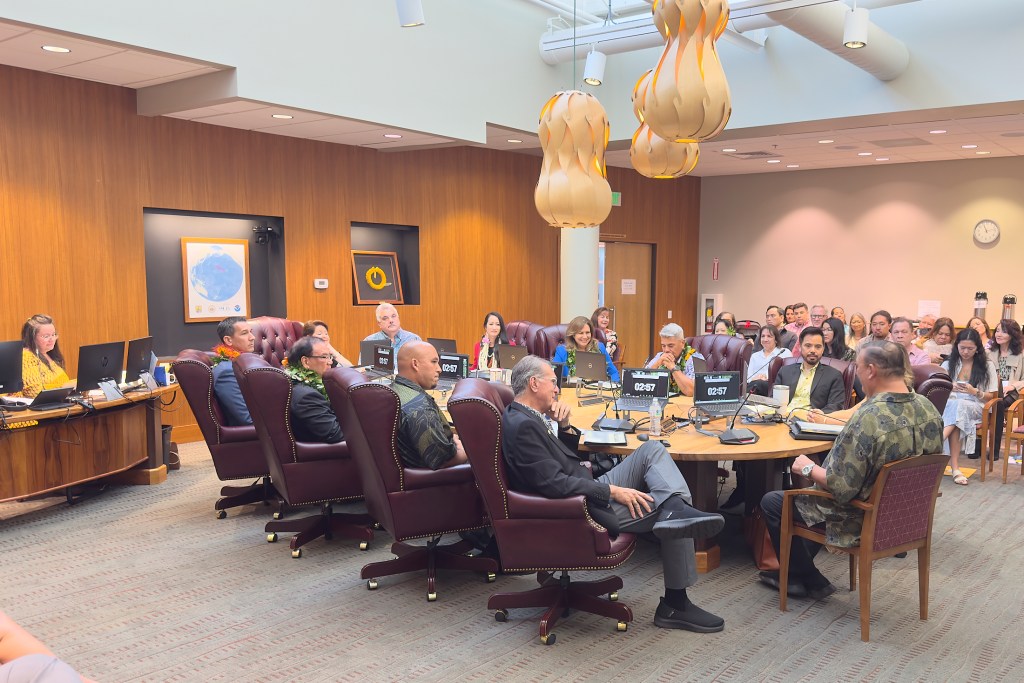
Consultants have presented the board with two viable options: partner with an outside entity through a joint venture, or spin off development to a limited liability corporation wholly controlled by OHA.
The joint venture could give OHA the real estate and development expertise the office currently lacks, but it would come at the cost of losing control over some decision-making. Consultants estimate it would cost about $1.6 million to set up.
The latter option is cheaper, about $500,000, and puts OHA in control, but it also puts it under greater financial risk. Both carry operating costs of about $2 million a year, although the partner in a joint venture would pick up some of that.
“Do you want more control, or do you want the external expertise and the external capital?” consultant Paul Quintiliani asked the trustees in early January.
This Could Be OHA’s Last Shot
OHA has an array of options on Kakaʻako Makai, but after nearly 20 years of waiting for a final plan, Kahele said one of them is a non-starter: waiting until next year. This will likely be the last time the office tries to pursue development there, Kahele said.
“We have other things that will require our energy and time and resources,” Kahele said. “And I’m not going to fight this fight again next legislative session.”
Combined, the Kakaʻako Makai parcels are assessed at more than $293 million, according to property records.
If the residential ban is not lifted, OHA’s development options are limited. A cultural center, as some lawmakers have floated this session, would be possible. Retail shops are another possibility but they would be competing in a crowded part of town, with Ward Village just across the street and Ala Moana Center down the road.
Kahele said the projects would fail without residential development. He doesn’t want to build something that would soon be defunct.
“If you can’t do any residential,” he said, “it just does not pencil out.”

