

These Are The Stories Lahaina Wildfire Survivors Never Got To Tell
Court documents filed in a wildfire compensation lawsuit give an unprecedented look at the struggles fire survivors continue to face.
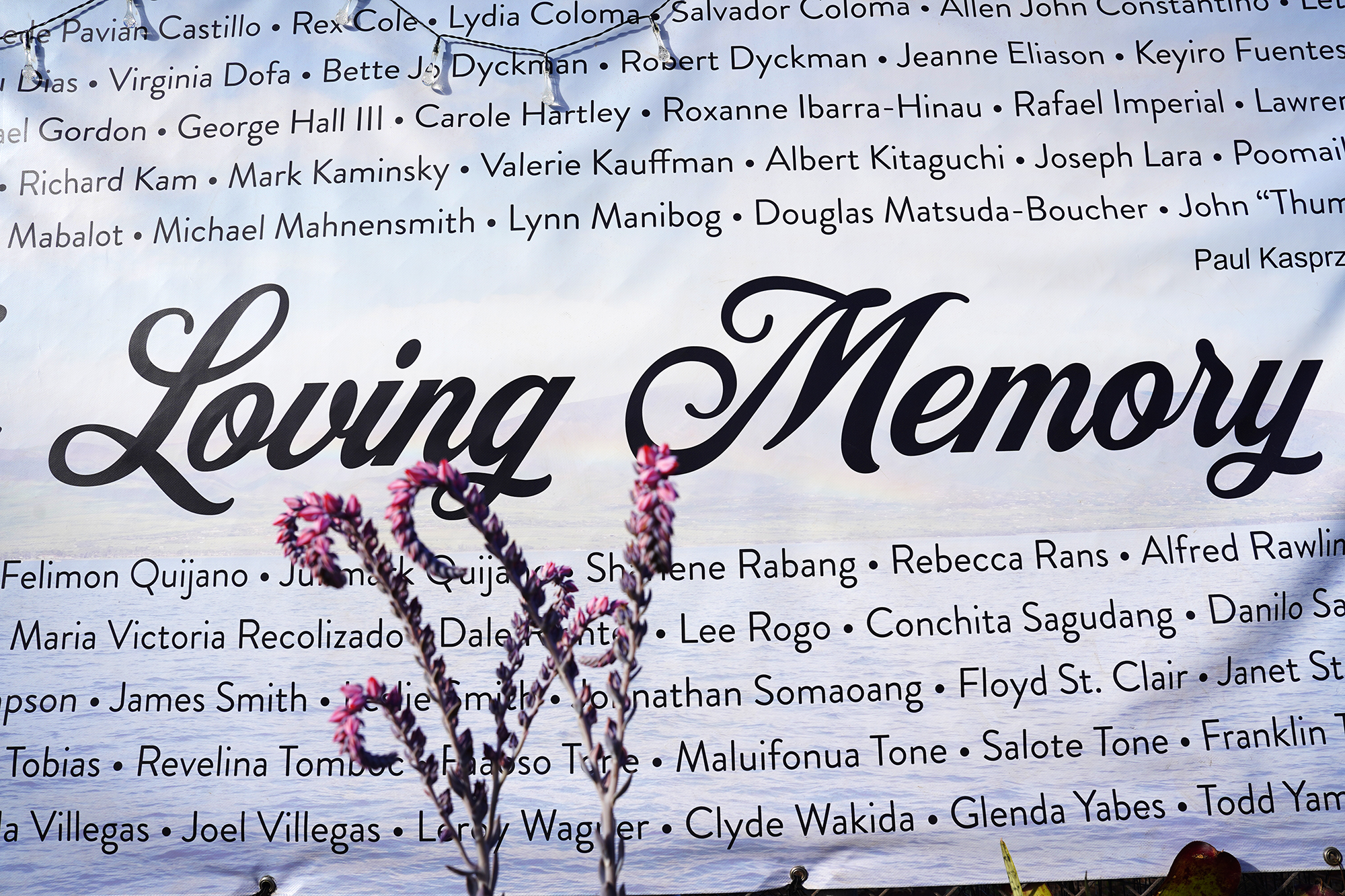
Perry Allen left Maui with little more than the clothes on his back, desperate to get to the Honolulu hospital where his wife had been airlifted after running through fire to flee their Lahaina neighborhood.
She didn’t make it and, more than a year after she died, Allen still hasn’t returned to the island they called home for 13 years. He doesn’t think he ever will.
Kevin Baclig has journeyed back and forth between Maui and the Philippines several times since the Aug. 8 fires. First to ask his wife’s relatives for DNA samples to help identify her body, and then to bring her ashes — along with the remains of her brother and parents — back to their homeland.
Folau Tone spent the last year trying to pick up extra restaurant shifts and stay strong for his children, but the grief and despair of losing his parents, sister and 7-year-old nephew is often overwhelming.
Dozens of survivors were preparing to share their struggles during a wildfire compensation trial scheduled to start last month, but they never got the chance: The trial was averted before anyone took the stand.
Written statements filed with the courts by more than three dozen people, however, offer rare insights into the night of the fire, and the lingering effects of disaster.
“The emotional weight of this loss often feels unbearable. I often feel removed, distracted, and distant when around my loved ones. I worry about the effects my experience and suffering will have on my children.”
Folau Tone
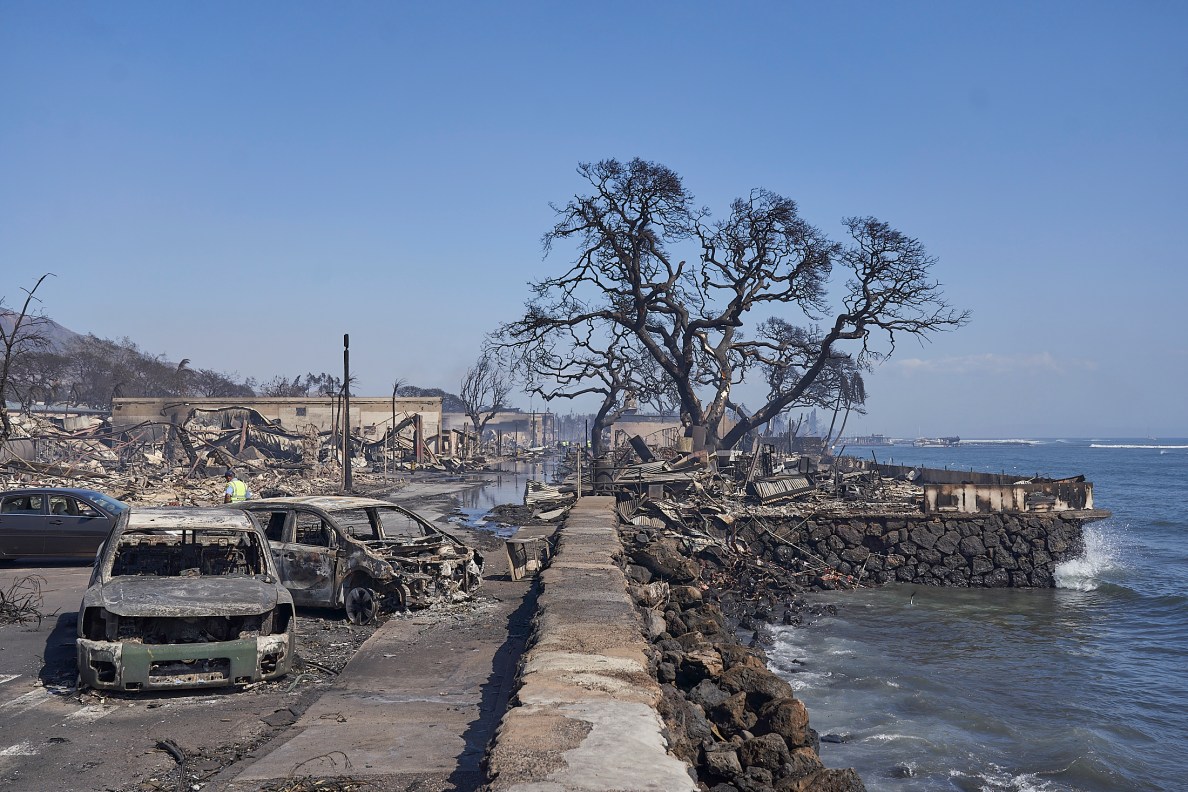
The declarations focus on individual loss and suffering, but woven throughout them is a strong sense of community: what it was like to be welcomed to Lahaina as an immigrant, what it meant to live in a home that housed five generations of your family, how the feel of a neighbor’s hand in the dark and choppy waters off Front Street offered an emotional lifeline on the night of the fire.
Many of the written statements came from survivors who have moved away from Maui or were unlikely to testify in person for other reasons. People signed their declarations from Honolulu and Hilo and states as far away as Maryland. No matter where they’ve landed, they remain haunted by memories of that night and the ways it upended their lives.
“The fire is not just an event of the past; it is a relentless presence in my daily life.”
Shantal Catanach
Harrowing Escapes
The fire on Aug. 8, 2023, moved with unthinkable speed, even to people who had been monitoring it throughout the day.
Christine Nishimoto saw neighbors watering down their yards, but thought the wildfire was still far away when she stepped outside her home to evacuate and was hit by a blast of heat. She didn’t realize she was badly burned until she got to a nearby neighbor’s house and poured water on herself.
“I noticed brown discharge seeped out from all over my body and initially thought it was dirt, but then realized it was my own skin.”
Christine Nishimoto
Julius Limbaga knew he was in trouble when he opened the door to his Lahaina home and black smoke billowed inside.
He ran to his car, but quickly realized too much of the neighborhood was on fire for him to be able to drive away.
“After realizing my car was a coffin, I jumped out only to be greeted by darkness, searing heat and embers that struck my face and body. Surrounded by flames, the only exit was through my backyard even though the bushes and grass were already ablaze.”
Julius Limbaga
Limbaga doused himself with water before running through the burning vegetation in his backyard. After his sandals melted, he ran barefoot across the rocky ground toward the beach, his skin bubbling and popping as his legs caught fire.
“When I finally reached the beach, I helped a distressed elderly woman unable to reach the surf. I lifted her onto my back and carried her into the ocean. As we entered the surf, I felt searing pain as the saltwater engulfed my burns and wounds.”
Julius Limbaga
Thao Tran and her husband tried to evacuate their home near the Pioneer Mill with their 95-year-old landlady but the trio soon found themselves stuck in traffic on Front Street.
As the fire drew closer to the line of cars, they joined others running toward the beach. Tran is not a strong swimmer, but she also has asthma. She couldn’t catch her breath. She decided to take her chances and swim away from shore to escape the smoke.
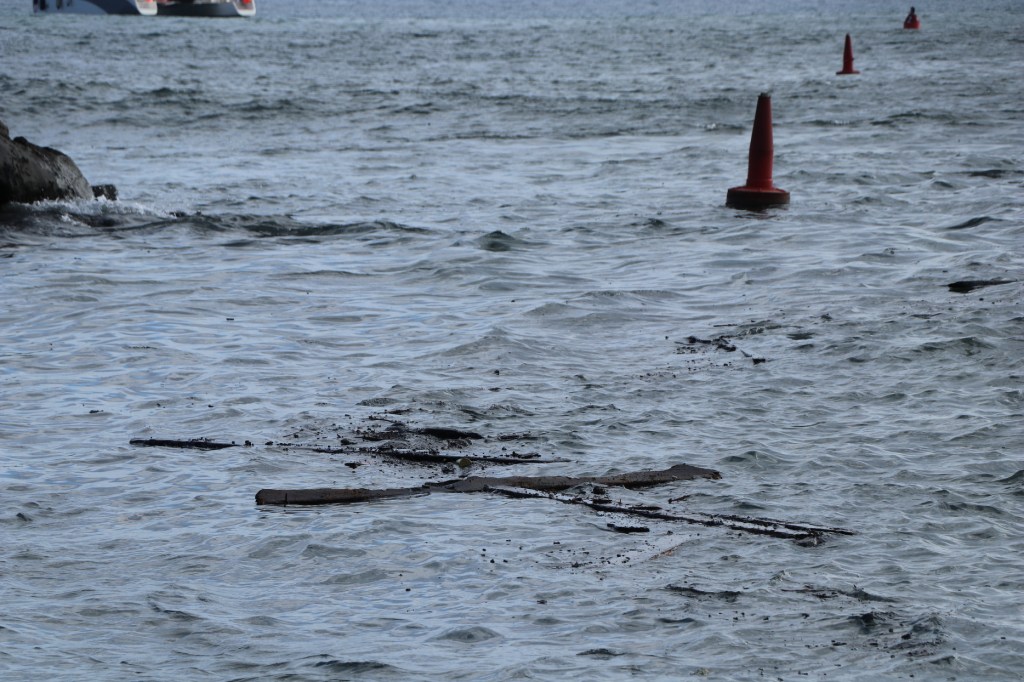
“After several hours of struggling to stay afloat, the sun went down. I was exhausted and did not know how much longer I could stay above water … Eventually, a large wave pushed me under. I was ready to give up. I would have drown if the man swimming nearby me had not pulled me back to the surface and thrown me onto a large piece of wood debris.”
Thao Tran
Tran’s husband stayed along the shoreline with their elderly landlady, concerned she would not survive otherwise.
Many fire survivors wrote of facing the same difficult choice: Stay near the flames, or jump into dark and choppy waters, where survival was far from guaranteed.
“I could not swim but was assisted by a young stranger who held onto to me through the night. He urged me to sit in the choppy water to avoid the fire, but I declined, rationalizing that I’d rather have my family find my charred body than have my body lost at sea.”
Elaine Nakamura
“Cars started to explode. We jumped into the ocean. I held our 7-year-old and David held our 3-year-old. Our two older children were treading water on their own. I remember watching my 3-year-old spit out water as the waves continuously crashed on us. We were in the water for over 10 hours.”
Jazmin Gobel
Annelise Cochran chose the ocean. She abandoned her car on Front Street after the building next to her caught fire. She spent the night treading water with two neighbors, one of whom died on a rock wall before morning.
“Etina and I held each other’s hands, squeezing periodically to ensure we were both still alive. The water that had once protected us began causing hypothermia, and I drifted in and out of consciousness. I feared drowning as my body gave out.”
Annelise Cochran
Helping Hands
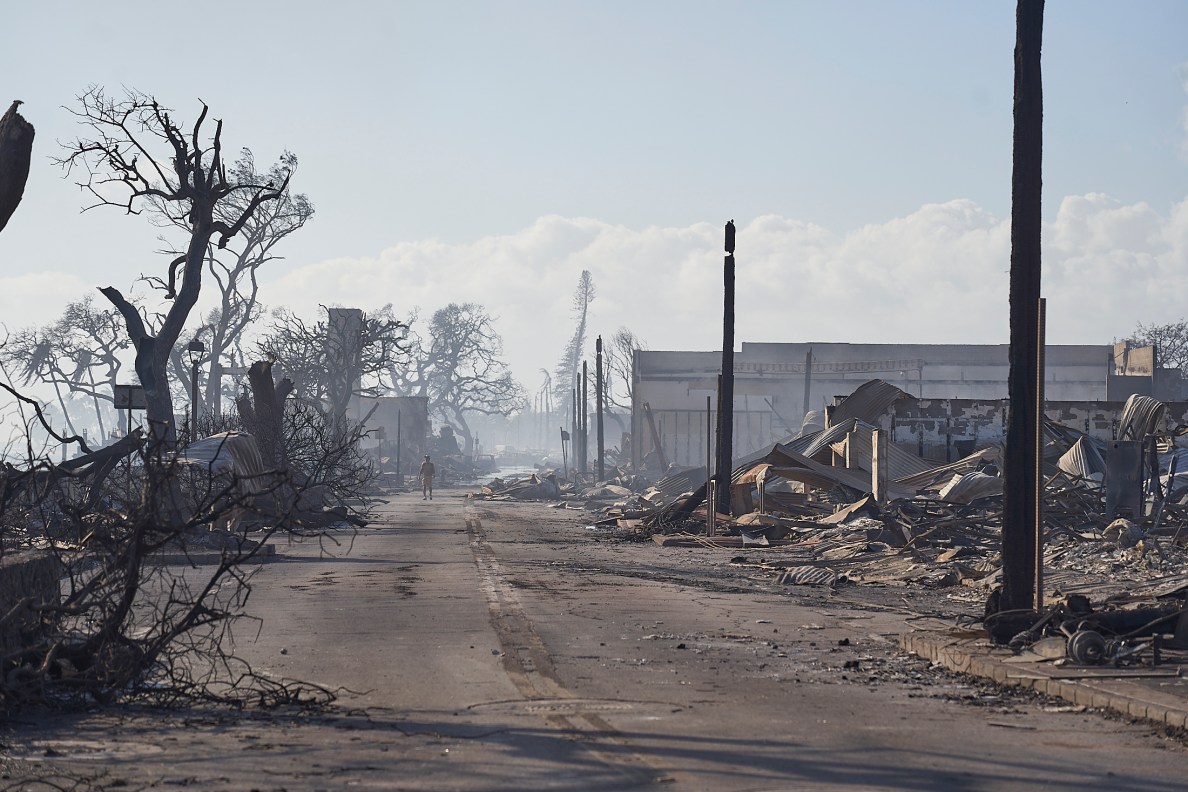
As the fast-moving fire quickly outpaced the capacity of emergency workers, Lahaina residents made decisions borne of desperation. They also put their own lives at risk to save friends and strangers.
“I had nothing to protect myself from the incredible heat when we reached the shore, but fortunately a young man nearby gave me his shirt to protect myself.”
Thao Tran
Amber Sampson was in bed recovering from a C-section when the fire broke out. As she tried to get out of Lahaina with her parents, toddler and 7-day-old son, her car died in the backup on Front Street.
Flames inched closer to them as Sampson’s father tried in vain to restart the car. When the truck bed in front of them caught fire, Sampson began to lose hope. Then another family stopped and pulled all five of them into their car.
“Had it not been for this family, I am almost certain we all would have died in our car that day.”
Amber Sampson

Terry Wollenschlaeger remembers running toward Safeway when she fell and her hair caught fire. A boy running with her stopped and put out the flames on her head. Wollenschlaeger and her husband hopped into a truck owned by someone they knew, then headed to the Civic Center. Along the way, they stopped amid flying debris and embers to pick up others.
“On our way, we saw a man covered in soot who was lying down and crying. We helped him into the truck and kept driving.”
Terry Wollenschlaeger
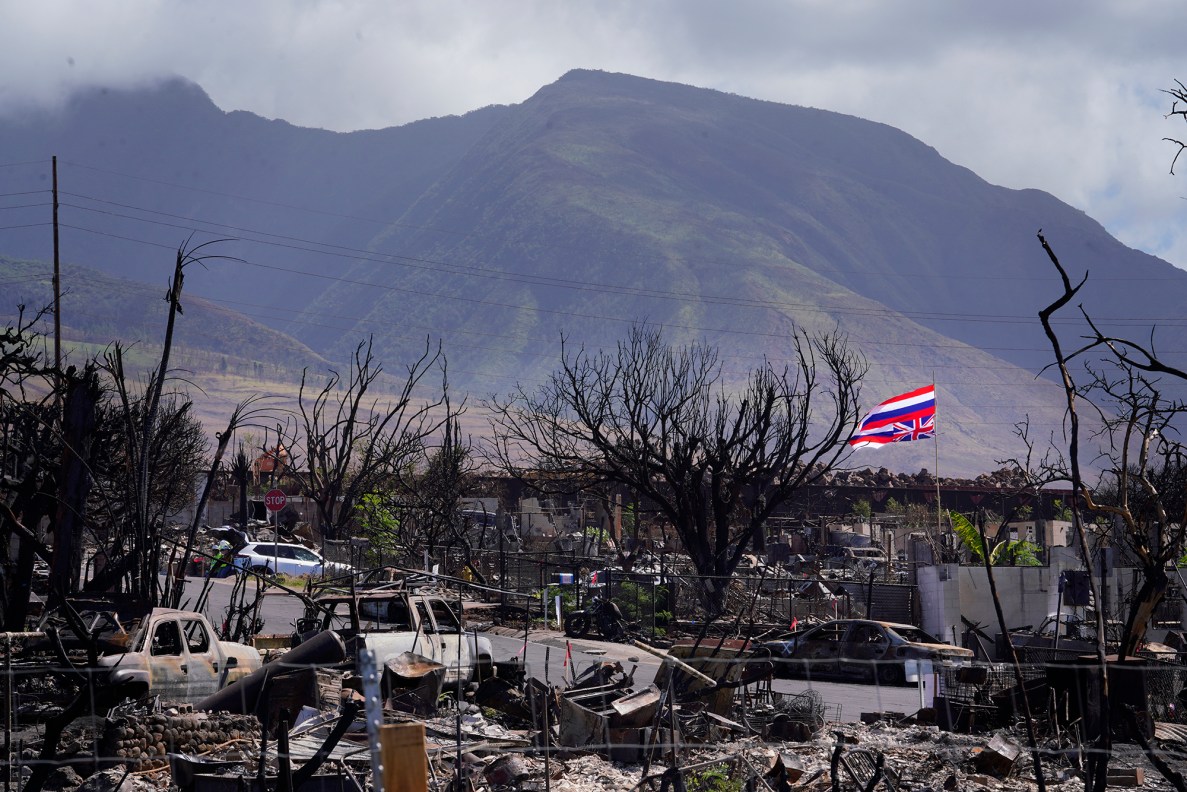
While his wife and children evacuated, Shaun Saribay stayed behind to try to save a house that had been in his family for generations. It quickly became clear he’d made the wrong choice. On his way to find his family, Saribay pulled into the parking lot of the Lahaina United Methodist Church and joined a group of men who were trying to keep the building from catching fire.
The church burned anyway but Saribay said the group was able to save two other structures and lead 17 people to safety. Though he spent the night fighting the fire burning his town, it wasn’t until the next morning that he realized the extent of the disaster.
“When the sun came up and the wind slowed, I saw the harsh reality of my hometown: Lahaina was gone. I found an abandoned bicycle and rode around Lahaina looking for other survivors and bringing them food. As I rode, I saw bodies in every state: charcoal bodies and bodies that didn’t have one speck of burn, probably because they inhaled black smoke. I felt like I was the only human on earth who had survived the apocalypse. I had to remind myself that I promised my kids I would make it home.”
Shaun Saribay
The Fire Is Not In The Past
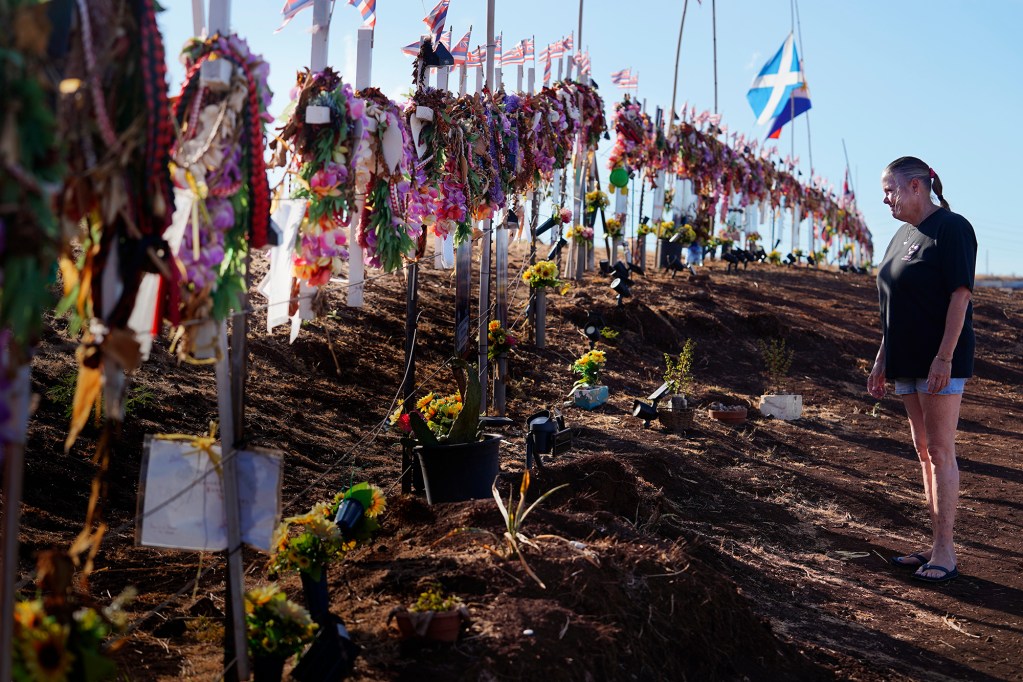
The written declarations of fire survivors are part of a process to decide how victims should be compensated for their loss. A clear message from the testimonials is that no amount of money will make people whole again.
“I lost someone in every generation of our family. At only twenty-five years old, I no longer have my parents and their love.”
Holly Tone
Hadassah Stevens circumvented police barricades the day after the fire to look for her mother. When she reached the remains of her mother’s house, she found the remains of a badly burned body in the driveway. There are no words to describe how traumatizing that continues to be, she wrote.
“While I could not recognize my mother, I knew that was likely who we found.”
Hadassah Stevens
Perry Allen, whose wife weighed just 61 pounds when she died two months after the fire, lives alone in Honolulu now. “I miss Laurie every day,” he wrote in his testimonial, “and my life will never be the same without her.”
James Stewart, a 33-year-resident of Lahaina, spent more than two hours in the water off Front Street. Though once an avid swimmer, he has yet to get back in the ocean and finds it difficult to cope with memories of the fire.
“I still hear the little girl screaming for water. I still hear the elderly woman screaming for her husband who had died just feet away from her. I still see buildings and cars burning all around me. I cannot sleep. I feel depressed. I feel anxious. I feel dread all the time, and I know life will never be the same.”
James Stewart
Joseph Pluta is in therapy to deal with his sadness and anger at losing friends and neighbors in the fire, which also destroyed his home.
“For a time, I felt as though I did not care whether I lived or died.”
Joseph Pluta
Even though Kevin Baclig brought the ashes of his wife, his brother-in-law and their parents to their native home in the Philippines, he couldn’t bring himself to bury them. Maybe next year, he says.
“Every night, my family appears in my dreams. Visiting Lahaina, the place where we built so many memories, is both difficult but necessary. It is the only way I know to honor them, even though it tears at my heart every time.”
Kevin Baclig
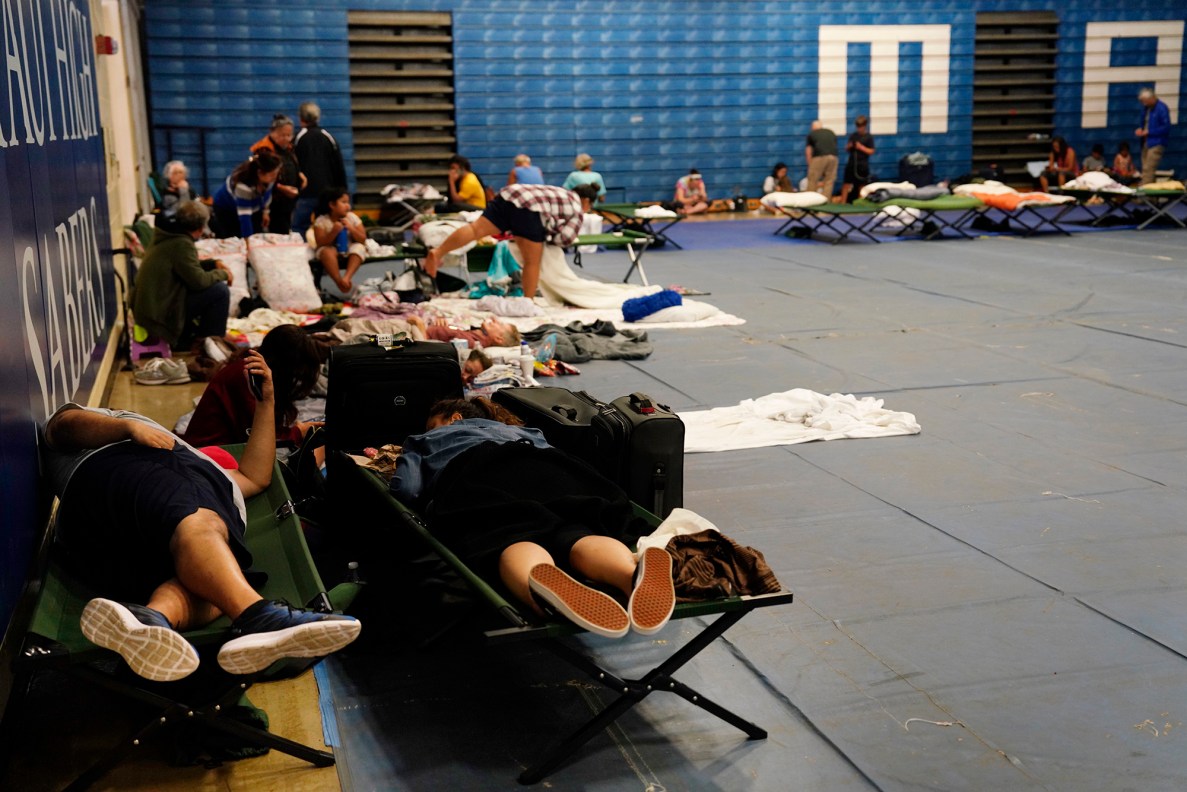
Ashley Lagazo stayed in a Walmart parking lot with her two children before moving to a temporary shelter at a school. Lagazo has had so much trouble finding the stable housing and medical care her children need that she is now planning to move out of state.
“While relocating to Nevada is the hardest decision I’ve ever had to make, I must do whatever it takes to ensure my children have access to the care and support they need to have a chance at a better future.”
Ashley Lagazo
“This fire has taken more than just buildings and belongings — it has taken our sense of security, our faith in leadership, and our dreams for the future. I will carry this loss with me for the rest of my life, as will my family and the community of Lahaina.”
Alen Aivazian
While Folau Tone hopes that one day his family can rebuild and feel safe again, other survivors have little expectation of returning to West Maui.
Less than a week after the home she’d built in the 1960s burned to the ground, 87-year-old Lillian Suter decided to leave Maui. The fire stole her legacy, her identity and her sense of belonging, she said. Now she faces “the impossible task of starting over.”
“With heavy heart, I boarded a plane to the Big Island, knowing that I would never return to the life I once had. As we left Lahaina, I caught one last glimpse of what remained of my home — a charred shell of the place where generations of memories had been made.”
Lillian Suter
