Leaks And Mold At The 4-Year-Old State Hospital Will Cost Millions To Fix
State officials say it will take $8.16 million, including $2 million in legal costs, to repair water leaks and get rid of mold that employees say is a health hazard.
Gov. Josh Green’s administration is asking lawmakers to put up millions of dollars in emergency funding to fix leaks, clean up mold and make other repairs to a $160 million building that opened at Hawaiʻi State Hospital just three years ago.
The request for funding includes $6.16 million for repairs to the structure known as the Hale Hoʻōla Building, and another $2 million to cover legal costs. Those legal expenses may include the cost of a lawsuit against contractor Hensel Phelps Construction Co.
Hensel Phelps developed the building under a design-build contract with the state, and the facility was unveiled by the state Department of Health in 2021. But a series of problems including design flaws and some construction defects kept the building closed until the following year.
Since then hospital employees have reported leaks in the building are allowing mold to grow inside the 144-bed facility.
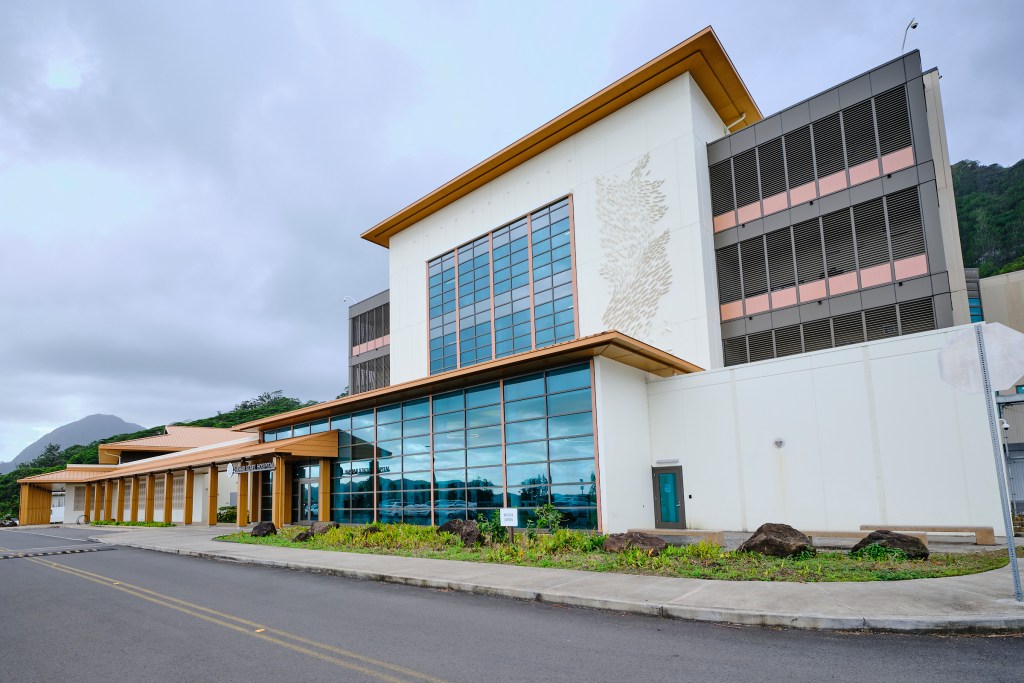
“The urgency of this request stems from the potential risks to the health and safety of the patients and staff at the HSH,” state Department of Health officials said in written testimony earlier this month. “A significant concern is the presence of water leaks in the building’s exterior envelope and plumbing systems.”
The roof of the building may need to be replaced as part of a “lasting solution” to the leaks, according to the testimony. If so, that work would cost extra beyond the $8.16 million emergency funding requested this year.
“Obviously, the whole situation is pretty frustrating,” Senate Commerce and Consumer Protection Committee Chair Jarrett Keohokalole said. “When you buy a new building, you expect it to work as if it was new. It doesn’t seem like that’s what we got.”
Problems After The Warranty Expired
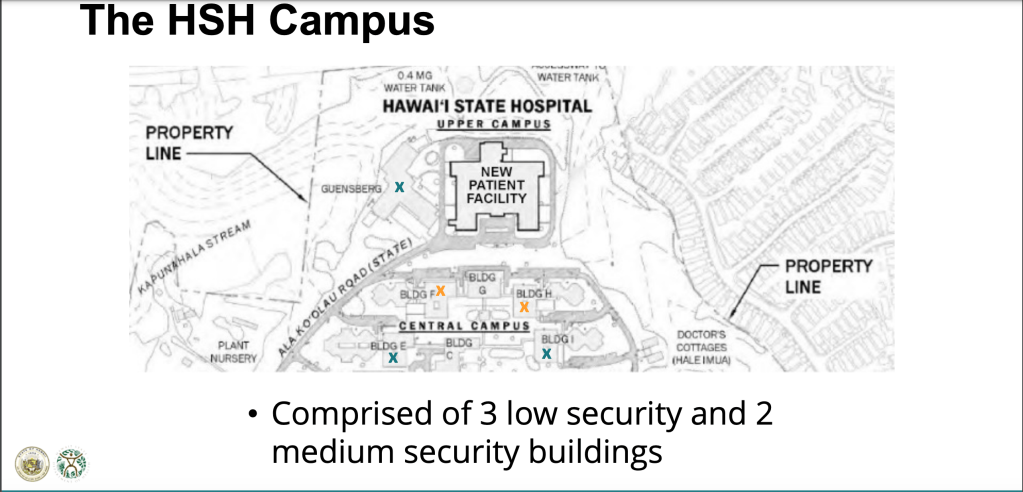
The Hale Hoʻōla Building, one of the largest buildings on the 103-acre hospital campus, is a secure forensic psychiatric facility. It is used to house patients who have been accused of a crime and are referred to the hospital by the court system for mental health evaluations or treatment.
State lawmakers approved funding for construction of the 170,000-square-foot building in 2016 to relieve overcrowding at the hospital. Problems have persisted since it was built.
The health department submitted a brief written justification for the latest emergency funding to lawmakers in January that hints the state may have a tough time holding Hensel Phelps responsible for the defects because the warranty has expired.
“After the project’s acceptance, and a warranty period of two years, HSH encountered various
issues, many stemming from latent defects due to poor design and construction,” according to the written explanation from the health department. “Investigations into the root causes are still ongoing and have been challenging. At the time of project acceptance, the State was unaware of any defects that would have warranted rejection.”
“The Department of Accounting and General Services (DAGS) believes many of the ongoing problems are latent defects and holds Hensel Phelps responsible for issues arising from these defects,” according to the justification submitted with the request for funding.
DAGS and the health department said in a joint written statement Tuesday the company has provided some repairs under the warranty provision in the contract, but refused to make other repairs “that it claims fall outside the warranties.”
“For some problems Hensel Phelps has sent repair crews, but for other(s) Hensel Phelps has not,” according to the statement. “When the Hensel Phelps crews made repairs, some have not held. We also believe Hensel Phelps has failed to fully investigate and address the root causes of many ongoing problems.”
“DOH and DAGS disagree with Hensel Phelps’s assessment of the warranties, and with Hensel Phelps’s view of its non-warranty responsibilities,” according to the joint statement. “DOH and DAGS also believe a thorough investigation is needed into the root cause of ongoing leaks and other problems at the facility.”
The emergency funding would cover fixes such as identifying water leaks and standing water in the building and conducting mold abatement. It would also cover the cost of emergency air conditioning repairs to replace failed components, according to the health department.
Longer-term work has also been recommended by a consultant, including “reroofing the building and repairs and improvements to other elements of the building envelope, plumbing, and other major building systems, to provide a lasting solution to issues of water intrusion,” according to the health department.
DAGS and DOH said in their joint statement they are “still investigating the scope of the problems at the facility, and the scope and (cost) estimate of long-term repairs.”
“You expect a leaky roof out of a 30-year-old cafeteria, not out of a brand new, state-of-the-art health care facility,” Keohokalole said. “I think we do need to go back in and look at what happened with the project management, and what happened with the contracts.”
Money Requested For Legal Help
The $2 million for legal expenses would be used to pay legal fees and costs of special deputies attorney general, which involves hiring private attorneys to pursue claims on behalf of the state.
Various problems with the building have affected operations and have caused delays in opening parts of the building while repairs were made. Housekeeping staff has been kept busy mopping floors to clean up water from the leaks.
“Treatment programs constantly must shift from the ground floor to the housing units,” according to the joint statement. “The gym had to be closed for extended periods, meaning patient recreation had to occur elsewhere within the facility.”
“At this time, all areas have been opened at least partially, except for the dining area, which remains closed,” according to the DOH and DAGS statement.
The health department also acknowledged in its submittal to lawmakers the mold and the “significant risk that it poses” has triggered union grievances from hospital staff. Those union filings allege the state is violating contract requirements that it provide a safe and healthy work environment.
Hensel Phelps did not respond to phone messages left at its Honolulu office, or phone and emailed messages left at its headquarters in Greeley, Colorado.
The House Health Committee is scheduled to hold a hearing at 10 a.m. Wednesday “to gain an understanding of the construction defects and resulting operational problems” at the new building, according to the committee’s hearing notice.
The Senate Heath and Human Services Committee has already given preliminary approval to Senate Bill 1448, which includes the emergency appropriation. That measure is now pending further action by the Senate Ways and Means Committee.
Civil Beat’s community health coverage is supported by the Cooke Foundation, Atherton Family Foundation and Papa Ola Lokahi.