No Income Tax For Working Class? Unions Float Radical Proposal
Lawmakers will consider a bill to increase the state excise tax and wipe out the state income tax for most residents.
House and Senate lawmakers are taking up bills designed to overhaul the Hawaiʻi tax code by lifting a big chunk of the state tax burden off the shoulders of local wage earners while extracting more money from tourists.
The bills are backed by a coalition of construction trade unions troubled by the exodus of Hawaiʻi working-class residents from the state — including many of their members.
Their proposal is radical. They want to eliminate the state income taxes for all residents who earn up to $100,000 and offset the revenue loss by increasing the state excise tax from 4% to 6% on most goods and services sold in Hawaiʻi.
The bill would also exempt food and non-prescription drug purchases from the excise tax and boost the state tax credit for low-income renters from $50 to $500 per year.
House Bill 959 will have its first public hearing Friday morning before the House Economic Development & Technology Committee, and another hearing on the Senate version of the bill is scheduled for Monday before the Senate Health and Human Services and Labor and Technology committees.
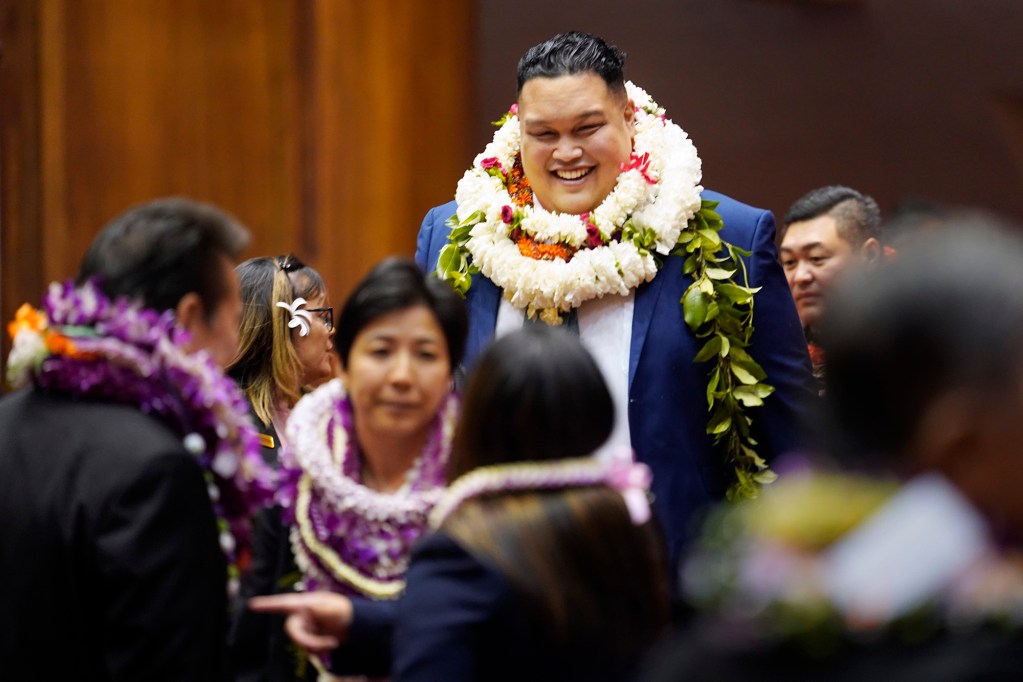
It is certain to be controversial. State Rep. Darius Kila, the lead sponsor of the House measure, admits the measure is a long shot for passage this year, but he said lawmakers should look seriously at ideas like the $100,000 income tax exemption.
“The district I represent is struggling every single day, and I know that a blanket exemption like this would probably encapsulate more than 90% of my constituents, literally impacting them every single day,” said Kila, who represents Leeward Oʻahu. “This could give them a chance to not have to face that struggle.”
Kila introduced the bill at the request of T. George Paris, executive director of the Hawai‘i Ironworkers Stabilization Fund and the primary architect of the tax proposals. The bill is also backed by the Hawaiʻi Building & Construction Trades Council, which is made up of 18 construction trade unions.
Paris said the bill was about three years in the making. He met with House and Senate lawmakers to ask a basic, pressing question: “Do you guys have any idea how we can keep our families from moving out of Hawaiʻi?”
The U.S. Census reported a net population decrease in Hawaiʻi of more than 15,000 people from mid-2020 to mid-2022, and Paris said that loss is hitting the construction unions hard. People in government jobs are not as affected because their jobs are stable, he said.
“Prior to that, we was worrying about our kids going to the mainland, finding jobs, right? So now it’s the whole family moving out,” Paris said.
Reducing income taxes is always politically popular, and last year the Legislature and Gov. Josh Green approved the largest income tax cut in state history. It will be phased in and is expected to cost the state more than $1 billion a year in lost state revenue in the years ahead.
On the other side of the ledger is the proposed excise tax increase, which is both a selling point and a major obstacle for the bill.
Hawaiʻi counties impose their own excise tax surcharges of one-half of 1%, bringing the total excise tax to 4.5%. The additional 2% excise tax included in the bill would be phased in over four years.
One benefit to an excise tax increase would be shifting a larger share of the total tax burden onto the millions of visitors to Hawaiʻi each year. The state Tax Department calculates that tourists and active duty military together contribute nearly 30% of the money raised by that tax.
But proposals to increase the excise tax are politically hazardous because it adds to the cost of almost all goods and services sold in the state, and it is highly visible. The half-percent excise tax increase to fund the Honolulu rail project has proved to be bitterly controversial over the years.
The excise tax is also generally considered to be regressive, meaning it weighs more heavily on lower-income people. Critics point out that the excise tax requires less-affluent people to pay a larger share of their incomes on essential goods such as food than more wealthy people.
Will White, interim executive director of the Hawaiʻi Appleseed Center for Law and Economic Justice, said he supports some parts of the bill, including increasing the renters’ tax credit, but questioned the core concept of providing income tax relief for low-income families by increasing the excise tax.

“If you’re worried about the impacts on low-income taxpayers, it’s very surprising to me that they would propose an increase to the general excise tax, which is probably the most problematic piece of the bill for us,” White said.
Lower-income residents generally pay very little in income taxes, he said, “so it’s hard for me to understand how that could be the main driver of people exiting the state. Really, it’s the high cost of everything else, like housing and food; those are the two biggest costs for any household in Hawaiʻi.”
The provisions that would eliminate the excise tax on food and some medicines would help, but White suggested a better approach would be to expand an existing state tax credit that was created to offset some of the impact of the excise tax on food. Another possibility would be to create a new child tax credit to support working families, he said.
Dylan Moore, assistant professor with the University of Hawaiʻi Economic Research Organization, said high taxes do sometimes prompt people to relocate, but it is generally higher-income people who move to avoid taxes.
The cost of housing is one of the biggest reasons working people leave Hawaiʻi, and “in some sense, you can’t solve the housing problem just by giving people more money,” he said.
“The effects of any tax cut like this in terms of improving people’s wellbeing or what they can afford are always going to be undermined to some extent, as long as we have these housing supply restrictions in place,” Moore said.