Oʻahu Public Housing Tenants Promised Relocation Help Hit Dead-Ends
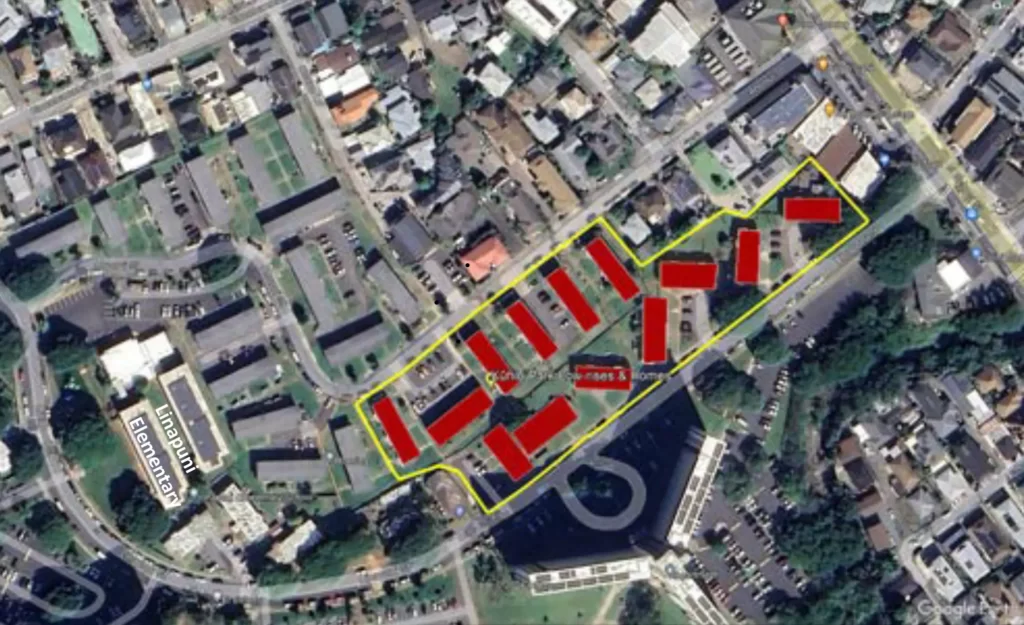
Boarded-up apartments. Wrong numbers. Homes already occupied or far from jobs, doctors and schools. Kūhiō Park Terrace residents in Phase 1 of the teardown are angry and bewildered as the Hawaiʻi Public Housing Authority moves to relocate them.
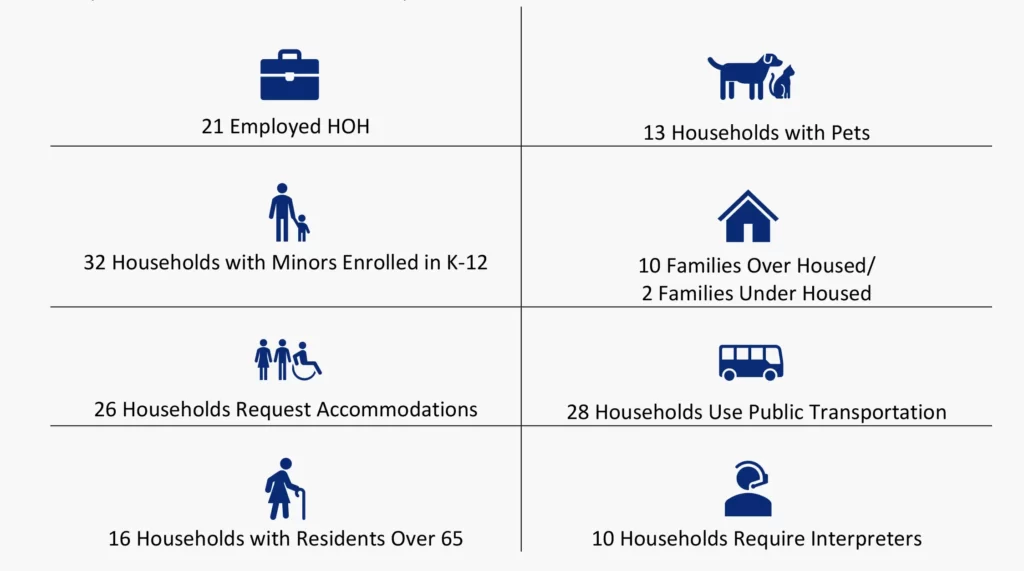
With a wrecking ball headed for Kūhiō Park Terrace, tenants of the Kalihi public housing complex were surveyed almost a year ago about their relocation needs. They were asked about everything from their command of English and the size of their family, to where their kids attend school.
Among the conclusions: 32 families had children in nearby schools; 16 people were senior citizens; 28 relied on public transportation.
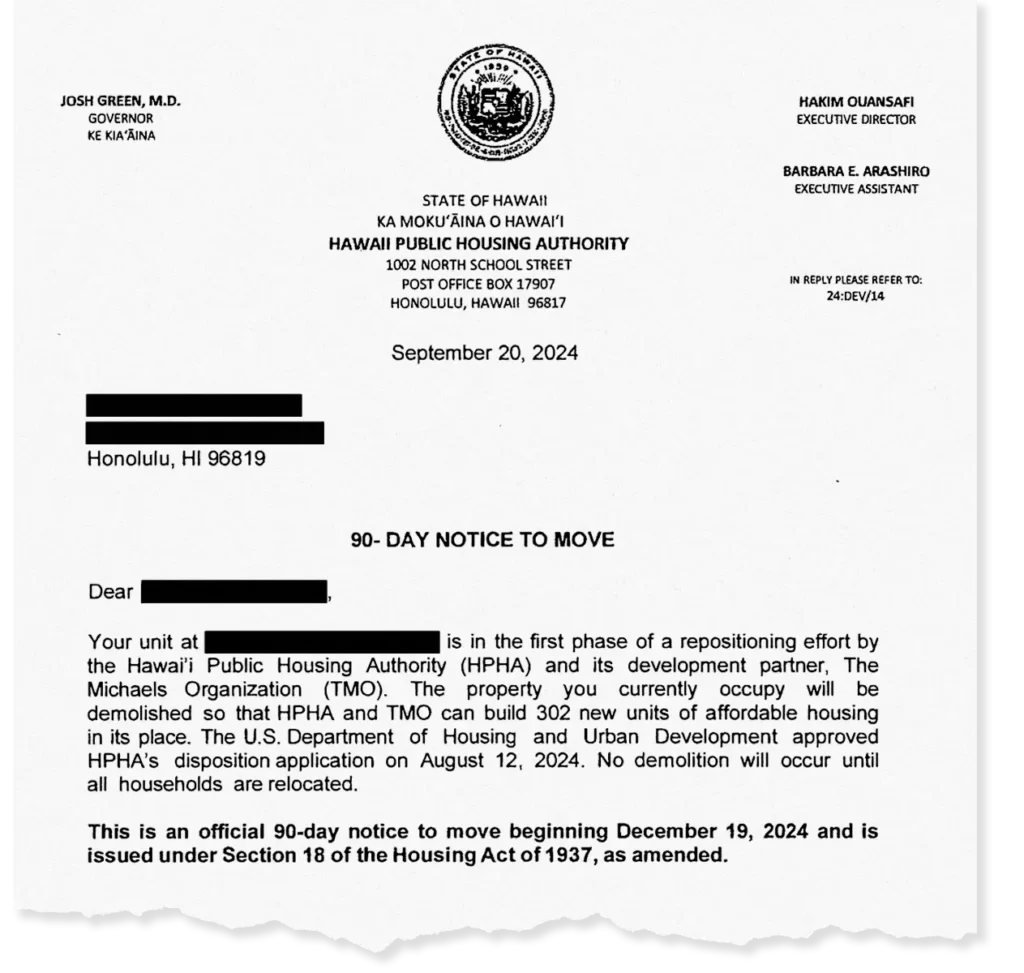
In late September, the 215 tenants were given 90 days to move out. The letter from Hakim Ouansafi, executive director of the Hawaiʻi Public Housing Authority, promised all the help they’d need moving to comparable homes.
For many, those promises – which are required by federal law – proved largely hollow. Today, two-thirds of the targeted apartments remain occupied as the relocation process drags on.
Some residents were sent to look at apartments only to find them already occupied, even boarded up. Others were offered places across the island, far from jobs, doctors and children’s schools. At least one disabled resident was sent to an apartment accessible only by flights of stairs. Several were given phone numbers for landlords who turned out not to be landlords at all.
The experience has left many shaken, confused and angry.
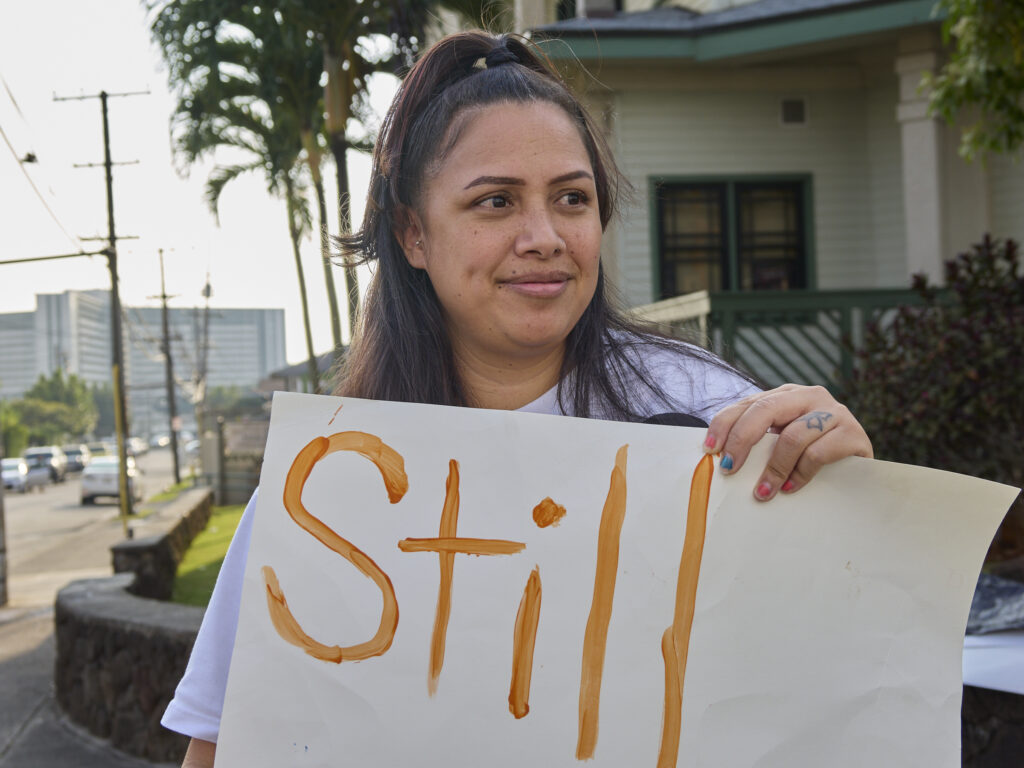
“They have no idea, there’s no communication,” said one of the holdouts, Lehua Willets, who has lived all of her 37 years at Kūhiō Park Terrace, where rents are set at 30% of a tenant’s income.
The Housing Authority’s director told Civil Beat he’s aware of a smattering of concerns, which he brushed off as overstated and from a minority of residents — a few of whom he claimed don’t live in the section of the property due to be demolished. The relocation process has gone smoothly and is nearing completion, he said, although he conceded it has taken longer than expected.
“What I’ve seen so far and the feedback from the tenants, I haven’t heard anything that is alarming,” Ouansafi said, who noted that he considers housing authority residents “family.”
He acknowledged that the process can be stressful, but said “we all have to relocate sometime in our life.”
Moving the tenants out is part of a plan to replace each of the demolished units with a government-subsidized unit, alongside other non-subsidized but affordable apartments. The goal is for displaced tenants to be able to return at some unknown date in the future, another promise.
The first apartments to be torn down – known as Low Rise and Kūhiō Homes – are phase one of three.
It’s an ambitious project that echoes a redevelopment initiative announced two years ago by Gov. Josh Green. That plan, Ka Lei Momi, calls for partnering with a private developer to tear down nine existing public housing complexes around the state and replace them with affordable and mixed-income housing developments that include at least 10,000 affordable units.
The Ka Lei Momi approach has been hailed as a way to address the state’s severe housing shortage. But its implementation at Kūhiō Park Terrace also offers a window into ways it can make an already difficult process more painful for current residents.
Like many of them, Tirimita Nifaro, 68 — who has lived in the housing complex nearly half her life — said her family of six is still unsure where they will go.
“I am scared,” she said.

Tenants Understand The Need
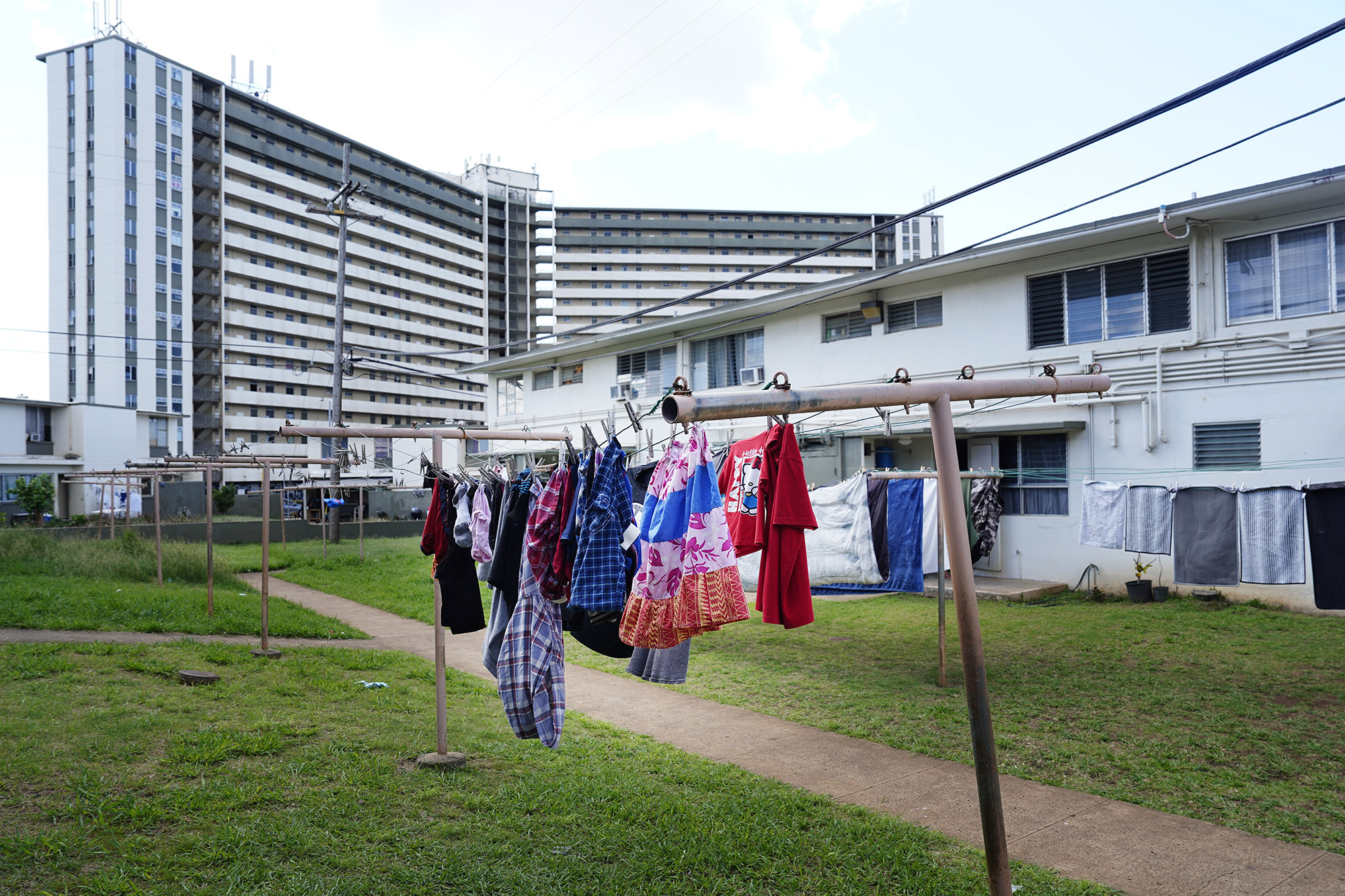
Built between 1953 and 1965, Low Rise and Kūhiō Homes are a collection of mostly two-story buildings painted shades of barracks green and separated by clotheslines and patches of grass, some neatly trimmed, others overgrown.
Maintenance has been minimal in recent years, tenants say, and rats are plentiful in some areas. The entire complex off North School Street received a failing score of 46 on a scale of 100 in a U.S. Department of Housing and Urban Development inspection two years ago.
The full redevelopment plan calls for replacing nearly all of Kūhiō Park Terrace — except two 16-story towers renovated in 2011 — with a mix of three-, six- and eight-story buildings, and, in a later phase, another 16-story high rise. The first phase alone will cost $212 million, paid for through a combination of federal and state low-income housing tax credits, a loan from the state’s Housing Finance and Development Corporation and a city bond. It will replace 64 demolished units with 304 affordable apartments, Ouansafi said.
The initial phase will include a mix of government-subsidized apartments and units with rents pegged to tenants earning up to 60% of the area’s gross median income for a family of four, currently $83,520. When the project is done, the complex will have 650 units, with the highest-priced available to tenants earning 100% of the median income.
“Public housing, it’s dead,” Ouansafi said. “It never worked in the U.S. and certainly didn’t work in Hawaii. So we’re trying to get that mixed-income, mixed-use kind of development.”
Tenants in general understand the need for more and better housing, according to WiIlets, who has raised three school-age children there.
“We’re not against it,” she said. “But at least appreciate our feedback, meet us halfway, to see what as a community we need.”
The housing authority hired The Michaels Organization — the nation’s largest owner of affordable housing — to redevelop the new housing project and manage it once it’s completed. Michaels, which manages six other affordable housing properties in Hawaiʻi, in turn contracted with Seneca Real Estate Services to help displaced residents find new homes.
Residents say they have tried to draw attention to their grievances. Besides meeting several times with representatives from the housing authority, Michaels and Seneca, they raised concerns at housing authority board meetings. They also reached out to the governor, whose office directed them to the project’s informational website.
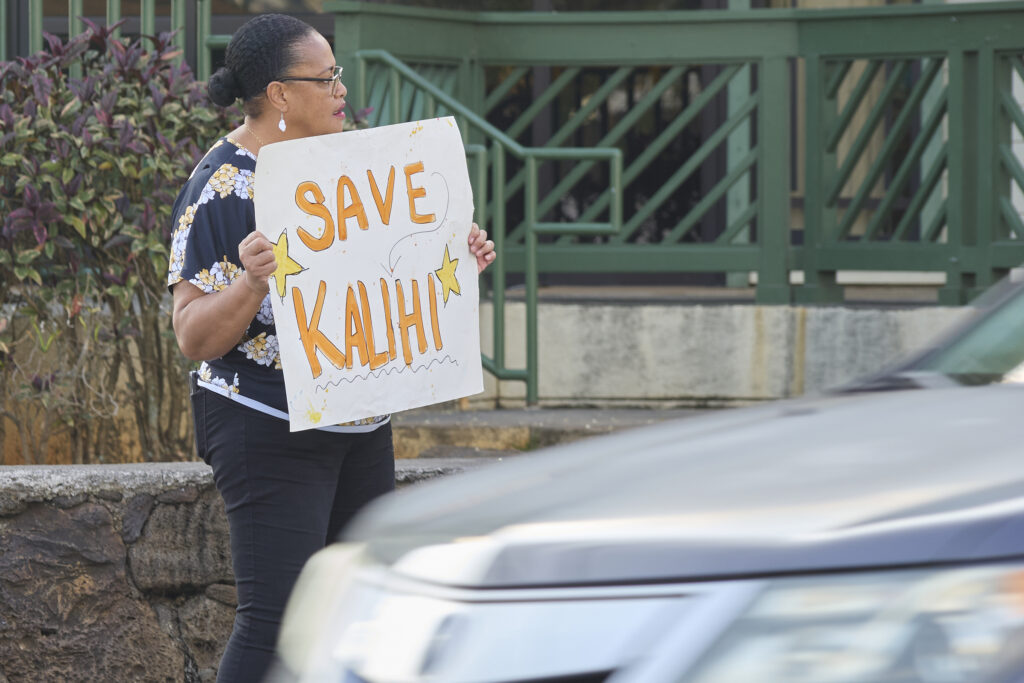
They have held rush hour protests every Thursday on North School Street. Over the last month, they also have traveled to the Capitol to testify in support of a bill, House Bill 1325, to strengthen laws governing what affordable housing developers must provide displaced residents, including an added requirement to “track and maintain communication” with those tenants.
Seneca staff manning an office set up for the tenants referred Civil Beat to The Michaels Organization, which did not respond to calls seeking comment. Seneca CEO Taurean Gordon did not respond either.
Ouansafi said Michaels provides “daily reports, regular reports” to the housing authority. The agency is committed to meeting residents’ needs, he said, including offering leeway they might not have found elsewhere, especially by shifting move-out deadlines.
“Under the normal circumstances, if we were not a state agency, all of them would be relocated by now,” he said. “We went certainly beyond what we are required to do by even federal law.”
All but two of the residents who remain at Kūhiō Park Terrace now have a move-out plan, the agency told Civil Beat.
The problems that tenants have faced getting there are not rare, said Sue Popkin, a fellow at the Urban Institute who researches public housing and has written about redevelopment and tenant relocation.
“It’s unfortunate, and I wish I could say that’s the only time that’s ever happened, but it requires a lot of oversight,” Popkin said. “There are better ways to do relocation.”
Hallmarks of a well-handled relocation, Popkin said, include consistent engagement between the housing authority and residents, and a development partner “being transparent and communicating with the residents about when relocation will happen.”
“Under the normal circumstances, if we were not a state agency, all of them would be relocated by now.”
Hakim Ouansafi, executive director of the Hawaiʻi Public Housing Authority
Even among those who have already moved out and moved on, reviews of the process are less than stellar.
It took Geraldine Mabida, 59, months to find a place where she could keep her family together in a three-bedroom apartment equivalent to her Kūhiō Park Terrace apartment. She lives with three adult children, two of whom are disabled.
A former classroom assistant who worked with special needs students, Mabida said she had to make weekly visits to the Seneca offices to advocate for herself in the face of what struck her as indifference.
“I’m not the same person,” she said. “I’m very distraught about what happened. I’m just trying to heal from that.”
Sorry, Wrong Number
The 90-day notice-to-vacate letter signed by Ouansafi dated Sept. 20 offered each household three housing options to pursue, ostensibly based on the March survey.
Some were dead ends, such as a duplex near the Bishop Museum, where both units were already taken.
The contact for that property was listed as Morgan Smith, with a Southern California area code. The man who answered that number told Civil Beat he was actually a Los Angeles resident who owned no property anywhere, let alone in Hawaiʻi. He said he had received more than 30 phone calls from Kūhiō Park Terrace residents.
Another property with Smith listed as the contact was on Pali Highway. It turned out not to be an apartment but a large home behind a closed gate on a private driveway next to the Consulate General of the Republic of Korea. Reached by Civil Beat, its owners declined to comment.
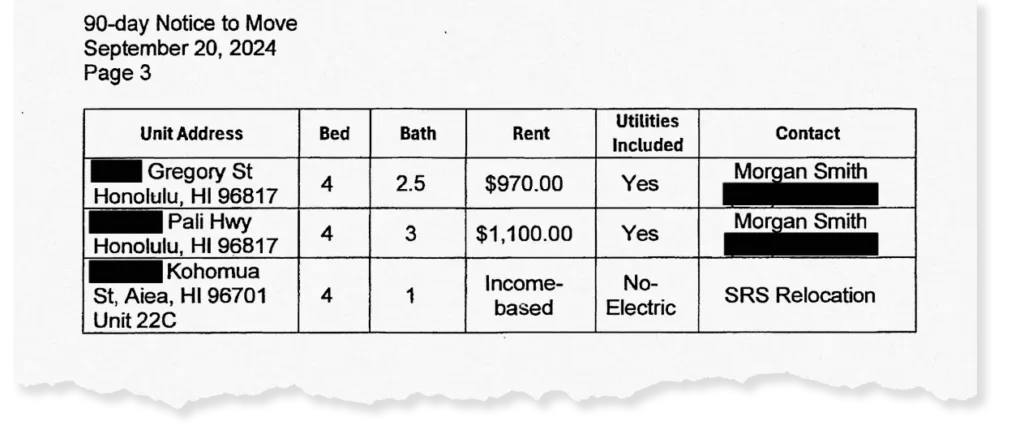
In a response from Seneca provided to Civil Beat by the housing authority, Seneca said the apartment listing that included landlord Morgan Smith came from the housing authority. When residents had called that person, the statement said he told them, “Ms. Smith had passed,” and Seneca then removed that listing.
When Civil Beat called the number once more, the man who answered reiterated that he was not Morgan Smith and added, “I had nothing to do with a Mrs. Smith, I don’t know a Mr. Smith. I don’t know anything about this person.”
All of the 90-day letters sent to residents, plus additional 30-day notice-to-vacate letters that followed in November, provided a number for residents to call if they wanted to file a grievance. When Civil Beat tried the number, the woman who answered said she did not know what Kūhiō Park Terrace was but had received about a dozen calls from its residents since September.
One tenant, Lovey Phasouk, accepted an offer to move with her mother to Mayor Wright Homes, a 364-unit public housing complex. It is set to be among the first demolished and redeveloped under the Ka Lei Momi plan.
Upon arriving to pick up the key, Phasouk said they were told their new apartment had only one bedroom, not two as was the case at their Low Rise home. That was not acceptable, she said, since she is her mother’s full-time caregiver.
“They said, ‘Your mom is qualified for only a one-bedroom, so you’ve got to go back,’” Phasouk said. “We don’t know where we’re going to be going. Nobody is telling us anything.”
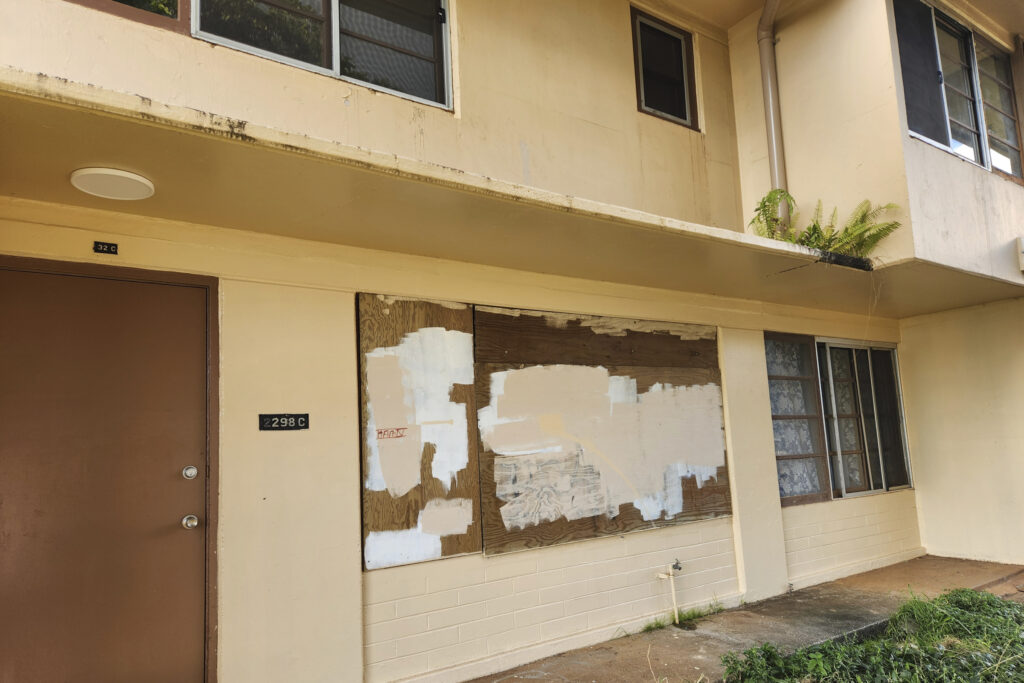
One resident was told to check out two apartments in the nearby Kalihi Valley Homes public housing complex. By the time they got there, another Kūhiō Park Terrace tenant had beaten them to one of the units. Plywood covered the lower windows of the other.
That resident didn’t want to be named because she and her family are still trying to work out a suitable relocation. She also does not speak English.
“It just makes me angry to be sent to that place, it’s so bad,” she said of the boarded-up unit, speaking through an interpreter.
Although Ouansafi said he could not speak to that woman’s experience, he suggested there might have been a misunderstanding. Some tenants, he said, could have been shown units that were scheduled to be renovated before they moved in.
“We don’t know where we’re going to be going. Nobody is telling us anything.”
Lovey Phasouk, Kūhiō Park Terrace Resident
“In no way, in no possible way, anybody was offered that unit that’s boarded up to live in it as is. Absolutely not,” he said. “But I am aware that some families said they want to see where it’s at, even though it was not yet available.”
The woman sent to Kalihi Valley Homes was accompanied there by Dina Shek, legal director of Medical-Legal Partnership for Children in Hawaiʻi. Her organization provides free legal clinics in a collaboration between the University of Hawaiʻi Richardson School of Law and Kokua Kalihi Valley, a nonprofit health center that serves Kūhiō Park Terrace residents.
“I turned to her and I said, ‘So what do you think?’” Shek said. “She just laughed. It was just so ridiculous to think that somebody would sign up to move into a boarded-up place. It really exemplifies for me how people are being treated.”
When Civil Beat visited the address two months later, the plywood was still up.
An Unambiguous Commitment
The 90-day letter from the housing authority was unambiguous. It said: “Persons with Limited English Proficiency will be provided translation services.”
Five months later, Iutita Momosea, a Kūhiō Park Terrace resident for about 30 years, remains flat-out confused by the whole process, despite the envelope of carefully stacked letters from the housing authority she keeps on a living room shelf.
The move-out letters in September and November both came in English. Momosea, 79, is Samoan, speaks English only haltingly and said she needs written materials translated.
“It’s easier for me (in) Samoan,” she said.
Her home is a neatly organized, two-bedroom ground-floor apartment that she shares with her son and grandson. The letters she struggled to read offered her a two-bedroom unit in Kapolei run by Michaels; and studios on Queen Street and Alakea Street in downtown Honolulu.
“Is that the place they want me to move?” Momosea said when the Civil Beat reporter pointed to the three options.
As she folded laundry, she recalled that someone official – perhaps from The Michaels Organization, perhaps from Seneca, she wasn’t sure – recently told her that she was eligible to move into an apartment in a section of the complex scheduled to be demolished in a later phase of the redevelopment project.
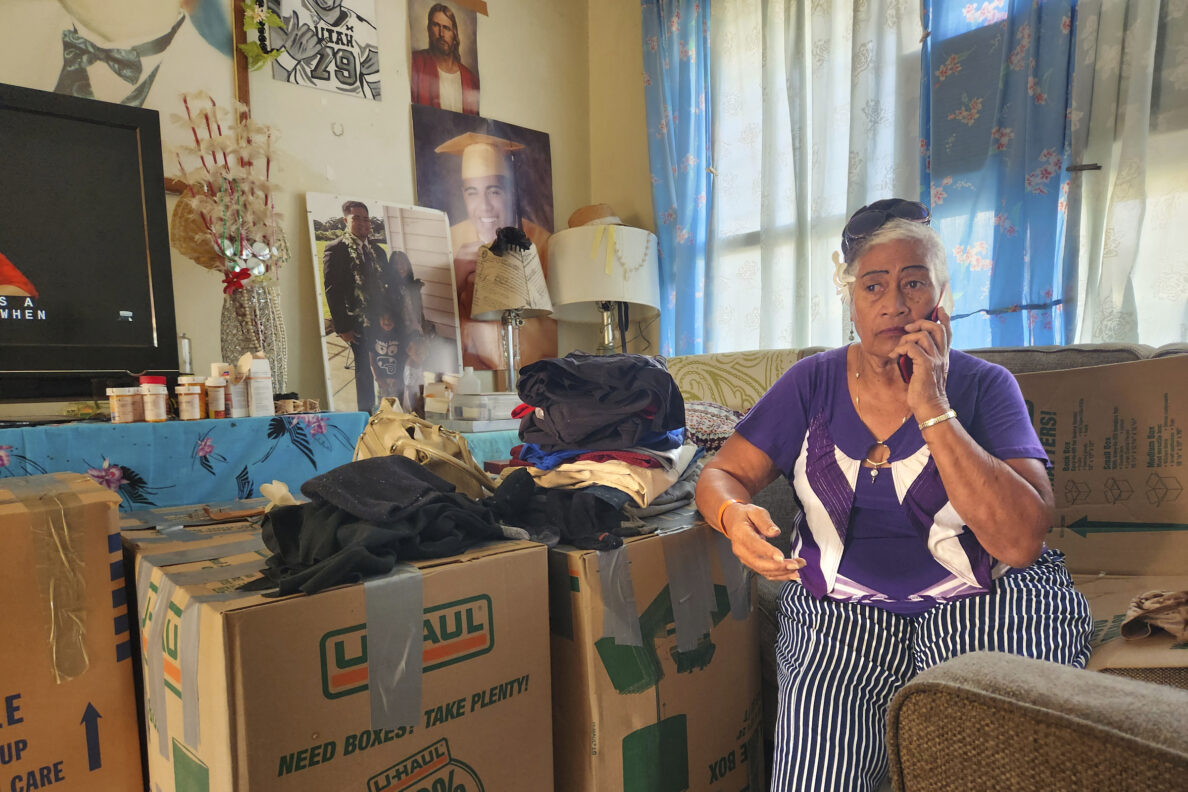
“Nobody call, I never get the key,” Momosea said. “They never come to tell me what to do. I never get any information about the place over there.”
A week after first talking to Civil Beat, she said a representative of either Michaels or Seneca had told her that she should use a housing voucher to find an apartment in the private market, an option she had not chosen and did not want.
Momosea sat on her couch surrounded by boxes she had packed for a move about which she still knows no details.
“It mess up my mind because I like to stay,” she said. “I don’t know what is here, after.”
Lost In Translation
Ouansafi said the housing authority has been consistent in meeting tenants’ language needs.
“No one gets information without translation. No meeting takes place without translators,” he said. “That’s not just in relocation, but every single transaction that we do, it has always been there. It’s the law, and we follow it and make sure that it’s done.”
But there are wide gaps in that consistency.
In a resident relocation plan available on a website with details about the project, Seneca said robocalls in Samoan, Chuukese and Tongan were made to residents before a March meeting that preceded the tenant survey. However, all 27 pages of that relocation plan — which says a “personalized” plan will be created for each tenant — exist only in English on the informational website.
The housing authority and Michaels did provide translated fliers — in Samoan, Chuukese, Tongan, Lao, Korean, Vietnamese and Chinese — for a July 11 community meeting. But residents said they had to create multilingual fliers themselves for other community meetings organized by or attended by the housing authority or Michaels. They also described the translation of documents and communications as spotty and largely inadequate.
The March 2024 survey found that 10 families needed interpreters, though residents told Civil Beat the number was considerably higher.
About a week after she was sent to visit the boarded-up apartment, the Kūhiō Park Terrace resident received a text in English from Seneca asking her to come to a meeting to discuss more housing options. She speaks Chuukese, a Micronesian language, and says she cannot read English.
A follow-up text, also written in English, said: “Please make sure to bring your translator with you.”
Aside from the fliers for the July 11 community meeting, Shek said that in months of working with Low Rise tenants, “I have not seen any translated documents regarding the redevelopment for any of our clients, nor have I heard of any from other tenants I have spoken with.”
Ouansafi said he would check whether the resident relocation plan posted online had been translated, adding that, “it should be translated or everybody should be aware that a translator can explain that to them.” As for the text asking the woman to bring her own translator, he said if that is the case, Seneca “will have severe consequences. I’m going to find out what’s going on. That is absolutely not acceptable.”
Civil Beat asked the housing authority for translated copies of key documents such as the relocation plan and the 90-day move-out letters. The agency supplied a March meeting agenda translated into Tongan, Chuukese and Samoan; and copies of the 90-day and 30-day notice-to-vacate letters translated into Samoan.
The agency supplied Lao, Tongan, Chuukese and Samoan versions of a Feb. 23, 2024, letter informing residents that the demolition of their homes had been approved by the U.S. Department of Housing and Urban Development but wouldn’t take place until they had been relocated.
It also provided the scripts for Tongan, Chuukese and Samoan robocalls reminding residents they needed to relocate, inviting them to a community meeting and asking them to text a number to make an appointment last May to discuss their housing needs.
The agency did not provide a translation of the relocation plan. Instead, it supplied a statement from Seneca that said, “of all 60 residents, (Seneca) received only one reported issue for interpreter services.”
The statement said that in that case an “advocate/translator” from Medical Legal Partnership objected to a Seneca interpreter and then refused to act as one himself. Later, it said, a replacement interpreter referred by Medical Legal Partnership did not respond in a timely manner.
The statement also acknowledged a Seneca staff member sent a text to a tenant requesting them to bring their own translator, but said that was because Medical Legal Partnership had said they would provide interpretation services.
Shek, of Medical Legal Partnership, called Seneca’s statement “replete with inaccuracies.”
She said the person would not act as an interpreter because he was an advocate, not an interpreter. Shek also said the nonprofit’s staff have told Seneca numerous times that it is the company’s legal responsibility to provide the interpreters.
“We only want what the residents have requested all along,” Shek said, “for the relocation and right-to-return process to be completed as legally required by contract.”
‘There Are Better Ways’
One option the housing authority has given Kūhiō Park Terrace tenants is to use a housing voucher instead, in which case Seneca would help them find an apartment for the first post-relocation year. In following years, finding landlords who accept the Section 8 voucher would be their own responsibility.
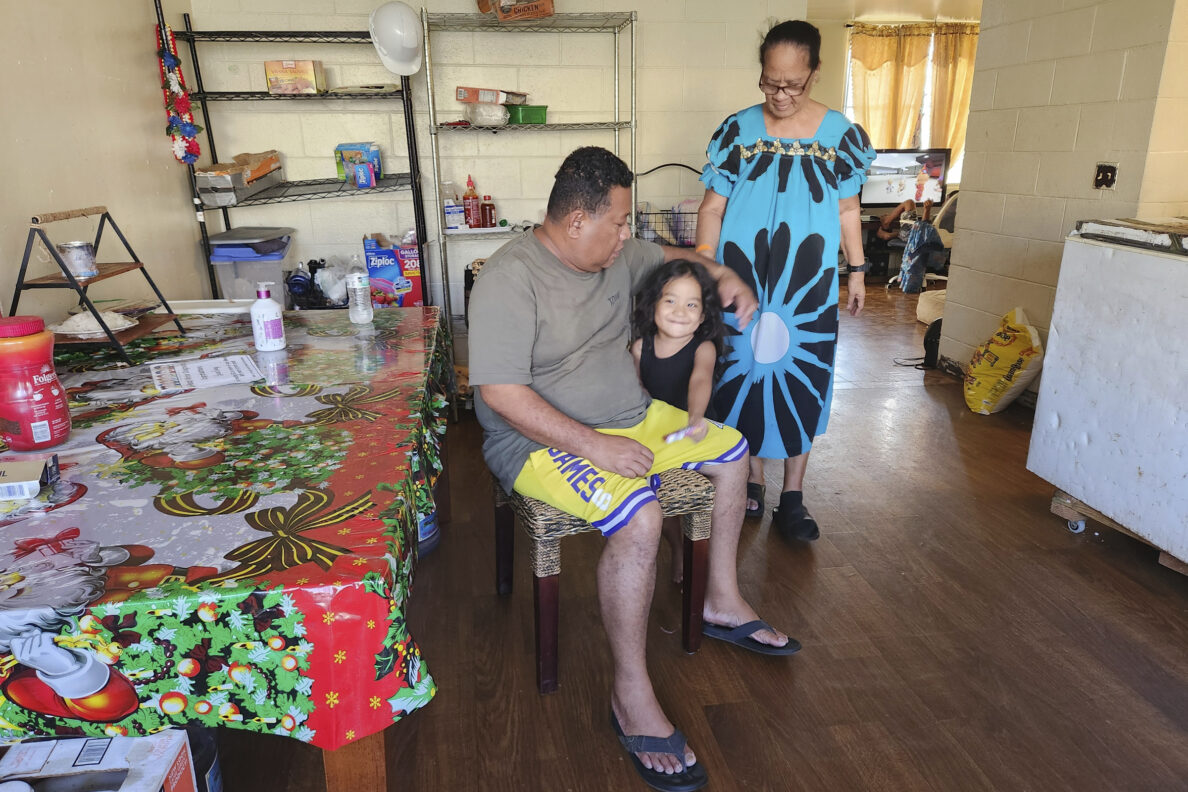
It’s an approach that comes with its own well-documented pitfalls, including the possibility of encountering landlords who refuse to accept vouchers, even though that’s not legal.
But Sarah Fahey, 46, chose that route because, she said, the other public housing options she was offered were all too far away, in West Oʻahu at least an hour by car from her 6-year-old daughter’s school.
Using the voucher, Fahey and her daughter moved to an apartment about two and a half miles from Kūhiō Park Terrace.
Although she was pleased with the help she eventually got moving, Fahey said she did have to trade her two-bedroom for a one-bedroom, where she and her daughter now share a bed.
That’s a problem, she said, because she has a spinal condition that makes sleeping painful, which is exacerbated by sharing a bed. Despite a note from her doctor attesting to her condition, Fahey said the housing authority’s Section 8 division ruled her ineligible for a two-bedroom.
“I’ll figure it out,” she said. “I’ve kind of got to. It’s just one of those kinds of things that’s not fair, and that’s about it.”
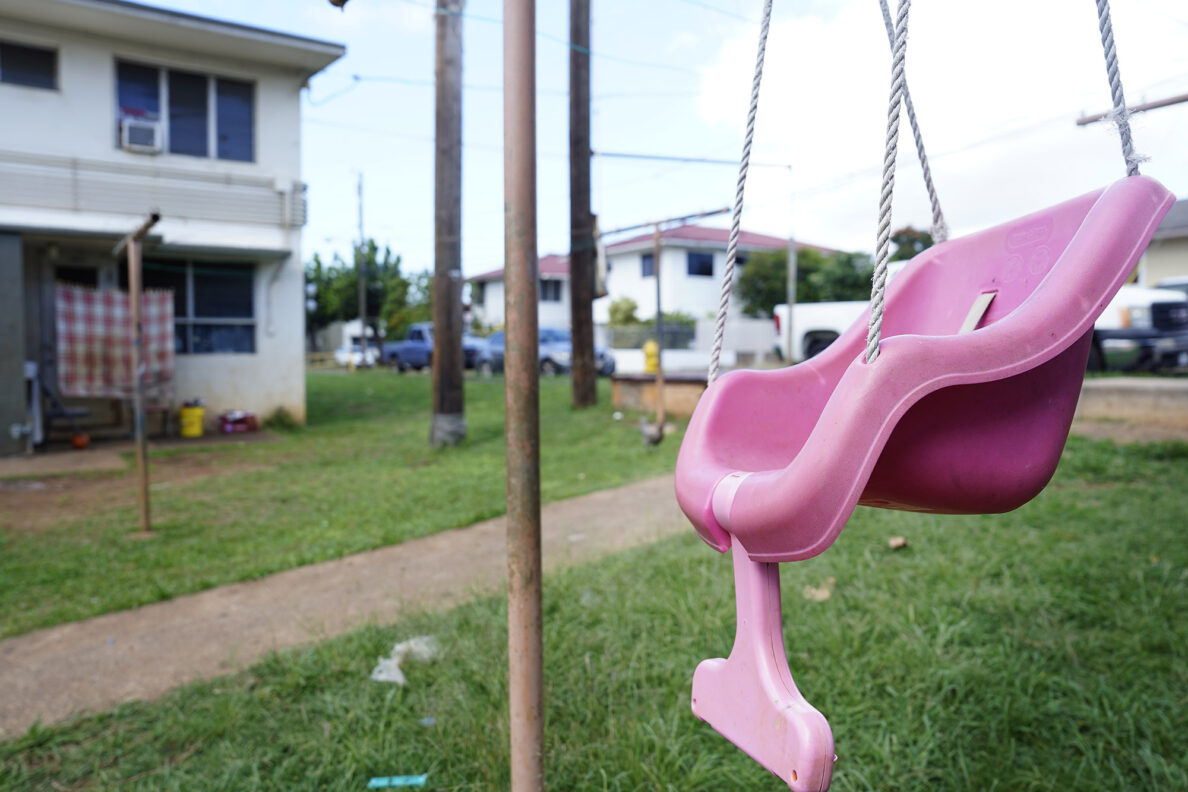
In Willets’ case, she said she told Seneca that she would prefer to remain in Kalihi, where her children attend school, and that her family — her children and her parents — need to stay together because she is a caretaker for her diabetic father and her mother helps out with her children.
Still, the housing authority sent her options of smaller apartments in Kapolei, ʻEwa Beach or another public housing project that she called a “calamity war zone,” where she felt her children might be unsafe because it is considered a rival to Kūhiō Park Terrace.
When they found an open three-bedroom at a different nearby housing authority property, Willets said Seneca representatives told her it wasn’t on their list so she couldn’t be placed there.
“It is mentally draining fighting against time in hopes to figure out a better solution to all the chaos,” she said.
Fatigued by the fight, her family is among 30 who have decided to go the Section 8 voucher route.
‘I Just Don’t Trust Them’
Following the first move-out letter, tenants repeatedly expressed concern about being able to return to Kūhiō Park Terrace once construction is done.
In response, Michaels posted a Google form in English on the project’s informational website, saying it would “help the project team maintain communication with relocated residents over the course of construction, and to be able to share about opportunities to return to the completed redevelopment project.”
According to the public relocation plan, the housing authority will give people the right to return as long as they stay in compliance with their leases elsewhere and still qualify for subsidized housing based on their income.
Ouansafi said the housing authority is offering that right even though it is not legally obligated to do so.
“I guaranteed in writing and verbally in the meetings that I’m going to give you a right of return,” he said. “The law doesn’t give it to you, we’re giving it to you and we’re putting it in writing.”
Federal law only requires housing authorities to offer displaced residents three choices for replacement housing, as the Hawaiʻi agency did, according to Popkin, the Urban Institute fellow – but it has become “a more common practice for housing authorities and developers to offer a right of return to tenants in good standing.”
When that return to Kūhiō Park Terrace could happen is still a question. Construction is projected to take about two years, although Popkin noted that many public housing redevelopments take longer than planned.
“Often,” she said, “it takes so long that people just don’t come back.”
Making it a genuine possibility, she said, requires a sustained, long-term effort.
“It’s hard to do,” Popkin said, “but they need to make a real commitment to tracking and staying in touch with the tenants so they can tell people, ‘Okay, it’s been five years. Are you still interested? Do you want to come look at it?’”
Residents, based on their experience with the relocation, are skeptical.
“I just don’t trust them,” said Lenda Tominiko, who lives in another part of the complex, set to be demolished in the project’s second phase.
‘It Was Nerve-Wracking’
Like other residents, Geraldine Mabida said she had told Michaels and Seneca her preference: She wanted to be relocated to Nānākuli, closer to other family members.
Instead, she was directed to an apartment complex across town in Pālolo Valley; a housing authority complex in ʻAiea that is to be torn down as part of the Ka Lei Momi project; and Kalihi Valley Homes, a mile from Kūhiō Park Terrace.
In the end, she chose Kalihi Valley Homes “because I knew that the clock was ticking. It just seemed like that was the only option I could choose.”
These days, Mabida says she isn’t unhappy there.
“I asked for a place outside where I can sit, you know, catch my breeze, plant some plants, plant some vegetables,” she said. “I have enough space that I could do that, and I can wash and hang my clothes, you know. So I am thankful for that. It was comparable to where I came from.”
But she added: “I guess you could say I’m out of the woods, but I still have my heart for the people there because I know what it feels like living there, counting down. The days are getting closer and you still don’t have a place to go. It’s nerve-wracking. It was nerve-wracking for me.”