Toxic Maui Wildfire Debris Heading Soon To Permanent Home
It took nearly a year and a half to remove the ash and wreckage from commercial lots and residential properties and move it to the Olowalu landfill. Now that debris is headed to Central Maui.
The 400,000 tons of toxic and charred wreckage of family homes, local businesses and tourist attractions affected by the Lahaina wildfire is expected to embark on its final journey in June, according to Maui County officials.
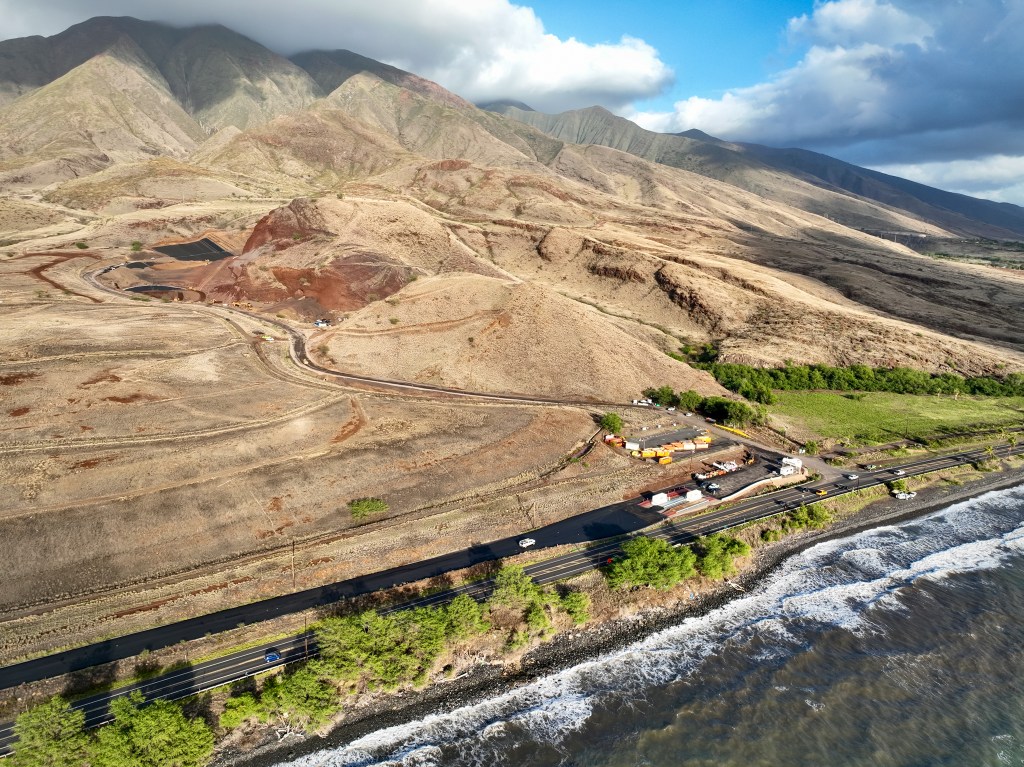
It’s a massive undertaking expected to take about five months, during which the debris will be loaded onto trucks to make the roughly 20-mile trip from the temporary holding pit above Olowalu Reef to Central Maui.
Maui County and the U.S. Army Corps of Engineers worked with the Federal Emergency Management Agency throughout the process of clearing the burn zone and determining where and how to transport the debris. The two agencies announced in a statement last week that March 17 was when they expect to complete the first phase of constructing a permanent disposal site at the Central Maui Landfill in Puʻunēnē.
It took nearly a year and a half for contractors working with federal, state and local agencies to clear ash and debris from 148 commercial lots and 1,538 residential properties destroyed by the August 2023 wildfire, according to county officials, with the final commercial properties officially cleared earlier this month.
That also clears property owners to apply for building permits.
“The completion of debris removal from Lahaina’s commercial properties marks another critical milestone in our community’s recovery,” Mayor Richard Bissen said in a statement. “This milestone not only paves the way for rebuilding businesses but also restores hope for owners, workers and families who depend on them.”
Environmental Concerns Linger
Locals have been expressing concerns about the current location of the fire debris in Olowalu ever since officials first proposed temporarily storing the toxic waste there.
The holding site about five miles south of Lahaina is a few hundred yards from the Pacific Ocean. The waters there are home to the country’s largest population of manta rays and a complex reef system known for its diversity of rare coral species.
Because many of the estimated 2,200 structures destroyed during the fire were older buildings, it was not a surprise when ash samples collected in Lahaina were found to contain elevated levels of arsenic, lead and other hazardous minerals.
Now those toxins will be on trucks headed across the island, from one landfill to another.
In a statement, a spokesperson from the Corps’ Recovery Field Office said the agency would “take the same care in transporting the debris” to the permanent disposal site as it did while transporting it to Olowalu. The ash and other waste will be secured using a plastic wrap system before being loaded onto trucks.
Once the debris arrives at the landfill, it will be encapsulated to ensure it remains in place and can shed stormwater, according to a statement from the county Department of Environmental Management.
In the joint statement released last week by the county and the Corps, Bissen said Maui officials remain committed to transferring the debris to the permanent disposal site “as quickly and safely as possible.”
“Our partnership with federal agencies is critical in making this happen efficiently, and we will continue to push for the swift completion of this process,” he said in the statement. “We made a promise to the Olowalu community, and we intend to keep it by prioritizing the responsible and timely relocation of the debris.”
What’s Happened And What’s Left To Do?
Late last year, the Maui County Council approved plans for the county to pay $4 million for approximately 79 acres in Central Maui to expand the landfill and make it the permanent debris disposal site.
The land — purchased by the county as part of an agreement with a subsidiary of the Honolulu-based construction company Nan, Inc. — consists of nearly 49 acres of a former quarry plus 30 acres still being quarried.
Over the coming months, the permanent disposal site will be built in Puʻunēnē and as of Feb. 27, construction of the base layer of the landfill was still on track to be completed by mid-March, county officials said.
A liner system will follow and is expected to be done in time to begin moving ash and debris to the new location in June.

Over about five months, county officials said that up to 50 trucks will transport debris to the permanent disposal site every day between 7 a.m. and sunset. In lieu of taking main roads, the proposed route would take advantage of a network of lesser-known roads once used to haul sugar cane to the Pioneer Mill.
The county said traffic controls will be set up and dust and air monitoring will be conducted to ensure workers and the public are safe.
One major task remains. Later this year, the Corps will coordinate with the U.S. Navy to remove concrete pilings along Front Street, the county said. Removing the pilings, intended to improve safety near the seawall and along Front Street, is expected to take about three months.
Civil Beat’s coverage of environmental issues on Maui is supported by grants from the Center for Disaster Philanthropy and the Hawai‘i Wildfires Recovery Fund, the Knight Foundation and the Doris Duke Foundation.
CORRECTION: This story has been updated to correct various details of the debris removal, including far more truckloads expected daily once the transfer begins.