

Trump Targets Federal Agency Managing $1.6B In Maui Recovery Funds
Maui County’s Office of Recovery said it had met with HUD officials Thursday to discuss the potential impact of staffing cuts.
Maui wildfire recovery efforts will grind to a halt if drastic staff cuts at the Department of Housing and Urban Development planned by the Trump administration proceed, Congresswoman Jill Tokuda said Thursday.
At stake is $1.6 billion in disaster recovery funding awarded to Maui County for new housing and infrastructure after the 2023 wildfires.
The funds are central to the island’s rebuilding and long-term recovery efforts. “This aid will be critical to building housing on Maui as quickly as possible,” Sen. Brian Schatz said when announcing them in January.
The federal Office of Community Planning and Development, a division of HUD, is charged with managing the award to the county, providing reimbursements based on receipts as work is completed. The administrator of Maui County’s Office of Recovery, John Smith, characterized concerns over potential delays in the grants at this point as conjecture.
But the Trump administration has targeted the federal office’s staff to be pared back by 84%, The New York Times reported Thursday based on leaked internal documents. That would reduce its current workforce from 936 to 150.
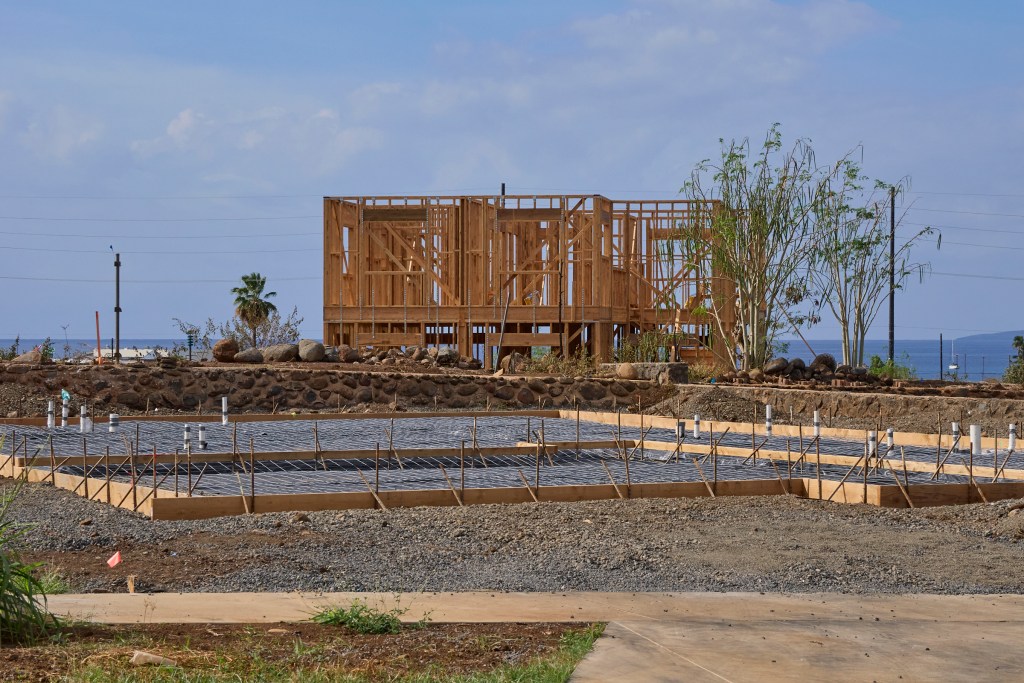
Those cuts would be a “death knell” for the major federal agency responsible for long-term disaster recovery Tokuda told Civil Beat from Maui, where she was touring the burn zone this week.
Even at current staffing levels, the reimbursement process takes years, she noted.
“We’re not talking about money that goes directly to the states,” she said. “There are approvals for receipts that are required, and then disbursements.”
The office is still managing disbursements for the Puna lava eruption and Kauai floods of 2018, Tokuda said. She called the new funds “critical for the rebuilding of Lahaina.”
At Maui County’s Office of Recovery, Smith said he was aware of the media report about the staff cuts and had met with the HUD officials Thursday. So far, he said, they have given him no indication that the county would need to revisit its timeline for recovery.
After receiving notice of the award in January, Smith’s office was in the process of preparing an action plan for release in March, which was scheduled to be followed by a public comment period.
The $1.6 billion for Maui was a portion of $12 billion in Community Development Block Grants in 23 states including Florida and North Carolina. It was the largest single disaster recovery appropriation ever by Congress.
Pages on the HUD website containing data and additional details of the block grants were offline Thursday.
Civil Beat’s coverage of Maui County is supported in part by a grant from the Nuestro Futuro Foundation.

