Windward Community College Expands Hawaiian Studies To Arizona Prison
The college launched a Hawaiian studies program at Halawa Correctional Facility in 2022, but found many students dropped out because they were sent to an Arizona prison.
Editor’s note: This story is published in partnership with Open Campus, a nonprofit newsroom focused on higher education.
When administrators from Windward Community College visited Saguaro Correctional Center last spring to explore the possibility of offering classes at the Arizona prison, they met with a dozen former students who had been transferred from Hawai‘i’’s largest men’s prison. Word spread quickly. The next day, the men presented administrators with a petition bearing over 200 signatures from others eager to enroll.
“We knew at that point that there was a demand for this,” said Windward Chancellor Ardis Eschenberg.
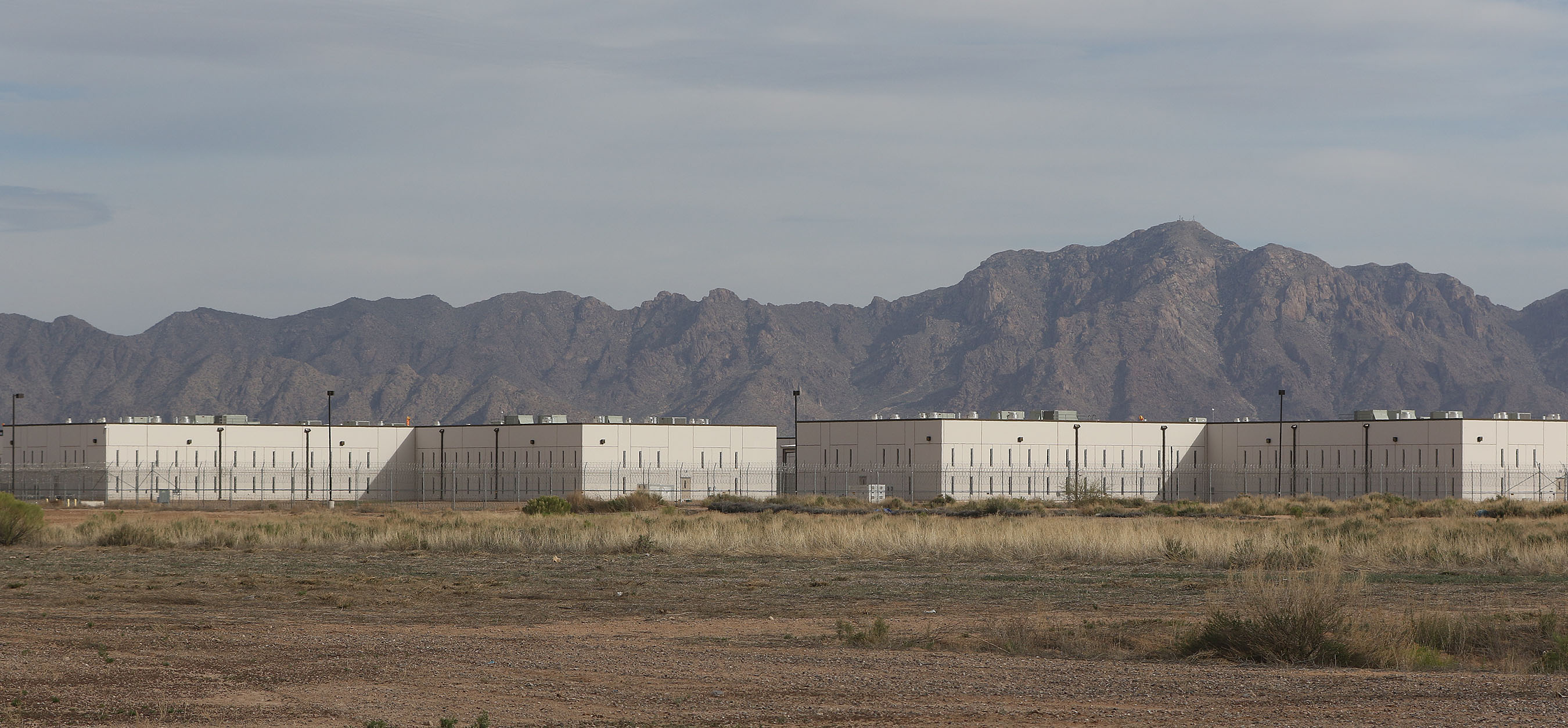
Windward, one of the University of Hawai‘i system’s 10 campuses, is now expanding its associate’s degree program in Hawaiian Studies to serve men incarcerated nearly 3,000 miles away in Eloy, Arizona. Saguaro, a private prison run by CoreCivic, houses more than 900 men from Hawai‘i, part of the state’s long-standing practice of transferring incarcerated people to the mainland due to overcrowding.
In January, Windward piloted its new program with a single course on Hawaiian history and culture in the context of the broader Pacific region.

Incarcerated students often face disruptions to their education, from lockdowns and staff shortages to restrictions on materials and inconsistent access to technology. Transfers between prisons in the same state are frequent occurrences, often ending students’ education due to waitlists, lost credits, and limited programming at their new location. Out-of-state transfers create even greater obstacles.
Every few months, Eschenberg said, a plane full of men is sent to Arizona with no notice from Halawa, the men’s prison on Oʻahu. “We don’t know in advance who it’ll be,” she said. “We lost about half of our planned class at one point. Then, if it’s during the semester, there’s no way for them to continue.”
“They’re being completely dislocated from their homes and from being able to be visited by the people they love,” Eschenberg said. “We’re reinforcing who they are, and even more so in Arizona, we’re creating this pilina — connection — for them, with their home.”
Students in Arizona were grateful to continue the education they left behind at home but also wondered if they would be able to finish if they were sent back to Hawai‘i, said course instructor William Cook.
The Hawai‘i Department of Corrections and Rehabilitation did not grant a request to interview individual students.
Cultural Connections
While most of the course is delivered via video, Cook traveled to Arizona to teach the first class session in person.
For students, seeing a Native Hawaiian instructor was meaningful.
“Just having someone in front of you that looks like you and talks like you and has similar stories helps you continue that spark to move forward and finish,” Cook said.
Cook, who has taught in both adult and youth facilities in Hawai‘i, described the experience of teaching in prison as deeply personal. “It’s a strange thing to see the guards and the prison population look very much like your community,” he said. “It can be kind of a heavy feeling, but I think that gives me a lot more inspiration to really do my best and give them the kind of quality education that I would want myself.”
Beyond providing education, the new program aims to address what Eschenberg calls the “cultural turmoil” many of the men experience when they are shipped to the mainland.
Native Hawaiians make up 40% of people incarcerated in Hawai‘i, despite being only 20% of the general population. About 35% of the men from Hawai‘i incarcerated at Saguaro are Native Hawaiian, according to the corrections department.
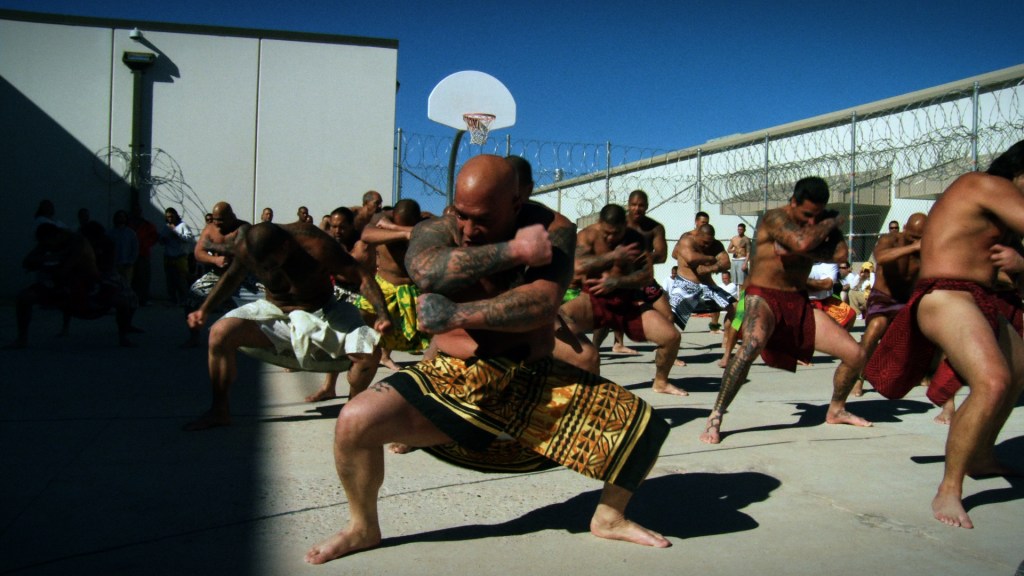
In addition to the academic program, Saguaro offers a number of other cultural programs. The men can take a Hawaiian culture class that includes language learning and hula. They also prepare for and perform twice a year in ceremonies marking Makahiki, an ancient Hawaiian New Year festival, according to a spokesperson for the Hawai‘i corrections department. A 2017 documentary, Out of State, explored how many incarcerated Hawaiians encountered their cultural traditions for the first time in prison.
Windward launched the associate’s in Hawaiian studies, known as the Pu‘uhonua program, at Halawa in 2022. Eschenberg said the program is an extension of the college’s mission as a Native Hawaiian-serving institution.
The Pu‘uhonua program has been primarily funded by a federal Education Department grant for Native Hawaiian-serving institutions. Windward is also a Second Chance Pell site and has applied to become an approved prison education program, which would allow incarcerated students to use federal financial aid. The Hawai‘i Legislature also funded three permanent staff positions to manage the program, Eschenberg said.
Windward has offered a psychosocial developmental studies certificate — featuring coursework in sociology, psychology, and social work — at the women’s prison on Oʻahu since 2016. Hawaiian studies classes are offered as electives, and the broader coursework is taught through a Hawaiian cultural lens.
A History Of Hawai‘i’s Out-Of-State Transfers
Transferring prisoners out of state is not uncommon, particularly for people who face safety risks in the state where they were convicted. Some incarcerated individuals request transfers to be closer to family. But in Hawai‘i, out-of-state transfers have historically been a tool to manage overcrowding.
At its peak in the early 2000s, more than half of Hawai‘i’s incarcerated population was housed in mainland prisons. Today, transfers continue, with decisions based on sentence length, misconduct, security level, and custody classification, according to a department spokesperson.
The practice is not unique to Hawai‘i. Emma Kaufman, a law professor at New York University, said several states house large numbers of incarcerated people out of state. In some blue states, such as Hawai‘i and Vermont, opposition to prison construction has led to reliance on out-of-state private facilities.
“They are incarcerating at a higher rate than their facilities can actually hold, so you end up having this curious situation where some of the more progressive states are actually some of the chief exporters of prisoners outside of state lines,” Kaufman said. “This is the perverse consequence of being unwilling to build prisons while not changing sentencing policy on the front end.”
Beyond disrupting coursework, out-of-state transfers can also make sentences longer. Kaufman noted that credits for completing educational programs—often used to reduce time served—don’t always transfer across state lines. “When you get transferred, it can literally make your sentence longer because you don’t have access to the programs that would reduce your time in custody,” she said.
The debate over new prison construction remains contentious in Hawai‘i. In December, Gov. Josh Green’s administration asked lawmakers to allocate $30 million to prepare for a new jail on Oʻahu, but a state oversight board has called for a pause, urging a focus on diversion programs instead.
Future Expansion
Eschenberg said Windward hopes to expand coursework at Saguaro in the future, potentially incorporating hands-on learning. She noted that the prison has a carpentry shop, which could allow for new programming such as Hawaiian wood carving.
There are currently 25 students in the program. While the program currently offers only one class at a time, Eschenberg said she hopes to expand course offerings in the future so that students can complete a full associate’s degree while incarcerated in Arizona.
In the long term, the college also hopes to create a seamless transition between its Arizona and Halawa programs so that if students are transferred mid-semester, they can continue their coursework without interruption. However, Eschenberg said logistical hurdles such as class size limitations and scheduling constraints mean this goal will take time to implement.
In the meantime, Windward is bringing Hawaiian culture to Arizona. “These men are being removed from their homeland where they can practice their culture and see the mountains … and moved to a desert,” Eschenberg said. “They’re removed from their families and their culture—so that’s what this is trying to address, providing a connectedness (to home).”