Proposed Bills Would Leave Few Options For Where Oʻahu Puts Its Next Dump
Westside residents want the island’s trash to stop coming to their community, but potential new restrictions could make it difficult to place a city dump anywhere else.
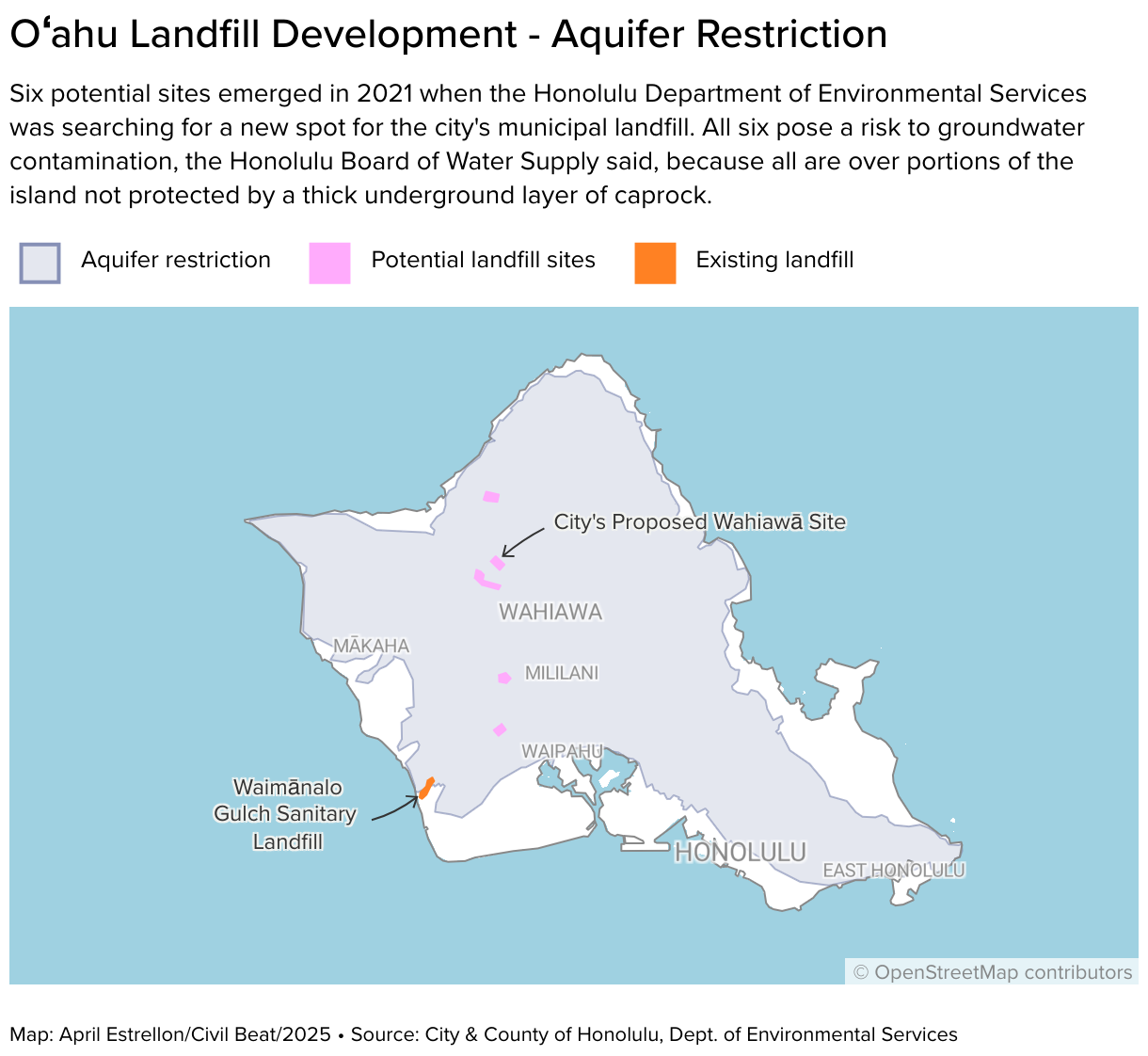
The city’s plan to put a landfill above a Wahiawā aquifer could be blocked by state lawmakers in the coming months, providing one fewer pathway for West Oʻahu residents to see the dump leave their side of the island.
The mayor’s office has argued it has little choice besides Wahiawā — a location that has generated significant pushback from Oʻahu residents worried about groundwater safety — because state restrictions remove much of the usable land on the island from consideration.
Lawmakers have introduced numerous proposals this year to address the controversy, but the only bills to receive serious consideration are ones aimed at blocking landfill development over significant groundwater sources, further restricting where the city can place its trash in the future.
Only one of the groundwater safety bills would loosen other existing restrictions to open additional locations for landfill development.

The result could be a deadlock in which the city has to keep its municipal landfill at Nānākuli’s Waimānalo Gulch, where it has operated since 1989 and is scheduled to close in 2028 per its permit with the state.
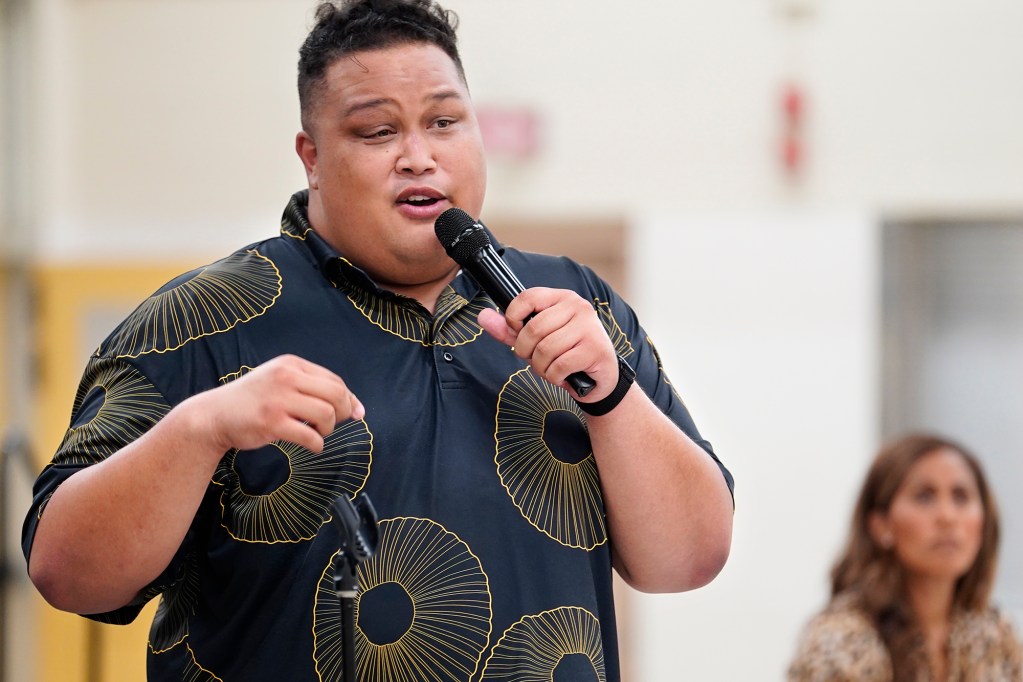
“It would be the kiss of death that extends the life of Waimānalo Gulch,” Nānākuli Rep. Darius Kila said, referencing restrictions that would limit where Oʻahu’s next landfill can go. “Because then you have nowhere to put it.”
Buffer Zones Leave Few Options Already
Mayor Rick Blangiardi has promised not to put the city’s next landfill along the Waiʻanae Coast, calling it a matter of environmental justice since the Westside has long hosted the island’s two current landfills. But his other options are uncertain.
State lawmakers enacted a half-mile buffer zone in 2020 separating landfills from residences, schools and hospitals in part to force the closure of the private PVT Landfill, also in Nānākuli. PVT holds construction and demolition waste and many nearby residents worry that the dump negatively impacts their health. The city has struggled to find a suitable location outside of the buffer zone.
If the buffer zone remains the same and landfills are prohibited above significant aquifers, spokesperson Ian Scheuring said in February, the landfill would have to stay in Nānākuli.
“That’s really going to be the only choice legally that we have left,” he said.
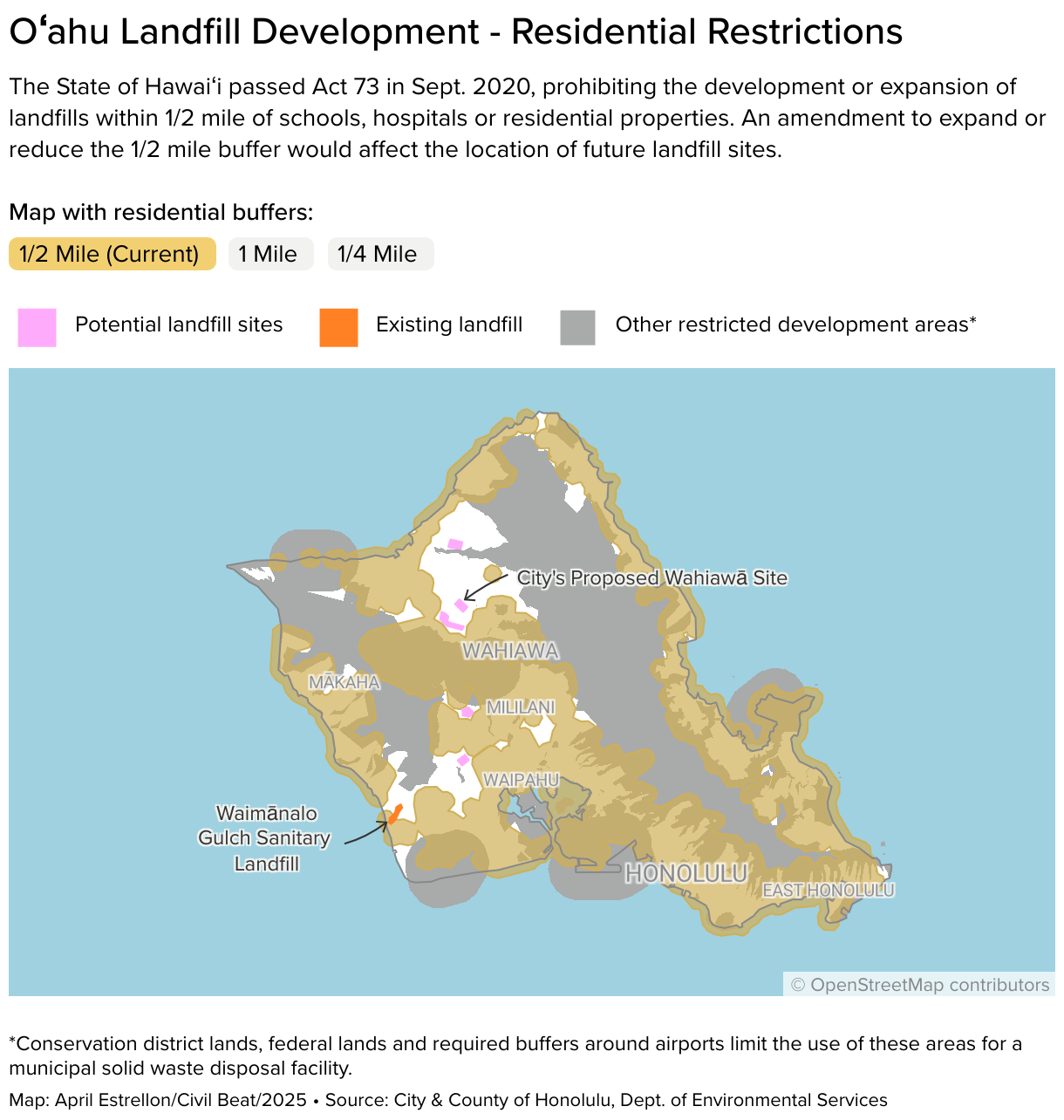
At the start of the session, several lawmakers proposed shortening the buffer zone from a half-mile to a quarter-mile, which, if combined with a less restrictive prohibition on conservation zones, would open a few locations around Kailua, including at Kapaʻa Quarry.
Those bills didn’t get hearings, but in late February Wahiawā Sen. Donovan Dela Cruz amended Senate Bill 446 to include shortened buffer zones of a quarter-mile. That bill’s prohibition against placing a landfill where it can contaminate groundwater also uses a stricter metric than the Honolulu Board of Water Supply’s No Pass Zone, according to the Hawaiʻi Department of Health, blocking more of the island from landfill siting.
Other landfill bills still advancing include House Majority Leader Sean Quinlan’s, which prohibits landfills over significant aquifers, along with another bill from Dela Cruz that prohibits landfills over certain classes of agriculturally zoned land.
Rep. Mike Lee, who represents Kailua, said his community has already hosted its share of landfills. He hoped to extend the buffer zones to 1 mile, fortifying his district from having to host the next one, but his bill to do so died Friday when it wasn’t scheduled for a hearing with the House Judiciary and Hawaiian Affairs Committee.
“We take on a burden of tourism at our community’s expense. We pay for a rail that we will never see, because it’s the right thing to do. And we don’t mind doing our part,” Lee said, adding that he thinks all districts do their part in some way. “But in the name of equity — given our history of landfills — District 50 feels like it’s more than done its part.”
Some Westside legislators are skeptical about shortening buffer zones. Sen. Samantha Decorte, who represents the entire Waiʻanae Coast, said she’s worried shortened buffer zones could make other communities in her district more susceptible to hosting landfills despite the mayor’s promise not to put one there.
Kila said he supports extended buffer zones to protect any community from potential health threats. But he thinks a prohibition against placing landfills over significant aquifers would unduly burden the city.
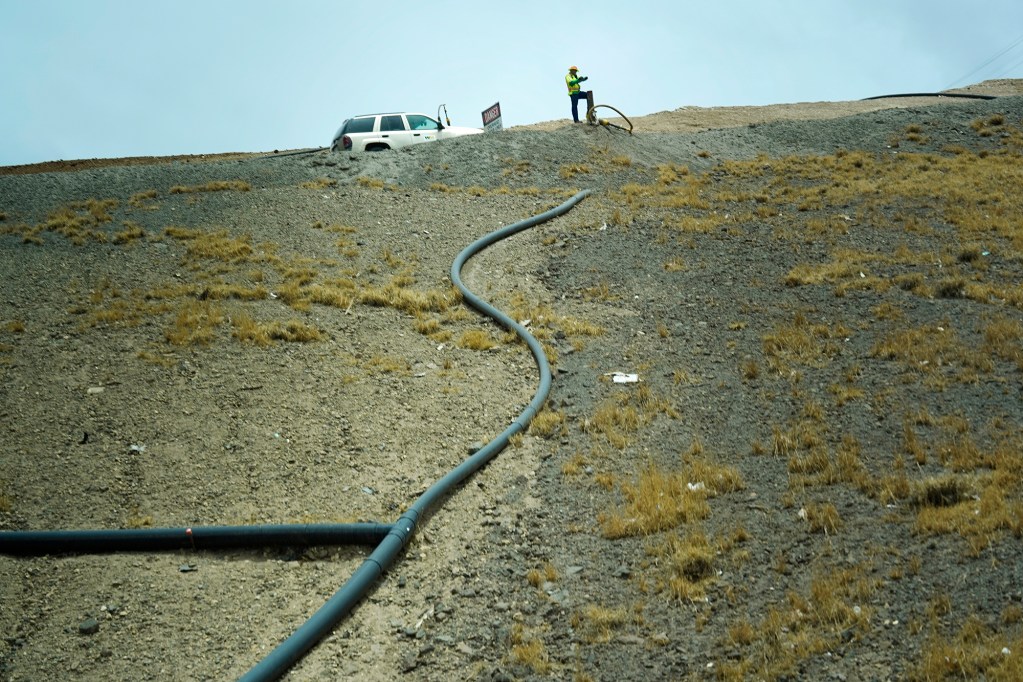
The city plans to place a double liner under the landfill to prevent contamination from liquid leakage called leachate. A pump would then transport the leachate to a wastewater treatment plant.
The current landfill at Waimānalo Gulch has one layer of liner under it and, in Kila’s view, that has worked fine so far in his district.
“We definitely need to be stewards of our communities, our backyards, our constituents,” Kila said. “But now when we’re doing legislation like this, it only ties the hands of the county more.”
Another Solution Needed In The Future
Any legislator with a proposed landfill site in their district is going to fight it, Quinlan, the majority leader, said. Quinlan represents the district where the mayor’s proposed site is.
In Quinlan’s case, other lawmakers have rallied behind his community’s opposition. They worry the landfill could irreparably contaminate an underground aquifer despite the city’s intention to prevent this, and that the path of contamination could be hard to predict given the labyrinth of underground waterways.
“It’s the fear of our water supply being poisoned again,” Quinlan said, referencing the recent Red Hill water crisis after Navy jet fuel contaminated military families’ drinking water. “That’s what I’m hearing from my fellow legislators.”
Some residents and lawmakers think the military should provide a place for the city’s next landfill in light of Red Hill. But Blangiardi’s attempts to negotiate this failed, and lawmakers are skeptical President Donald Trump’s administration would be willing to change its mind.
“Look at the federal lay of the land now,” Kila said. “The time to have done it was before this election.”
Scheuring said the city reached out to leaders at U.S. Indo-Pacific Command in January and they reiterated their denial of the city’s request, citing two years of evaluating options between 2022 and 2024.
Sustainability advocates argue that a long-term solution is to reduce the amount of waste residents generate, including through discouraging wasteful packaging as part of a concept called extended producer responsibility. The Department of Health would be required to study this under House Bill 750, introduced by Rep. Nicole Lowen.
Kila agreed. He said landfills are the current tool for managing waste, but they don’t have to be in the future.
“Right now, we’re having very surface-level battles on the location of a landfill,” he said. “But we haven’t even delved further into the concept of: How are we going to do waste and trash management moving forward?”
Civil Beat’s community health coverage is supported by the Atherton Family Foundation, Swayne Family Fund of Hawai‘i Community Foundation, the Cooke Foundation and Papa Ola Lōkahi.