

Hawaiʻi’s Smallest Elementary Schools Could Face Closure
The education department is looking for ways to reduce costs as enrollment continues to decline statewide.
For more stories like this, sign up for the Morning Beat, our free daily email newsletter that keeps you up to date on Hawaiʻi news.
School education leaders are bracing for controversy and hard conversations as the Hawaiʻi Board of Education starts the lengthy process of closing under-enrolled schools for the first time since 2011.
Over the past 20 years, enrollment in Hawaiʻi public schools has dropped from nearly 176,000 to 152,000 students, a 13% decrease. The department predicts it will lose an additional 14,600 students by the end of the decade.
But declining enrollment hasn’t impacted all schools equally. Some schools, like Keolu Elementary in Kailua or Kalihi Elementary in urban Honolulu, saw their student population drop by more than a third between 2014 and 2024.

Now, state education leaders are looking at closing schools with low enrollment that may struggle to provide quality education to their kids or need significant upgrades to their facilities. The Department of Education will present its plans for studying the consolidation of schools to the board on Thursday.
Consolidating schools is a lengthy and controversial process. The education department first needs to identify which schools could be good candidates for closure and would not finish its proposed study until the end of the year, according to a presentation submitted to the board.
Following the study’s completion, the department would still need to present its findings and receive community feedback before the board decides which schools to close. The final vote could take place in spring 2026.
The department did not say how many schools will be included in the consolidation study. This year, 34 schools enrolled fewer than 250 children, the estimated number of students needed to adequately fund a school.
Board Chair Roy Takumi doesn’t expect the decision-making process to be easy. People have a strong attachment to their neighborhood schools, but it’s also important to evaluate the financial costs of maintaining and repairing campuses when they’re not operating at full capacity, he added.
“Closing a school isn’t like closing your neighborhood Starbucks,” Takumi said.
The department plans to target elementary schools where enrollment is less than two-thirds of the school’s maximum capacity and significant facility improvements are needed. If nearby schools can absorb students from the small elementary school, the cluster of campuses would be prioritized for a consolidation study.
The education department would also consider other factors, including the school’s academic achievement, the retention of teachers and students’ transportation needs, according to its upcoming presentation. Maui schools will be excluded because the island’s student population is still in flux after the wildfires, the department said.
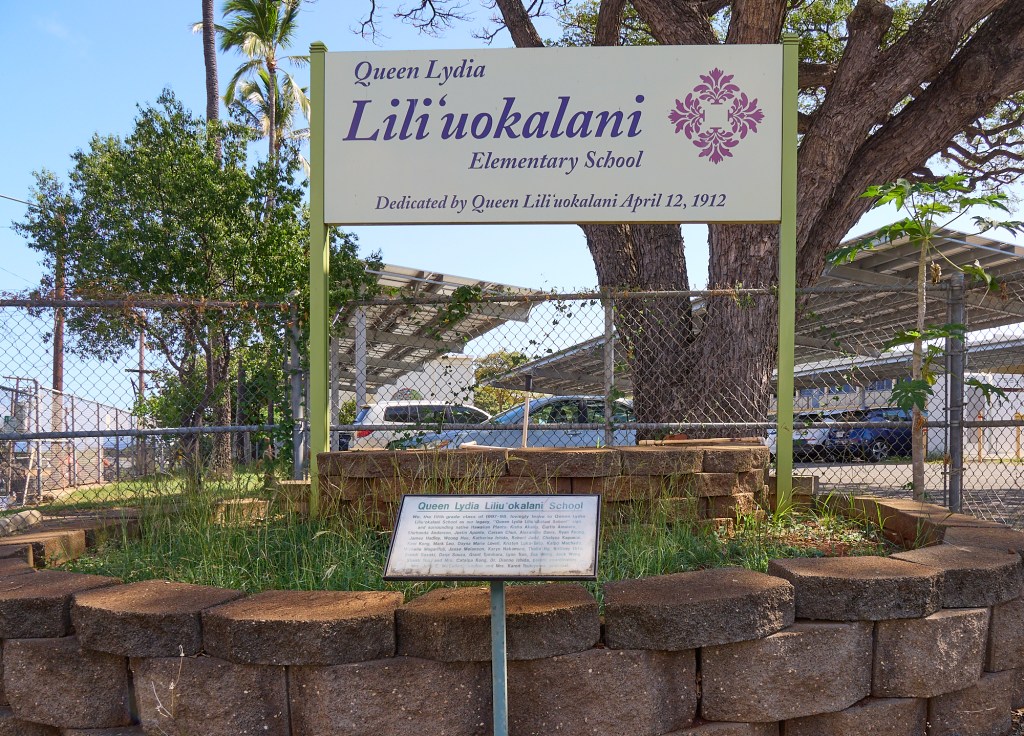
A 2017 study estimated that roughly 25 schools would be operating at less than two-thirds capacity by the 2021-22 school year, although the report significantly overestimated the state’s projected student enrollment.
Marlene Zeug, who authored a study on the small schools Kaʻaʻawa and Waiāhole Elementary in 2022, said closing schools can be a difficult and emotional process. With Hawaiʻi’s rising cost of living, fewer families are moving into older communities and sending their kids to local schools, she said.
But the remaining families take pride in sending generations of children to the same school, she added, and parents appreciate the individualized support their kids receive in small learning environments.
“There’s a legacy they’re fulfilling when they go to those schools,” Zeug said.
Shrinking student populations mean less money for schools, since their budgets are largely based on enrollment numbers. The state appropriated $6 million to supplement the budgets of small and geographically remote schools in the 2024-25 academic year, and the department plans to continue the funding boost next year, said spokesperson Nanea Ching.
Principals have estimated that small elementary schools need annual budgets of at least $1.38 million to adequately fund basic needs like staff positions, classroom supplies and resources for teachers. Entering the 2023-24 academic year, eight elementary schools, all of which enrolled fewer than 200 students, had budgets under this threshold.

On Molokaʻi, Kimberly Kaai is running Maunaloa Elementary on just over $900,000 this year. The school enrolls 59 students in grades pre-kindergarten through six.
The school combines its kindergarten and first grade, as well as its fifth and sixth grade classes to save money. Kaai said she’s not sure if her school will be included in the department’s consolidation study, adding that the nearest elementary school is 17 miles away and a 30-minute drive from Maunaloa Elementary.
At Kaʻiulani Elementary, Principal Bebi Davis said numbers don’t tell the whole story. Her school enrolls just under 250 students, but Davis is hoping to bring in more children next year by adding a public preschool classroom.
Davis said she understands the financial challenges of keeping small schools open, especially when buildings are older and need more repairs. But she’s worried closing her school and consolidating with another campus may make it more difficult for students to attend class, since not all of her families have cars and currently walk their kids to Kaʻiulani from the nearby housing development.
“We have to be thoughtful at how we look at not just funding, but also safety and access for kids,” Davis said.
Civil Beat’s education reporting is supported by a grant from Chamberlin Family Philanthropy.

