No Charges For HPD Officer In 2024 Shooting Death Of Homeless Man
Prosecutors said officers tried to de-escalate the situation and use non-lethal force before shooting Brandan Maroney.
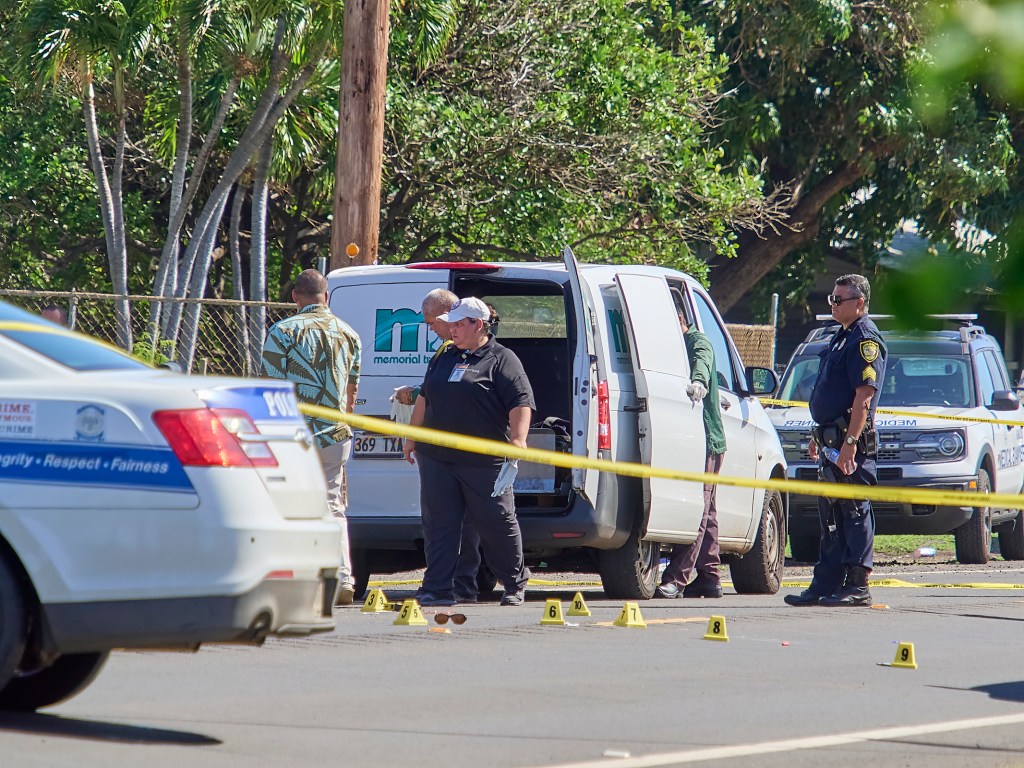
A Honolulu police officer who shot and killed a homeless man in Mākaha in 2024 will not face charges, prosecutors announced on Thursday.
Honolulu Police Chief Joe Logan told reporters shortly after the shooting that 35-year-old Brandan Maroney had been armed with a knife and charged at police officers. At the time, it was unclear whether Maroney was holding the knife when he rushed the officer who fired the fatal shots.
At a press conference on Thursday, prosecutors shared new details, including that Maroney didn’t pull out the knife until several moments after officers approached him and that he was not holding the knife when he was shot.
But Honolulu Prosecuting Attorney Steve Alm said the officer’s use of force was justified and described the police response as a textbook example of de-escalation.

It’s exceptionally rare for an officer to face prosecution for a fatal shooting on the job. The officer who shot Maroney was temporarily placed on leave after the shooting. The other officer involved in the incident returned to full duty. Neither officer has been identified and a spokesperson for the prosecutor’s office said the agency doesn’t typically name police involved in fatal shootings.
Maroney’s mother, Dana Maroney, said she was not informed of the decision not to charge the officers involved in her son’s killing. Alm said that informing the victim’s family of prosecutorial decisions isn’t the department’s protocol in officer-involved shootings.
New Details About The Fatal Encounter
On the morning of Jan. 25, 2024, two officers approached Brandan Maroney, 35, as he was walking barefoot and dragging a black suitcase full of his belongings along Farrington Highway in Mākaha. His mother has said she thinks he was in the middle of a mental health crisis.
Officers tried to persuade Maroney to step out of the road, according to body camera footage shown at the press briefing Thursday. After a few minutes of back and forth, Maroney pulled a pocket knife out of his pocket and flicked it open. Weapons drawn, officers yelled at him to drop the knife.
“Seriously, you want to get shot?” one of the officers said.
“If you want help, drop the knife so we can help you,” the officer said a few seconds later.
“Why would I drop it?” Maroney said. “I don’t trust you guys to protect me.”
The back and forth went on for several minutes before one of the officers fired her Taser, and Maroney dropped to the ground, throwing the knife several feet away.
As the other officer picked up the knife, Maroney got up. The female officer fired her Taser again, but it had no effect. Bodycam footage shows Maroney rushing toward the male officer who had picked up the knife, attempting to grab him.
That’s when the male officer fired two shots, sending Maroney staggering and rolling onto the hood of the police car.
The toxicology report said Maroney had methamphetamine and marijuana in his system at the time of his death.
Prosecutions Are Rare
Honolulu police have shot and killed 37 people since 2010, according to Civil Beat’s database of deadly encounters with police.
For decades, police in Hawaiʻi had been left to investigate themselves when a civilian was killed. Each time, it led to the same result: The shooting was deemed legally justified.
When Alm entered office in 2021, he pledged that the prosecutor’s office would conduct an independent investigation into every fatal police shooting. Under his lead, prosecutors filed criminal charges against officers involved in the 2021 fatal shooting of 16-year-old Iremamber Sykap, but a grand jury declined to indict the three officers, and a district court judge ruled there wasn’t sufficient probable cause for a trial.
That case remains the only incident on Oʻahu in at least three decades where criminal charges were filed against officers in a fatal shooting.
Statewide, there have been 79 police killings and in-custody deaths since 2010.
Deadly police encounters are more likely to involve a knife or other cutting instrument in Honolulu than in the rest of the country. Like Maroney’s killing, about a quarter of cases involved a knife, according to a report by researchers at the University of Hawaiʻi Mānoa using data from 2010 to 2022. About 1 in 5 of all use-of-force cases in Honolulu involved someone facing a mental health crisis.
In April 2021, HPD changed its use-of-force policy, in part to emphasize de-escalation. “When reasonable and safe under the totality of the circumstances, officers shall attempt to de-escalate and stabilize with time and space so that more options and resources might be made available,” the policy states.
Mental Health Struggles
Brandan Maroney had a history of mental illness and was homeless at the time of his death, said his mother. Shortly after her son’s death, Dana Maroney told Civil Beat that he had cycles of deep depression and mania, as well as auditory hallucinations.
He had been living in encampments for about three years, a friend said at the time. About a month before his death, he was cited for having a tent in a public park. He was killed four days before a court hearing. He also had several convictions on drug charges, according to court records.
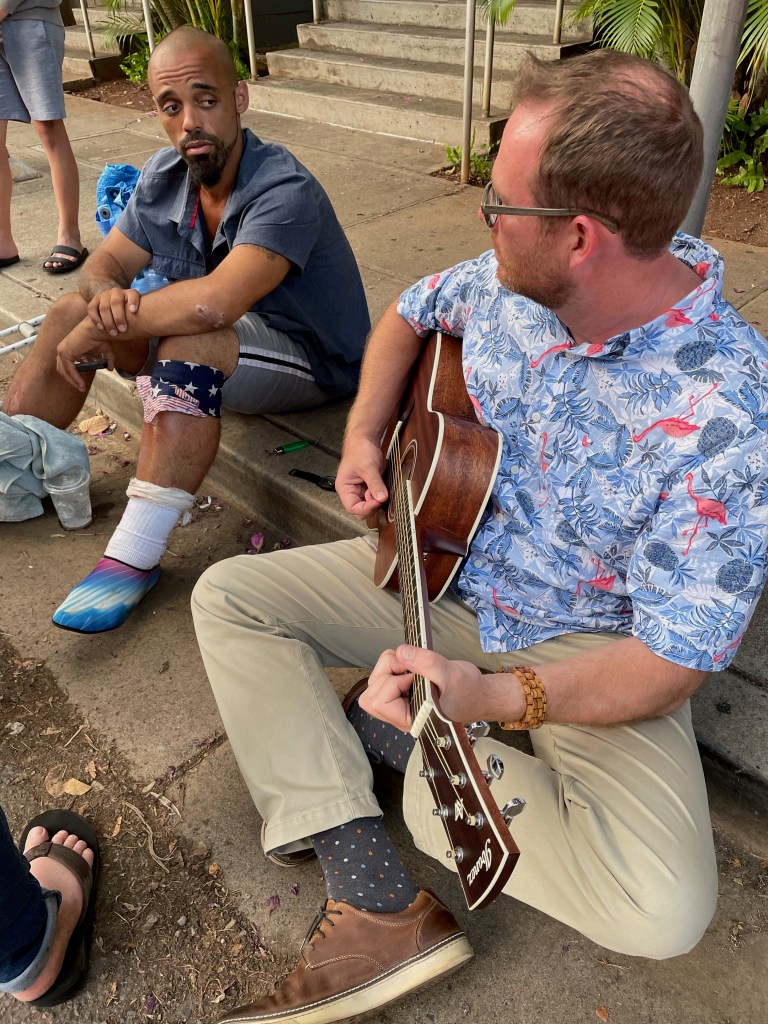
Friends and family described Maroney as a kind man who always looked out for other people experiencing homelessness in the community.
After he died, his mother heard from people all over the Westside who had known her son. “So many told me how much Brandan had helped them or how nice and respectful he was to the aunties and uncles,” she said. People told her he never expressed any desire for violence.
After his death, someone who knew Maroney told police that he had recently told her he wanted to commit suicide by cop, according to Alm.
“Suicide by cop is terribly unfair to the officers. It’s the tragedy that Mr. Maroney got killed, but him putting these officers in that position is inexcusable,” Alm said.
The department has taken steps to combat this in recent years. Officers can take a weeklong class in crisis intervention led by the Hawai‘i Health & Harm Reduction Center and the local chapter of the National Alliance on Mental Illness. But participation is voluntary and as of December, only 247 HPD officers — about 15% of the force — had completed the training, according to NAMI Hawaiʻi.
The mere presence of police can escalate a situation, particularly when mental health is a factor, said Nicholas Chagnon, a sociologist at the University of Hawaiʻi West Oʻahu.
“Police are the hammer in the toolbox of government,” he said. “This is a mismatch between the tools that we’re applying in the problem that we’re trying to fix.”
In 2021, Honolulu launched an effort to divert nonviolent, homeless-related calls away from police. HPD now works with the city’s Community Outreach Response and Engagement team, which includes social workers, community health workers and EMTs.
However, Emergency Medical Services Director Jim Ireland told Civil Beat last year that the team mostly does proactive work and would not typically respond to calls involving someone with a weapon.
“The police have to respond right in the moment. I think it would be great if there were funding to have a mental health person at every station able to go out on every call. It might make a difference. Who knows,” Alm said. “It certainly sounded like they tried to reason with him.”
Maroney’s mother said she hasn’t heard from HPD or prosecutors in the year since her son was killed.
“Brandan should not have been killed that day,” she said.
She said she requested her son’s autopsy twice but still hasn’t received it.