Attorney Shortage Undermines Court-Ordered Mental Health Treatment Program
There is effectively one attorney on Oʻahu handling all the petitions for getting severely mentally ill people treatment through a court order. The mayor says that needs to change.
It’s the people who didn’t get help in time that haunt Connie Mitchell. Like her former classmate, who was mentally ill and living on the street when she developed sepsis from an infected wound.
Social workers from the Institute for Human Services, where Mitchell is the executive director, were trying to get the woman into court-ordered mental health treatment through the Assisted Community Treatment program, a state initiative to help people who are so mentally ill that they may not recognize they need help.
She was found unconscious in a bathroom in Waikīkī before they could file a petition with the court.
“She passed before we were able to do it,” Mitchell said. “That’s hard.”
The Assisted Community Treatment program allows petitioners to get a court order to force a person into treatment for mental illness. But the program’s success has been severely undercut by the lack of attorneys willing to take on these cases.
Currently, there is effectively one person on Oʻahu who shoulders the vast majority of about a dozen cases a year, at most. Cases stretch on for months.
Guardians ad litem — private attorneys appointed by a judge to represent the person’s best interests — are mandatory under state law for these Assisted Community Treatment petition cases. But the compensation is low compared to what these attorneys would make as private counsel in family court, and the rates haven’t been increased since 2007.
To address the problem, the Legislature is considering increasing how much those lawyers get paid to $150 an hour.
“Sometimes Assisted Community Treatment is underutilized, I believe, because it’s misunderstood, or it’s too cumbersome, or it’s not glamorous enough for an attorney to get involved with,” said Christopher Thomas, an attorney who files petitions on behalf of IHS to kickstart getting people court-ordered treatment. “But I can tell you this, the work … is life changing.”
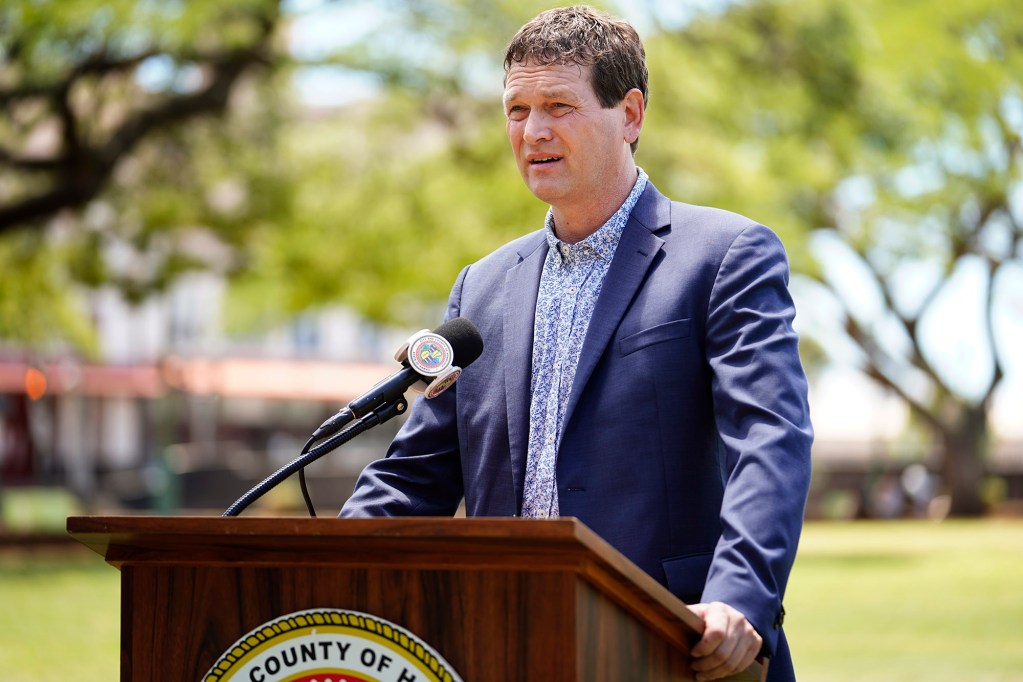
At a press conference on Tuesday, Honolulu Mayor Rick Blangiardi urged attorneys to step up and add their names to the list. The mayor’s office considers more guardians ad litem critical to scaling up the Assisted Community Treatment program and fulfilling the administration’s agenda on homelessness.
“We’re saying five. I’m hoping we get 25,” he said. “Quite honestly, we think there’s so much more that could be done.”
Help For The Chronically Homeless
The Assisted Community Treatment program launched in 2013 to get severely mentally ill people who refuse treatment into outpatient care and medicated. To qualify, a person has to have a mental illness or substance abuse problem that impairs their judgement or ability to care for themselves, a history of noncompliance with treatment and the potential to be a danger to themselves or others.
Often, those in the program also are chronically homeless, sometimes cycling in and out of the state hospital or jail.
Anyone from family members to staff at the state hospital can petition a judge to have someone involuntarily enrolled in mental health treatment through the program. IHS, a nonprofit that works with people experiencing homelessness, files the most petitions on behalf of the unhoused.
A judge then appoints a guardian ad litem to steer the case through the court. Often working in partnership with staff from IHS, these attorneys meet with the person and review any documentation about their medical history, past mental health treatment or medication.
“It’s really reviewing whatever information has been given to them and determining whether they think the person might benefit from the medication,” Mitchell said. “They’re trying to decide whether the person has the capacity to understand the ramifications of their decisions, and in particular the decision not to take medication.”
Typically, guardians ad litem spend about 10 to 15 hours on a case, but each case can stretch on for two to five months before people get treatment, according to Thomas.
The program has so far fallen far short of the need. Family court judges have only granted court-ordered treatment in about 50 cases to date, according to numbers from IHS, which brings forward the majority of petitions. The Attorney General’s Office can file petitions as well, but Ian Tsuda, the deputy attorney general who oversees those cases, didn’t provide a number of cases.
Last year, the First Circuit Family Court handled about a dozen cases involving an Assisted Community Treatment petition. It’s an increase from previous years when there were six cases in 2023 and just two in 2022, according to Mitchell.
But that’s nowhere near meeting demand. About 300 to 400 people on Oʻahu could benefit from the program, said Ryan Wilson from the mayor’s office.
Mitchell has asked her team to start the petition process for two people a week. But without more guardians ad litem to take on the cases and usher them through the court process, that’s where the urgency stops.
“It’s something that they just have to somehow fit into other things on their docket,” she said. “It could be delayed quite a bit.”
All the while, people are usually living on the streets. Some have been hit by cars, developed difficult to treat wounds or been the victims of crimes, Mitchell said. Others, like her former classmate, have died before receiving help.
“What kind of system is that that allows that to happen?” she asked.
Low Rates Have Not Helped
For the first few years of the program, Assisted Community Treatment petition cases were handled by a public defender. That didn’t work. Public defenders are required to act in their client’s wishes, which meant if the person declined treatment, the public defender’s hands were tied.
In 2021, the task of representing people in these cases was given to guardians ad litem. These attorneys, who are common in child welfare cases, are charged with acting in the best interests of the person.
That made it easier to get people treatment, Mitchell said.

But the added work didn’t come with added compensation. Guardians ad litem make $60 an hour for out of court work and $90 an hour when in court. Compare that with a private attorney who can bill $250 to $450 for a different case in family court.
House Bill 398 would increase the rate to $150 an hour and set the maximum compensation at $5,500 – a $2,500 increase over the current cap. Lawmakers from the House and Senate are set to work out differences in their proposals. So far, the House has appointed its conferees; if the Senate does not do the same, the bill could die.
Blangiardi wants to see the bill pass. “It should be a no-brainer,” he said. “It’s a proven, worthwhile solution … Why would they say no?”
For Mitchell, even the program’s success stories are tinged with the feeling that more could have been done if the process moved faster.
There’s one man in particular. He had been living on the streets of Honolulu for about 20 years when a judge eventually granted IHS’ petition to enroll him in court-ordered treatment. But the man’s underlying health issues, including diabetes and hypertension, landed him in the hospital, where his foot had to be amputated before the case managed to get through the court.
After receiving treatment and getting on medication, he’s now housed.
“That’s definitely a success story,” Mitchell said. “But, geez, I wish he didn’t have to lose his foot.”
Civil Beat’s community health coverage is supported by the Atherton Family Foundation, Swayne Family Fund of Hawai‘i Community Foundation, the Cooke Foundation and Papa Ola Lōkahi.