Senators Question Qualifications Of Governor’s Picks For Education Board
Gov. Josh Green withdrew one of his nominees to the Board of Education the day before senators were set to vote on his confirmation.
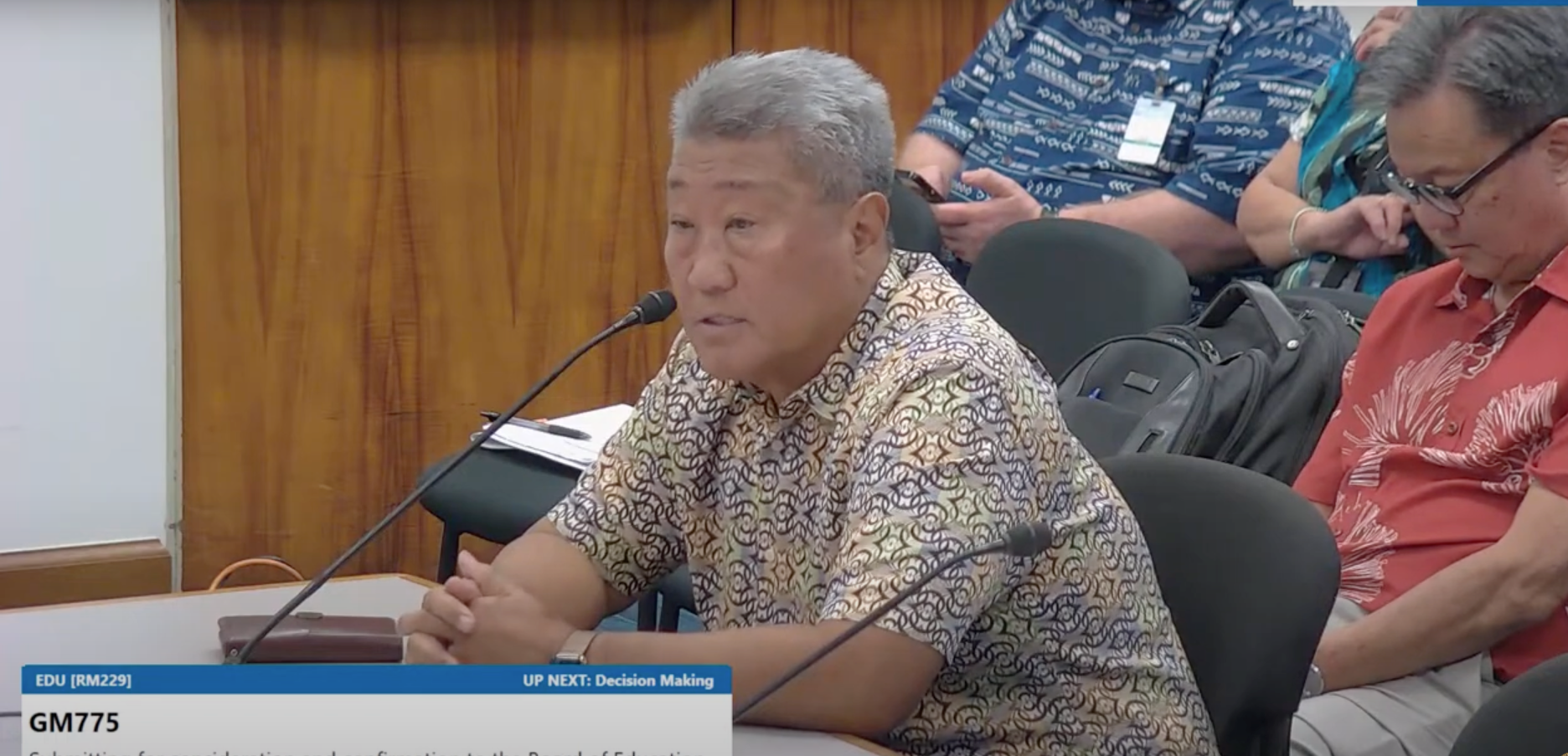
When Michael Magaoay stood before the Senate Education Committee last week, the former lawmaker and engineer tried unsuccessfully to convince senators that he was equipped to oversee Hawaiʻi’s public school system despite having little educational expertise.
During the tense hourlong hearing, the Board of Education nominee explained how he wanted to improve the education department’s management of its construction projects, citing his experience in engineering and in leading the boards of large organizations such as Catholic Charities Hawaiʻi.
But many senators remained skeptical of Magaoay’s qualifications as he struggled to answer questions about school facilities and admitted to having done little research on the public school system before the hearing. The committee made the rare decision to defer its vote on Magaoay’s confirmation.
On Thursday afternoon, Gov. Josh Green withdrew Magaoay’s nomination. In Green’s message to the Senate, he said the decision came at Magaoay’s request. Green’s senior advisor Will Kane said in an emailed statement that the office only learned about Magaoay’s withdrawal on Thursday and is planning its next steps.
Magaoay did not respond to Civil Beat’s requests for comment.
The hearing and the governor’s last-minute decision to reverse course highlights ongoing tensions about the role of the board in Hawaiʻi education. Namely, who is qualified to join it and whether its members are doing enough to hold the education department accountable for the success of Hawaiʻi students.
Magaoay was the second of two appointees without education backgrounds to undergo intense questioning during the hearing last week. Another nominee, Wesley Lo, comes from decades of experience leading large health care organizations but was confirmed by the committee after sharing that he previously served on the board.

Recent membership on the nine-member board has ranged from former U.S. diplomats and lawyers to business executives. Currently, six board members have experience as teachers and administrators in schools or universities, although some lawmakers have previously said the BOE should include more educators.
The volunteer board, which is appointed by the governor and must be confirmed by the Senate, has also gone through major changes over the past year. Last spring, former chair Warren Haruki abruptly resigned amid ongoing concerns around a lack of BOE transparency and oversight, and four new members joined the board, including current chair and former lawmaker Roy Takumi.
At the time, lawmakers questioned new board members about their plans to create change in schools by updating graduation requirements or pushing for answers to why the Department of Education planned to give up nearly half a billion dollars in school construction funds.
The same questions arose this year as lawmakers expressed their continued frustration with the limited change they’ve seen in the department. But board members say they’ve made progress in holding the superintendent accountable for student achievement and developing school policies sought in the past by lawmakers.
Three of the nine BOE members are up for Senate confirmation this year. Former principal and district administrator Sylvia Lee received her confirmation by the Senate Education Committee last week, along with current board member Lo.
Like Magaoay, Lo was pressed by lawmakers about his lack of experience as an educator, although he previously served on the BOE from 2011 to 2013 before rejoining last spring. Both Lee and Lo will need to receive confirmation from the full Senate to serve terms running from summer 2025 to 2028.
Who Makes Up The Board?
There are no laws dictating the experience needed to serve on the BOE, although a legislative proposal from 2023 would have required that the board include at least one teacher and one school administrator. Supporters of the bill said educators needed to have a larger say in developing school policies.
“Too often, educational governance decisions are made without the input of the hardworking public school teachers in Hawai’i, who are responsible for crafting our children’s future,” the teacher’s union said in written testimony supporting the bill.
Currently, four of the nine board members have worked as longtime teachers or administrators in Hawaiʻi schools. Two others serve as faculty in the University of Hawaiʻi system. Board chair Takumi led the House Education Committee for 15 years and introduced major reforms to public school funding.
The remaining two members are Lo and Makana McClellan, who currently serves as the governor’s communications director. McClellan’s term will end this summer.

While it’s important for the BOE to have members with firsthand experience in schools, the board also benefits from having people with a variety of perspectives and expertise, said Catherine Payne, a former board chair and principal. When former Gov. David Ige appointed Payne in 2018, she was the first educator to lead the board in a decade.
Prior to 2010, board members were elected, but voter turnout was often low. Switching to an appointed board gave the governor more power to create a balanced board that can oversee a large organization like the DOE, said Sen. Troy Hashimoto, who serves on the Senate Education Committee.
“I’m looking at your resume, and I’m trying to really connect the dots.”
Sen. Samantha DeCorte
But some senators were still concerned about Magaoay and Lo’s limited education experience during last week’s hearing. Magaoay currently works as an electrical engineer, while Lo leads ʻOhana Pacific Health, which provides health services to kūpuna across the state.
“I’m looking at your resume, and I’m trying to really connect the dots,” Sen. Samantha DeCorte said during Lo’s hearing last week.
She was eventually persuaded that Lo had sufficient familiarity with the DOE after serving on the board from 2011 to 2013 and again this year. But she remained skeptical of Magaoay’s understanding of the education system after he faltered on questions involving DOE’s management of its facilities and a recent proposal to increase the prices of school meals.

Takumi did not respond to a request for comment about Magaoay’s withdrawal. But he said after the hearing that Magaoay’s lack of familiarity with some of the senators’ questions was to be expected, adding that the board could benefit from someone who has close ties to the Filipino community and is passionate about public service.
If Magaoay were not to receive senators’ approval, Takumi said he was concerned about finding a replacement. Not everyone is willing to publicly share their financial details or go through the process of confirmation hearings, he said, and serving on the board can be time consuming.
“It’s very difficult to find people willing to serve on a board or commission,” Takumi said.
When it comes to overseeing an agency as large as the education department, Takumi said, there’s always room for improvement. But he said the board has tried to take a closer look at metrics like graduation rates and achievement gaps over the past year to ensure the department is making progress in these areas.
Taking Responsibility
Lawmakers and board members have long debated who should create educational policy in Hawaiʻi. While the education board is responsible for setting many school policies, lawmakers often take action when they feel the board isn’t moving quickly enough.
“Sometimes we get criticized for micromanaging when we see the board fails to act,” Sen. Donna Kim said during the Senate Education Committee hearing last week.
One failed bill this year would have required BOE to develop a policy mandating that schools teach financial literacy by 2026. Another directed the board to ban cellphones during the school day but died early on during the session.

Takumi said he understands lawmakers’ impulse to introduce legislation instead of waiting for the BOE to take the lead, but he believes the board has taken more initiative over the past year. The board is considering developing a statewide policy on cellphones in class and discussed how schools can teach more about financial literacy in its most recent meeting.
Lo also said the board has taken more steps to hold Superintendent Keith Hayashi accountable in areas that have long been a concern for lawmakers, including school repairs and improving student attendance. In the past, board members said Hayashi needed to provide more specificity and data in his annual reviews and questioned the criteria used to evaluate his leadership of the department.
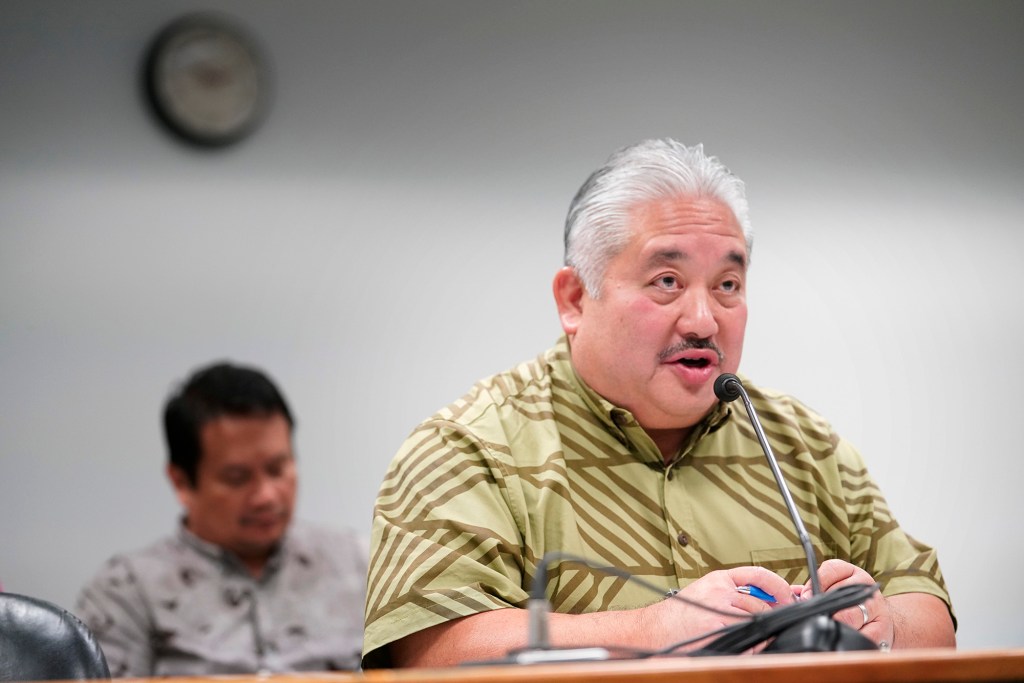
Late last year, the board developed new criteria for the superintendent’s evaluation, requiring him to show tangible improvement in challenging areas such as attendance for Native Hawaiian and Pacific Islanders and produce plans explaining how the department will reduce staff vacancies and improve teacher retention.
“You align on your goals, and you monitor them periodically during the year, so that at the end of the year, the goal is that everybody gets there,” Lo said.
Serving on the BOE is a heavy responsibility, DeCorte said, especially when families’ trust in the public school system seems to be declining. Even before Magaoay withdrew from the board, DeCorte was skeptical that he would earn her vote.
“Our job,” she said, “is to confirm the board members that are going to make sure that the Department of Education does its job.”
Civil Beat’s education reporting is supported by a grant from Chamberlin Family Philanthropy.