

Hawaiian Ocean View Has Abandoned Cars As Far As The Eye Can See
Staff turnover at Hawaiʻi County has stalled the use of new measures meant to penalize property owners with illegal junkyards and derelict cars.
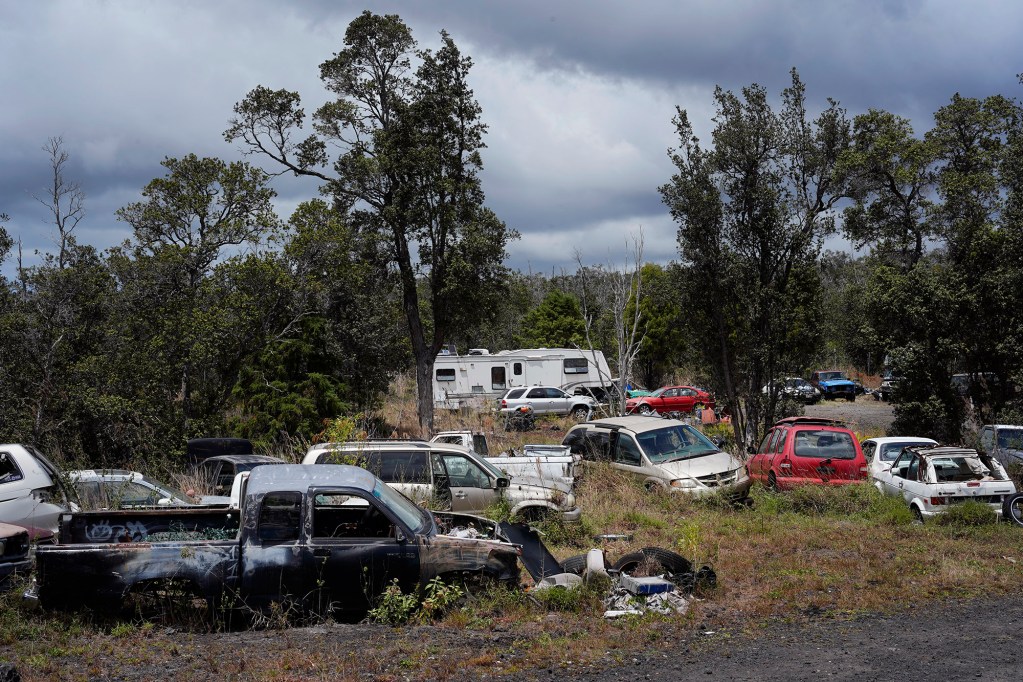
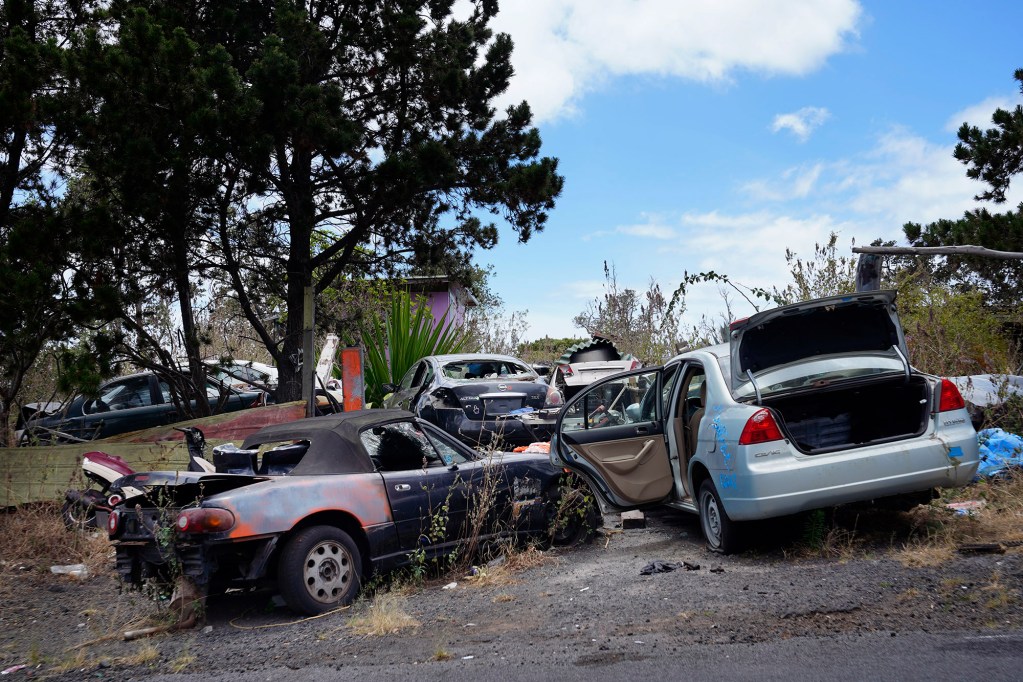
When Heidi Jaworksi moved to the Big Island in 2005, she noticed many yards covered with mangled cars, SUVs and other abandoned vehicles, especially in her sprawling southwestern community. She has been keeping track of the addresses and filing complaints with the police ever since.
Derelict vehicles are one of the Big Island’s most intractable environmental issues and safety concerns with 1,600 vehicles dumped every year – almost a quarter of the 8,000 vehicles left statewide. The wrecks are an eyesore as well as a potential chemical hazard since they can leak toxic materials into the water table. They’re also common breeding grounds for vermin and mosquitoes.
Efforts to clean up the longstanding problem — including a rash of state laws in 2022 — have barely made a dent as people find it cheaper and easier to walk away from derelict vehicles rather than go through the official process of surrendering them. Meanwhile some property owners find it profitable to sell parts from the hulking wrecks.
The problem is particularly prominent in Hawaiian Ocean View – the largest subdivision in the United States covering 36 square miles made up of 11,000 one-acre parcels connected by more than 150 miles of roadway.
Sitting near the southwestern tip of the island, Ocean View is relatively remote, meaning that cars that permanently break down there tend to stay there, Jaworski said.

In an interview last week she described one property on Oceanview Parkway that has three dozen car wrecks. Another on Aloha Boulevard has abandoned vans, SUVs, trucks and heavy equipment. And her list goes on.
Jaworksi said derelict cars generate other problems including squatting, break-ins and theft. “It brings down the whole community, not to mention your house value,” she said.
‘A Huge Problem’
The county defines a junkyard as any area over 200 square feet used for storing scrap or junk, or dismantling vehicles. That’s the equivalent of 0.5% of the one-acre lots in Ocean View and aerial photos show many properties would fall into that category.
“It is a huge problem there,” said Michelle Galimba, council member for Hawaiʻi District 6, which includes Ocean View. “Some of those lots in Ocean View have hundreds of cars.”
The cost of private disposal is prohibitive for most in a community where the median household income of $45,917 is less than half the state household income, she said. The county allows individuals to turn in up to two vehicles each year without charge but many lots hold dozens of vehicles.
County officials say they have made progress clearing abandoned vehicles left on roadsides, but they’re hampered in places like Ocean View because the county can only tow from private properties if the owners have applied for assistance under its Vehicle Disposal Assistance Program.

Crime reports for Ocean View between New Year’s Day and the end of March show an abandoned vehicle reported every two days, but that’s likely an undercount.
“With so many roads and such a large area, it’s easy to assume someone else has already made the report; but that’s not always the case,” said Craig Kawaguchi, who runs the county’s derelict vehicle program. Officials say people in the rural community with a population under 5,000 also fear retaliation for reporting on junk in a neighbor’s yard.
The reporting is important because inspectors from the county’s Department of Planning can investigate illegal junkyards as part of code enforcement, but the investigations are complaint-driven.
In an email, Hawaiʻi County spokesperson Tom Callis said inspectors have handled 10 complaints about illegal junkyards in Ocean View between 2022 and so far in 2025, but did not specify what action if any had been taken.

The problem is statewide, and several new laws passed in 2022 were meant to provide all the counties with additional legal tools to target abandoned roadside vehicles and illegal junkyards like the ones in Ocean View.
But the Puna lawmaker who helped craft the legislation said in an interview Tuesday that he was frustrated the rules haven’t been implemented in Hawaiʻi County – largely due to staff turnover.
Rep. Greggor Ilagan, who was elected House Vice Speaker in 2022, said he developed the laws in consultation with staff members who no longer work at the county.
Act 229 enables the county’s finance director to share registration and other information with staff at the vehicle disposal program that would help them focus on chronic offenders. “We realized that 20% of the offenders were responsible for 80% of the offenses,” Ilagan said.
The law also gives finance directors additional powers to recoup the cost of derelict vehicle disposal from registered owners. The county can escalate that to prohibit the renewal of driver’s licenses and registrations.
Callis said the county was still looking at how to implement the mechanics of the statutes.
Act 228 sets a statewide standard for the minimum distance that abandoned vehicles need to be towed once they’ve been tagged for removal. The idea is to prevent wrecks being rotated around to evade towing operations. That could be effective in places like Ocean View, Ilagan said.
Callis said abandoned vehicles remain an environmental and health concern for the county and encouraged residents to report abandoned vehicles to the police and illegal junkyards to the county planning department.
Progress On Public Roads
The county has expanded its abandoned vehicle program, which assists the police department, the Department of Land and Natural Resources and Hawaiʻi Volcanoes National Park. It generally keeps up with the roadside vehicles reported to police, Kawaguchi said.
In 2018 the program’s budget was $2.4 million and 678 vehicles were processed. The program is now budgeted at $3.73 million and 1,581 vehicles were processed in 2023-24.
However Kawaguchi acknowledged that staffing shortages have caused delays — tow companies are sometimes short-handed, and the program has only two field staff covering all of Hawaiʻi Island.
“We’re hopeful that we’ll be able to add one or two more employees in the future to help improve overall coverage,” he said.
Those roadside wrecks are the responsibility of Torey Keltner, Traffic Services Program Manager at the Hawaiʻi Police Department.
He said in the past 10 years the county has improved its tracking of abandoned vehicles on roadways through better identification and regular reporting.
Last year police investigated 3,500 vehicles, Keltner said – identifiable by the fluorescent pink stickers that warn owners of the violation and the imminent risk of removal within 24 to 72 hours.
Public engagement also has improved, Kawaguchi said. In fiscal year 2023, just over 100 vehicles were disposed of through the assistance program. In fiscal year 2024, that rose to approximately 500.
Abandoned vehicles in suitable condition are sold at public auctions, and if they fail to sell they end up at a permitted scrap metal facility or processed and shipped to the U.S. mainland or foreign countries.
Civil Beat’s coverage of environmental issues on Hawaiʻi island is supported in part by a grant from the Dorrance Family Foundation.

