

Pet Projects And Low Budgets: How Lawmakers Undermine School Repairs
The Department of Education wants more power over school construction and repairs, but some state leaders are skeptical of the change.
At the start of the legislative session, Hawaiʻi school officials came to lawmakers with a bold request: stop funding pet construction projects and let the Department of Education take control of its budget instead.
The department receives an average of $454 million in capital improvement funds each year. But over the past decade, more funding has been set aside by lawmakers for specific projects in their districts that don’t always align with what DOE says schools and students need.
In a year when the DOE listed upgrading softball fields, addressing gender inequities and improving a science classroom at Leilehua High School as top priorities, lawmakers funded — among other things — a $4.3 million covered playground, a $7.2 million covered walkway and $21.6 million for projects at Leilehua that did not include the science classroom.
When school officials asked for $34 million for a new classroom building for ʻIlima Intermediate School in 2022, lawmakers responded with $2.5 million for a new performing arts center instead. The project was so off base from DOE’s original request that officials recently proposed returning the performing arts money to the state.
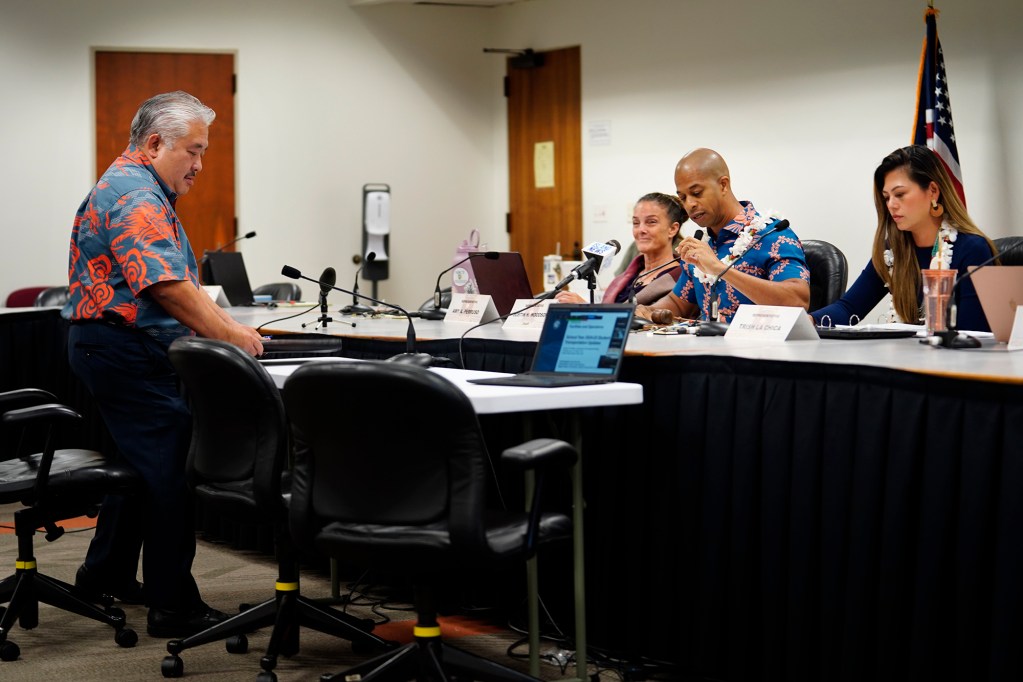
The disagreements over school construction money are part of a much longer struggle to improve school maintenance in the state. Last year, the education department proposed giving up nearly half a billion dollars in construction funds, arguing that permit delays and supply chain shortages made it impossible to use all of its budget, despite the poor condition of Hawaiʻi’s many aging schools.
But efforts by lawmakers to hold DOE accountable by tying funds to specific projects have only made it more difficult for school officials to complete projects on time. It’s also created an inequitable process that leaves out students in districts whose legislators have less political pull, according to a 2019 study from the Jacobs Engineering Group.
“We can’t do business as we’ve been doing it for the last eight to 10 years,” Superintendent Keith Hayashi told lawmakers at the start of session as DOE requested $1.65 billion in construction funds for the next two years. “That’s not going to help us.”
Despite some initial support for his proposal, significant change appears unlikely this year.
Lawmakers are planning to appropriate $353 million in lump sum funding for schools next year, which typically comes without provisions and allows the department to spend the money as it wants.
But the final pages of the budget mandate that the department prioritize 39 school projects, limiting its ability to use a chunk of the money for projects that fall outside lawmakers’ priority list.
The Legislature is set to vote on the final version of the budget on Wednesday.
“It defeats the purpose,” said Randy Moore, who oversaw school facilities in DOE from 2006 to 2012 and again last year from May to December. “It’s just a line item in disguise.”
Wants Versus Needs
On the Big Island, Rep. Jeanne Kapela said mold and old gutters are top concerns for schools in her district. Not all schools have covered walkways to shield students from frequent rain, she said, and Mountain View Elementary has reported some mold on its classroom ceilings.
But the current process of developing DOE’s construction budget doesn’t ensure that these schools will receive the repairs they need, Kapela said. In the House, lawmakers are allowed to request three major construction projects for their districts, Kapela said, and there are other state facilities that need funding outside of schools.
DOE currently receives some lump sum funding that could go toward initiatives like replacing gutters or removing mold from schools, but there’s no guarantee the department can get to these repairs when they’re facing pressure to complete other projects lawmakers have specifically funded in their districts.
“The department itself should be prioritizing the health and safety of all of our schools and our students as a whole,” Kapela said.
The budget process for the education department doesn’t need to be so politicized, said Rep. Amy Perruso.
Wes Lo, who served on the Board of Education from 2011 to 2013 and rejoined last spring, said the education department had a clear list of prioritized projects during his first term on the board. Lawmakers and the board understood the consequences of moving projects up the list at the expense of other schools, he said, and generally supported DOE’s priorities.
A decade ago, DOE’s construction budget primarily consisted of lump sum funding, grouped into spending categories like school capacity or equity projects. Only 75 school projects received earmarked funding in the 2015 to 2017 biennium budget.
“We were definitely trying to make sure that there was a prioritized list that everybody supported, because it was a constant direction and a plan for the Department of Education,” Lo said.
But the department began to lose lawmakers’ trust as it struggled to complete construction projects and faced a huge buildup of funds. In 2018, DOE mistakenly reported a backlog of $293 million for its repair and maintenance projects but then corrected the number to over $868 million, angering lawmakers and raising concerns about its ability to manage construction.
The following year, lawmakers inserted nearly 190 line items into DOE’s construction budget. Since line items dedicate funds to specific projects, Lo said, lawmakers contend that it’s easier to follow the money and hold the department accountable for using the funds as the Legislature intended.
But lawmakers’ priorities don’t always align with those of DOE.

More legislative mandates around construction aren’t always the solution, Moore said. While lawmakers may think it’s more efficient to set aside funding specifically for schools in their districts, they don’t always have an accurate projection of the project’s costs since they rely on estimates from principals or complex area superintendents, he said.
If DOE needs more money than what lawmakers have appropriated, Moore said, the line-item project is dead. The line items also take away from the funding and resources DOE could spend on other projects that are necessary for student safety or compliance with laws around accessibility and gender equity, he said.
“I inflate my numbers based on transportation costs, rising costs, wages and everything,” Sen. Lynn DeCoite said about estimating the costs of school construction projects in a hearing earlier this year. “And still it’s not enough.”
In December, DOE published a list of 30 projects that it wanted to let funding expire for this spring. In more than half of the proposed lapses, the department said the projects were underfunded or didn’t meet school priorities.
Who Gets To Decide?
A 2019 study by the Jacobs Engineering Group found that the department lacked a comprehensive plan and framework for repairing facilities and building new ones, making the process vulnerable to lawmakers’ personal interests.
“Making the challenge more complex is that HIDOE’s funding requests are a detailed menu of projects allowing politics to drive decisions rather than common values and objective data,” the study said. “Without a strategic plan, the result has been sustained inequitable allocation of public resources, with some students benefiting at the expense of others who are under-represented.”
But there’s been little consensus about who should be responsible for developing such a plan.
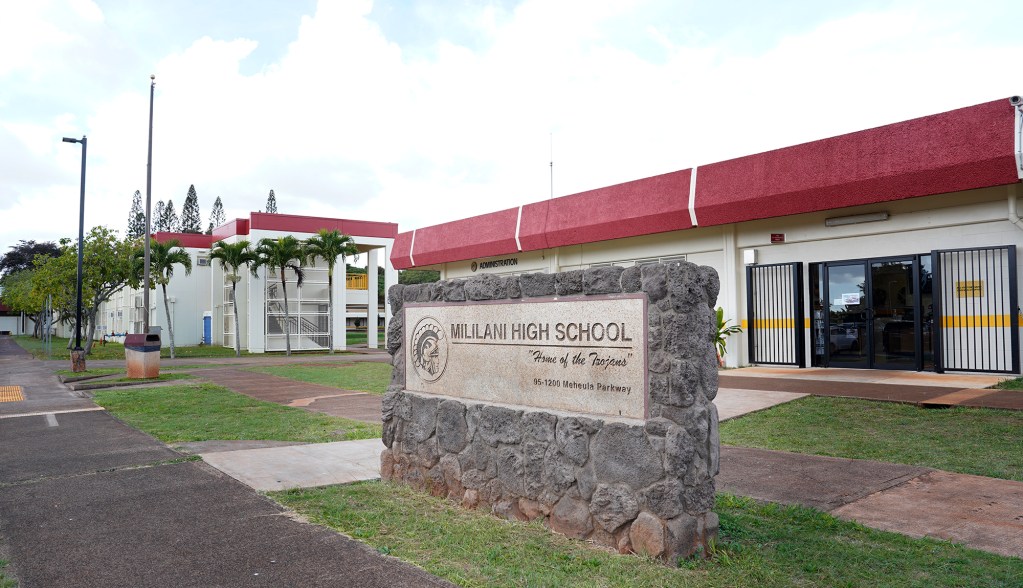
In 2020, lawmakers created the School Facilities Authority to oversee school construction projects. But the agency got off to a slow start, struggling to find an office space for its small team and only hiring an executive director in 2022 — who left less than two years later.
The authority is currently responsible for only a handful of projects, including the construction of teacher housing in Mililani and the development of public preschool classrooms across the state. But its scope remains limited, with some lawmakers arguing that building new schools and managing facilities should fall under the DOE.
Two bills attempted to strip the authority of its staff and funding last year, but both measures failed.
Other lawmakers believe that the authority should lead efforts to hold DOE more accountable for managing school construction funds.
Rep. Trish La Chica said she wants to see more transparency and data about how projects are prioritized and completed. Right now, she said, lawmakers are familiar with the state of school facilities in their districts but aren’t always aware of needs across the state.

Moore said the department maintains a list of short- and long-term needs for each school and regularly gathers data on the state of campus facilities. The education department did not respond to requests for comment.
A bill from La Chica earlier this year would have required SFA to develop a public database on the quality campuses across the state, including ratings for school facilities.
“The Legislature can’t really make intelligent, data-driven decisions on where to spend all this money,” said Riki Fujitani, executive director of the authority. The bill died when it failed to receive a hearing in the Senate last month.
Mary Filardo, executive director of the 21st Century School Fund, said other school districts on the mainland have followed similar models as they delegate the responsibility of managing school construction and facilities to an outside agency. The process of determining which schools receive funding is always a political process, she said, unless a state or district has long-term plans ensuring that all campuses will eventually receive the repairs they need.
“When trust has been broken in the education sector, these authorities can really help out,” Filardo said.
Looking Ahead
The current version of the budget strikes a balance between giving DOE more flexibility with spending its funds and ensuring projects’ completion, said Sen. Sharon Moriwaki, vice chair of the Ways and Means Committee. While the budget appropriates $353 million in lump sum funding for school construction, it also specifies 39 projects that the department must prioritize as it spends the money.
But only seven of the projects named in the budget match the priority list published by the DOE last fall. The other 32 projects, such as improvements to Wailuku Elementary’s parking lot or fire alarm upgrades at Kahaluʻu Elementary, do not appear on DOE’s list.
House Capital Improvement Projects Manager Lisa Kitagawa declined an interview request but said in an emailed statement that lawmakers chose which projects to include based on communication with principals, students and community members.

“This also encourages the DOE to demonstrate its capacity to complete multiple projects simultaneously, especially in light of past challenges with lapsing previously funded CIP projects,” she said.
But the provisions are essentially line-item projects that limit DOE’s freedom to spend its construction budget, Moore said. To ensure equity, he said, DOE needs the authority to determine which schools are in greatest need of improvement.
Perruso said she supports providing the department with construction funds to use at its own discretion, but lawmakers should also demand more accountability and communication from school leaders moving forward.
“We need to look at enhancing their capacity and supporting them and helping them figure out how to get unstuck,” Perruso said. “Their mission is important for all of us.”
Civil Beat’s education reporting is supported by a grant from Chamberlin Family Philanthropy.

