

Tax Bills Win Preliminary Approval From Hawaiʻi Lawmakers
The House and Senate are also considering allowing legalized gambling for the first time in state history.
Hawaiʻi lawmakers advanced bills to increase an assortment of state taxes along with measures to legalize sports betting and levy a green fee on visitors to help pay for climate change mitigation in floor voting Tuesday.
The measures now advance to the opaque, late-session conference committee process, where lawmakers will meet privately to iron out their differences and try to reach agreements on final versions of dozens of bills.
The legislative session is set to conclude May 2, though lawmakers have left open the possibility of holding special sessions later this year in light of the uncertain economic outlook.
Taxing Tourists
Probably the best-known tax proposal still in play is a variation on Gov. Josh Green’s “green fee” to increase the state hotel room tax to provide new funding to cope with the impacts of climate change.
Various green fee proposals died in the waning days of each of the last three legislative sessions, but the idea is still alive this year.
Senate Bill 1396, as originally introduced by Green’s administration in January, would have raised an extra $180 million a year by increasing the transient accommodations tax from 10.25% to 12%.
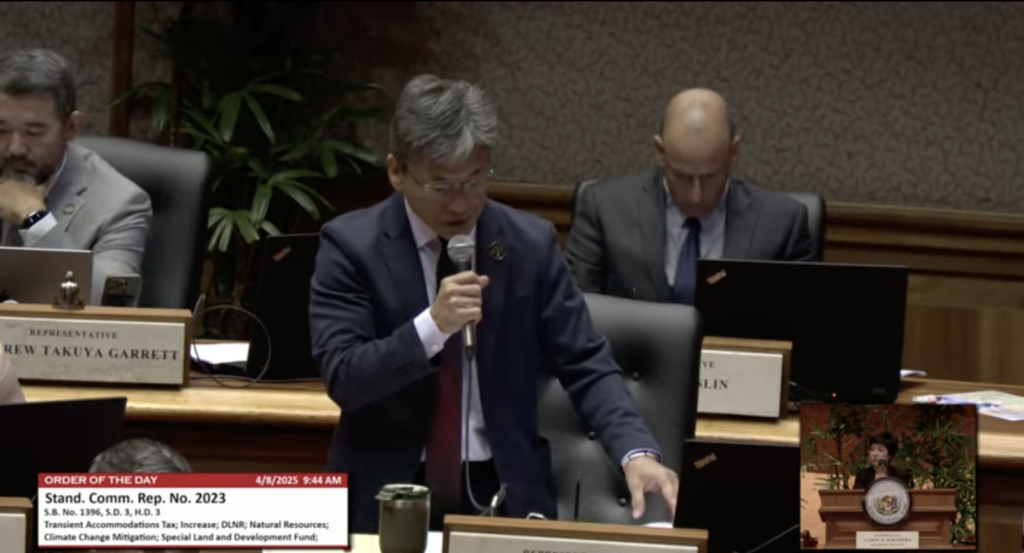
Then last month the administration scaled back its proposal, suggesting a more modest hotel tax increase to 11.25% to raise $90 million per year. Green wants to funnel 40% of that money to environmental stewardship, 40% to climate and hazard mitigation efforts, and 20% to sustainable tourism programs.
Both the House and Senate advanced bills to increase the hotel tax, but so far have left blank the amounts of the proposed increase. That crucial detail will have to be negotiated in the private conference committee meetings in the weeks ahead if the bill is to pass this year.
The hotel tax increase is backed by an array of environmental groups but is being resisted by hotel and resort interests.
Republican Rep. Garner Shimizu opposed the latest version of SB 1396, warning his colleagues that the state may be “reaching a breaking point in our price point” with the latest proposal to increase the hotel room tax.
“Visitation to Hawaii is not a given.”
Stephanie Donoho, Kohala Coast Resort Association
Hawaiʻi may be “possibly pricing ourselves out of the market,” Shimizu said.
That echoed concerns raised by industry representatives such as Stephanie Donoho, administrative director for the Kohala Coast Resort Association.
Donoho told lawmakers earlier this year that Hawaiʻi is already known for having some of the highest visitor taxes in the world.
“Visitation to Hawaii is not a given,” she said in written testimony. “Visitors have more opportunities than ever before to visit destinations around the world.”
House Tourism Committee Chair Adrian Tam countered that “we cannot put a price on our natural beauty. We have to continue to support it because it is not a partisan issue. We have to continue to ensure that future generations will be able to enjoy Hawaiʻi’s natural beauty.”
Lawmakers also advanced plans for a new cruise ship tax, which the Senate proposed to set at $20 per passenger per port entry in House Bill 504. The House moved ahead with a similar new cruise ship levy in Senate Bill 1396, but did not specify the amount of the new tax.
The concept is opposed by the Cruise Lines International Association and Norwegian Cruise Line Holding Ltd., which warn the proposed fee would violate federal law and the “Tonnage Clause” of the U.S. Constitution. Only the federal government can impose such a fee, they say.
Tam disputed that, saying the U.S. Supreme Court has ruled the Tonnage Clause does not give preferential treatment to vessels. Applying the hotel tax to the cruise ship industry “puts them on a level playing field with everyone else in the tourism industry,” he said.
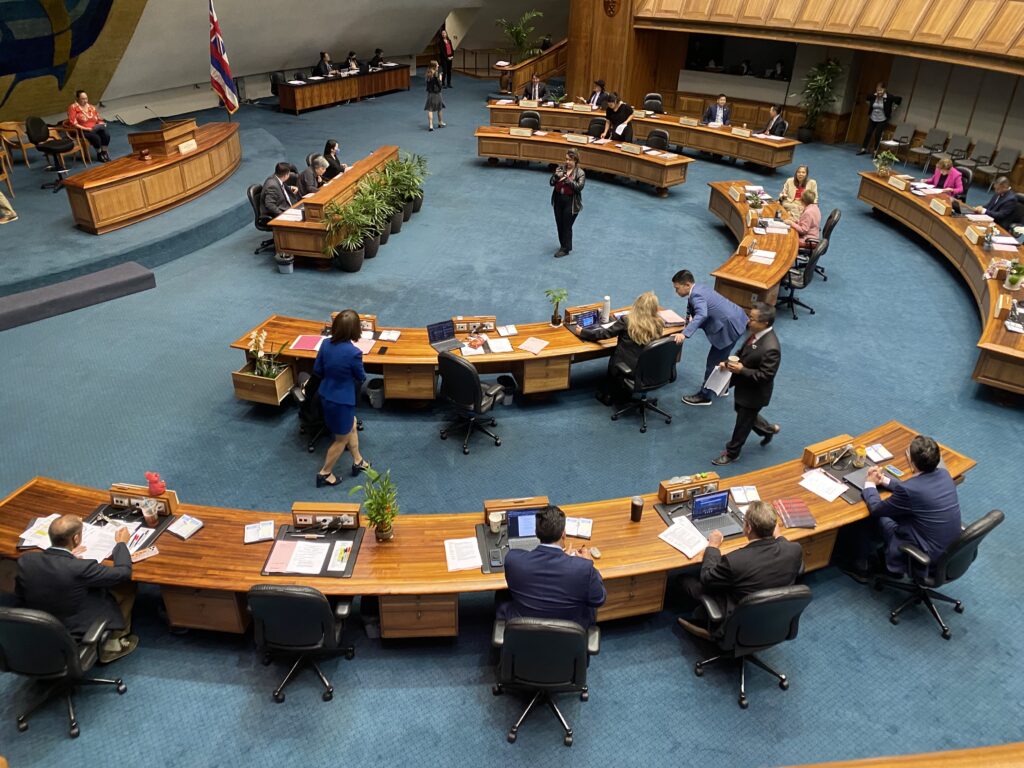
SB 1396 easily passed the House on Tuesday, with only seven Republicans and Democratic Rep. Sam Kong voting against it. The Senate unanimously approved HB 504, a similar measure to both increase the hotel room tax and also impose the new cruise ship tax.
An Unemployment Tax Increase?
Other Hawaiʻi employers are alarmed by an effort this year to raise the state unemployment insurance tax to build up the balance in the fund that pays unemployment benefits. House Bill 202 would do that by tweaking the definition of “adequate reserve” for the Unemployment Insurance Compensation Trust Fund.
That fund makes the payments when workers lose their jobs, and the measure is backed by Department of Labor and Industrial Relations Director Jade Butay. He said in testimony earlier this month that “now is the time” to strengthen the fund while the economy is stable.
“Raising the adequacy levels today helps prevent sudden tax hikes on employers and ensures workers get timely benefits during future downturns,” Butay said in a written statement. “This phased approach provides long-term stability, protecting both businesses and employees from economic uncertainty.”
The fund was quickly drained early in the pandemic, forcing the state to borrow about $700 million from the federal government to pay benefits. The fund balance has only slowly increased in the years since then because lawmakers limited the amount of unemployment taxes that could be charged to Hawaiʻi businesses.
The state expects the trust fund will have $838 million in reserves at the end of this calendar year, according to William Kunstman, deputy director of DLIR.
The U.S. Department of Labor recommends the fund use a higher funding ratio or “multiplier” — meaning Hawaiʻi should maintain a higher balance than it has at the moment — to be ready to withstand “a severe economic downturn,” Butay wrote in his testimony to lawmakers.
The DLIR is now asking lawmakers to adjust the trust fund multiplier over the next two years, which would trigger increases in what many employers pay.
The amount each company would pay varies based on their unemployment claims histories and other factors, but Kunstman said if lawmakers approve the proposed increases the fund reserves are expected to grow to about $1.026 billion by the end of 2027.
The proposal is opposed by the National Federation of Independent Business Hawaiʻi Chapter, which warned in written testimony that “Small businesses across Hawaiʻi continue to face ongoing economic hardships due to sustained inflation, lingering supply chain disruptions, labor shortages, and the lasting financial impact of recent economic downturns.”
The Senate vote on Tuesday was 25—0. The House approved the same bill in a unanimous vote in February.
Cigarette And Truck Taxes
Another little-known tax proposal still moving this year would increase the state vehicle weight tax for large trucks and SUVs to help fund the Safe Routes To Schools program.
That program supports projects such as paths and bike lanes to encourage pedestrian and bicycle traffic within a one-mile radius of school zones. Supporters say the program is underfunded.
House Bill 1231 would increase the current annual state vehicle weight tax from 2 cents to 3 cents per pound for vehicles that weigh 4,000 to 7,000 pounds, and increase the tax from 2.25 cents to 3.75 cents per pound for vehicles from 7,000 to 10,000 pounds.
Abbey Seitz, director of transportation equity for the Hawaiʻi Appleseed Center for Law and Economic Justice, told lawmakers in written testimony the tax increase is designed to both increase pedestrian safety and also “reduce the prevalence of large, dangerous vehicles on the road.”
Lawmakers are also advancing House Bill 441 to increase the state’s cigarette tax from 16 cents to 18 cents per cigarette, raising the total state tax to $3.60 per pack.
The state Tax Department estimates that would raise an additional $4 million per year to help support the Cancer Research Center of Hawaiʻi. Hawaiʻi already has one of the highest cigarette taxes in the nation.
The Senate approved HB 1231 in a 22-3 vote on Tuesday, and approved HB 441 unanimously. The House approved both of those bills in February.
Capital Gains Tax Plan Dies
One of the most controversial tax bills of the session died quietly last week when Senate leadership recommitted House Bill 476 to the Ways and Means Committee, effectively killing it for the year. That bill would have increased the maximum tax rate for the state capital gains tax.
Lawmakers have considered a capital gains tax increase almost every session in recent years, and the latest proposal was backed by the Hawaiʻi State AFL-CIO, the Hawaiʻi Alliance for Progressive Action, the Hawaiʻi League of Women Voters and the Appleseed Center for Law and Economic Justice.
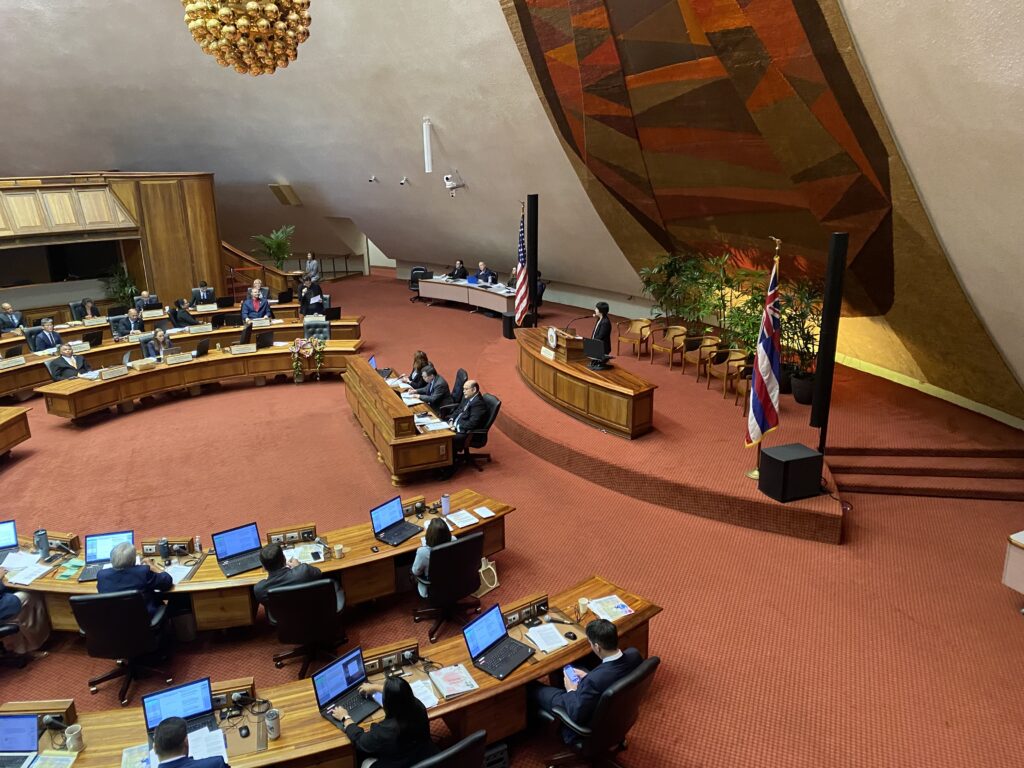
Capital gains are profit from sales of assets such as stocks and bonds, and supporters of the bill said that tax is mostly paid by wealthier residents. The current state capital gains top tax rate of 7.25% is too low, they contend, and the bill as originally introduced would have raised to top tax rate to 9%.
The bill died after it was opposed by the Hawaiʻi Association of Realtors, the Grassroot Institute of Hawaiʻi, the Chamber of Commerce Hawaiʻi, the Maui Chamber of Commerce and others.
Those critics said it would stifle investment and economic growth in Hawaiʻi, and increase the state tax burden on middle-class Hawaiʻi residents along with the wealthy.
Dozens of individuals also submitted testimony opposing HB 476 and any other kind of state tax hike, citing the high cost of living and existing high tax burden in Hawaiʻi.
Gambling Coming To Hawaiʻi?
In the Senate, legislators passed over 200 measures, some of them expected to head to conference committee next week so that senators can try to work out disagreements with their House colleagues.
There was little dissent in floor debate Tuesday, with most of the 25 members voting in favor of all bills. Republicans Brenton Awa and Samantha DeCorte were among the few who opposed much of the legislation.
One measure that did bring some debate was House Bill 1308, which would tax sports betting companies at a rate of 10%. Industry experts believe it would net the state from $10 million to $15 million in tax revenue annually.
If passed by the full Legislature, HB 1308 would require at least four sports betting companies to become licensed and operate in the state. The Senate set initial licensing fees at $250,000.
Under the measure the Senate approved Tuesday, the state Department of Law Enforcement — already tasked with investigating fireworks, firearms and drug cases in Hawaiʻi — would have six months to stand up a new branch tasked with overseeing gambling regulations.
“We need this revenue because of what we are facing in the state of Hawaiʻi from this unprecedented disaster in Washington, D.C.”
Sen. Angus McKelvey
It was a fairly narrow vote, with 15 senators voting in favor and several of those “with reservations,” votes that count as yes votes but suggest a senator’s concerns.
The vote was close enough that Senate President Ron Kouchi took the vote twice to make sure the count was accurate.
Oahu Sen. Sharon Moriwaki was among the 10 senators voting no.
“House Bill 1308 proposes to effectuate safe gambling in Hawaii, but in its 62 pages there is little beyond a Department of Health (program) for problem gambling, prevention and treatment, and a special fund offering counseling and treatment for disordered or problem gamblers. Where is the infrastructure for safe sports wagering, particularly for the vulnerable and young college students prone to digital gambling?”
Moriwaki said she had received email messages from parents and ex-gamblers “writing of the tragic loss of life and homes due to addiction to sports gaming by those who cannot keep their fingers from clicking to bet.”
But Maui Sen. Angus McKelvey supported HB 1308, arguing the state needs a new revenue stream.
“We need this revenue because of what we are facing in the state of Hawaiʻi from this unprecedented disaster in Washington, D.C.,” he said. “It’s not just the blatant upfront cuts. It’s the inflation. It’s the tariff wars.”
While agreeing with Moriwaki that safeguards for social concerns need to be addressed, McKelvey said, “There’s a lot of other things that are legal in this state which causes much more damage to our society. I point to alcohol.”
Regarding the proposed state budget, House Bill 300, which also cleared the Senate on Tuesday, Oahu Sen. Donovan Dela Cruz said his chamber is mindful of the fiscal challenges arising out of the second Trump administration. But Dela Cruz, chair of the Senate Ways and Means Committee, expressed confidence that Hawaii would manage as it did during the Covid-19 pandemic and the Maui wildfires.
“This body remains nimble during times of economic turbulences and uncertainty,” he said. “This body continues to prioritize critical services and strategic economic investments while practicing fiscal responsibility even after the downward forecast projected by the Council on Revenues.”
Other measures passing the Senate and heading to conference committee would increase enforcement on illegal fireworks, prohibit waste disposal facilities over aquifers, allow private donations to be used for rebuilding Aloha Stadium and establish a Maui wildfires settlement trust fund to be administered by the Attorney General’s Office.
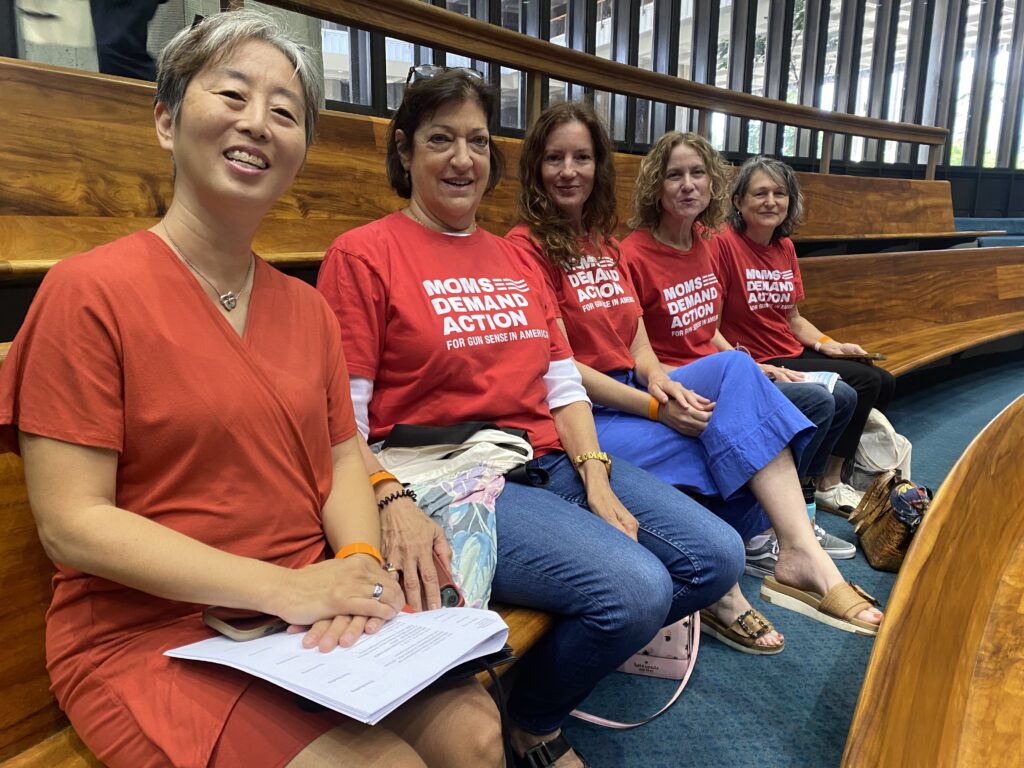
Also heading to conference is House Bill 664, which creates a statewide office to support gun violence prevention goals, including improved data collection to inform policymaking.
Another gun measure, House Bill 125, goes directly to the governor. If it becomes law, it will require gun owners to keep all firearms securely stored when not in use.
Both bills were backed by the Hawai‘i chapters of Moms Demand Action and Students Demand Action, part of Everytown for Gun Safety’s grassroots network.
The Senate and House will wrap up final voting for the Legislature’s second crossover deadline Thursday. The bills include one to regulate midwives.
Reporter Blaze Lovell contributed to the report.


