West Hawaiʻi Needs More Water. But At What Cost?
The battle over a single Kona well site shows the tension between development and protected Indigenous water rights.
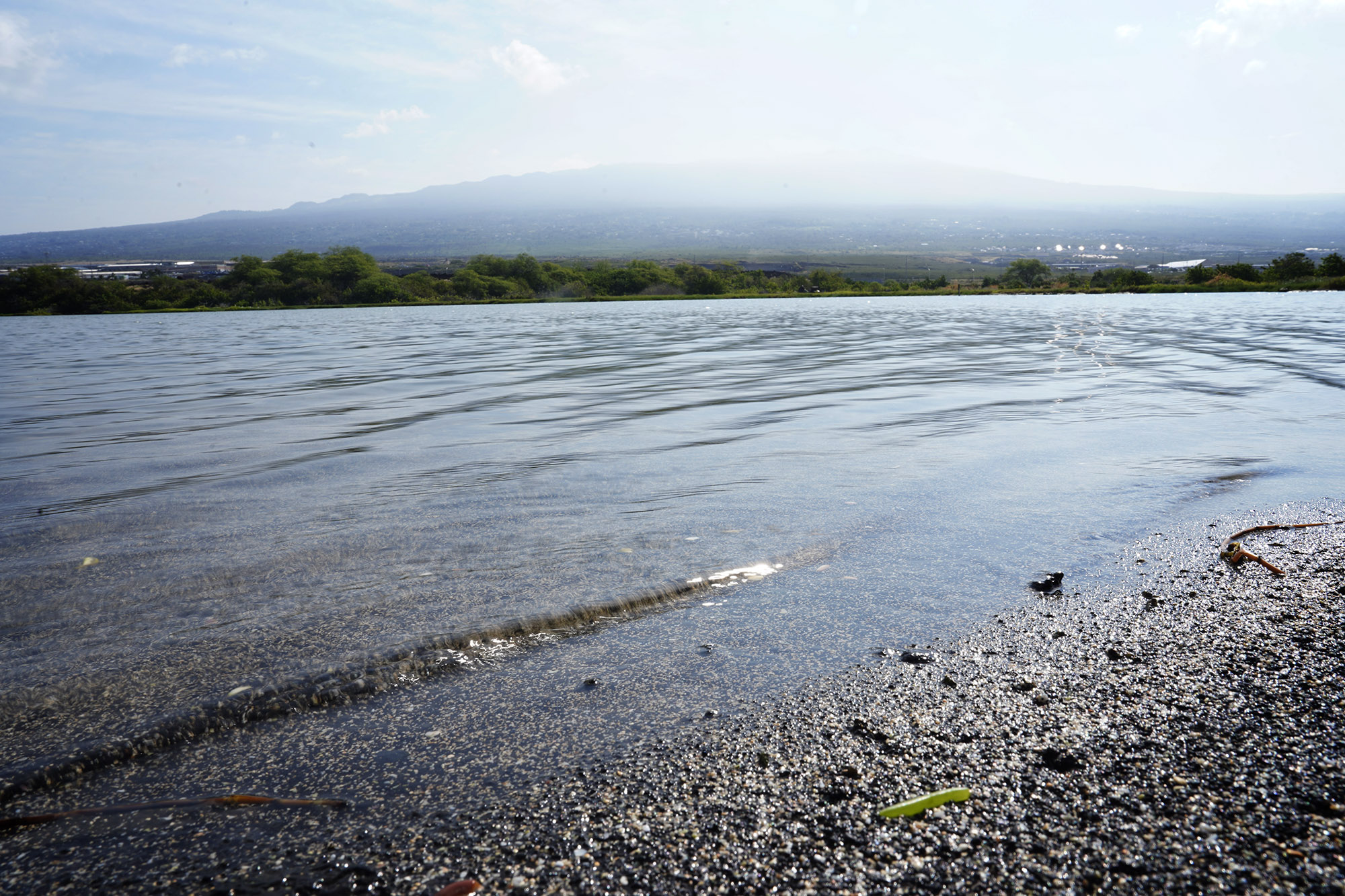
It may not seem like much: Just another Hawaiʻi island well slated to be drilled deep into the dry, volcanic landscape of North Kona.
But this well, dubbed the “Ota well” for the family that used to own the site, has been fought over for years. Its approval, and any conditions placed on its owners, could help steer the future of water use in West Hawaiʻi, one of the fastest-growing regions in the state.
It’s also become a flashpoint in the frequent struggle seen across Hawaiʻi between Indigenous water rights, which are firmly protected by the state constitution, and the growing development pressures felt across the state.
Developers, along with state and county leaders, are eager to build hundreds of new homes in North Kona. Some of the projects already have their needed land entitlements. The only thing missing is the water.
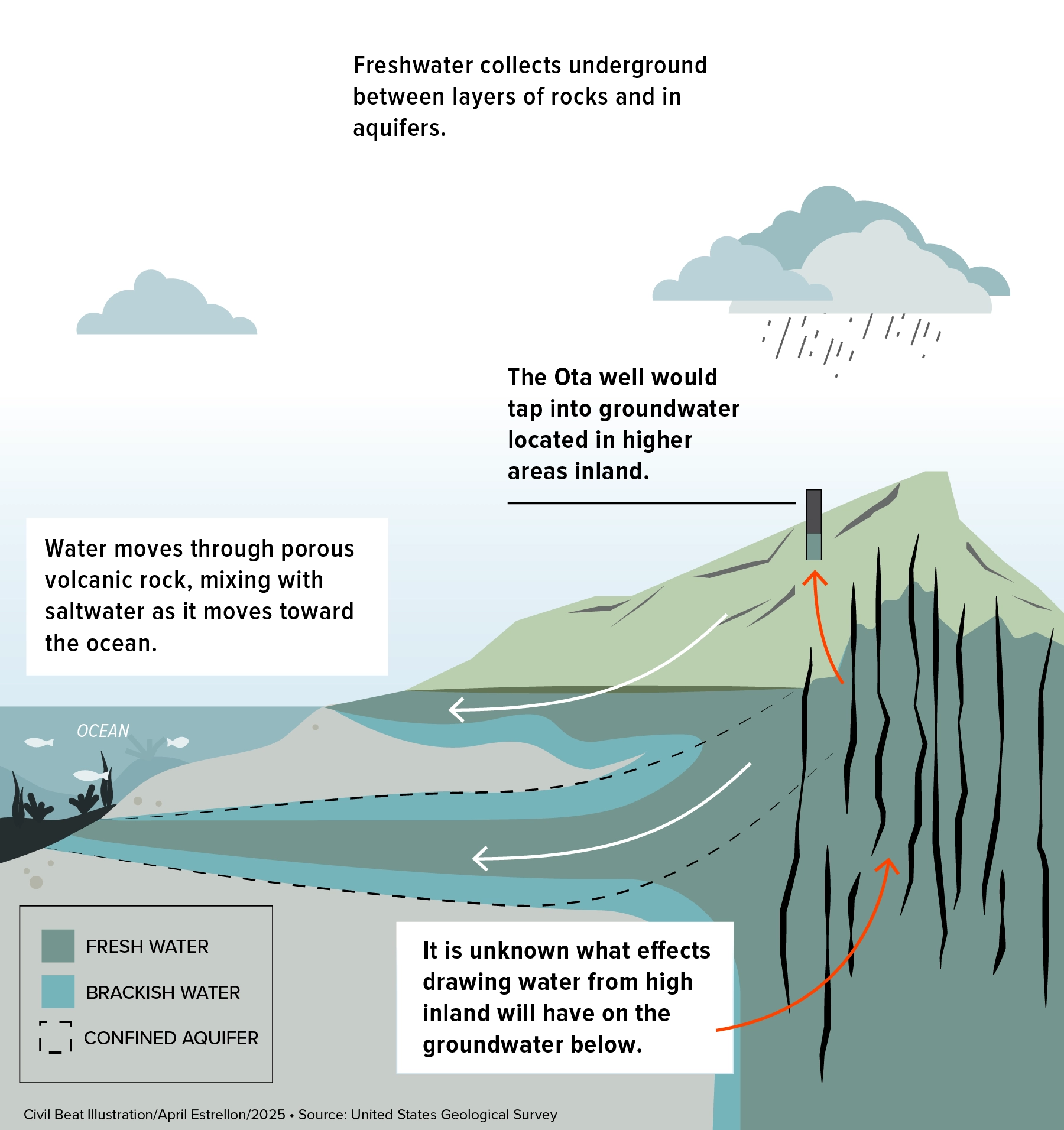
However, geologists don’t fully understand what’s happening beneath the surface in what’s known as the Keauhou Aquifer System:
It remains unclear just how much harm any added pumping at Keauhou might have on the rare brackish pools, ancient fishponds and other sensitive coastal environments nearby that rely on groundwater flowing into the ocean.
“Kona, relying on its groundwater, it’s known that it comes out in plumes or in springs in certain areas,” said Loke Aloua, a Kona resident and member of Hui O Ka La Wai, a group of fishers, fishpond stewards and other community members concerned about potential impacts from drilling more wells.
“In those certain areas, the waters aren’t as cool as they used to be,” Aloua said. “We’re not seeing the seasonal blooms, the seasonal limu (seaweed). Those freshwater species aren’t coming in in comparison to what was usually known.”
Amid such concerns, the state’s powerful Commission on Water Resource Management earlier this month opted to postpone a decision on the Ota well for at least the third time in the past five years.
“Everyone’s biting at the bit to develop Keauhou,” Board of Land and Natural Resources Chair Dawn Chang said at the commission’s hearing last week on the proposed well and the surrounding aquifers.
It’s important, Chang added, that “we get this first one right.”
Local water experts say there are a dozen or so other parties waiting in the wings to build wells in the upper reaches of Keauhou — and they’re watching closely to see how the commission handles Ota.
‘Lack Of Water Is The Main Impediment’
Two partnering state agencies have applied to drill the Ota well. The Natural Energy Laboratory of Hawaiʻi Authority runs a clean-energy research and development park near the Kailua-Kona Airport, and the Hawaiʻi Housing Finance Development Corp. looks to build a nearly 1,600-home project nearby, dubbed Kamakana Villages at Keahuolu.
Just over half the units there are intended to be affordable housing. Many would be made available only to buyers who earn up to 140% of the area’s median income. That price point, while technically deemed affordable, remains out of reach to many local buyers.
Aloua worries that many Kona locals won’t be able to afford those homes, even though they’re being used to promote the need for the well.
“I would love for folks in the community to look at those numbers and to tell me that they can actually afford it realistically,” Aloua said.
Meanwhile, Kona-Kohala Chamber of Commerce President Wendy Laros called Kamakana Villages “desperately needed” in recent testimony before the commission. Water development and housing, Laros said, are that local chamber’s top priority.
“Lack of water is the main impediment” to the homes being built there, HHFDC Development Branch Director Dean Minakami told the state water commission in 2022, when it previously considered the Ota well.
The two state agencies have pushed back against proposed conditions for the well’s approval that would have them work with the community to survey natural resources along the nearby coastline, plus pay a nearly $14,000 annual fee to help replenish the watershed.
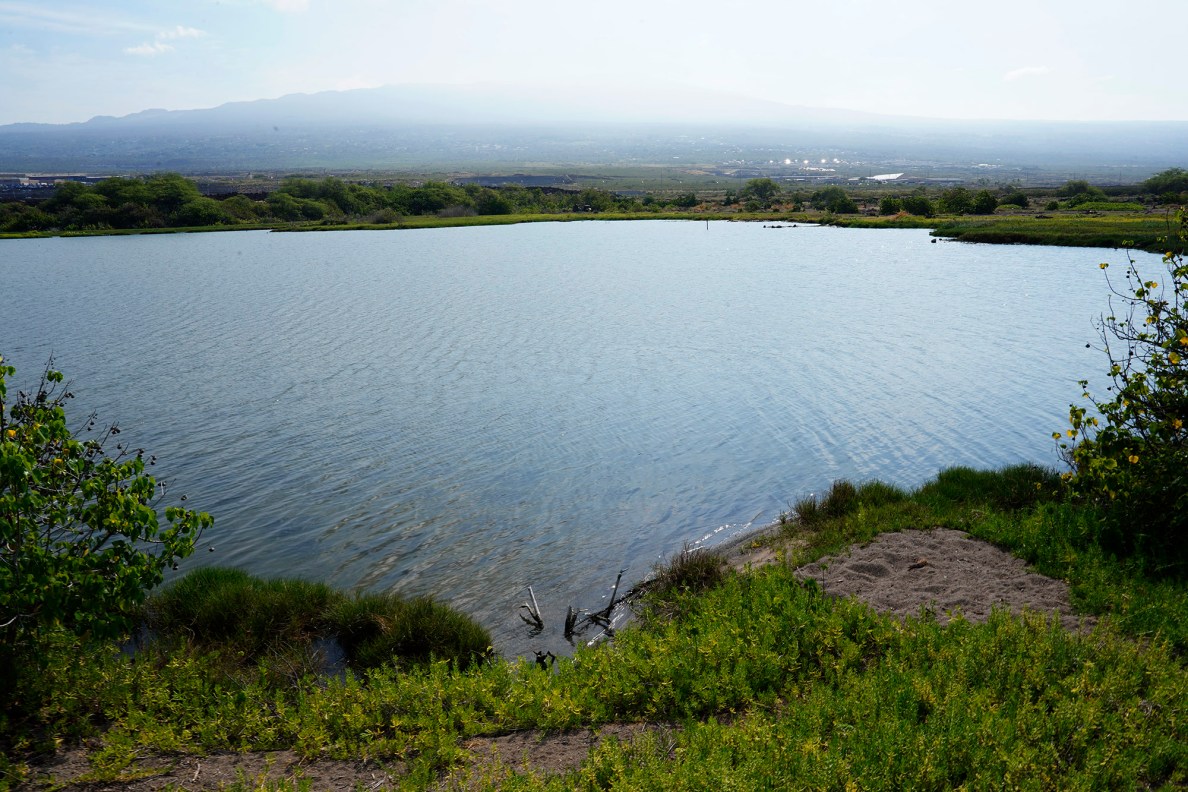
The commission previously weighed adding those conditions in 2022 after its staff consulted local families concerned about the degradation in the fish, limu (seaweed) and other marine species they’ve witnessed along the coast.
However, the conditions were scrapped from the most recent version of the well proposal taken up earlier this month. That sparked renewed community concern. Minakami, meanwhile, said Wednesday that those requirements would be a severe overreach by the commission.
Officials with the Natural Energy Laboratory, which would also be subject to those conditions, did not respond to a request for comment.
The state currently assumes that at most 38 million gallons a day can be pumped sustainably from within the Keauhou boundaries. Water commissioners have said, however, that the methodology used for that estimate is limited and they’ll need to take a different approach to better estimate how much groundwater is available there.
The Ota well, along with the dozen or so other wells that local water experts say are in the works, would be drilled along North Kona’s inland slopes where geologists say groundwater is trapped by subterranean rock formations.
Those aquifers are separated from the lower-lying ones closer to the coast, and advocates for pumping more water in the region argue that makes them a prime place to drill more wells. However, geologists say there nonetheless remains some sort of connection between Keauhou’s inland aquifers and its coastal ones.These connections aren’t fully understood, despite numerous studies in recent years by local U.S. Geological Survey scientists.
How pumping the water upland might eventually impact Kona’s traditional fishing grounds and brackish pools, home to endangered Hawaiian shrimp and damselflies, might not be known for years.
Many of those culturally important sites lie within the Kaloko-Honokōhau National Historical Park, and in 2013 the National Park Service asked the water commission to designate the Keauhou Aquifer System a Groundwater Management Area. The move would give the groundwater there special protection from the state and bring added scrutiny to any proposed wells.
“We must act now because the fresh water that sustains North Kona’s residents and economy is threatened by growing water demand, declining rainfall, and rising sea level,” the park’s then-superintendent, Tammy Ann Duchesne, wrote to then BLNR Chair William Aila. “Fresh water must be preserved for unique cultural and natural resources along the Kona Coast.”
Nonetheless, after several years and strong debate across the community, the commission decided that Keauhou did not meet the standard for that special designation.

A Common Thread
On neighboring Maui, similar tensions have simmered between upscale housing developers who divert stream water to their projects and the island’s native kalo farmers, who rely heavily on those streams but often get short shrifted.
Meanwhile, Gov. Josh Green has notably clashed in the past year with local conservationists and certain Native Hawaiian groups over who should serve as the designated loea, or cultural expert, on the water commission to represent those interests.
Green initially balked at choosing one of several finalists preferred by water rights activists for that seat. He finally appointed one of those finalists, Hannah Springer, earlier this month after his original pick withdrew amid stiff opposition in the state Senate. She’s scheduled for a confirmation hearing Friday before the Senate Water and Land Committee.
Springer comes from North Kona, where the sprawling, rocky slopes don’t have any of the surface streams that Maui does. The region, officials and residents say, depends almost entirely on its groundwater.
The commission deferred last week on the Ota well, Deputy Director Ciara Kahahane said at the meeting, because the newly appointed Springer wasn’t able to join the meeting.
Later that day, however, Minakami testified before state lawmakers that the commission deferred for a different reason: ongoing community concerns.
Now, Kahahane and the water commission’s staff aim to address those concerns by developing what they’re calling an “adaptive management plan” for Keauhou. The details of that so far are vague, but the plan generally aims to further monitor and study the aquifer system and grasp more clearly the impacts of future wells.
Chang said that effort could eventually lead the water commission to reconsider designating Keauhou as a Groundwater Management Area, even though it previously rejected that idea. A bill moving through the state Legislature this session would also fund new monitor wells at Keauhou to better study the impacts of pumping there.
It’s not clear when the Ota well will next come before the commission.
CORRECTION: A previous version of this story misidentified the mountain that lies mauka of Aimakapa Fishpond.
Civil Beat’s coverage of environmental issues on Hawaiʻi island is supported in part by a grant from the Dorrance Family Foundation.