

What The State Refuses To Say About Fatal Child Abuse Cases
A federal law requires states to release information about how they handled child maltreatment cases ending in deaths. Hawaiʻi’s reports raise more questions than they answer.

After a toddler who contracted Covid died in 2021, the state found that her legal guardian had committed medical neglect by failing to seek care.
That investigation triggered a federal requirement that Hawaiʻi’s child welfare system disclose any earlier reports it had received about the caregiver.
The goal of that law is for the public to be able to see whether state social workers were aware something was amiss in a household before a death occurred. If so, did they do everything possible to prevent it?
In this case, the state Department of Human Services divulged in the required report that it had investigated the girl’s legal guardian in 2017, three years before the girl was born.
The woman and her husband had biological children of their own, and DHS received a report of domestic violence in the household. Its investigation that year confirmed a “threat of abuse and neglect” to the kids.
But the state’s summary was perhaps most notable for what it left out.


Two decades earlier, the legal guardian – anonymous in the state’s summary but whose identity other documents reveal to be Jennifer Edwards – failed to seek medical care after she or her partner beat and kicked her infant child, causing internal injuries that later killed the girl.
The arrest and trial of Edwards for that death was frontpage news in the late 1990s. Edwards, at age 20 barely out of foster care herself, was convicted and sentenced to 20 years for reckless manslaughter.
It’s a vivid example of how the three- or four-sentence summaries of child maltreatment deaths omit significant information. The barebones synopses they do include can raise more questions than they answer.
If the state had mentioned Edwards’ 1999 conviction, for instance, the public might reasonably have asked how a Family Court judge approved her as a legal guardian. Judges must find that legal guardians are suitable and that the guardianship is in the best interest of the child.
The federal law requiring the reports, the Child Abuse and Prevention Treatment Act, is so vague that states have interpreted it in wildly varying ways.
In some states, an earlier history like Edwards’ would have been included, in others not. In fact, four states lack policies for disclosing anything at all after a maltreatment death, according to a 2024 report by the American Enterprise Institute examining interpretations of CAPTA in all 50 states.
Yet several states, among them some of the largest such as New York, Florida, Arizona and Pennsylvania, release far more information than Hawaiʻi does, including in some instances the actual case files, not just one- or two-paragraph summaries.
Some states also publicly address the crucial question of what the child welfare system learned from the case and could have done differently. Hawaiʻi, however, does not.

Learning From Tragedy
Of the 1,800 deaths nationwide from child maltreatment each year, a third to a half occur in households that were already being supervised by the child welfare system as a result of maltreatment reports, according to the American Enterprise Institute report.
These tragic cases can offer the public and policymakers a chance to examine the workings of child welfare systems usually shrouded in secrecy. That’s the reasoning behind the 1996 addition to the federal Child Abuse and Prevention Treatment Act: When a child dies, the interest in knowing how it happened outweighs normal privacy concerns.
Civil Beat assembled a database of Hawaiʻi’s CAPTA disclosures for the past 10 years, focusing on cases in which the caregivers of a child who died of maltreatment had previously drawn the attention of the child welfare system.
Other sources can fill in the blanks for those who know where to look. Autopsies, court records, media accounts and other sources all offer clues.
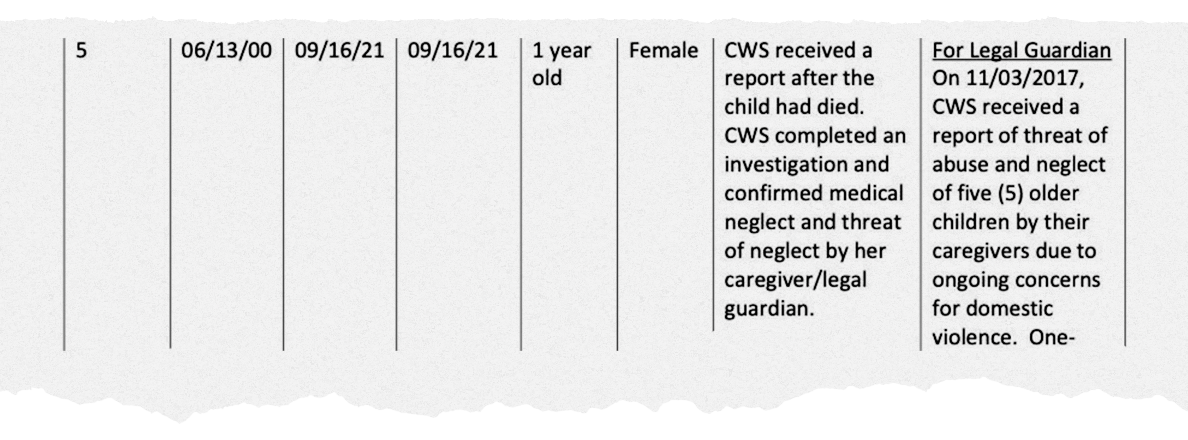
Some child deaths subject to CAPTA disclosure received a lot of attention at first but new information about the state’s actions has since been trickling out with little note. Others — like the Covid death of the child in Edwards’ care — have never before gotten media coverage.
In Hawaiʻi, the most detailed information can come from civil lawsuits, where the power of legal discovery reveals how officials handled the case. In some recent court filings, that information contradicts the official government version.
But civil cases are often settled out of court, closing off that avenue of information.
As a result, the public’s ability to judge the performance of government guardians of children is often significantly undermined by a lack of basic information.
Civil Beat sent a series of questions to DHS about individual cases, but also seeking clarifications in the CAPTA disclosures it has already made public and about its overall policy for releasing information when a child dies of maltreatment.
The department answered none of them.
“Due to confidentiality requirements pursuant to state law, Child Welfare Services … is unable to comment on individual cases,” the department’s written response said, referring to a branch of DHS. “Additionally, as the Department is a party to the litigation you referenced, any response will be provided through the appropriate legal proceedings.”
A Hodgepodge Of Interpretations
One reason states have such a hodgepodge of practices in reporting maltreatment deaths is that the federal government has never written regulations fleshing out how CAPTA should work, leaving each state to go its own way.
The 2024 report says that 17 states fulfill their obligations by publicly announcing maltreatment deaths without anyone asking for that information. Hawaiʻi is not among them.
As a result, children in Hawaiʻi may die of abuse or neglect without the public or media even being aware it has happened.
A Waiʻanae infant, for instance, died under mysterious circumstances in 2021, but because no one was ever charged with a crime, authorities said nothing.

In its three-paragraph CAPTA disclosure made in response to a 2023 Civil Beat request for all maltreatment reports for the past 10 years, DHS said it had been working with the baby’s unnamed “caregiver” after it confirmed a report about her mental health struggles and substance abuse. Then one day when a social worker visited her home, the caregiver revealed that her child had drowned.
But an autopsy and police report tell a far more detailed and bizarre story.
The child’s mother told police she had fainted one night and when she woke up, found herself inexplicably at the Waiʻanae Mall, more than four miles from her home. She hitched a ride from a stranger, she said, and when she got home found her infant unresponsive on the bathroom floor. The autopsy determined that the infant had drowned or inhaled water after being forced to drink a large amount.
The police interviewed a DHS social worker, who said he had visited the mother several times before the baby’s death and found everything to be fine. And yet, the baby’s grandmother told police that her daughter had been acting bizarrely and not visiting as often. Then, she got a text from her daughter saying the baby had been adopted.
The narrative raised the question of how a relative could have noted such erratic behavior while a state social worker was saying everything seemed in order.
The CAPTA disclosure neither poses that question, nor answers it.
What One Civil Case Found, So Far
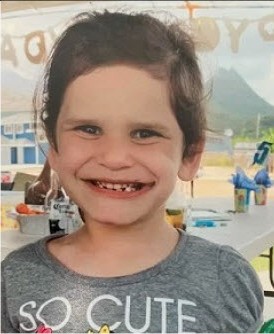
The death of 6-year-old Ariel Sellers is the subject of ongoing civil and criminal actions. And the civil case by Ariel’s estate against the state and some of its nonprofit contractors has recently revealed some startling information – never disclosed under the CAPTA law – about how the case was handled by DHS and others.
The Waimānalo girl disappeared in 2021, setting off an intensive days-long search by police and the community.

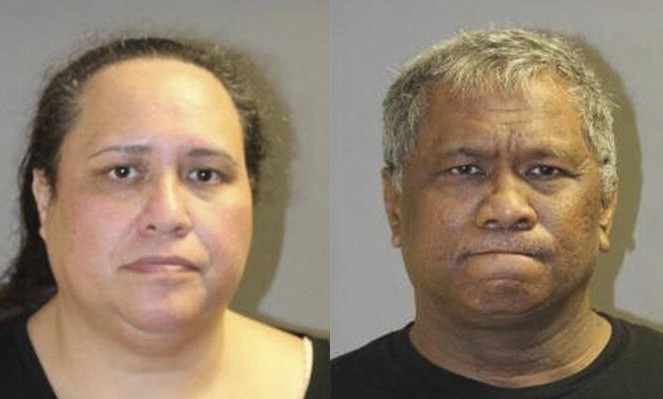
The searchers came up empty. Two months later, her adoptive parents, Isaac and Lehua Kalua, were accused of starving and beating to death the girl they renamed Isabella, having confined her to a dog crate with her mouth duct-taped the night she died. Their trial for second-degree murder is scheduled to start next month.
DHS, which placed Ariel and her siblings with the Kaluas as foster children, has made no CAPTA disclosure at all in her case. It argues that since her body has not been recovered, it cannot say for sure that she died of abuse or neglect.
One of the shortcomings of CAPTA is that it does not specify how a state should determine that a death was from abuse or neglect – whether by an autopsy, its own investigation or some other means.
So Hawaiʻi’s argument that the abuse has not been confirmed does not directly contradict the federal law.
“I don’t think it’s in the spirit of the law, but I don’t think any state wants to follow the spirit of the law,” said Marie Cohen, the author of the American Enterprise Institute report. “They want to follow the letter of the law.”
In the Kalua case, plaintiffs in the civil suit armed with the power of discovery have deposed officials and gotten some answers.
In late 2019 and early 2020, Ariel was taken to three different medical providers for bone fractures – first her fingers, then her collarbone and finally her two bones in her right leg.
The Kaluas offered various explanations for these injuries. But social workers said they suspected the Kaluas were lying, according to motions filed in the case.
So they convened a panel of experts called a multi-disciplinary team, charged with deciding whether the risks to Ariel and her siblings warranted removing them from the Kaluas.
The plaintiffs in January deposed a woman, Alyssa Foster, who had worked on Ariel’s case first with DHS and then for a state contractor called Parents and Children Together, or PACT. She and others have started to fill in the gaps left by the state’s failure to make any CAPTA disclosure in the case.
Foster said that she had expected to participate in the multidisciplinary team’s meeting, but never got an invitation, according to one plaintiff’s motion. She said she was troubled to learn afterwards the identities of two of the people who did attend: adoptive parents Isaac and Lehua Kalua.
“Ms. Foster testified that it was improper to have invited the Kaluas to have participated in the (multidisciplinary team meeting) when their conduct was the subject … ,” according to a plaintiff’s motion filed in late March.
Following that meeting, DHS ended up recommending that Ariel and her siblings be adopted by the Kaluas.
Litigation Discovery At Odds With State Reports
Other civil lawsuits still in the early stages have cited new information about DHS’s alleged mishandling of recent child maltreatment deaths, sometimes directly contradicting or raising questions about what DHS disclosed under the federal law.
Sarai Perez-Rivera died of starvation and dehydration in June. The 3-year-old’s mother and her partner are charged with second degree murder and a variety of other offenses.
DHS’s CAPTA report consists of two paragraphs describing prior abuse and neglect reports and services the family was receiving as a result. The department says only that it had received two reports regarding a different child in the family, and that it did not confirm either.
Yet a lawsuit filed by Sarai’s grandmother against the state and others alleges that DHS received a report on Valentine’s Day 2024 that Sarai’s siblings had been removed from school and that all of the children appeared to be dirty and skinny.
PACT, the state contractor, received similar reports in March and May, according to the lawsuit.
Sarai’s grandmother, Leah Schnabel, told Civil Beat last year that she was the one who made the reports to the state and PACT.
“I did see something. I did say something,” Schnabel told Civil Beat. “But the problem is that it didn’t matter. It didn’t work because no one listened.”
DHS did not respond to questions about why its CAPTA disclosure includes no mention of the reports Schnabel said she made.

A similar discrepancy can be found in the reporting on the 2024 death of Geanna Bradley, a 10-year-old girl whose 2024 killing was eerily reminiscent of Ariel’s. She also was starved and chronically beaten, bound with duct tape and confined to a small part of the porch of her Wahiawā home.
Her legal guardians, Thomas and Brandy Blas, as well as Brandy’s mother Debra Geron, face second-degree murder charges.
In its 58-word CAPTA disclosure, DHS said it had received no reports about the Blases. Yet a civil lawsuit by Geanna’s estate against the Blases, Geron and the state, says that Geanna told her biological father in 2015, when she was only 3, that the Blases had beaten her.
Geanna’s father told a DHS social worker, Deborah Yoshizumi, according to the lawsuit. But Yoshizumi said she knew and trusted the Blases – and that children often make up stories – and dissuaded the father from making an official report.
The father, Gerime Bradley, recounted the same series of events to Civil Beat in 2024. He also mentioned that when Geanna said she had been beaten by Brandy Blas, a worker from Catholic Charities who was supervising the visit also heard her.
Yoshizumi, who has since retired, declined in 2024 to talk to Civil Beat.
DHS’s CAPTA disclosure that it had no reports about the Blases leads to obvious questions. Did Gerime Bradley’s alleged account of abuse to a DHS social worker never get registered officially as a report? Did the Catholic Charities worker, who would also be mandated by law to report child abuse, never call the police or DHS?
Once again, DHS did not respond.

Twice Failed To Seek Medical Care
“Child had been sick prior to her death but no medical attention was sought.”
That was the terse CAPTA summary of DHS’s determination in the Jennifer Edwards case. But a deep dive into other sources paints a fuller picture.
Civil Beat started with DHS’s brief report about the death of an unnamed 15-month-old toddler in 2021.
The Honolulu Medical Examiner was able to use the year the toddler died and her age to find an autopsy for a child named Tyli-lelei Kaili.

An online obituary for Tyli listed her “adopted mom” as Jennifer Edwards Amani. That, in turn, led to court records showing Jennifer Amani had also been known as Jennifer Edwards, and the news coverage of her conviction 22 years earlier in her daughter’s death.
Divorce records between Edwards and the man she married after getting out of prison, Tunu Amani, confirmed both the 1999 case and Tyli’s death, and provided more detail.
In 1997, Edwards and her boyfriend appeared at the hospital with her 20-month-old toddler, Cedra.
The baby was pronounced dead, and an autopsy later showed Cedra had suffered a rupture in her small bowel that became infected over several days, according to media accounts at the time. The medical examiner found the injury had occurred when the girl was struck by something like a fist.
Edwards told a detective that she had punched the toddler repeatedly over several days to punish her for behavior such as sitting on a stranger’s lap on the bus. She said she kicked her on the left side when Cedra was on the floor, and held her head under water in the bath.
At trial, Edwards took back those statements, saying she made them because her boyfriend had threatened her.
But the boyfriend said he had seen Edwards stomp on the girl’s stomach and deprive her of liquids for two days as punishment for throwing up. He said she had once tied a tennis ball to the girl’s mouth.
Prosecutors told the jury that Cedra had died a “slow, agonizing, painful death” that could have been prevented if Edwards had sought medical care.
She was convicted of reckless manslaughter and sentenced to 20 years. Edwards had originally been charged with second degree murder, but the jury went with the lesser charge after deciding the evidence did not show she “knowingly and intentionally” caused the child’s death, the Honolulu Star Bulletin reported at the time.
She ended up serving 15 years. And though DHS would not mention this in its CAPTA disclosure two decades later, in 1997 it confirmed that she had committed physical abuse and a court terminated her parental rights for a surviving infant boy.
Edwards and Amani had three children of their own and their relationship was tumultuous. The couple filed nine temporary restraining orders for domestic abuse against each other between January 2017 and June 2018, the year Jennifer Amani filed for divorce.
Even that did not end the conflict: They sought three more restraining orders from 2019 to 2021.
According to the DHS CAPTA disclosure, it was in 2017 – in the midst of the spate of restraining orders – that someone called to report the domestic abuse. DHS confirmed that the violence threatened the children and they were taken into state custody. After the couple did the counseling services and classes required by DHS, they got the children back.

Caring For Another Infant
Tyli was born on June 13, 2020, and that same day, someone called to report that the biological mother’s substance abuse and mental health issues were a threat to the newborn and three siblings.
DHS’s CAPTA disclosure says that the mother made arrangements for Tyli to be “formally” cared for by an unnamed cousin and that this cousin was granted legal guardianship on April 28, 2021.
In a declaration in her divorce case, Jennifer Edwards states that Tyli was her husband Tunu’s niece and that “I was asked to take guardianship over by Tyli’s mother.”
A Family Court judge had to approve the guardianship, finding that Edwards would be suitable. But did the judge know that she had gotten out prison less than a decade earlier in the death of her daughter?
At the time, DHS had just received a report about the biological mother, and by then had been involved with Edwards over two decades. But in an interview with Civil Beat last week, Edwards said that the judge asked no questions about her past and DHS had no say in the guardianship.
About four months later, on Sept. 6, 2021, Tyli died. The state’s CAPTA disclosure on the death does not say why, but an autopsy specified that she had Covid. The autopsy says she was found face down on a pillow in her playpen, so it was impossible to rule out external factors “such as asphyxia due to sleeping face down on soft bedding.” The autopsy found no evidence of physical abuse. Both the cause and manner of death were listed as “undetermined.”

A database of child death disclosures that DHS sent to Civil Beat in early 2023 stated that it had confirmed medical neglect by the legal guardian, whom it did not name but Civil Beat determined was Edwards, for failing to seek medical care.
Yet this March, DHS sent another summary of CAPTA cases to Public First Law Center, which advocates for open government. This list included a different version of Tyli’s death. It states that the “caregiver” – who could be either Tyli’s biological mother or Jennifer Edwards – had five prior reports of suspected abuse or neglect for “other children.” Two of these reports, it says, were confirmed.

Since the report does not give dates or specify who the caregiver was, it’s impossible to determine if either of these confirmed reports was the 1997 death of Cedra and DHS did not clarify.
Despite all of this, Jennifer Edwards stated in her divorce case that, after Tyli’s death, DHS had investigated her “per standard protocol.” After the autopsy determined the cause of Tyli’s death to be Covid, she wrote, she was “cleared” by DHS.
Edwards told Civil Beat she was surprised to learn that DHS had made a finding of medical neglect in Tyli’s death. DHS did not respond to a question about whether that initial finding had ever been reversed.
In December 2021, Jennifer and Tunu Amani’s divorce was finalized. In April 2022, the court awarded Tunu Amani full physical custody of their three children, then ages 6 to 8, with Edwards to share legal custody with visitation rights.
“The public has a right to know.” — Jennifer Edwards
Then, in 2024, the judge – considering a request to expand Jennifer Edwards’ visitation – asked DHS to report on whether she was a danger to her children. That report was sealed. But a filing in the divorce case says DHS found no safety concerns.
In September, the judge said that Edwards could share custody of the children with her ex-husband.
Edwards told Civil Beat that she has worked hard to move beyond what happened two decades ago. She counsels incarcerated women on how to overcome trauma, she said, and serves as a youth pastor.
“I’m active in my community,” she said. “I’m not saying it takes away the past, but I’ve made great strides to make a positive impact.”
However, Edwards also said she believes the state should be transparent about its handling of child maltreatment cases. “The public has a right to know,” she said. Even though civil suits can reveal information about the state’s actions, she said that too often the state settles to avoid that.
“They buy them out and that’s why it’s not reported,” she said. “Certain things are swept under the rug.”
Civil Beat’s community health coverage is supported by the Atherton Family Foundation.
Civil Beat’s investigation into past foster child deaths and near-deaths is funded in part by the Fund for Investigative Journalism.
