Army Proposes Downsizing Its Training Grounds On Oʻahu
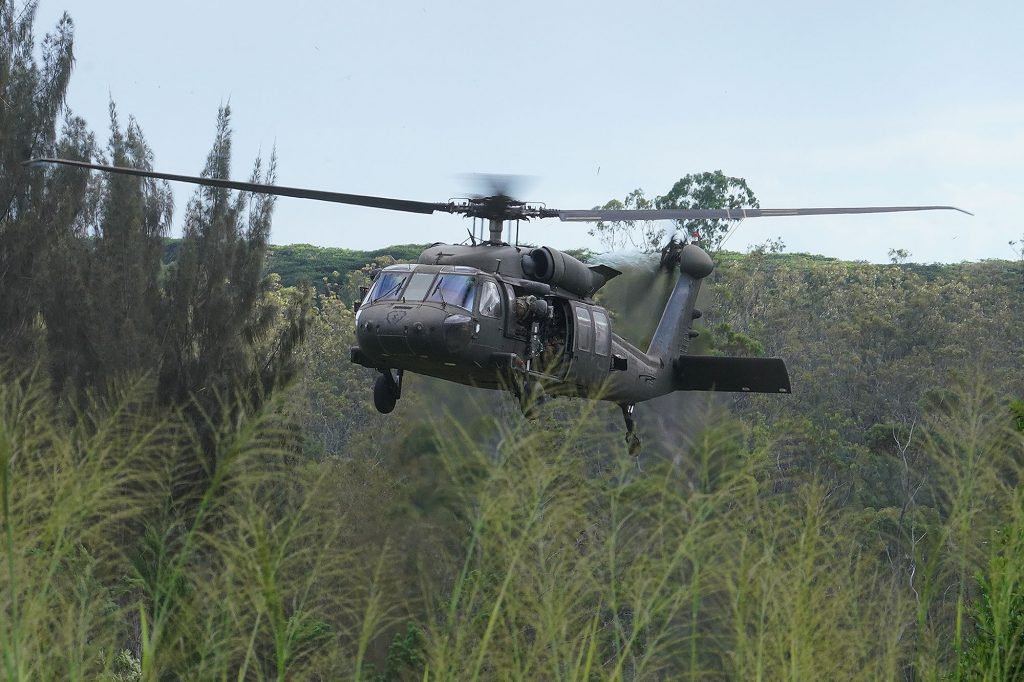
Leased lands the military proposes turning back over to the state have mostly been used for aviation training.
The U.S. Army signaled its intent to return to the state the vast majority of lands on Oʻahu it currently leases for training, according to recently submitted environmental documents.
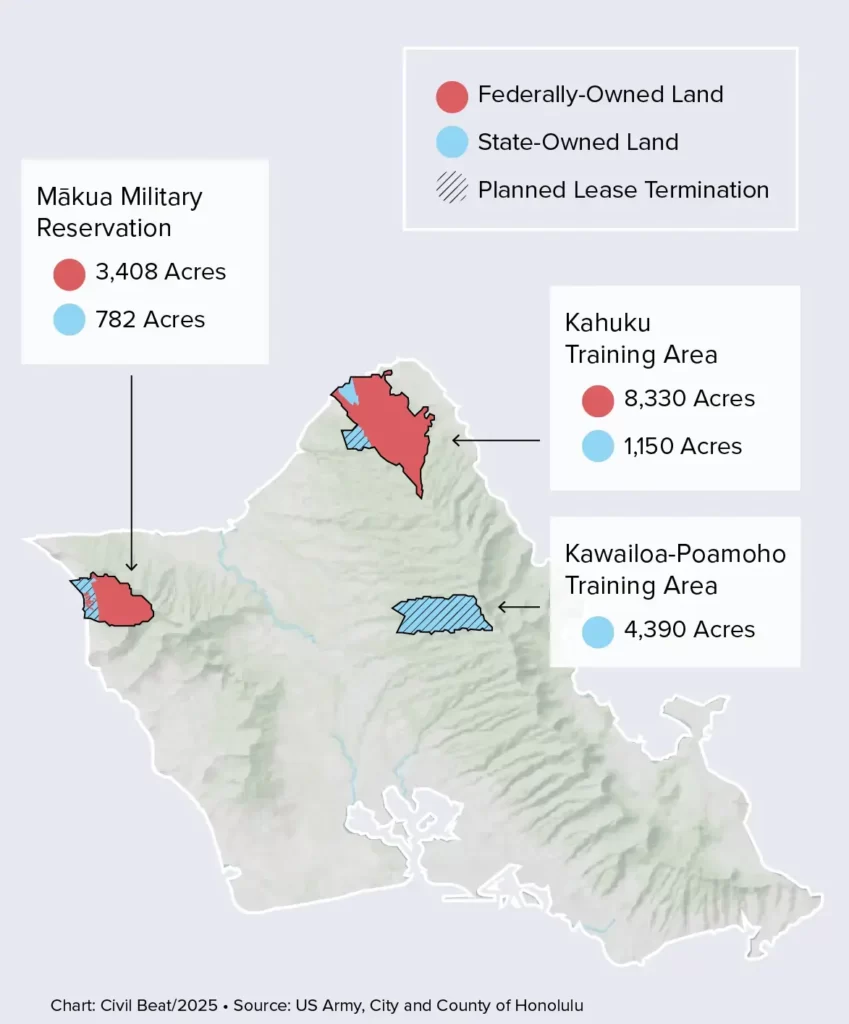
Those include parts of the Kahuku Training Area that aren’t used for ground maneuvers as well as all 4,390 acres in the Kawailoa-Poamoho Training Area that for the last decade have almost exclusively been used for aviation training, according to the Army’s final environmental impact statement posted online Thursday night.
The Army has also proposed returning all of the state-owned land in the Mākua Military Reservation, although that encompasses just a fraction of the lands it uses in that valley on the Waiʻanae Coast.
The impact to training is expected to be minimal. The federal government would still control more than 3,400 acres in Mākua and more than 8,300 in Kahuku, which includes a 400-acre tract of state-owned land that the Army wants to retain for its land-based exercises.
Retention of that tract in Kahuku would be subject to the state coming to new lease terms with the Army — a process that is expected to become much more difficult with new pushback coming from the state resources agency in charge of the leases as well as groups of activists that have mobilized to try to stop the military from retaining land in the islands.
What’s Next For Army Leases?
It’s yet to be seen how the Army’s proposal to reduce the use of state land on Oʻahu would interplay with its ongoing efforts to retain land on the Big Island’s Pōhakuloa Training Area, where more than 22,000 acres of state land connect two large parcels of federally owned land on which the Army conducts long-range artillery exercises.
The Army has not yet announced how much of those lands it plans to retain. A hint at what could come next there may lie in Congress’ upcoming draft of the National Defense Authorization Act, expected in the coming months.
The annual measure broadly sets priorities around how the Department of Defense should spend its money but is separate from the appropriations bill that actually provides the military with funds.
Army officials have floated the idea of buying the land in Pōhakuloa or proposing a land swap with the state. Either avenue would likely require authorization through the NDAA, according to Kai Kahele, chairman of the Office of Hawaiian Affairs and a former congressman.
Kahele wants OHA, created in 1978 for the betterment of Native Hawaiians, to be at the negotiating table on the military’s leases alongside Gov. Josh Green and Hawaiʻi’s congressional delegation.
“We want to make sure … whatever the end state is, that OHA is there at the table and is able to provide that unique perspective of the Native Hawaiian community in regards to these lands,” Kahele said.
He said the office’s Board of Trustees would likely take a vote on its position on the military’s leases later this year.
The Army’s leases for its lands on Oʻahu and for the Pōhakuloa Training Area on the Big Island expire in 2029. The state entered 65-year leases for those lands in 1964, charging the Army just $1 for each the leases.
Those lands have been the subject of many protests over the years and recently became a focal point of Hawaiʻi’s changing relationship with the military following a series of leaks at the Red Hill fuel storage facility in 2021 that contaminated Oʻahu’s drinking water.
The next hurdle for the Army will come in June when the state land board is expected to take up the environmental report that covers the three training areas on Oʻahu. At the land board’s last meeting on May 9, it rejected the Army’s EIS to retain state land in Pōhakuloa over concerns from the state Department of Land and Natural Resources that the military didn’t do enough to account for impacts to endangered species.
‘Minimal Impact’ On Training
In the Kawailoa–Poamoho Training Area, which the Army proposes giving up completely, the report says that the endangered ʻōpeʻapeʻa — the hoary bat — may roost in the area. But surveys conducted by the military found no roosting bats.
The biggest impact on wildlife could come from helicopters that may still need to fly over the area en route to other training grounds or installations. The report said noise could startle animals, causing them to flee nests and burn energy, increasing their demand for food.
Still, under the proposal in the report, the Army said the long-term impact on wildlife would be negligible.
Ground maneuvers in Poamoho stopped about a decade ago and only blank ammunition can be fired.
In the Kahuku Training Area, the Army proposes handing a piece of land called Tract A-3 back to the state. The land was once used for reconnaissance training but has mostly been the site of low-level helicopter flights for the last 20 years, according to the report.
Giving up those lands “would have minimal impact on ongoing mission training,” according to the environmental report. Air and ground exercises could still continue on the 8,330 acres of federal land in Kahuku as well as a smaller, 400-acre state-owned parcel known as Tract A-1.
The Army said that it would clean the lands of any unexploded ordnance or debris left behind by past training maneuvers on the more than 5,000 acres of land that it is proposing handing back to the state when leases expire in 2029.