Can’t Afford A Lawyer? Good Luck Getting Help On Neighbor Islands
Lawmakers are taking steps to address a severe shortage of court-appointed attorneys across the state, but lawyers and judges say it may not be enough to solve the problem.
After Makaalohi Liftee was pulled over for speeding and arrested for driving under the influence because an officer smelled marijuana in his car, the 27-year-old Hawaiʻi island resident thought his case would be thrown out quickly.
Liftee had taken a drug test for the police, and he said that he hadn’t been driving while high. But he couldn’t afford a lawyer to present his case to a judge. Instead, he had to rely on the court system to provide an attorney for him.
It was a process that took nearly five months. Every few weeks, Liftee would take time off work to report to the Kona District Court at 8:30 a.m., sitting on a hard, wooden bench for hours — only to have the judge call his name and tell him there was no attorney available.
“You can’t go to work, you can’t make money,” he said. “It feels like it’s holding you back a little bit, like somebody’s holding you back.”
When public defenders aren’t available or have a conflict of interest, the court system turns to private attorneys willing to represent people who can’t pay for a lawyer. Lately, such attorneys are few and far between.

The shortage of private attorneys willing to take court-appointed cases is a serious problem statewide, but it is particularly acute in Hawaiʻi’s Third Circuit District Court in Kona, which handles traffic offenses and misdemeanors, including driving under the influence cases.
More than a third of defendants in need of a court-appointed attorney have been waiting longer than three months for a lawyer. With no attorneys reliably taking court-appointed cases, lawyers are flying in from Maui to handle dozens of cases a day in an effort to clear the backlog.
“It’s catastrophic,” said Kori Weinberger, a former prosecutor who works for the Judiciary but spoke in her capacity as vice president of the West Hawaiʻi Bar Association. “The courts are begging attorneys to take cases a lot of times.”
Low pay is part of the problem. The state offers $90 an hour, far less than what attorneys can make representing needy clients in the federal court system and a mere fraction of what many attorneys charge private clients.
Lawmakers voted this week to raise the rate for the first time in 20 years — to $150 an hour — a move that prosecutors, public defenders and judges say is key to addressing a crisis that threatens people’s constitutional rights to counsel and a speedy resolution of their case.
But without more public defenders and a higher maximum payment for DUI cases in particular, some say the pay increase alone won’t fully resolve an issue already so acute that some lawyers are asking for cases to be dismissed because they’ve gone on too long.
Decades Without A Pay Raise
The state has an obligation to provide an attorney for people who can’t afford one when jail time is on the line, often through a public defender.
To qualify for a court-funded lawyer, someone needs to be at or below 150% of the poverty threshold or receive food stamps. The vast majority of defendants in Hawaiʻi meet that bar, according to judges and attorneys. But only Mississippi spends less on indigent defense per capita than Hawaiʻi, according to the Sixth Amendment Center, which works on access to counsel issues nationally.
Over the years, judges and defense attorneys say fewer private attorneys are willing to take on cases that public defenders can’t. Many have stepped away from court-appointed work, finding it financially impractical.
In addition to the relatively low hourly rate for state court work, there are also limits on the total amount charged for a case. For a petty misdemeanor like operating a vehicle under the influence of an intoxicant, court-appointed attorneys are capped at $900. Private attorneys typically charge $4,500 to $5,000 for these cases, which are notoriously time-intensive and complex.
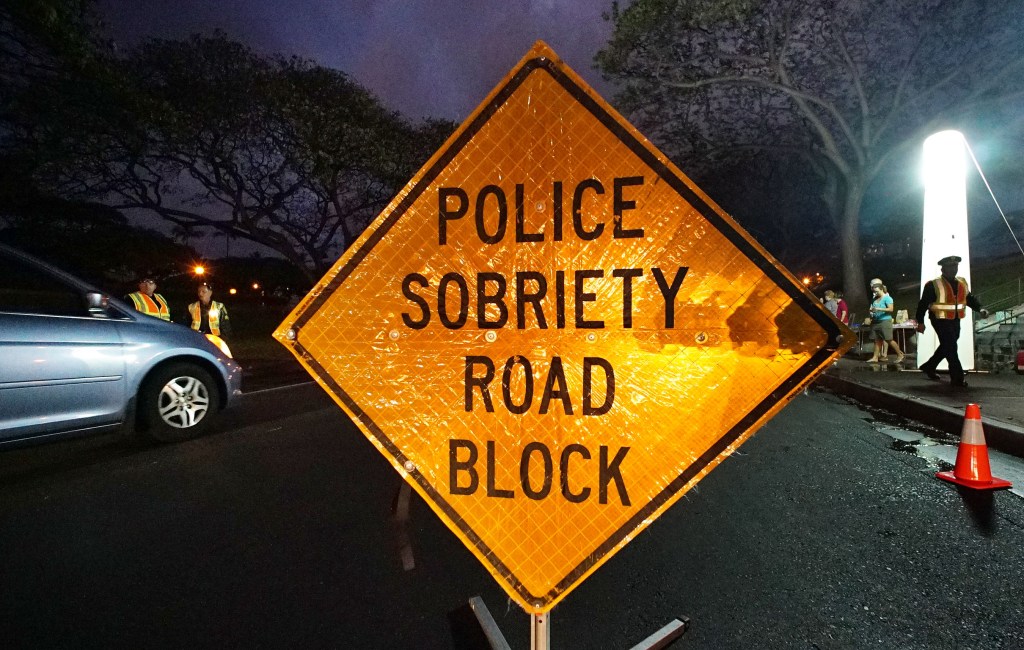
While the rates for cases in state court have remained stagnant, pay for federal cases has gone up to $175 an hour, driving many defense lawyers away from Hawaiʻi’s district and Circuit Courts.
“It’s just not cost beneficial. And so some people who used to do court-appointed just said, No, I can’t afford it, I’m not going to do it anymore. Slowly attrition, over time,” said Robert D. S. Kim, the Chief Court Administrator in the Third Circuit, which covers the Big Island. “This is a slow train. We could see it coming.”
In the First Circuit, which covers Oʻahu, there are 13 attorneys willing to take court-appointed murder cases, Deputy Chief Judge Ronald G. Johnson told lawmakers in March. Only 11 attorneys are willing to take sexual assaults, and 25 attorneys are on the list to represent clients with for lower-level class C felonies. Since last July, there have been 194 requests to the court to appoint private counsel to represent a defendant in Circuit Court, according to Brooks Baehr, the spokesperson for the state Judiciary.
The situation on neighboring islands is often more severe. With fewer public defenders on island, the chances are higher that they will have to recuse themselves because their office has represented a co-defendant or a victim in the past. And there’s a smaller pool of court-appointed attorneys to draw from.
The Crisis In Kona
On the Big Island, Kona is particularly feeling the crunch.
That’s because the Kailua-Kona Public Defender’s Office is severely understaffed. The office has one public defender primarily focused on traffic offenses and misdemeanors in District Court and that person has a caseload in excess of 300 cases at any given time, according to Hayley Cheng, the first deputy public defender.
The other public defenders step in when possible, but they also handle felonies in Circuit Court. The Kona office hired a new attorney in early April, bringing the total public defenders to four, but two positions remain vacant.
“We cannot overly burden our attorneys, who are already overworked, under-resourced and are dealing with an incredibly high volume of cases,” Cheng said. “The other side to that is every client that is represented by either the public defender’s office or by court-appointed counsel is entitled to effective representation.”

The staffing shortage grew so severe that last June the Kona office stopped taking high-level Class A felonies entirely, including murder, sexual assault and certain drug crimes. They also stopped representing people facing charges in District Court for driving under the influence, which are less severe but time-intensive cases.
Even when their office is fully staffed, Cheng said that court-appointed attorneys are needed to keep the courts running and ensure needy clients get legal representation.
“It does affect the client negatively when we do not have enough attorneys or qualified attorneys who are willing to do the work,” she said.
From June 2024 to January 2025, the public defender’s office declined to take 125 felony cases, requiring the court to appoint an attorney, Cheng said. But there are only a handful of private attorneys who will reliably take those cases in Kona.
Some lawyers on the court’s list will only take certain types of cases. Others, despite having volunteered to represent indigent clients, haven’t done so at all in recent memory. Of the 29 names on the court’s list of attorneys willing to represent indigent clients facing a felony, only five regularly do so, according to Baehr.
Things are even worse in the District Court in Kona. Public defenders had to decline to take 262 lower-level cases during the same time period. None of the private attorneys on the court’s list reliably take court-appointed cases, though some do on occasion, according to Baehr.
“When we can’t find anybody, judges will personally call attorneys to basically, I don’t want to say beg but I guess that’s the best description, to help the court,” Kim said. “Just think of how much time our staff is sidetracked from trying to get the business done, just calling attorneys. I mean, holy smokes.”
In one case, said Kim, court staff had to call 50 attorneys before they found someone to represent the defendant. Cases get postponed over and over, creating “mountain of cases that couldn’t be disposed of.”
There were 129 defendants with cases in Kona’s District Court who need a court-appointed attorney as of April 22, according to a list of cases provided by the court. People have been on the list for an average of three months, though a handful have gone more than 200 days without someone to represent them.
Unfair To Defendants And Victims
Without a defense attorney, cases grind to a halt.
“I can’t do anything until I have somebody to communicate with on the other side,” said Annaliese Wolf, a prosecutor who spoke in her capacity as the president of the West Hawaiʻi Bar Association.
Technically, she can fulfill her legal obligations by giving police reports and evidence she plans to use to the defendant. “Do I feel comfortable about it? Not really,” she said, explaining that attorneys, unlike defendants, have professional obligations to protect sensitive information.
Delays put her in a tough position when working with victims.
“I can’t get a resolution for somebody. Somebody can’t get paid restitution, somebody can’t start to have closure on an issue or anything like that,” she said. “That’s a real bitter pill to swallow.”
A delay in a case is not without consequence for defendants either. People who are released pre-trial have to report back to court for regular hearings; if they miss one, a judge can issue a bench warrant. If someone is sitting in jail unable to pay bail, they could stay there until an attorney can argue for them to be released or their bail decreased.
“Who’s suffering at the end of all of this are folks who can’t afford attorneys, people with harder abilities to access justice.”
Joanne Hicks, Maui attorney
“If there is a delay in the case, their life is essentially on hold,” Cheng said. “If you are trying to either relocate or secure employment, but you have a pending case that needs a resolution before you can move forward, then that could impact them.”
To address the backlog, two defense attorneys from Maui have been flying back and forth every few weeks to handle these cases in Kona. One of them, Joanne Hicks, has represented clients in nearly 40 cases. Another attorney from Maui has taken a few dozen more.
“Who’s suffering at the end of all of this are folks who can’t afford attorneys, people with harder abilities to access justice,” Hicks said.
Hicks is now trying to have some of her cases dismissed because they have dragged on so long. Under a Hawaiʻi state law called Rule 48, cases must go to trial within 180 days, barring certain circumstances. If cases stretch beyond that, they can be dismissed. Hicks has filed Rule 48 motions in seven cases, and plans to file seven more shortly.
But flying in attorneys isn’t sustainable. To attorneys like Hicks, taking on court-appointed driving under the influence cases only makes financial sense when she can take dozens of cases at once. She isn’t sure she’ll do this again.
“We all have a responsibility to take … lower cost work,” she said. “But when you’re running a business, it can’t be your main thing.”
Relief May Be On The Horizon
On Wednesday, lawmakers voted to raise the rates for court-appointed attorneys representing clients in criminal cases for the first time in two decades. House Bill 396 appropriates more than $2 million to pay for court-appointed attorneys.
If signed into law by the governor, court-appointed attorneys will make $150 an hour, an increase of $60. Caps on cases have been raised to $3,000 for misdemeanors that waive the right to a trial, $6,000 for misdemeanors that go before a jury and $12,000 for all felonies. For petty misdemeanors, which includes many driving under the influence cases, the maximum total compensation is $1,800 – twice as much as it’s been in the past.
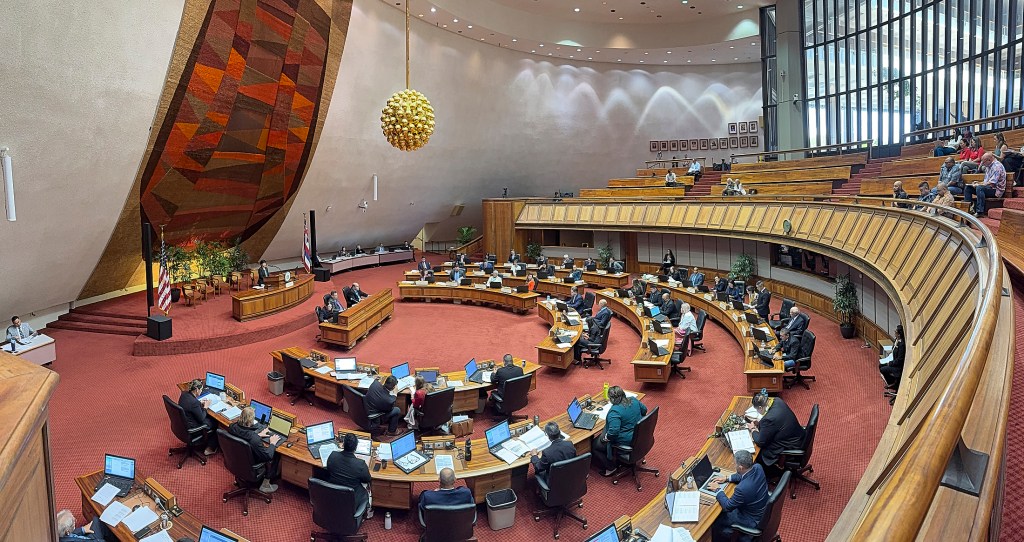
That’s still lower than the $175 an hour that court-appointed attorneys make on federal cases. But judges and prosecutors are hopeful that the increase will lure back attorneys who had previously decided not to take criminal cases in state court.
But the fix isn’t absolute, Kim said.
“There’s an underlying hidden problem,” he said. “We need the young attorneys, the people who are coming out of law schools to basically take a few of these court appointed cases to have some trial experience and so we’ll attack this problem on all fronts.”
Others say rates still need to be increased for driving under the influence charges in particular. The cap on these cases is still about $2,000 short of what private attorneys charge.
“This is a huge increase, but it’s not going to solve everything, especially for DUI,” said Weinberger. “The cap is way too low.”
For Liftee, the wait for an attorney caused tension with his family and his boss, and he lost income every time he had to take time off work to go to court.
After months of waiting, Hicks was assigned to be his attorney, and she immediately filed a motion to have his case dismissed. On Monday, that motion was granted.
“A lot of pressure off the shoulders right there,” he said. “Now I can focus on other things.”