Hawaiʻi Lacks Resources For Homeless College Students
The effort to help struggling students at the University of Hawaiʻi is led by volunteer faculty and staff. Other states allocate money to help college students alleviate hardships.
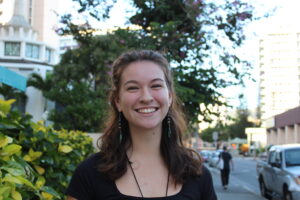
Grace Reynon always makes sure her school-issued laptop and her cellphone are charged before she takes the bus away from Windward Community College.
Unlike the majority of her classmates, she knows the feeling of leaving school without knowing if she’ll be sleeping on a sofa, a mattress on the floor or in a car.
Reynon, who was homeless when she first enrolled at the community college two years ago, got help and is living in an apartment building for disadvantaged youth. She attends WCC on a full-ride scholarship studying theater and social work while also working in student support services at the college.
If Reynon was a college student in states like Washington or California, she’d have access to reduced-priced meals, laundry services and a robust network of housing assistance. But not in Hawaiʻi, where the state provides no such targeted resources to alleviate hardships in the 10-campus University of Hawaiʻi system.
Reynon’s situation, though unique, is not an isolated experience.
Nationally, 48% of college students experience housing insecurity and 14% deal with homelessness, according to a survey published earlier this year by Temple University in Philadelphia.
‘Hard To Put A Price On It’
It’s not known how many University of Hawaiʻi students are homeless; the university doesn’t officially inquire about students’ housing status and previous estimates are based on self-reported surveys, which aren’t always accurate. But homelessness is a widespread problem in Hawaiʻi, with recent surveys counting more than 4,000 people living on the streets.
Many other states provide financial resources to their public university systems to fund on-campus housing programs and homeless coordinators. Though Hawaiʻi lawmakers allocated tens of millions of dollars for statewide homeless services in the most recent two-year budget, none went to UH to support homeless students.
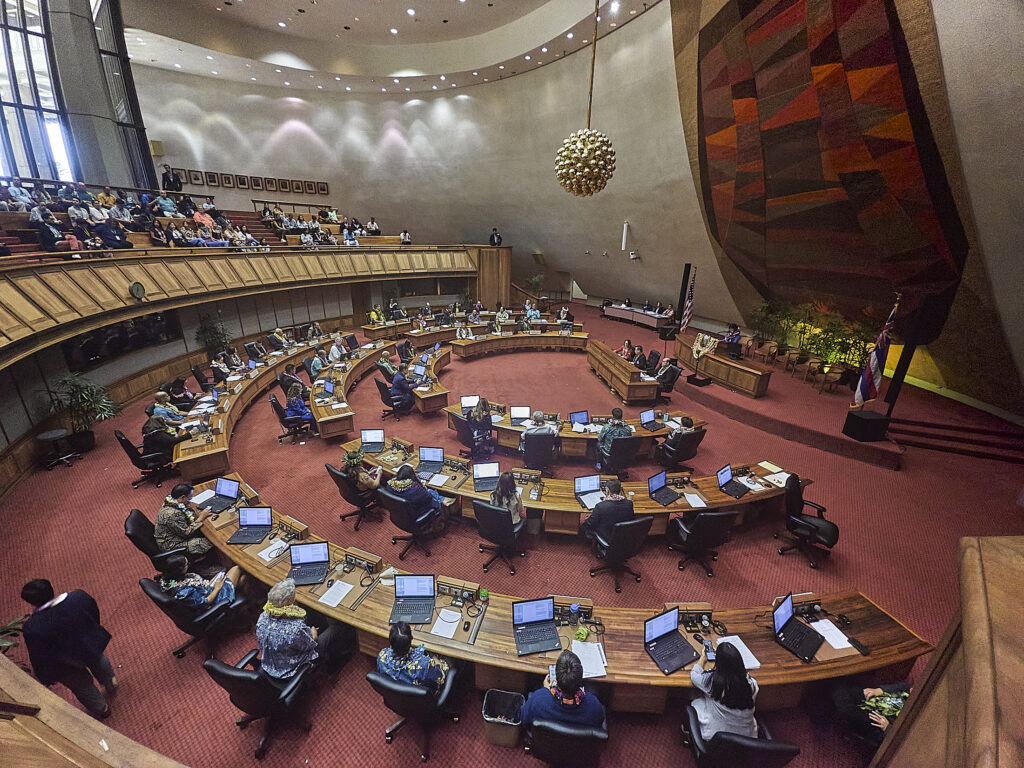
A bill that proposed creating stability programs for homeless students and establishing outreach coordinators at each of the UH campuses died without getting a hearing.
Rep. Andrew Garrett, who introduced that bill and chairs the House Higher Education Committee, said he plans to try again next year.
He is also waiting on the outcome of a task force that includes officials from UH and the state education department convened to address basic needs of students.
“We’ll come back next year and see what the financial cost might be and what the scope of this program might look like as well,” Garrett said. “Right now it’s just hard to put a price on it.”
For now, UH staff are making do with volunteers.
Albie Miles is a UH West Oʻahu professor and a researcher on an updated survey of basic needs insecurity among UH students that’s set to be completed later this year.
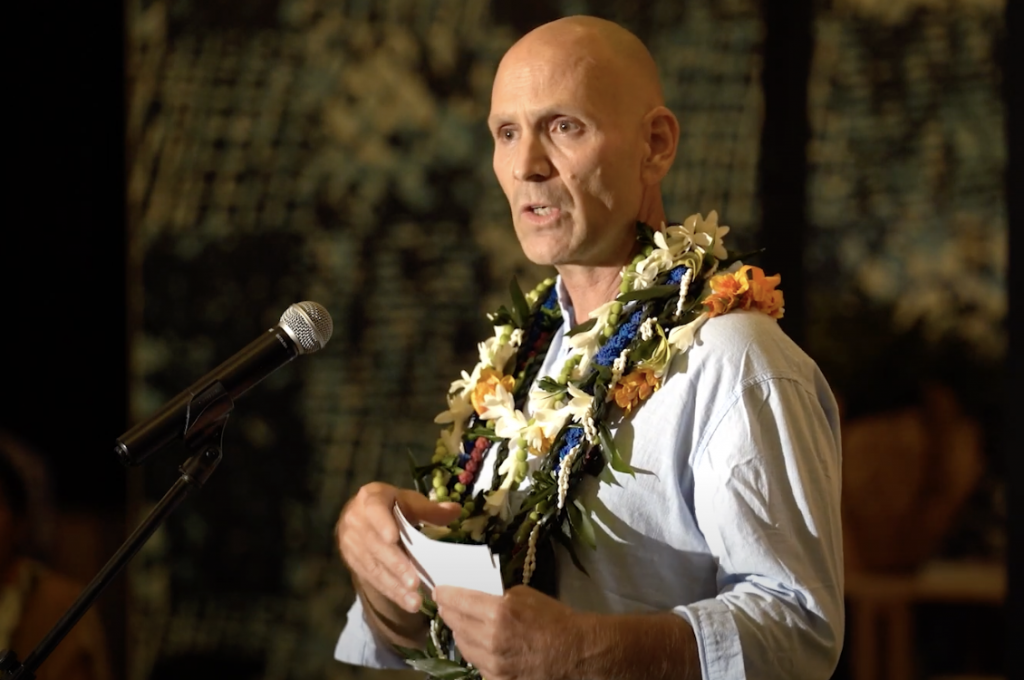
Instead of homeless coordinators, he said UH campuses have basic needs coordinators focusing on numerous issues. They are often student affairs workers who either volunteered or were asked to take on that role, he said, adding that some of the smaller campuses, mainly the community colleges, don’t have designated coordinators.
The university established a virtual basic needs cafe in 2023, meant to connect students struggling with housing, hunger, finances and mental health problems with services that can help them.
UH Mānoa on Oʻahu and UH Hilo on the Big Island are the only two campuses with on-campus housing, meaning that students elsewhere are often referred to one of these for emergency shelter. But Tehani Keanini, the system-wide student basic needs coordinator, described this as a “short-term fix for a long-term problem.”
Miles attributed the root cause of the shaky existing resources to the fact that UH receives no money from the state specifically for basic needs efforts.
He previously worked in the University of California system, which has received more than $24 million annually since 2019 for rehousing and basic needs programs, according to a report to the California Legislature.
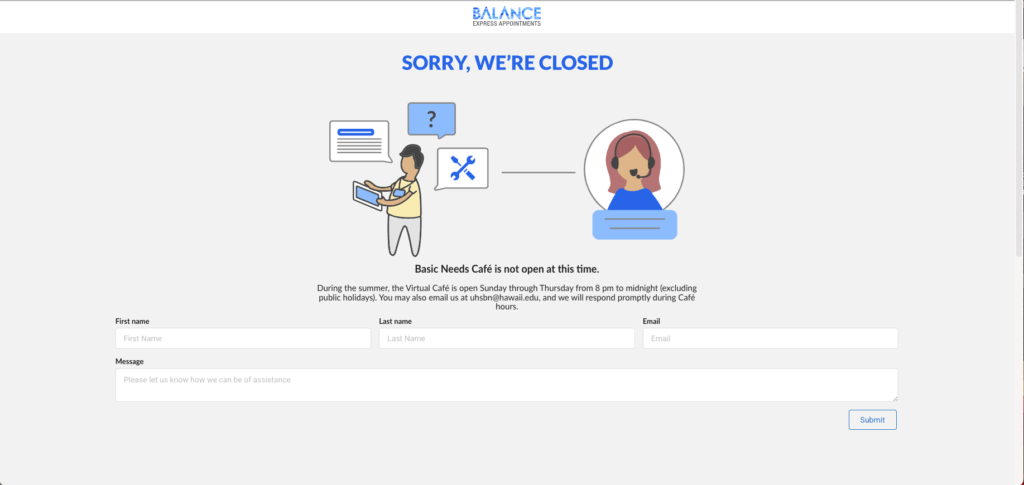
In an ideal world with access to substantial funding, Miles said he would start with establishing a physical basic needs cafe on each of the 10 campuses, with coordinators at each location. They would provide free food, clothing, Wi-Fi, medicine and other necessities.
Another obstacle in the fight for funding and resources for students is the perception that college homelessness is not a pressing issue. Miles stated his frustration with people not believing that students are truly struggling with housing, food and mental health.
A 2021 survey conducted by UH and the Hope Center found that 58% of UH students reported some sort of basic needs shortages including food and housing. A quarter said they were hungry but didn’t eat because there wasn’t enough money for food. About 14% to 15% said they experienced homelessness.
“What we need to do is convince people that this is based in reality,” Miles said. “You can’t just say ‘suck it up.’ That’s not an option when they’re living in their damn cars.”
Seeking Help
Sandra Goldrick-Rab, the founder of the Hope Center at Temple University, which conducts research on homeless students, said students facing housing insecurity are less likely to participate in surveys that seek to determine resourcing levels. They already face barriers to accessing technology and have time constraints.
Those same constraints could mean they are less likely to seek help as well. Hope Center researchers also found that Indigenous students experienced higher rates of homelessness compared to Black or white students.
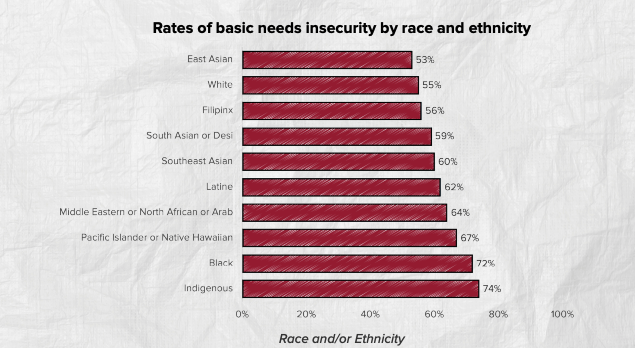
Goldrick-Rab said students often think their situation is not severe enough to warrant the resources that are available to them.
“We’ve taught people that there’s a finite number of resources rather than teaching people that if the resources are used up, we will create more,” she said.
For some, scarcity has become a way of life.
Reynon, the Windward Community College student, had housing problems when she was a student at Kamehameha Schools. She boarded at the school, but that ended when she graduated.
“It was like a rug had been pulled out from under me,” she said.
She couldn’t move back in with her parents for personal reasons, so she turned to her brother’s couch. He never asked for rent because he knew college was her way out of years of instability and struggle.
“I was still getting my ass on that bus every morning at 6 a.m. to go to school,” she said.

Reynon found a place in Lydia House, a Honolulu apartment building run by the Liliʻuokalani Trust, which was founded in 1909 to help orphans and youth experiencing poverty.
She said this is the most stable housing she’s had for most of her life. But she still keeps a suitcase packed in her closet, always at the ready, just in case. After years of bouncing around places to sleep, the feeling of unease is hard to shake.
She pleaded for people to have more empathy toward struggling students and those on the streets, emphasizing that it’s impossible to tell what someone’s going through behind the scenes.
“Everyone is one mistake or one paycheck away from being on the streets,” Reynon said. “Homelessness doesn’t care how many hours you’re putting in or what kind of job you’re working. This could be you tomorrow.”
CORRECTION: An earlier version of this story misstated how Reynon boarded at Kamehameha Schools as well as when and by whom the virtual special needs cafe was established. The story has been corrected.