

Lunch Debt And Book Fines Are The Last Barriers To Graduation
Hawaiʻi requires high school seniors pay off school debts before donning a cap and gown. Not all families can afford to.
A few years ago, ʻIlima Intermediate teacher Sarah Milianta-Laffin was surprised to see a student with previously good attendance start showing up to class late and without her uniform at the end of the year.
The teen earned enough tardy slips in the final weeks of school to be excluded from her eighth-grade promotion ceremony — a consequence that Milianta-Laffin believes the student was deliberately seeking.
ʻIlima Intermediate requires students to pay their meal balances, return library books and clear all other financial obligations before participating in celebratory end-of-year activities. But when students can’t afford to pay their debts, Milianta-Laffin said, they sometimes try to avoid being sidelined for financial reasons by misbehaving to get a less embarrassing excuse for missing class celebrations.
The school wants students to enjoy the end of the year and consistently reminds families to pay off their debt, Milianta-Laffin said. Teachers will also donate money to help clear students’ meal balances, but some kids are ashamed to speak up and ask for help if their families are struggling.

By the time Milianta-Laffin figured out that the student had started misbehaving shortly after finding out her name was on a school list of students who owed lunch money, it was too late to intervene.
“Social development really can take a back seat if the kids know that they can’t participate at the same level as their peers,” Milianta-Laffin said.
The end-of-year policy isn’t unique to ʻIlima Intermediate. Other elementary and middle schools require students clear their debts before participating in celebrations during the final days of school. The Board of Education also has a statewide policy requiring high school seniors to resolve school financial obligations before they can participate in graduation.
Seniors who still owe money at the end of the year aren’t allowed to participate in commencement, although they still receive their diplomas as long as they’ve completed the academic requirements.
The Department of Education doesn’t track how many students are unable to participate in graduation ceremonies each year because of unpaid debts, communications director Nanea Ching said. As of last month, Hawaiʻi families had accrued more than $105,000 in school meal debt this year, although the department did not have details on how many individual students owed money, Ching said.
In addition to meal debt, student obligations can include fees for lost or damaged textbooks, unreturned athletic and school uniforms and fees for student activities.

Some teachers say policies around school debt penalize low-income students whose families can’t afford to cover the costs of lost textbooks or meal balances that accumulate during the school year. Donations by teachers and community members to clear the debt are an admirable but imperfect solution, Board of Education Chair Roy Takumi said.
As former chair of the House Education Committee, Takumi once proposed that the Legislature create a $1 million discretionary fund that schools could use to cover unpaid student debts and other costs like student transportation. The proposal didn’t pass, he said, and it’s currently up to principals to work with families on a case-by-case basis to settle debts at the end of the year.
“You don’t want to limit students from participating in the whole inventory of opportunities,” Takumi said, “because they can’t afford to pay.”
Different Solutions For Meal Debt
Takumi hasn’t heard of any seniors being excluded from graduation because of unpaid debt as a former lawmaker or current education board member, although he’s previously received calls from parents whose seniors couldn’t participate in graduation because of their behavior. The board doesn’t have any plans to revise its policy around student obligations and graduation, although Takumi hopes the ongoing push to provide free school meals to more students will help families who are struggling with lunch debt.
Last month, Hawaiʻi lawmakers passed a bill to increase access to free school meals, starting with students who currently qualify for reduced-price lunch. By fall 2026, the expansion would include children whose families earn up to 300% of the federal poverty level or roughly $110,000 for a family of four.
When schools penalize students for failing to pay their meal debt, Milianta-Laffin said, it can leave kids feeling embarrassed and self-conscious about their family finances and other factors that are out of their control.
“By making sure more kids have universal free meals, that zeros out one of those shame opportunities where you might miss access to something and it’s not your fault,” she said.
Schools on the mainland have also grappled with the challenge of holding students accountable for outstanding debt while still allowing them to participate in major events like graduation.
In one school district in Kansas, 200 to 300 seniors faced the possibility of not participating in graduation because of unpaid lunch dues this year. A Kansas-based hospitality and construction firm donated $10,000 to clear the debt earlier this month, ensuring the teenagers could participate in graduation ceremonies.

Other states have changed their policies around school meals, resolving heated debates about punitive policies surrounding meal debt. So far, nine states have passed legislation to provide free school meals to all students.
West Virginia doesn’t have a universal free meals program, but the state has a policy against schools excluding students from commencement because of lunch debt. In another school district in Kansas, seniors with unpaid fees can participate in graduation but may receive fewer guest tickets to the ceremony or face a delay in receiving a printed diploma.
“This is not about punishment – it’s about being good stewards of our resources,” McPherson Public Schools Superintendent Shiloh Vincent wrote to Kansas families earlier this month. “We have a responsibility to make sure the resources our community provides are used fairly and sustainably.”
Assessing The Consequences
Earlier this month, ʻEwa Beach Elementary reminded families to bring back library books, return borrowed uniforms and pay off children’s lunch debt before the final two weeks of the school year. Failure to do so could keep students from participating in end-of-year activities, including an all-school field day, according to ʻEwa Beach Elementary’s Facebook post.
All students paid off their debt and were able to participate in their class celebrations, said Delia Clark, the school’s family and community liaison. Most children come from families who can afford to pay for lost books or uniforms, and it’s rare that parents can’t pay off end-of-year debt, she said.
But the struggle to clear debt is more difficult at schools with a higher percentage of low-income students.
At Kaʻiulani Elementary in Honolulu, Principal Bebi Davis said several of her students are struggling with housing instability, frequently moving or living in homeless shelters. Knowing that families may struggle to repay debts, Davis doesn’t fine families for lost books or prevent students from participating in end-of-year activities because of unpaid school balances.
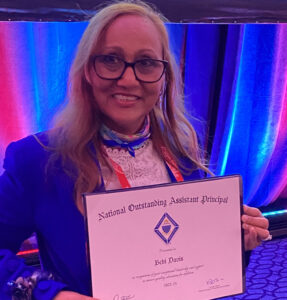
“Our kids have a lot of other challenges we have to address, so I don’t want to give them another challenge,” Davis said.
The school also provides free breakfast and lunch to all students, a service it can provide with additional federal support because of its high proportion of low-income students, minimizing the fees families accumulate during the school year.
But Davis also empathizes with high school principals, who are dealing with more students and larger debts that the school must cover if families don’t pay off their balances. While all principals want their seniors to participate in graduation, she said, they also need to teach students the importance of responsibility when it comes to managing money and borrowing school property.
“When it comes to children, we have to give and take,” Davis said. “We’re here to help them, but we’re also here to tell them, you cannot be careless or irresponsible.”
Community Contributions
While state education policy is clear about the consequences of unresolved debt for high school seniors, it’s rare for teens to actually miss out on graduation ceremonies, said Robert Chavez, a teacher at Nānākuli High and Intermediate School.
Chavez said he’s seen individual students accumulate up to $60 in debt, but the school works closely with families to create a payment plan and clear student balances before graduation.

And it’s not just teachers who pool money to help pay student debt — community members have also stepped up to ensure that unpaid fees don’t keep seniors from enjoying their end-of-year celebrations.
“That shouldn’t be a reason why you’re not participating in graduation,” Chavez said. “That should be the least of the students’ concerns.”
On Maui, Pukalani Superette contributed more than $2,000 in customer change and company donations to pay off student meal debt at King Kekaulike High School in March.
The Upcountry store cleared the high school’s lunch debt of roughly $1,900 and used the remaining money to pay off some meal balances at the nearby Kalama Intermediate School, President Megan Nakashima said.
While she doesn’t fault schools for enforcing policies around student debt, Nakashima said it’s difficult for students to worry about clearing their obligations at the end of the year.
“Given the economy right now,” Nakashima said, “it’s just one more thing to add to the ever-full plate of a family.”
Civil Beat’s education reporting is supported by a grant from Chamberlin Family Philanthropy.

