

Miske’s Trust: A Look At His Moves To Control His Fortune From The Grave
In amending his revocable living trust shortly before he died, Michael J. Miske confirmed his granddaughter is the primary beneficiary. It is the first time the provisions of Miske’s trust have been made public.
Editor’s note: This column is being reprinted from his blog, iLind.net, with the author’s permission.
“I Michael Miske Jr. … With sound mind effectively make the following edits to my trust.”
Less than three months before he died, convicted racketeering boss Michael J. Miske Jr. sat at a computer in Honolulu’s Federal Detention Center to get his affairs in order, and typed out four pages of changes to the trust he had created back in 2008 to hold title to his personal and business assets.
His instructions were then printed, notarized by a mobile notary, and mailed to San Francisco-based criminal defense lawyer Christopher J. Cannon, who had previously been retained by Miske’s Kamaʻāina Termite and Pest Control.
Copies of these last amendments to Miske’s revocable living trust, as amended, along with the the full text of three earlier versions (2008, 2014, and 2016) were filed in federal court by another San Francisco attorney, Edward M. Burch, representing the trustees of the Miske trust in opposition to the government’s lawsuit seeking the forfeiture of all of Miske’s property. It is the first time that the provisions of Miske’s trust have been made public.
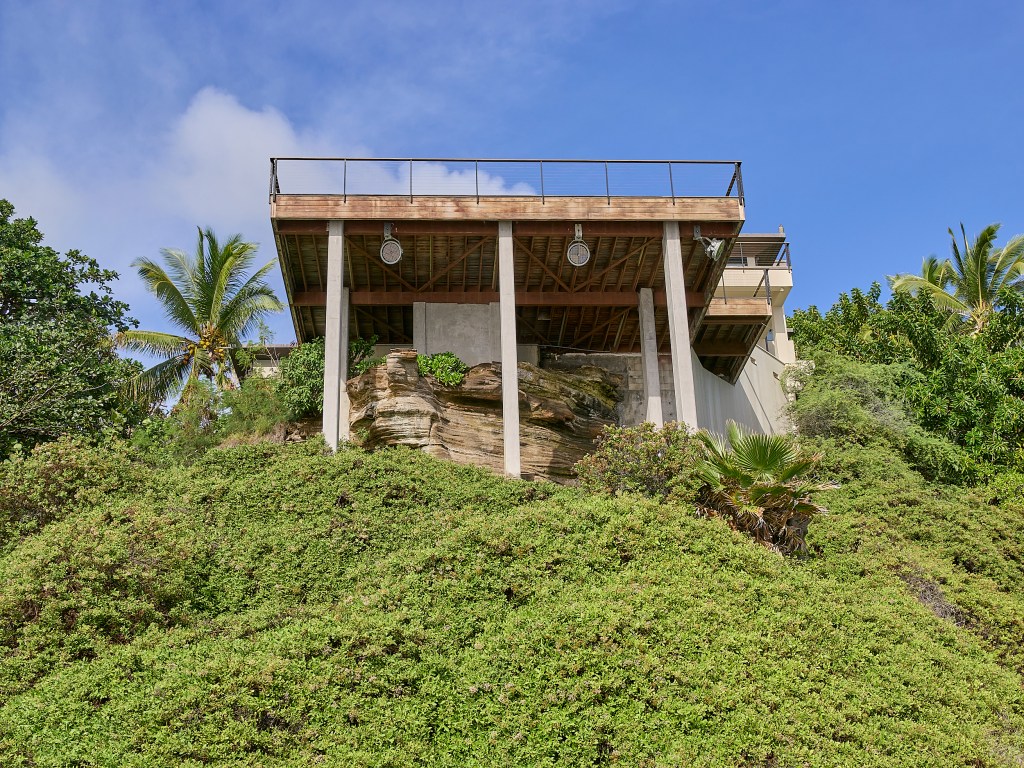
Miske’s new instructions started off relatively routinely. He confirmed the trust’s primary beneficiary — his granddaughter, the daughter of Miske’s only son Caleb, who died in March 2016 from complications of injuries received when a vintage 1993 Honda he was driving collided at high speed with a pickup truck turning left across traffic just outside Windward City Shopping Center.
The girl’s name is redacted in court records, where she is identified only by her initials because she is a minor.
Miske also changed the roster of trustees he wanted to control the trust after his death. At the time, Miske, then age 50, could look forward to a long natural life, although likely to be lived out in federal custody. But he felt compelled to update his trustee list as if dwelling on his own demise.
The new trustees named by Miske are Honolulu attorney Alen Kaneshiro, who frequently represented Miske, Caleb and several other Miske associates. Those included Lance Bermudez, who had Kaneshiro’s telephone number tattooed on his arm; Russel Mascoto, also known as Russel Boy, who was identified in the trial as a “ghost employee” of Kamaʻāina Termite who didn’t really work there but provided “muscle” to Miske; and Jon T. Dahl, owner of companies providing transportation services to the film production industry, a longtime friend and former business partner of Miske.
Miske also gave instructions regarding his remaining real estate, contingent on regaining control of the assets being held by the government.
“Shall the assets be returned (in full) my wish is to immediately sell 6 Lumahai Honolulu, Hl 96825 for fair market value by a qualified Realtor with experience in marketing and negotiating high-end property,” Miske directed.
In addition, he directed that the mortgage on his second property, a home in the Enchanted Lake area in Kailua, be paid off and the home rented out for fair market value.
In another change of questionable legality, Miske directed his attorney to remove the boilerplate language that empowered the trustees to pay “legally enforceable claims against me or my estate.”
“My trustee does not have my authority to make such payments,” Miske wrote, apparently hoping to increase the time and cost for anyone seeking to collect a debt owed by Miske or his trust.
Then Miske Dropped The Hammer
He directed that two women he had close relationships with over a number of years — Andrea Kaneakua, his longtime live-in partner, and Delia Fabro-Miske, Caleb’s wife and the mother of Miske’s granddaughter — were to be completely written out of his trust and retain no interest in it. He provided no reasons for his action.
“I would like to remove the names Delia Anne Miske and Andy Miske (Andrea Kaneakua) from my trust entirely,” Miske wrote, referring to an apparent error in a prior draft of the trust that referred to Kaneakua several times as “Andy Miske.”

Further, he moved to close off a possible backdoor way into the trust: “There shall be no distribution or benefit from my trust to Delia Anne Miske or Andy Miske (Andrea Kaneakua) by way of guardianship of (my granddaughter) … I request Delia Anne Miske and Andrea Kaneakua are removed from every section from my trust.”
According to the most recent previous version of the Miske trust, adopted in April 2016, Kaneakua had been in line to receive a $1 million payout from the trust “as soon as practicable” in the event of Miske’s death.
Instead, Miske now directed the $1 million bequest “immediately” removed, and a power of attorney giving Kaneakua control over his luxury home on Portlock since his arrest in 2020 to also be immediately revoked.
“Under no circumstance is Andrea Kanekua (sic) to be associated with the management or rental of above mentioned property,” Miske wrote. “Andrea Kaneakua’s limited power of attorney over 6 Lumahai St, Honolulu HI 96825 is hereby revoked effective immediately.”
Long Histories
These moves marked a dramatic severing of long prior relationships with the two women.
Fabro-Miske had become a key member Miske’s small group of trusted followers following Caleb’s death, and when an intensifying federal investigation led Miske to “go dark” in late 2016 by distancing himself from his various business entities, at least on paper, his continuing ownership was concealed by reregistering the companies with the state under Fabro-Miske’s name as the sole officer or member, according to evidence presented during Miske’s racketeering trial.
She was indicted along with Miske, and eventually pleaded guilty to racketeering and bank fraud. She was sentenced last month to seven years in federal prison.
Kaneakua was the office manager for Miske’s Kamaʻāina Termite and Pest Control, and later wielded the title “general manager,” according to trial testimony. Others with management responsibility in the company reported directly to her and to Miske.
She was in charge of all administrative work at Kamaʻāina, including accounting, keeping track of employees’ hours and pay, then reporting wage and hour information to the Department of Labor. Prosecutors considered Kaneakua an unindicted co-conspirator, and considered calling her to testify as a “hostile witness” during Miske’s trial.
She also became a surrogate mother for Caleb Miske when he was in elementary and high school.
Kaneakua and Mike Miske, along with Fabro-Miske and her infant daughter, lived together for a period in the same Keokea Street building in Hawaiʻi Kai where Caleb’s close friend, Johnathan Fraser, had lived with his girlfriend before he suddenly disappeared.
A former state sheriff testified under oath during Miske’s trial that he had been asked by the building owner to move to the premises “to keep an eye on the property.”
Kaneakua, who had been described as Miske’s “work wife,” appeared to be “the mother hen, so to speak,” the former deputy sheriff said. “She ran everything. She told Delia what to do, where she could go.”
By that time, Andrea Kaneakua had been involved with Mike Miske for nearly two decades, almost as long as Delia Fabro-Miske had been alive, records show.
The first record of their knowing each other came when Miske was charged with first-degree robbery, a class A felony, in 1996, and Kaneakua was called as a witness during his trial, court records show. Miske was acquitted following a jury trial.
Several years later, in June 2000, Kaneakua obtained a temporary restraining order alleging domestic abuse by Miske. Miske was still on probation after several other criminal convictions. He agreed to a three-year TRO but denied the abuse, court records show, and asked the judge not to enter a finding of abuse, apparently in order to avoid triggering the revocation of his probation.
Just days after a three-year TRO was granted, Miske allegedly violated its terms. He was charged with a criminal misdemeanor for violating the TRO, with Kaneakua as the complaining witness, according to court records. Again, Miske was acquitted following a jury trial.
A Tightfisted Trust
As long as Miske was alive, he was in control of his trust assets, and he was the trust’s primary beneficiary.
Although Miske’s trust had assets valued at upward of $13 million, with some news accounts quoting a value over $25 million, he was anything but generous in authorizing specific bequests in the event of his death.
The trust assets include real estate appraised at $8.8 million for tax purposes, including his large luxury home overlooking the ocean at Portlock and a home in Kailua’s Enchanted Lakes; nearly $4.3 million in cash and checks; a 2017 Ferrari F12 Berlinetta purchased just six weeks before his arrest in 2020 for $219,000; several vintage Volkswagens dating from 1951 to 1961 that he valued at at up to $350,000, a 1970 Ford Bronco he valued at $75,000 and several art works.
As Miske typed his 2014 changes, his trust was just an empty legal shell that held nothing of value because a federal jury had already found virtually all of his sustantial fortune, should be forfeited to the government because it represented the ill-gotten gains of his criminal enterprise. By that time, his businesses had been shut down and his property had already been seized, or was subject to legal notices that it was designated for forfeiture.
However, following Miske’s death, everything from his indictment through and including the trial, the jury’s verdict, and the jury’s forfeiture verdict were all vacated, although the property had been encumbered by the government and will not be returned to the Miske trust unless the government’s pending civil forfeiture lawsuit is successfully challenged, or a settlement returns some portion of the assets to the trust in order to avoid a lengthy trial.
Another person was also erased from the trust. The original Miske trust document and the first formal revision both provided for a bequest to a second child, a daughter not publicly acknowledged previously. Miske’s daughter is a Kāneʻohe woman born at least a couple of years later than his son, Caleb. The 2008 document provided for a $100,000 payment to her, while the 2014 revision called for $200,000 to be set aside into a separate trust “to provide for her well-being and happiness.” The remainder of the trust was to go to Caleb Miske.
The 2014 revision also called for $100,000 to be set aside in a separate trust for the benefit of Kaneakua. As noted above, this was increased in the 2016 rewrite to provide a $1 million payment to Kaneakua in the event of Miske’s death.
The 2016 version of the trust continued to acknowledge Miske’s daughter as his child and, after Caleb’s death, his only child. However, it dropped the bequest for her benefit, which was replaced with a $200,000 bequest to be paid to Miske’s half-brother, John Stancil.
But Miske’s 2024 changes included a specific provision that reduces the likelihood Stancil will ever receive anything from the trust.
“The specific distribution to John Stancil is contingent upon my seized assets being returned (in full) to my trust on appeal,” Miske directed, something that appears unlikely.
Bequests to other family members or longtime friends, including Miske’s mother, Maydeen Stancil, are conspicuously absent.


