

Movies And TV Shows Left Hawaiʻi. The Workers Followed
With the loss of productions came a decline in film jobs and spending in the state.
After wrapping work on “Lilo & Stitch” last March, Jason Fitzgerald packed up his life in Hawai‘i and moved to Atlanta – not by choice, but out of necessity.
With no new productions coming up and his savings rapidly being depleted, the longtime lighting technician said staying in the islands became impossible for his family.
“It just became clear that there was not going to be enough work to sustain living together as a family in Hawai‘i,” Fitzgerald said. “We don’t want to have a life where I live in another city and send remittances home to Hawai‘i.”
The island state — with its lush natural backdrop of volcanoes, waterfalls and waves crashing against picturesque rocks — has long attracted film and TV productions. Both the original and reboot series of “Hawai‘i Five-0″ and “Magnum P.I.” were produced primarily in Honolulu, as was the 1954 Oscar-winning film “From Here To Eternity.” The list goes on.

But film production has tanked in the state: movies that require exterior shots move elsewhere to finish production while television shows that stabilized the local job force have wrapped up or been canceled – with no new productions to take their place.
The film industry has long blamed the lack of production on Hawaiʻi’s relatively low tax rebates compared to other states. But Hawaiʻi’s high costs haven’t just affected the bottom line for studios.
The dearth of new productions has had a real effect on the workforce. Some local industry veterans feel their only option is to leave the islands in search of work – or leave the industry entirely.
Losing Workers
In one year, the number of film jobs dropped from 12,000 to 8,000. In 2022, qualified spending on motion picture productions totaled about $333 million. That fell to $179 million last year, according to a report from the Department of Business, Economic Development and Tourism.
State lawmakers tried to address the decline this year with a proposal to expand tax breaks for movies and shows that hire at least 80% local workers. That measure, the latest in a series to raise the tax incentives, died in the final days of session.

Fitzgerald has more than 35 years of experience in the film industry. He moved to Hawai‘i in 2016 when work was steady but left last year as production jobs all but disappeared.
Relocating wasn’t cheap. But he faced two difficult options: stay in Hawai‘i, burn through savings and find a new line of work – or move to Atlanta, where costs are lower and film jobs are more frequent.
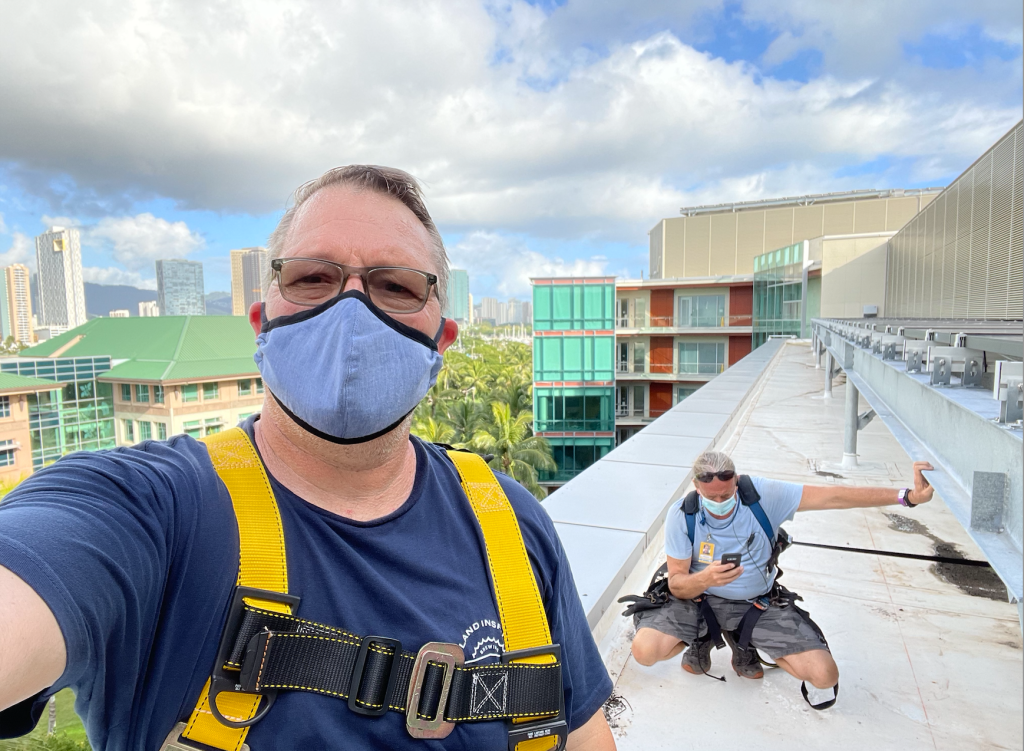
“It’s daunting to do at 58. Like, what I’m going to become? A roofer? I’ve never done that before,” he said. Fitzgerald highlighted the significant financial benefits and increased job opportunities that drew him to Atlanta.
“My expenses here are 60% less, and I’ll probably work twice as much,” he said. “I won’t have to leave home either. I can be with my family.”
Fitzgerald said the film slowdown in Hawai‘i has led many of his friends and colleagues to walk away from decades-long careers.
Some have applied for electricians’ licenses. Others have pivoted to contracting or installing air conditioning units – anything to survive.
Ted Tunney, a gaffer with 30 years of experience who worked on “Jurassic World” and “Rescue: HI-Surf” and “Magnum P.I.,” said he’s unemployed after the TV shows ended and is weighing his options.
“I know a lot of people that are just now trimming trees, driving Uber – that’s something I’ll probably have to do too for a little bit,” Tunney said.
For many, it means painful conversations about family finances and whether parents can send their kids to college.
Unlike freelance crew members who can take short gigs and day work, Tunney’s position involves long-term planning and leadership responsibilities. That makes it harder for him to step in and out of film jobs or accept unrelated work in the meantime.
Still, he hopes that Hawaiʻi’s film industry can help develop future generations of local film professionals. “I want Hawai‘i to be a thriving, incredible film community for decades to come. It’s special here,” he said.
That’s A Wrap
From 2016 through 2019, Fitzgerald rarely went more than a few weeks without work.
But the coronavirus pandemic changed everything. Following the 2020 lockdowns and increasing doubts about Hawai‘i’s tax credit reliability, productions slowed. A major blow came with the cancellation of “NCIS: Hawai‘i” in April 2024 – ending a 14-year CBS streak and leaving hundreds out of work.
Hundreds of film workers attended a rally in March outside the State Capitol to support a bill to increase Hawai‘i’s film tax incentives. The event came together quickly, with volunteers offering shuttle services and parking to make attendance easier.
Daniel Hamilton-Lowe, a unit production manager who attended the rally, said the strong turnout reflected the urgency many in the industry are feeling.
“Some people are desperate because their livelihoods are in danger,” he said.
Many felt Hawai‘i’s tax incentives aren’t competitive with those offered by other locations.
Oʻahu offers a 22% rebate for film and TV spending, but that doesn’t compete with places like Georgia, New Zealand or Australia, which offer around 30%. California is considering boosting its rebate rate from to 35%.
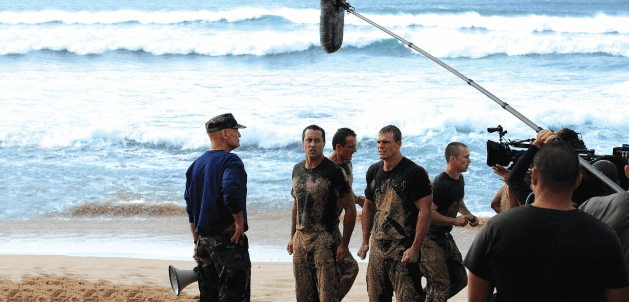
Ricardo Galindez, co-founder of Island Film Group, said more productions also are heading overseas not just for better tax incentives and exchange rates, but also because some countries don’t require union labor – lowering costs and simplifying logistics for studios.
“Hawai‘i has been hit by this tsunami of lower overall production levels and more productions going out of the country,” Galindez said.
Lack Of Facilities
Infrastructure is another concern. Hawai‘i has two state-managed sound stages: the Hawai‘i Film Studio near Waikīkī and the Kalaeloa Navy Stages – a retrofitted facility that can accommodate one to two productions.
Georja Skinner, the state’s division chief for creative industries, said many productions opt for locations outside of Hawai‘i due to the limitations in studio capacity.

These sound stages have hosted productions like “Jurassic Park,” “Magnum P.I.” and “Hawai‘i Five-0,” but their limited capacity makes it difficult to support multiple large productions at once.
Both sound stages are vacant – not due to lack of interest, but because they don’t meet the scale most productions need. A private sound stage in Kaka‘ako, run by Island Film Group, adds some capacity but not enough for major productions.
“We’re leaving money on the table because we don’t have the facilities here,” Galindez said.
Galindez said productions often come to Hawai‘i for exterior shots but return to the mainland – typically to California or Georgia – to shoot indoor scenes on larger, soundproof stages.
That’s what happened with the remake of “Jumanji,” which filmed its jungle scenes at Kualoa Ranch on Oʻahu but completed the rest of the movie on the mainland and in other countries.
Island Film Group hopes to reverse that trend. It was awarded development rights to build new sound stages on 34 acres in West Oʻahu.
By reducing the need for productions to split filming between locations, Galindez believes Hawai‘i could retain more of the economic benefits from filmmaking while expanding local opportunities.

Brian Keaulana, a producer and actor with credits in “50 First Dates” and “Dawn of the Planet of the Apes,” has been a strong advocate for growing the local film industry in Hawai‘i.
His experience in New Zealand, where the upcoming series “Chief of War” starring Hawaiʻi-born Jason Momoa was shot, opened his eyes to what is possible when there is strong support for local talent.
He was impressed by New Zealand’s infrastructure, including acting classes, TV stations that speak the native language and programs that help young people grow into professionals. Keaulana wishes Hawai‘i had more of these opportunities to support local talent.
“Coming home, I got frustrated because I looked at our industry and … we haven’t moved in years,” Keaulana said.
AI Uncertainty
Artificial intelligence could be the next threat to the local film industry.
Labor unions are concerned that AI could one day generate exterior shots of Hawaiʻi locations. One idea is to charge a fee to studios that try to use that content. But for that kind of law to work, the state would need more staff to track and enforce those regulations.
Skinner said the state plans to start training to help people understand the benefits and risks of artificial intelligence and protecting intellectual property.
Fitzgerald worries for those who started working in the industry fresh out of high school or college and built their careers entirely in the Aloha State.
“You establish yourself after 15 years of doing something, and then all of a sudden that business doesn’t exist anymore,” he said. “You can go start over, but … you’re going to have to work your way back up again.”

