Suicides At Hawaiʻi’s Largest Prison Up The Stakes For Mental Health Review
The state’s top corrections official has promised “unfettered access” for a pair of outside experts who will begin scrutinizing the system next month.
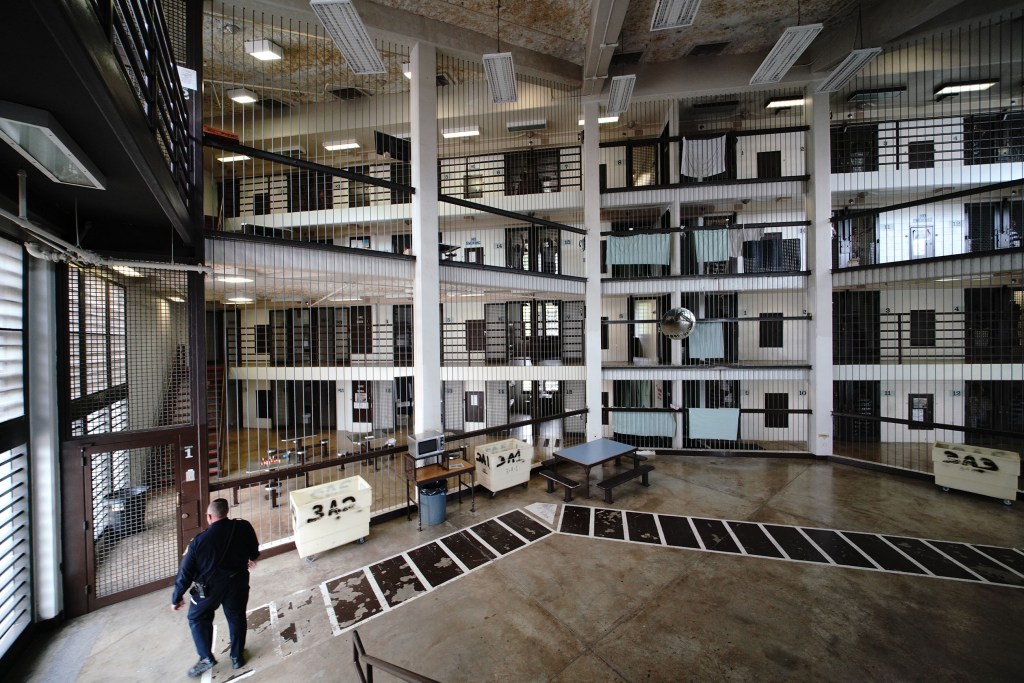
Two more prisoners at Hālawa Correctional Facility died in the past two months in what are believed to be the fourth and fifth suicides there since last summer, making the state’s largest prison a disturbing anomaly nationally that experts blame on longstanding operational flaws.
The most recent, on April 12 and May 17, were reported weeks before two outside experts are scheduled to arrive in Hawaiʻi to scrutinize the mental health services provided in the state’s correctional facilities.
The state agreed to that review to settle a federal lawsuit that alleged the correctional system provides inadequate mental health services inside, and has failed to do enough to prevent suicides.
The American Civil Liberties Union of Hawaiʻi is calling on state lawmakers to hold public hearings on the recent deaths to determine what steps the state Department of Corrections and Rehabilitation is taking to prevent recurrences.
Many inmates have histories of mental illness, drug addiction and homelessness, but there aren’t enough mental health and drug treatment slots inside. “So really it’s this combustion of lack of services and tremendous needs that are not being addressed,” said Carrie Ann Shirota, the group’s policy director.

U.S. Department of Justice data shows suicides nationally accounted for 8% of deaths in state and federal prisons in 2019. At Hālawa suicides appear to have been far more dominant, accounting for all but one of the six deaths reported at that prison over the past year.
Autopsies have confirmed two of five Hālawa cases were suicides. Final autopsy reports are pending in the three most recent deaths, but the state’s Correctional System Oversight Commission has reported those deaths were also apparent suicides. More details about the circumstances surrounding the deaths are not yet available.
Hālawa stands apart from the rest of the Hawaiʻi correction system, where data compiled by Civil Beat found only two other suspected or confirmed suicides since May 2024.
Mental Health Services Under Scrutiny
Five suicides in a single year in a prison that holds only about 800 inmates is “pretty damning,” said Jay Aronson, director of the Center for Human Rights Science at Carnegie Mellon University.
Aronson said the outside experts should take a close look at how inmates are screened for mental health problems and the risk of suicide, and how the system responds to those risks. Aronson, an expert in documenting human rights abuses, is assembling a database of deaths in Pennsylvania jails.
Christin Johnson, oversight coordinator for the state’s Correctional System Oversight Commission, said the number of suicides at Hālawa in the past year “does not seem reasonable to me.” The commission is “deeply concerned with what is going on at Hālawa,” she said.
Aronson and Johnson said the risk of suicide is normally much greater in jails, where inmates are held to await trial after their arrests, compared to prisons such as Hālawa where they serve out their sentences.
The problem goes back years and has proven costly to the state. In 2022, a judge awarded nearly $1.4 million in damages to the estate of Joseph O’Malley, about five years after the 28-year-old inmate hanged himself in an isolation cell in the medical unit at Hālawa. A subsequent report found numerous problems with the way suicidal inmates were treated at the state’s largest prison.

Johnson credited corrections officials with trying to hire staff to fix the problem.
“But the bottom line is that there’s not enough mental health practitioners in any of the facilities, particularly Hālawa,” she said.
Across the county 41% of federal and state prisoners have a history of mental health problems, according to the Bureau of Justice Statistics. Meanwhile, state lawmakers were told earlier this year that 20 of 23 psychologist positions for the state’s correctional system were vacant.
Department of Corrections and Rehabilitation Director Tommy Johnson has said those positions are extremely difficult to fill because most qualified psychologists are not interested in working in a prison or jail setting.
Search For Solutions
The oversight commission also has repeatedly raised concerns about the lack of activities available to inmates at Hawaiʻi correctional facilities, often leaving prisoners locked down in their cells for 20 hours a day or more.
“We frequently hear about people only getting maybe two to three hours a day out of their cells, and that’s just not acceptable,” Christin Johnson said, adding that research shows that being confined in a cell that long “deeply impacts mental health.”
“I believe really strongly that if people have things to do, if people can get out of their cell, if they have things to focus on, whether it be a program or whether it be as simple as a board game or more phone time, it makes a difference,” she said.
Aronson said inmate activities were paused or discontinued across the country when the coronavirus pandemic began in 2020, and in many cases never resumed after the Covid-19 threat faded. Many prisons and jails are now short-staffed.
“It’s much easier for a facility, particularly one that’s understaffed, to not have to move people around and get people from point A to point B,” Aronson said. “So, Covid took a problem that was bad and made it worse.”
The oversight commission also has urged the department to rely more on direct supervision, meaning deploying more corrections officers to prison modules to directly interact with the inmates, Christin Johnson said, calling that “a huge issue.”
Hālawa relies largely on an indirect supervision system, with an officer in a control center and another acting as a rover to keep tabs on 100 people or more, she said. Direct supervision requires more staff but pays off by giving the officers a better feel for what’s happening with the inmates.
“They know who’s having a bad day, who’s having a good day, they just know because they’re there, they’re physically there,” Johnson said.
Even with the limited staffing at Hālawa, she said corrections officers were able to intervene in two attempted suicides in recent weeks, which saved lives. That is remarkable, she said, because suicides can happen very quickly.
A Push For Public Hearings
The ACLU of Hawaiʻi called on Gov. Josh Green to support an independent investigation into the conditions surrounding the deaths — something the group has requested before.
“We’re also asking our state Legislature to not look away,” Shirota said. “They have the authority to convene an informational briefing and demand that the Department of Corrections account for the deaths in custody by suicides.”
The head of the Department of Corrections and Rehabilitation was traveling out of state last week and was unavailable for comment. But Tommy Johnson said in an interview last fall suicides in custody are a growing problem nationwide because many mentally ill people are being incarcerated, turning correctional facilities into “de facto mental health institutions.”
Prison officials “do what we can to protect the lives of the folks in our custody and care. But I can tell you this, if someone is determined to kill themselves, they’re going to try, and keep trying,” he said. “Our job is to identify them and try to get them to care and the treatment they need at the appropriate level.”
Earlier this year the state agreed to settle a 2019 federal class-action lawsuit alleging that the department holds people with serious mental illness in “extreme isolation with little or no mental health treatment.”
That lawsuit was filed by a team led by Honolulu lawyer Eric Seitz, and was based in part on the death of Jessica Fortson, who hanged herself in the Women’s Community Correctional Center in 2017.
As part of the settlement, Tommy Johnson said in March the state will provide “unfettered access” to facilities, records and staff to two outside experts tasked with providing an unbiased assessment of the mental health services in Hawaiʻi’s prisons and jails.
Those experts will be forensic psychiatrists Bhushan Agharkar of Atlanta and Jeffrey Metzner of Denver, who are scheduled to begin their work in June.
The idea is to develop a clear path forward to improve the system, then request funding from state lawmakers to execute that plan, according to Seitz and Tommy Johnson.
Senate Public Safety and Military Affairs Chair Brandon Elefante and House Public Safety Chair Della Au Belatti both said they want to see the report that Agharkar and Metzner produce. Belatti said she wants to hold a public hearing on the report.
“What we don’t want is for the state to get into a consent decree with the federal government because we’re not complying with protocol, safety standards, staffing levels” and other precautions necessary to prevent further deaths, Elefante said.
Civil Beat’s community health coverage is supported by the Atherton Family Foundation.