An Embarrassing Housing Scam Triggers Big Island Reforms
A dishonest public worker and his partners slurped up millions of dollars by illegally manipulating a complex system of affordable housing credits.
Former Big Island Mayor Mitch Roth calls it “this ball of mixed up twine,” a tangled mess uncovered by an FBI investigation of a corrupt employee who worked for a dozen years in the Hawaiʻi County housing office.
That employee was Alan Rudo, and by the time he resigned from his job as a county housing specialist in 2018, he and his partners had raked in millions of dollars by exploiting weaknesses in a system designed to encourage developers to build badly needed affordable housing.
Rudo, 58, was the lynchpin of those schemes, drafting agreements for his superiors to sign authorizing land transfers or awarding valuable affordable housing credits for units that were never built. He admitted to seeking or accepting $1.8 million in bribes and kickbacks. Rudo and three others await sentencing on federal felony charges after a trial held earlier this month.
The county, meanwhile, has been working to clean up the mess and implement badly needed reforms to make sure it doesn’t happen again.
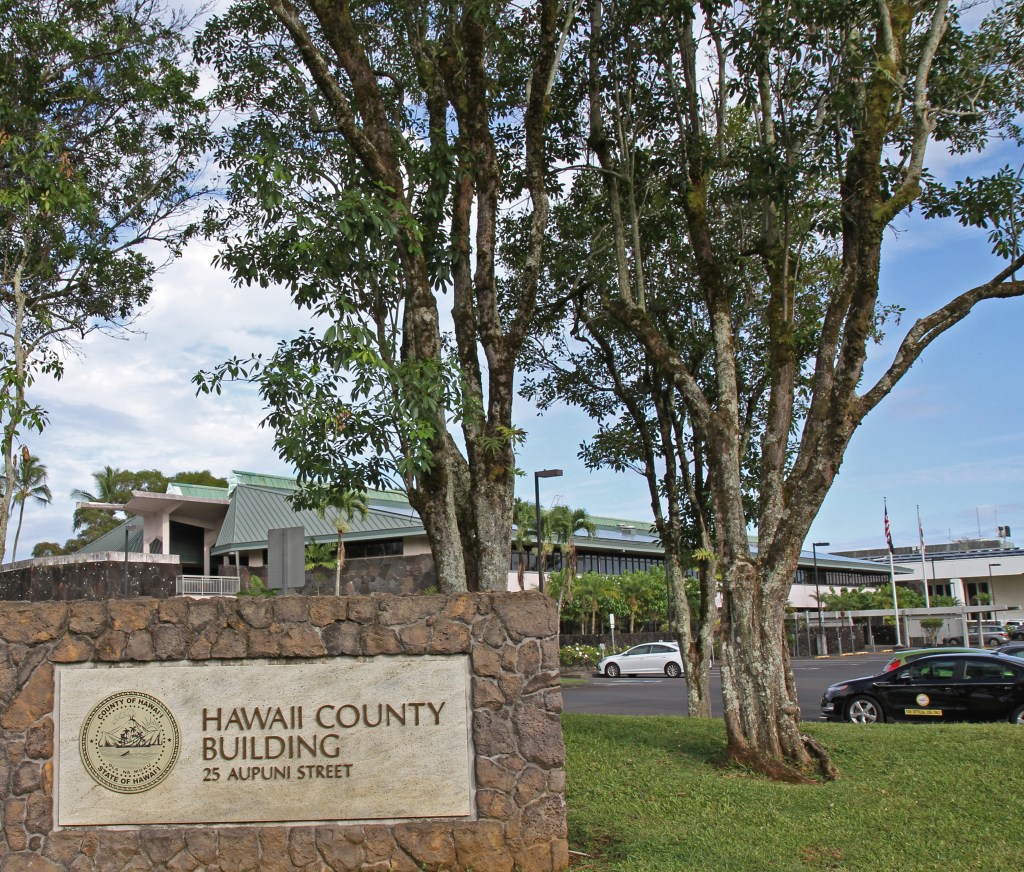
The fraud case triggered reforms that include new safeguards imposed by the county Office of Housing and Community Development, such as dividing up responsibilities within OHCD so they’re not concentrated in a single employee like Rudo.
The office also banned the practice of issuing affordable housing credits before those units are actually built, said Susan Kunz, who was administrator of the office until last year.
“I’m confident with the changes that we put into place — as long as they’re followed — it won’t happen again,” Roth, who was mayor from 2020 to 2024, said in an interview.
Expertise And Broken Trust
Rudo pleaded guilty on July 18, 2022, and his partners — Hilo lawyers Gary Zamber and Paul Sulla Jr. and businessman Rajesh Budhabhatti — were indicted a week later. The federal bribery case didn’t go to trial until last month, culminating in a guilty verdict for the other three and revealing new details about how the corruption was allowed to happen.
The task of picking up the pieces was complicated by two computer server drivers that failed in 2018, causing some office records to be lost.
Court records and Civil Beat interviews with former officials show how Rudo used his expertise and position to manipulate the complex county code for the benefit of himself and his three secret business partners.
The Big Island’s affordable housing policy is set out in Chapter 11 of the county code, and Rudo’s supervisors at OHCD relied heavily on his knowledge of its intricacies, Kunz said.
Developers who seek rezoning to build homes are required to fulfill affordable housing requirements, with “affordable” on the Big Island defined as units serving families earning 140% or less of the area median income. That amounted to $141,120 for a family of four in 2023.
The requirements can be met in several ways, including building units that are affordable for low- to moderate-income families or donating land on which others can build them.
When developers build more affordable units than required, they receive “excess credits” that can be sold to others. Developers sometimes buy those excess credits from one another for tens of thousands of dollars because they can later surrender those credits to the county to fulfill affordable housing requirements for other projects.
Those excess housing credits were at the center of the yearslong federal case.
One of Rudo’s responsibilities was drafting affordable housing agreements with developers that involved awarding those credits. He advised his superiors on whether to enter into those agreements, which were then signed by the county housing administrator, the Corporation Counsel and the mayor.
His job also involved making sure developers actually built the promised affordable units, Kunz said. That turned out to be a huge weakness in the system.
At some point before 2015, Rudo became a secret partner with Zamber, Sulla Jr. and Budhabhatti, drafting and promoting county agreements that benefited their companies, according to federal court records.
The federal prosecution focused on three of those agreements. Despite their promises to provide affordable housing, companies formed by the defendants “never built a single unit,” the documents show.
One of the agreements transferred 212 affordable housing credits to Luna Loa Developments LLC, which was formed by Budhabhatti and partly owned by Zamber and Rudo. The county agreement required Luna Loa to develop 106 affordable units, but the company never did that. Instead, it sold some of the excess credits for as much as $50,000 each, according to court records.
Nearly $11 Million Earned But No Housing
Another agreement awarded 104 affordable housing credits to West View Developments LLC, which was owned by Zamber, Budhabhatti and Rudo, according to court records. West View was supposed to develop 52 affordable units initially, and 62 more in a later increment.
None of those units were built. Instead, West View traded 46 of the credits along with about $14,000 for 13 acres of land in Kailua-Kona. The company then sold 7 acres of that land and two housing credits in separate transactions for more than $1 million, according to court records.
Yet another deal described in court documents as the “Waikoloa Scheme” involved getting the county to accept a different kind of transaction.
“Hopefully, in the end the community learns that the bad guys got caught.”
Former OHCD administrator Susan Kunz
Under the terms of that deal, an unnamed developer was to transfer 11.8 acres in Waikoloa to a company called Plumeria at Waikoloa LLC operated by Rudo, Sulla and Zamber to satisfy the unnamed developer’s affordable housing obligation.
Plumeria at Waikoloa was supposed to develop affordable housing on the site, but didn’t. Instead, Rudo and his partners sold the Waikoloa property for $1.5 million.
In all, the FBI investigation found the group received affordable housing credits and land worth about $10.98 million from those three schemes, including the $1.8 million Rudo sought or received in bribes or kickbacks.
The Reckoning
Patricia Tummons, editor of the nonprofit monthly newsletter Environment Hawaiʻi, began writing about the Waikoloa deal in 2018, and the details she reported prompted someone to alert the FBI to the case.
In 2022, Rudo pleaded guilty to conspiracy to commit honest services wire fraud, a felony punishable by up to 20 years in federal prison. He went on to testify at the trial for his former partners this year.
A federal court jury on June 4 found Sulla, 78, Zamber, 55, and Budhabhatti, 65, guilty of conspiracy to commit honest services wire fraud and nine counts of honest services wire fraud. Sulla was also convicted of money laundering, according to the U.S. Attorney’s Office for the District of Hawaiʻi.
Those convictions were “an important step toward accountability, and reinforces the importance of integrity in public service,” Hawaiʻi County Mayor Kimo Alameda, who replaced Roth in last year’s election, said in a written statement.
The county auditor released a report on the affordable housing credit program in 2023 that detailed an array of problems, ranging from shoddy record keeping to lack of oversight of the program.
OHCD Administrator Kehaulani Costa said in a statement the agency has implemented fixes and is working to put into action all the recommendations made in the audit.
Roth told Civil Beat the federal investigation left the county with “this ball of mixed up twine, and we spent time to untangle the twine and make sure we had some things in place so it wouldn’t happen again.”
Much of the cleanup work fell to Kunz, who served as county housing administrator in 2016 and again from 2020 to 2024.
Finding Lost Records And Implementing Reforms
The Office of Housing and Community Development spent at least four years recovering data from the server failures, and as late as 2022 still did not have an accurate number of excess affordable housing credits the county had issued, according to the county audit.
The report found an array of other problems with housing credit records as well. Executed agreements were missing from two dozen project files, documents didn’t have required signatures, and according to the audit, a dozen legally binding housing agreements were never recorded with the state Bureau of Conveyances.
The audit also found the housing office had repeatedly “pre-awarded” affordable housing credits, distributing excess credits to developers who promised to build affordable units, but had not yet done so.
That allowed Rudo and his partners to obtain and sell off excess credits without building the required housing. Kunz said the office banned pre-awards after the investigation.
Another major problem that had to be fixed was an office organization that placed the same person in charge of both creating affordable housing agreements and making sure the required units were actually built.
“Duties should be segregated amongst employees so that errors and irregularities made by one employee are difficult to conceal,” according to the audit report.
The county also hadn’t developed administrative rules for Chapter 11, a shortcoming that meant few formal checks and balances for staff tasked with carrying out the affordable housing ordinance.
“Alan Rudo was operating pretty much on his own during that time,” said Kunz. “We’re trusting our staff to know what they’re doing, to advise us.”
The county has since added formal training for staff on both Chapter 11 and county ethics, and separated key responsibilities such as preparing the agreements and enforcing them among workers within the department, Kunz said.
OHCD also drafted administrative rules for Chapter 11, but has not formally adopted them because the Hawaiʻi County Council is considering changes to the housing ordinance. The draft rules will be revised and adopted when the council has finished its review and amendments.
“Hopefully, in the end the community learns that the bad guys got caught,” Kunz said. “Nobody should ever think they’re going to do something like this in the county government or state government and get away with it.”
Gary Singh, the lawyer who represented Rudo in federal court, said Rudo was a trusted employee who had his bosses’ full confidence. “He was there for the longest time. He did good work, and he got greedy, and he himself would say that.”
“Greed is dangerous, you know?” Singh said. “He took responsibility. He knew what he was doing was wrong.”