

DOE Called For 12 New Schools In ‘Ewa A Decade Ago. It’s Built 2
The education department has been unable to keep up with the housing boom in ʻEwa and Kapolei – even as developers contribute land and money to help build new schools.
When Clarisa Miguel bought her East Kapolei house from the Department of Hawaiian Home Lands in 2021, the developer assured her that a new elementary school was in the works to accommodate her growing neighborhood.
The school wouldn’t be built in time to serve her youngest daughter, who was starting kindergarten at ʻEwa Elementary, but Miguel was glad the education department was planning ahead.
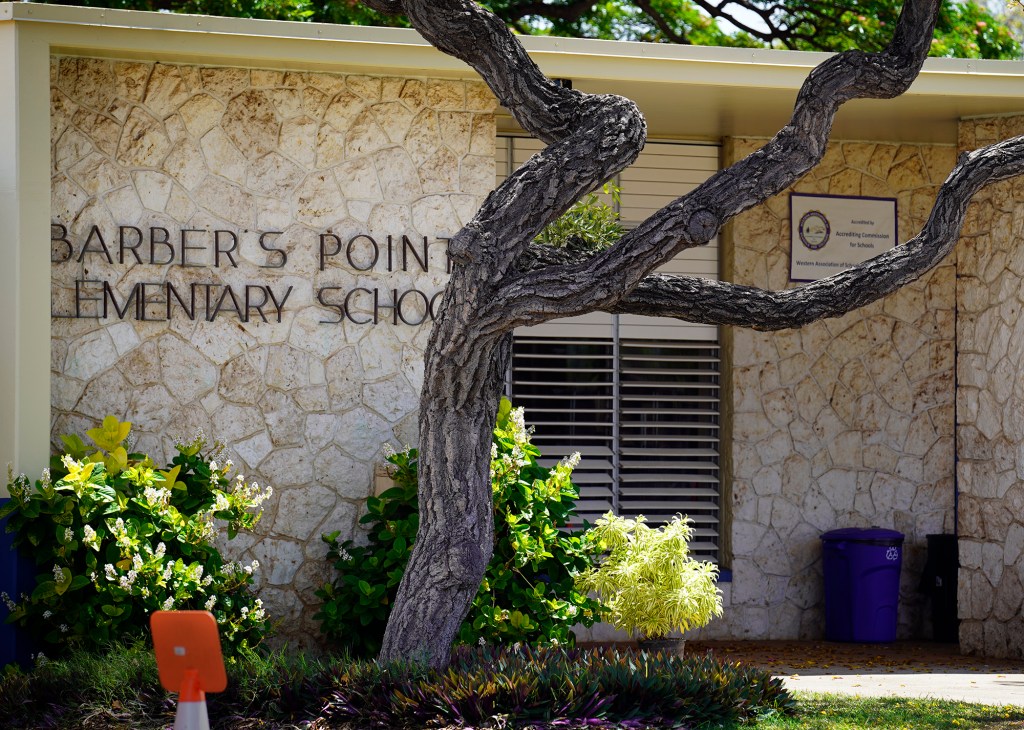
Four years later, there’s been little movement toward building or even designing a new campus — and her daughter’s current school is so overcrowded that education officials are transferring more than 100 students from ʻEwa Elementary to Barbers Point Elementary next year. The change was announced this spring, giving Miguel little time to coordinate transportation or help her daughter adjust to a new elementary school for fourth grade.
“I’m just a little frustrated that we can build houses, but we can’t build the schools,” Miguel said.
The Hawaiʻi Department of Education and state lawmakers warned of the problem of overcrowding in Kapolei and ʻEwa schools more than a decade ago. In the city’s 2013 ʻEwa development plan, DOE projected it would need at least a dozen new schools in the area by 2030 and required developers to set aside parcels of land and money that could go toward building new campuses.
But while ʻEwa developers have dedicated land for 11 schools, DOE has only built two new campuses in the area since 2015. The department has also failed to spend the $20 million in construction fees it has collected from developers statewide, driving lawmakers to end the fee requirement this year.
Enrollment in public schools has steadily declined statewide over the past decade, and the education department started the lengthy process of closing small schools earlier this year. But in the Leeward district, new school construction hasn’t kept pace with rapid housing growth. Campuses like ʻEwa Elementary and Kapolei High will be among the few Oʻahu schools with increasing enrollment through most of the decade, according to DOE projections.
East Kapolei, home to major housing developments like Ho’opili, was too small to be identified on its own in the 2010 census. A decade later, it was counted as having 5,300 residents — a number that swelled to 6,200 by 2023. More construction and growth is expected.
“We need to look at expanding capacity, or new schools in this case,” said Rep. Julie Reyes Oda, who represents parts of ʻEwa Beach. “The need should be justified when they start looking at not just how many students are there, but what’s the projection of more students in the area.”
Unclear Plans
Next year, ʻEwa Elementary projects its enrollment will be more than 1,300 students, up from its current enrollment of roughly 1,250 kids.
A redistricting plan going into effect in August moves roughly 140 students from ʻEwa Elementary to Barbers Point and Kapolei Elementary. The plan aims to avoid overcrowding by moving families living on Hawaiian homelands and a subdivision of the Ho’opili development from ʻEwa Elementary to other campuses, DOE communications director Nanea Ching said in an emailed statement.
Miguel said she’s worried about how her daughter will fare academically next year at Barbers Point, which has reported lower test scores in reading and math compared to ʻEwa Elementary in recent years. But ʻEwa Elementary has had its own challenges with large class sizes and overcrowding, she said, sometimes limiting the personalized support her daughter could receive.
While the department hopes to avoid redistricting families again in the future, teachers and parents remain concerned about the lack of plans to address overcrowding in other schools in the community.

Since 2015, DOE has opened two new schools in the Campbell-Kapolei complex: Honouliuli Middle School and Ho’okele Elementary. While the schools have helped to address the need for more campus space in the area, it’s a far cry from the 12 new schools DOE said it would need by the end of the decade, according to the city’s 2013 ʻEwa Development Plan.
The plan, updated in 2020, provided few details on how — or when — DOE would build the schools, and only said the department would rely on land contributions and construction fees received from developers to help build its new campuses.
The department is currently working on designing an East Kapolei elementary and high school, Ching said. The department plans on submitting permits for the elementary school this summer and will request construction funds in 2027, she said.
In total, she said, the department is planning up to six new schools in Kapolei and ʻEwa over the next decade, including four campuses in the Ho’opili development, which is projected to add roughly 11,700 homes to the area in total. The other two campuses would be built on land from the University of Hawaiʻi West Oʻahu, which is planning on building roughly 5,000 housing units, and from the Department of Hawaiian Home Lands.
Not all the housing developments included in the city’s ʻEwa plan are completed and generating additional demand for new schools. Makaiwa Hills, a housing development that would add more than 4,000 homes to ʻEwa, set aside land for an elementary and middle school in 2008, said Matt Caires, vice president of development affairs at the James Campbell Co.

But the company is still developing the land and infrastructure needed to build new homes, and it could be years before families move in and generate the need for another school, he said.
In other cases, families and teachers have called for a new school for decades.
Last fall, Campbell High School enrolled 2,890 students, making it the largest public high school in the state. In 2018, the school’s capacity was roughly 2,000 students, although the campus has since added another building to accommodate more students.
Even with the campus’ expansion, the community has needed a second high school for more than a decade, said Corey Rosenlee, a Campbell teacher and a member of the ʻEwa neighborhood board. It’s difficult for students to make it to class on time when they’re navigating the campus with thousands of other people, he said, and kids have fewer opportunities to participate in athletics when there’s so much competition for a limited number of spots.
“The community and the kids are the ones paying the price,” Rosenlee said.
Construction Delays
The problem isn’t a lack of land for schools — it’s the need for more planning from DOE and additional funding from lawmakers, Reyes Oda said.
A 2007 law requires developers to contribute money and parcels of land to the DOE to build new schools for the influx of students moving into new homes. Leeward developers have set aside parcels for 11 schools in planned housing projects, according to the ʻEwa Development Plan. The state is responsible for funding and building the campuses.
The Leeward district has also collected roughly $8.6 million in construction fees from developers that can go toward building new schools or expanding the capacity of existing campuses — though that’s a fraction of the funds needed. The state’s newest public school, Kūlanihākoʻi High School on Maui, cost taxpayers more than $200 million.
But the department hasn’t touched any of the impact fees so far, citing overly restrictive laws governing how school officials can use the money. For example, fees must stay in the same district they came from, meaning that money collected from new housing construction in Kalihi can’t go toward school expansions in ʻAiea.

Lawmakers passed a bill this year that will end the construction fees altogether, although developers building large housing projects will still be required to set aside land for public schools moving forward.
The department has struggled to get major construction projects off the ground in recent years. In late 2023, department officials angered lawmakers and the public by proposing to give back nearly half a billion in school construction funds, including $500,000 that was dedicated for the planning of the East Kapolei High School.
Most recently, the department entered into a $4 million design contract for the East Kapolei Elementary School and received the design last August, according to the DOE’s facilities tracker. Lawmakers also set aside $15 million for the design and construction of the East Kapolei High School in 2023.
The department already contracted a company to design the high school back in 2016, Reyes Oda said, although it’s unclear if the original design is still usable several years later.
“I don’t know if it’s common that people build entire buildings off of designs that are 10 years old,” Reyes Oda said.
Lee Wang, executive director of Housing Hawaiʻi’s Future, said DOE’s plans for constructing new schools in East Kapolei need to be clearer. While projecting the future enrollment of schools in response to new housing developments isn’t easy, he said, the department has known about the new housing developments planned for ʻEwa and Kapolei for years.
“It seems like the general sentiment is that the DOE is coming a little too late and unprepared with these plans,” Wang said.
But lawmakers have also failed to fund new East Kapolei schools in recent years. In 2021, DOE estimated it would cost more than $300 million to complete the first phase of the high school, which would allow the campus to serve 1,600 students. To get to the final enrollment of 3,200 kids, the department said, the state would need to invest an additional $120 million in the new school.
Most recently, the department requested $130 million for the construction of the East Kapolei elementary school in the 2025 legislative session.
But lawmakers included no funding for the elementary and high school in this year’s state budget.

Lawmakers were focused on funding a new middle school in Central Maui this year, an area of the state that is also facing rapid population growth, said Rep. Diamond Garcia, who represents portions of ʻEwa and Kapolei. Garcia hopes the state will fund the construction of the new schools in his district next session, although he would also like to see DOE improve its track record of using state funds responsibly.
Board of Education chair and former lawmaker Roy Takumi said the education department is facing a difficult decision moving forward. While student enrollment is shrinking in some communities, it’s not feasible to bus students from Kapolei or ʻEwa to less crowded schools in Honolulu, he said.
The department and board must be responsive to community needs, he said, which might entail building new campuses in areas where the population has grown and closing shrinking schools to save money.
Reyes Oda said she would like to see more transparency from the department around plans to address overcrowding in schools and prepare for the influx of families moving to new housing developments in her district.
“I wish that there was a process,” Reyes Oda said. “I don’t think that there is.”
Civil Beat’s education reporting is supported by a grant from Chamberlin Family Philanthropy.

