

Hawaiʻi Launches A New Fire Playbook As Maui Investigations Wrap
A new state fire marshal and a Big Island nonprofit will take the lead on preparing communities for fires and reducing risks.
Hawaiʻi is poised to take a different approach to preventing and mitigating wildfires, as the state enters an especially dry fire season and the second anniversary of the 2023 Maui fires approaches.
The Attorney General’s Office, which officially concluded its investigation into the Maui fires Thursday, has handed the reins for future wildfire prevention efforts to new State Fire Marshal Dori Booth and the Hawaiʻi Wildfire Management Organization, a Big Island nonprofit.
It is now be up to Booth and the wildfire organization to address the long list of state shortcomings identified by the AG’s office.
The 25-year-old nonprofit will lead the creation of a master plan for wildfire prevention in Hawaiʻi, a strategy likely to have implications for numerous state and county agencies not previously included in fire prevention efforts. At the same time, Booth is tasked with rebuilding and staffing the Office of the State Fire Marshal, which was shuttered almost 50 years ago, before implementing the state strategy.
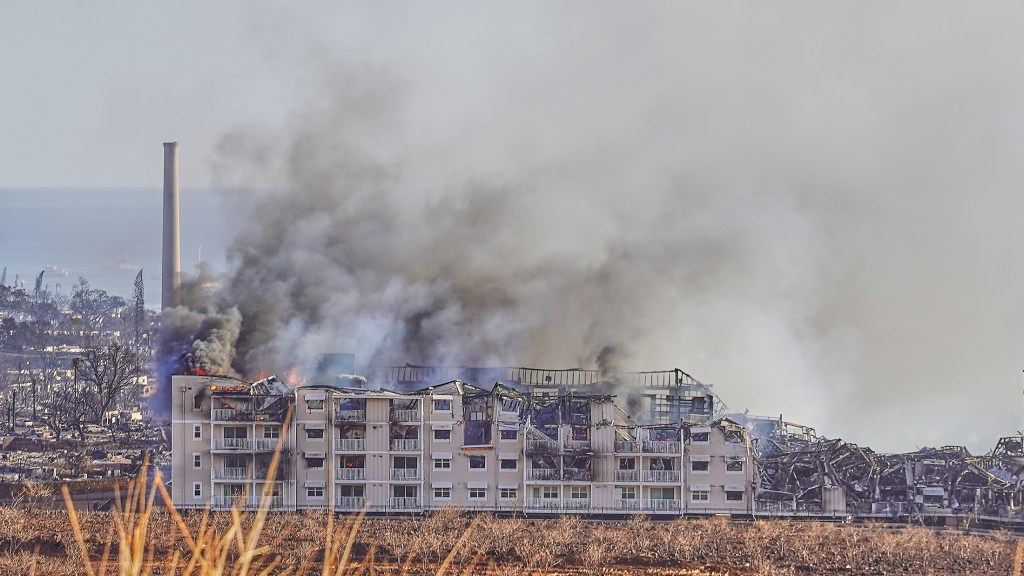
The move represents the next step in addressing Hawaiʻi’s ever-growing wildfire risk, a problem that was understated and received little attention until the Aug. 8, 2023, Lahaina fires killed 102 people and destroyed more than 2,200 structures. The fires prompted the attorney general to lead a two-year investigation into the state’s response to the fire, as well as gaps in fire defense and preparation.
The AG’s office identified 10 top priorities for improving wildfire safety in the last of its three reports on the fire. They included issues like improving fire and building codes and standards, doing more vegetation management, improving fire forecasting, being better prepared to respond to wildfires, increasing public wildfire education, improving evacuation routes and strengthening communication.
The highest-ranked suggestions were revitalizing the state fire marshal’s office and giving the Hawaiʻi Wildfire Management Organization a leadership role in fire prevention strategy, which it now has.
The state’s master wildfire plan will be an “action plan” that addresses specific needs, said Elizabeth Pickett, co-executive director of the wildfire management organization.
“Some departments will be stepping into new roles, while others — who’ve been doing this work for decades — will finally get the support and alignment they’ve long needed,” Pickett said. “This is about learning together, building systems that last, and finally connecting our collective efforts into one coordinated path forward.”
The process is expected to take about two years, but will cover everything from staff and policy needs to addressing gaps in the workforce. Part of the work, Pickett said, will be educating agencies on what their roles should be in wildfire prevention and mitigation.
Creating such a detailed plan to improve fire safety across the state is a unique move, according to Pickett.
“As a state, we went from the most behind the curve to the front of it,” she said.
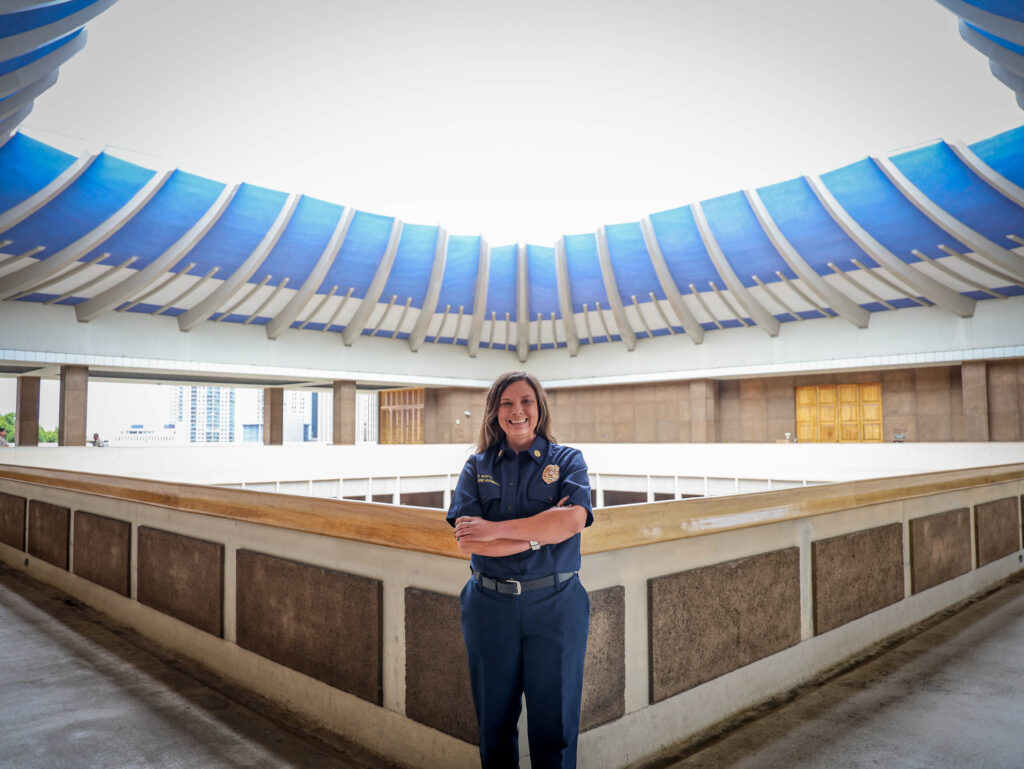
The work will not be limited to state agencies either, as Hawaiʻi’s diverse communities will play a crucial role too, Booth said Thursday.
“We ask everybody to do their part, work on their homes and help your neighbors,” Booth said. “This is an ecosystem we have to learn to live in.”
Fire-adapted communities — communities aware of risk and preventing it as much as possible— are one of the four key areas the wildfire strategy will focus on creating, along with helping make the state’s landscapes more resilient through things like fire breaks and ensuring stronger emergency responses.
The State Fire Marshal’s Office will have a major role in implementing that strategy once it is done, Booth said, but the office will be rebuilt with clear focus on remodeling codes and standards, as well as a focus on fire regulations and operations.
With The Drought, Look out
The AG’s announcement came a day after state fire officials launched a publicity campaign to warn residents about fire risks ahead of what could be a particularly dry, windy and fire-prone summer.
Officials underscored a need for public vigilance while also highlighting state and county investments in new machinery and staffing to help prevent wildfires statewide, a problem that has exponentially grown in recent decades.
Maui and Hawaiʻi counties are already facing varying degrees of drought, according to the U.S. Drought Monitor, with a quarter of the state’s population already living with drought conditions.
That does not bode well for the state’s wildfire outlook for the next three months.
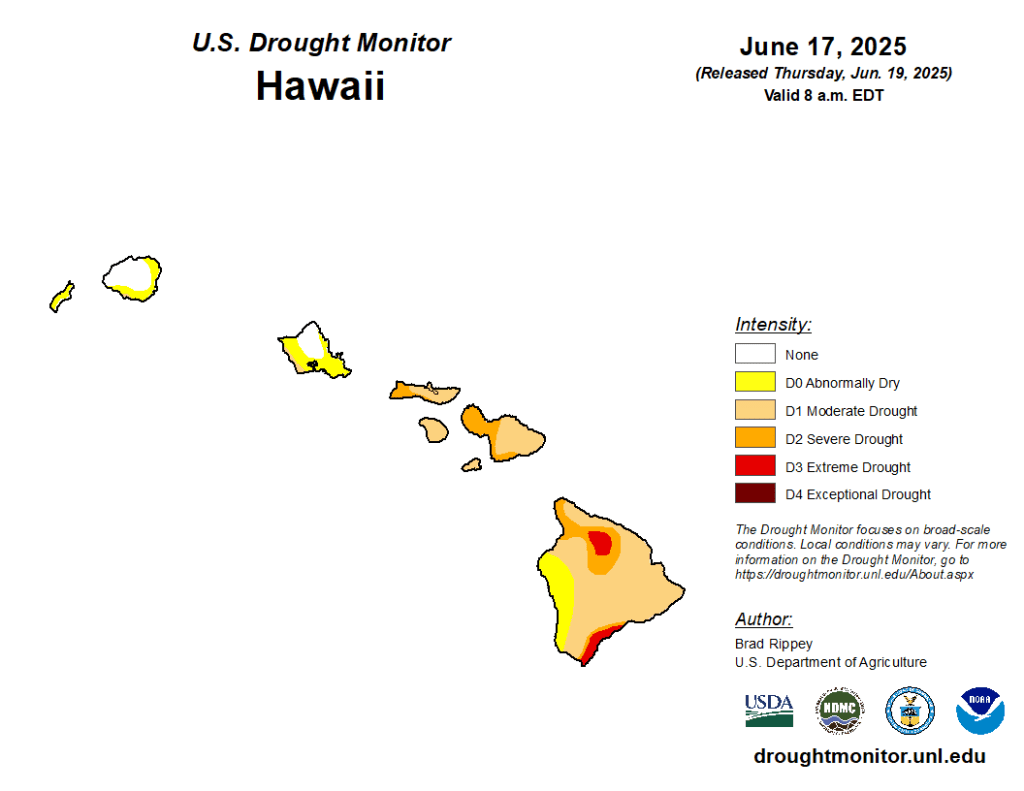
The most extreme cases of drought are on the Big Island, on the northern slopes of Mauna Kea and parts of the southeastern coastline, in Kaʻū.
All islands of Maui County are currently experiencing moderate-to-severe drought, and the majority of the islands are abnormally dry.
Drier conditions will likely worsen statewide, National Weather Service forecaster Genki Kino said, worsening already bad conditions as the state comes out of its second-driest wet season in 30 years.
Those dry conditions, combined with high winds, are a disastrous recipe for wildfires statewide.
Since the Lahaina fire, the number of communities that are in the process of becoming — or are already are — part of the Firewise Communities program has more than doubled to 30.
The program helps communities mitigate fire risk in their neighborhoods while also allowing them to leverage funding from the government.
“I want to be really clear,” Pickett said on Wednesday. “There’s a role for everybody to play.”

