

How Hawaiʻi’s School Transfer System Leaves Students Behind
Geographic exceptions were intended to give families more flexibility with their children’s education, but the process may be exacerbating educational inequality.
More than eight months before her son started kindergarten, Nicole Gomez started the intensive process of choosing an elementary school. Her family is zoned for Lanakila Elementary in Honolulu, but she wanted a campus with more extracurriculars and after-school options for her son.
Unlike other states, Hawaiʻi has no magnet schools and offers few school choice options within the Department of Education. But the state does allow parents to ask special permission to switch schools — a process known as geographic exceptions or GEs — so Gomez and her family started the months-long process of applying to three additional public elementary schools.
Once she heard back from principals in the spring, she had only 10 business days to decide.
“You have to move fast,” Gomez said. “You’re wrapping up the year, and it gets a little busy.”

Roughly 13% of Hawaiʻi students received a geographic exception last year. The process was created in 1996 to give students access to special programs not offered at their neighborhood school or attend campuses in a location more convenient for their parents. Over the last two decades, however, parents have increasingly used it to send their children to better-rated schools, often in more affluent neighborhoods.
Critics say the application process lacks transparency and question whether principals have too much leeway in selecting which students to accept.
Not all families benefit equally from the system. In the 2022-23 academic year, nearly 30% of Asian students received GEs, even though they made up 16% of the public school population. On the other hand, just 7% of Pacific Islander students attended school using GEs but made up 11% of DOE’s enrollment.
Students who were low-income, special education or English learners were also less likely to tap into the transfer system, according to the DOE.
A lack of clarity around GEs can disadvantage families who aren’t familiar with the application process or don’t speak English as a first language and need translations of the paperwork, said David Sun-Miyashiro, executive director of HawaiiKidsCAN, an educational advocacy group.
“I think there are a lot of logistical issues and issues relating to privilege there,” Sun-Miyashiro said.
GEs can also exacerbate educational inequalities and disadvantage students attending small, low-income schools that may already be struggling to keep their doors open, particularly as the education department considers school closures as enrollment dwindles across the state.
When schools lose students through the transfer process, they face smaller budgets and possible cuts to their staff and extracurricular programs, making it harder to attract families to their campus and keep students from leaving.
“It hurts if we continue to lose more kids on GEs, and our enrollment goes down, and our funding goes down,” said Michael Harano, principal of Washington Middle School, which lost more than 170 students to GEs last year. “It’s a slippery slope.”
‘Not A Lot Of Information’
Families have a three-month window at the start of each year to submit a form explaining why they want to transfer from their home school to another campus. Principals at the desired school are responsible for reviewing and approving requests and must notify parents of their decision by mid-March, according to DOE guidelines.
When schools have more requests than they can accommodate, principals are supposed to use a lottery system to select applicants. Students receive priority consideration if their requests fall into certain categories, such as asking to attend the same school as their siblings or transferring to a school that offers unique academic programs.
“In theory, it seems like it should be pretty streamlined to transfer across schools, and yet there’s just not a lot of information and not a lot of transparency or standardization,” Sun-Miyashiro said.
In 2019, Sun-Miyashiro’s group supported a resolution in the Legislature asking the state to audit the transfer system, arguing that more data is needed about which families are receiving transfers and how those requests impact the equality of educational opportunities in Hawaiʻi. The resolution failed.
“Despite these educational options within the public schools, families often report frustration with the current system of geographic exceptions, based on a perception that parents with means and connections are able to gain an unfair advantage through the process for their children,” the resolution said.
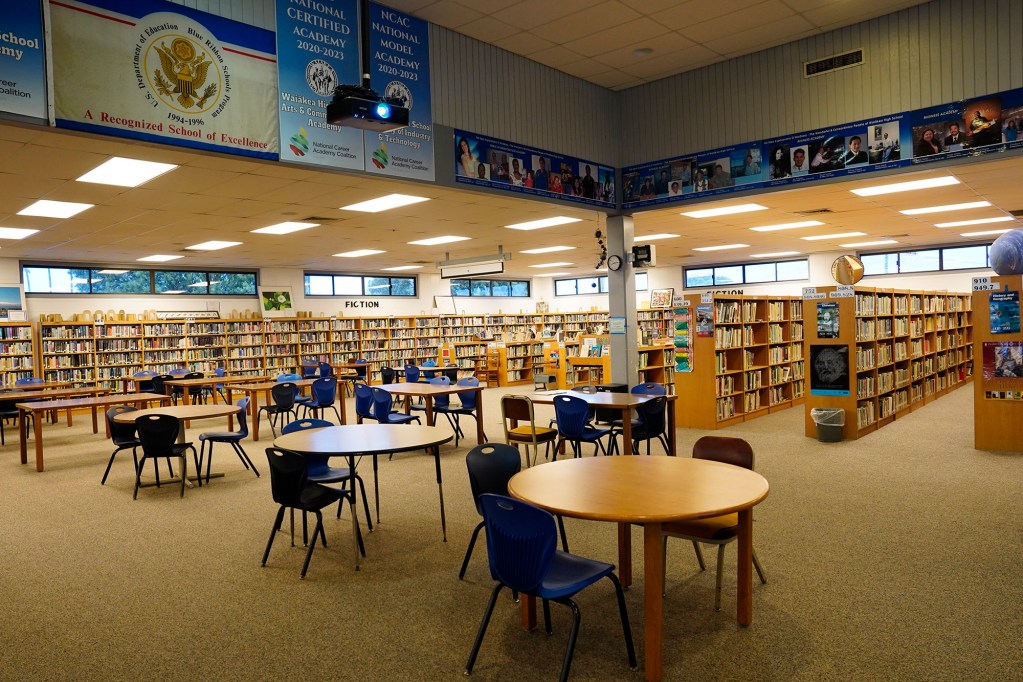
Catherine Payne, a former principal at Farrington High School who also served as chair of the Board of Education, said it’s difficult for DOE to monitor the process when applications are mainly processed by hand. Families have the option of appealing a principal’s decision if their GE request is rejected.
“Sometimes you just have to trust the people that are in charge and hope they’re doing the right thing,” she said.
Kelcy Koga, principal at Waiākea High School, said schools receive little information about students on their GE applications, making decisions fairly straightforward for administrators. Most of the time, he added, he can’t access the academic records of an applicant, and families aren’t required to share any personal information or disclose if their child qualifies for special education services on the GE form.
Waiākea High tries to accommodate as many applicants as possible and typically gains about 200 kids through the GE process, said Koga, whose school enrolled fewer than 1,200 students last year. He tries to prioritize students already attending the nearby middle school on a GE, as well as those who want to come to Waiākea for academic programs such as early college that aren’t available at their home school.
But families more familiar with the GE process may be able to use the system to their advantage.
Karen Meyer runs Castle High School’s learning center, which specializes in performing arts and draws roughly 10 to 20 GE students from across Oʻahu every year. When Meyer started at Castle around 20 years ago, she said, some students would cite the school’s performing arts program on their transfer requests — but then never joined a theatre production or took a dance class.

Meyer said she suspects these students wanted to attend Castle for other reasons, like athletics, but knew they could improve their chances of receiving a GE if they named an extracurricular that wasn’t available at all schools.
Meyer said she hasn’t seen a falsified application in years, but she now holds short interviews with students who cite performing arts as the reason why they want to transfer to Castle. It’s easy to tell which students are committed to the program and which families are using performing arts as an excuse on their applications, she said. She still believes the GEs play a key role in helping students find and pursue their passion at school.
“You can find out what your kid’s interested in, and find that place where your child is going to thrive and feel comfortable,” Meyer said. “And that’s what the GE program’s for.”
Changing Reputations
Over the past 20 years, Washington Middle School’s enrollment has fallen from roughly 1,000 students to just under 600. While some families have moved out of urban Honolulu to other parts of the island, Harano said geographic exceptions are also to blame.
Last year, more than 170 students transferred out of Washington Middle to Kaimukī Middle and other schools — taking with them funds that the school could have used for teacher positions or special classes like Hawaiian language.
Families often transfer to schools where they assume the academics or extracurriculars are better than what their zoned school has to offer. But Harano is determined to prove families wrong, pointing to Washington Middle’s array of performing arts classes, robust after-school programs and a successful math team that’s won more than 10 state titles.
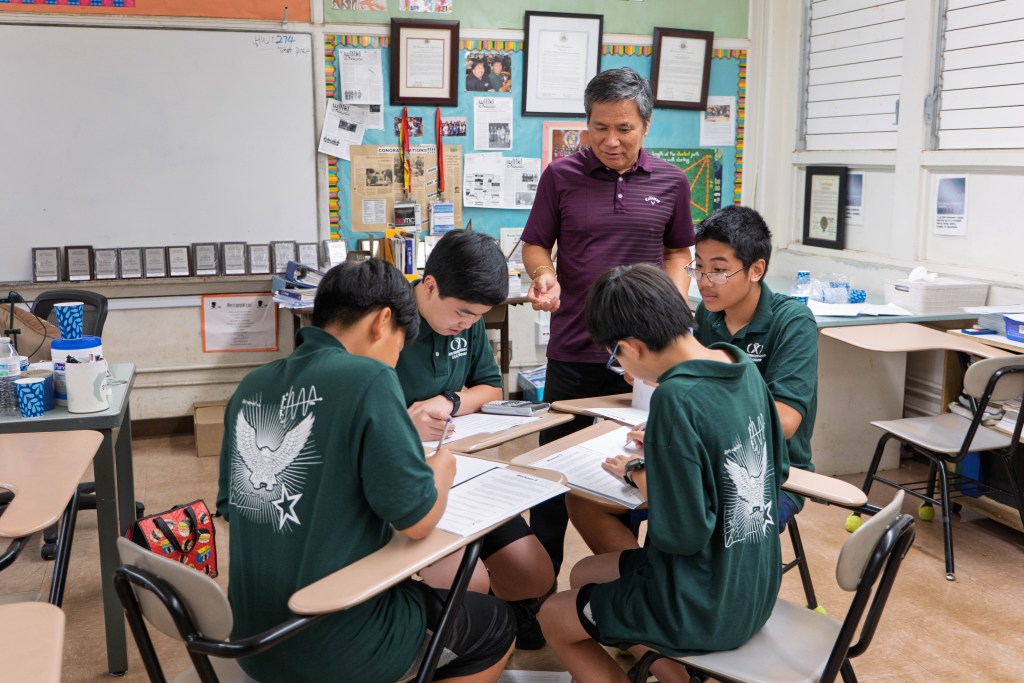
“We need to be able to convince kids so that when their parents say, ‘Well, where do you want to go to school?’, they’ll say Washington,” Harano said. This fall, he expects the school to gain the same number of students it’s losing through GEs, a significant shift from past years where he’s lost more than 100 kids to the transfer process.
The transfer system can create a self-fulfilling prophecy for schools already struggling with fewer resources or lower test scores, said Lois Yamauchi, an education professor at the University of Hawaiʻi Mānoa.
If a campus has a poor reputation, more families may leave — sometimes without giving their neighborhood school a fair chance, she said. In turn, the school losing students faces a smaller budget, less family engagement and fewer resources to maintain programs and hire staff that could attract new kids or maintain current levels of enrollment.
Sarah Lenhoff, a professor at Wayne State University who studies school enrollment systems, said GEs typically benefit better-resourced families who learn about schools through their social networks and have the time to transport their children to campuses outside their neighborhood. When schools see an exodus of families leaving on exceptions, she said, the students left behind often are lower-income or minorities.
Some schools in Hawaiʻi have seen significant changes in their student demographics as transfers have become more common over the past 20 years.
In 2005, roughly a third of students at Kalihi Elementary spoke English as a second language, and 6% of kids received special education services. In 2023, more than half of students at the school spoke English as a second language, and the proportion of kids receiving special education services rose to 9%.
The school lost 230 kids to GEs last year — more than the total number of students it enrolled.
Public school parent Chris Kobayashi has mixed feelings about GEs. Growing up, Kobayashi said, he received GEs to attend schools closer to his parents’ workplaces in Honolulu. He also recently submitted GE requests to seven elementary schools for his son, who is starting kindergarten in the fall.
The schools he applied to seemed to have consistent, open communication with parents, Kobayashi said, and offered programs such as robotics and after-school sports that his son would enjoy.
But despite his investment in the GE process, Kobayashi also wonders what it would be like if all students attended school in their neighborhoods and families focused on improving their local educational options, instead of seeking options outside their community.
“It’s really hard to say, but I’d like to think that you’d see improvement in maybe some of the underperforming schools,” Kobayashi said.
At Kalihi Waena Elementary, Principal Daniel Larkin said he’s been working hard to improve the school’s reputation, emphasizing its caring staff and fun environment through social media posts and community engagement. In years that the school receives more students through GEs, Larkin said, he’s able to invest in new computers and small group tutoring for students.
Last year, the school grew by 11 students through the transfer process, a reversal from 2022 when Kalihi Waena’s enrollment dropped by 35 kids because of GEs.
Moving forward, Sun-Miyashiro said, struggling schools may see more success in adopting unique academic programs that set them apart from other campuses and attract families, although it can be difficult for principals to make these investments as their budgets shrink.
Even though Hawaiʻi has no magnet schools with specialized classes and curriculum, the state has attempted to create a similar system through learning centers. The centers, which operate in 25 middle and high schools, offer classes and after-school programs in areas like performing arts or business and accept students on GEs, according to the education department.
These unique programs aren’t always enough to bring in new students, especially if schools are struggling to maintain other extracurriculars that could widen their appeal. Many high schools with learning centers have seen only small boosts in their enrollment from GEs, and some campuses, like Kaimukī and Castle High School, lost significantly more students than they gained through the transfer process last year.

Even public schools known for their academic success are competing with Hawaiʻi’s robust private school system. Gomez, who submitted GE requests to three schools this year, decided in the end to send her son to Le Jardin Academy, a private school in Kailua. Le Jardin seemed to be better prepared to challenge her son academically, Gomez said, while still allowing him to learn alongside his peers.
Reputation matters, Sun-Miyashiro said, and sometimes principals need help promoting the work they’re already doing on campus. If it were easier for families to learn about the extracurriculars and classes offered at their assigned schools, he said, parents might be pleasantly surprised by the opportunities already available in their community.
“I think it’ll be a different story than what a lot of folks assume,” Sun-Miyashiro said, “just based on their biases and things like reputation.”
Look up geographic exception numbers by school in the table below:
Civil Beat’s education reporting is supported by a grant from Chamberlin Family Philanthropy.

