

Honolulu Wants To Put More Cameras In Public Parks To Reduce Crime
The City Council hasn’t come up with funding yet for the program and research shows cameras alone may not be effective.
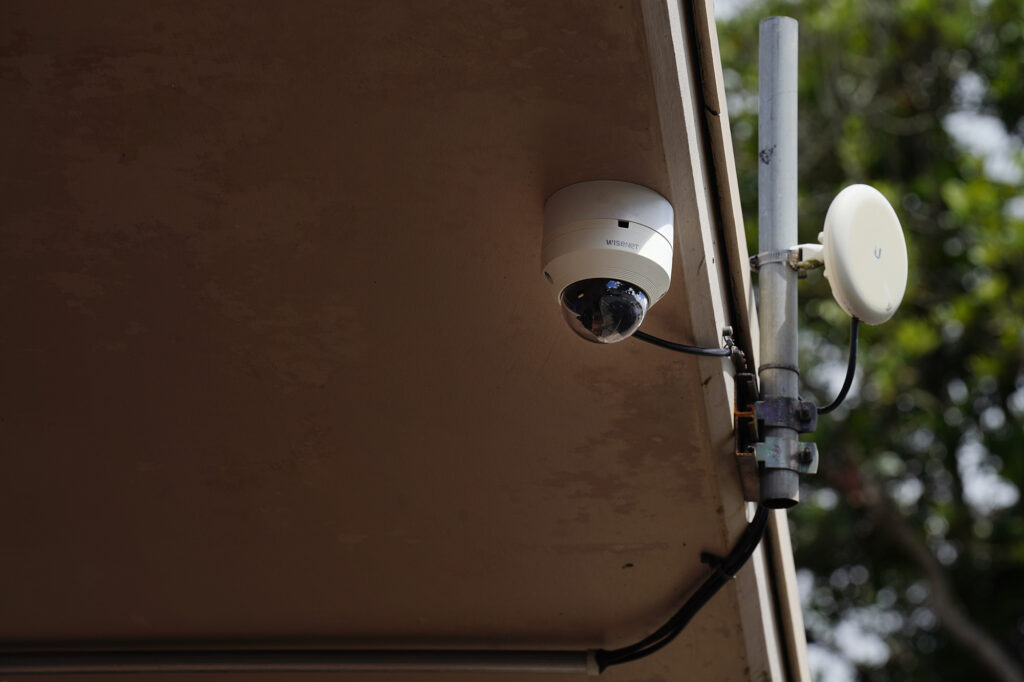
Many more of Honolulu’s parks would be subject to video surveillance under a one-year pilot program recently approved by the City Council.
But it’s unclear when the rollout will begin because the city still needs to identify funding sources, according to council member Radiant Cordero, who introduced the resolution.
The city did not respond to a range of other questions on the timeline, cost and installation details. The resolution doesn’t specify when work needs to begin and Cordero said via email she is working with the Honolulu Police Department, the city’s Department of Information Technology and the City Council to get the money for the program.
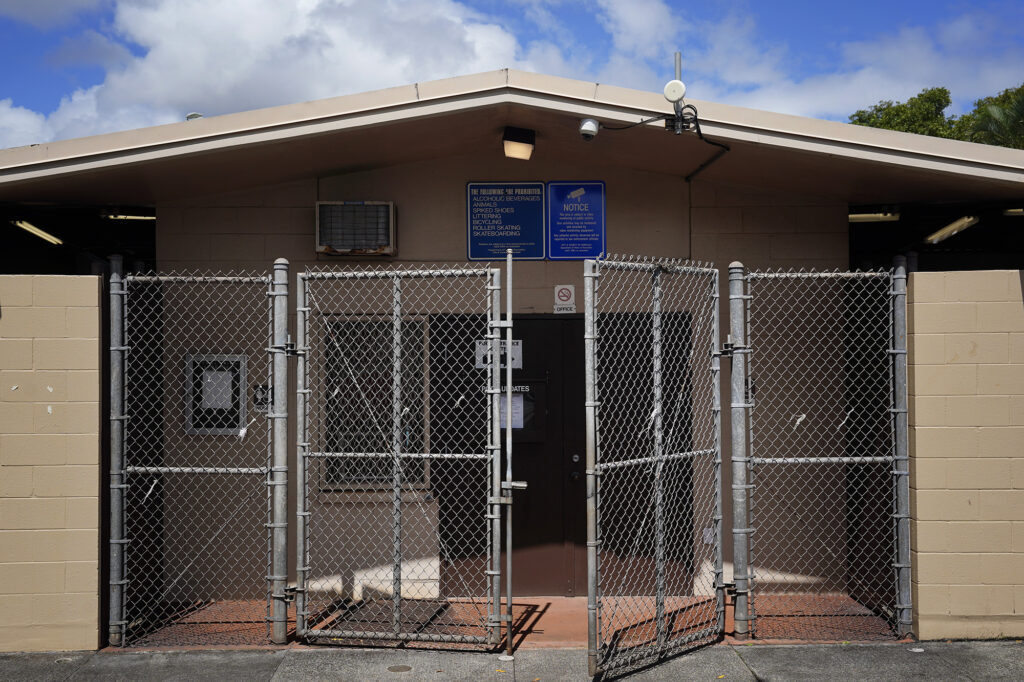
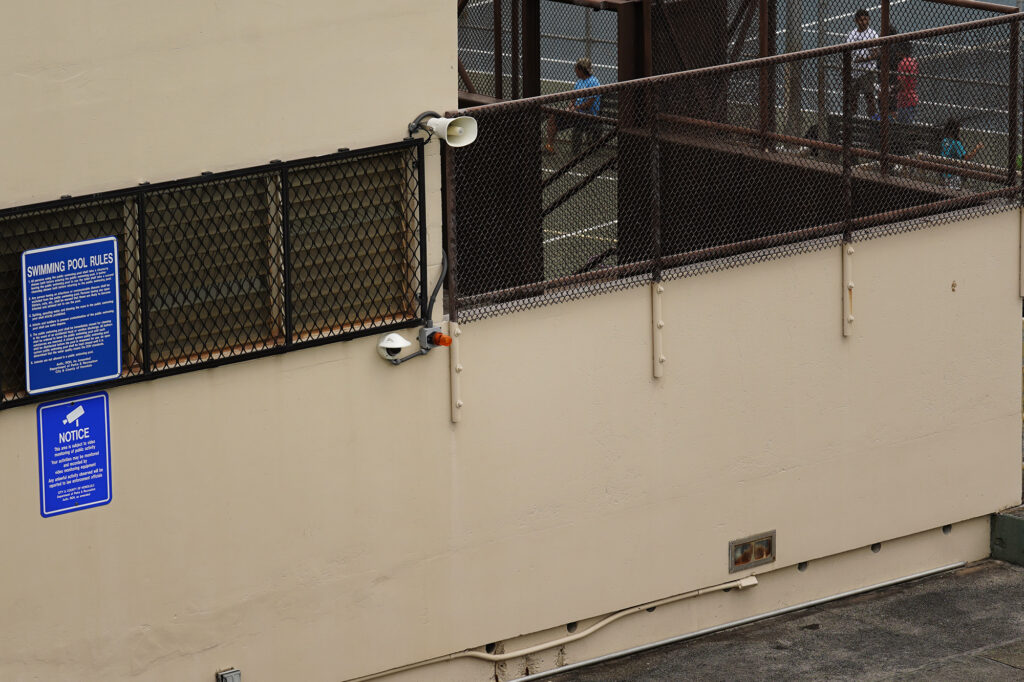
Sixteen parks are already monitored by 165 closed circuit cameras. That would jump to around 45 parks under the new program and cover most of Oʻahu’s open recreation areas. The resolution cited staffing shortages at the Honolulu Police Department as a key reason for the expansion.
Cameras would be added to at least another 30 beach and community parks, including Kapolei Regional Park, Kāneʻohe Regional Park and ʻEwa Beach Community Park. Other locations on the North Shore and Windward coast are yet to be decided.
While the exact number of cameras hasn’t been finalized, based on the current distribution that could result in nearly 500 cameras recording 24 hours a day.
The American Civil Liberties Union said the expansion raises concerns over constitutional rights, and recent academic studies show that cameras alone do little to deter or prevent criminal activity.
The resolution passed June 4 with strong support after an uptick in reports of crimes and vandalism in city parks, including gun violence at Ala Moana Regional Park and the destruction of newly installed playground equipment at Wahiawā District Park.
Both of those parks already have some video cameras installed.
Cordero said in a statement she believes “visible surveillance cameras are an important tool that can help deter crime and create a safer environment for our community.”
But research shows the expanded surveillance would have only a limited impact on criminal activity because the cameras won’t be continuously monitored, and footage would only be reviewed by staff and police for investigative purposes.
Case studies show that cameras that aren’t actively monitored do little to deter crime, said Eric Piza, a national expert on crime control technology and director of Crime Analysis Initiatives at Northeastern University.
”The monitoring they seem to be pursuing doesn’t have much of any track record of success, to be honest,” Piza said.
The expansion could also have a chilling effect on protected First Amendment activity, according to Wookie Kim, legal director for ACLU Hawaiʻi.
“It’s unclear how this will actually improve public safety,” said Kim, adding the rollout is especially concerning because of the focus on parks where a lot of unhoused people live, and where activity like political demonstrations often take place.
The resolution requires cameras to be pointed away from private property, but city statute also allows the cameras to zoom, tilt, rotate and pan. The city did not provide technical details on how installations would ensure cameras comply with that requirement.
Cameras Alone Have Little Impact
Cameras have been in city parks for over a decade, according to the Honolulu Department of Parks and Recreation, and are commonplace in urban settings like Chinatown where officials say their presence – along with the expansion of HPD’s Chinatown Task Force – has helped bring down crime rates.
At the moment closed-circuit television cameras in parks are concentrated in metroplitan and East Honolulu with a handful in Central Oʻahu and the Windward Coast. Seventy-five of those were installed starting in 2019 through a partnership between the city and the Hawaiʻi Tourism Authority aimed at curbing vandalism and crime in parks.
Those cameras cost the city about $39,000 and HTA picked up the installation bill of $204,000, said parks department spokesman Nate Serota. Vandalism in city parks typically costs the department between $300,000 and $400,000 every year, he said.
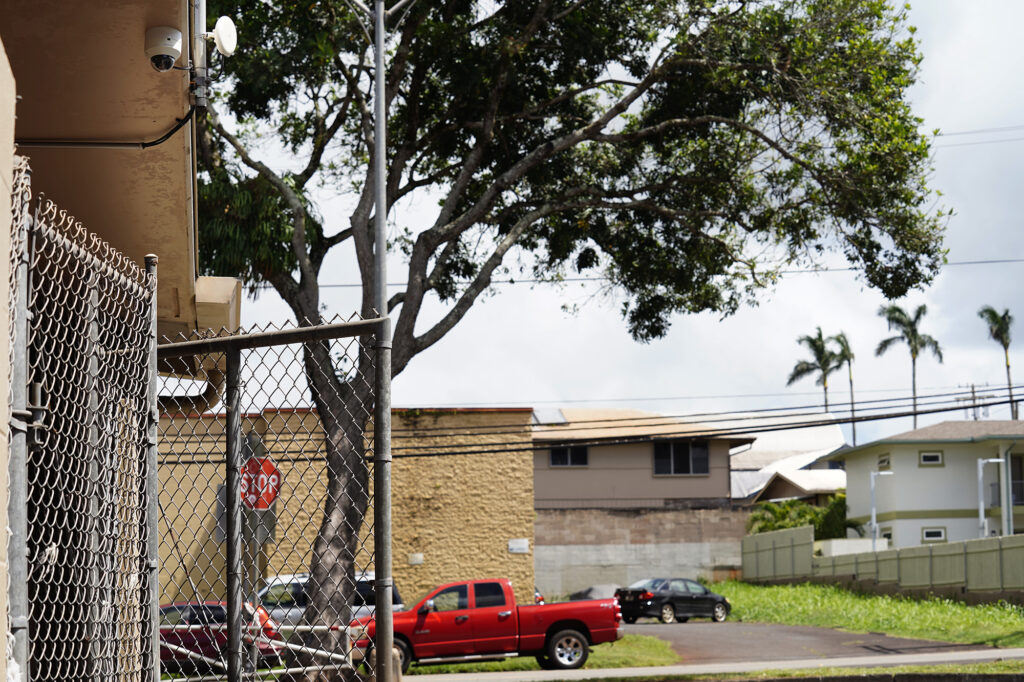
Most recently, the city installed an additional 25 cameras on streetlights around Ala Moana Regional Park, adding to 23 already in place around bathrooms in the park. The main purpose was to provide additional deterrents to crime, Serota said.
Despite the array, the park was the setting for recent firearms incidents, including one in February in which an 18-year-old man was shot, and another in April when a 16-year-old was arrested for allegedly discharging a firearm. Those incidents were raised during council discussion on the expansion plan.
Piza, whose research has focused on crime deterrents, said the camera rollout “doesn’t seem to have the necessary components to make crime prevention a high likelihood.” He said that the key ingredient for success involves active monitoring of cameras by staff who can communicate with enforcement on the ground.
A successful example was Project Green Light Detroit, he said, which combines real-time camera feeds to the police from eight gas stations with active beat policing and community involvement.
But that presence in city parks is lacking on Oahu because of HPD staff shortages, the City Council resolution acknowledges.
HPD did not submit testimony on the bill but spokeswoman Alina Lee said via email the department agrees “that there is great value to the expansion of available footage within our parks” and that video evidence has become an “invaluable tool” for investigations.
Broad Public Approval, But No Local Data
Despite all the caveats, surveys generally show that there is broad public support for cameras, Piza said, and “people report that they don’t consider cameras in public places to be a serious infringement on their privacy.”
Chandra Kanemaru, who testified in support of the resolution, said she spoke with Cordero after a series of break-ins at the Salt Lake Community Center where equipment for after-school programs was stolen.
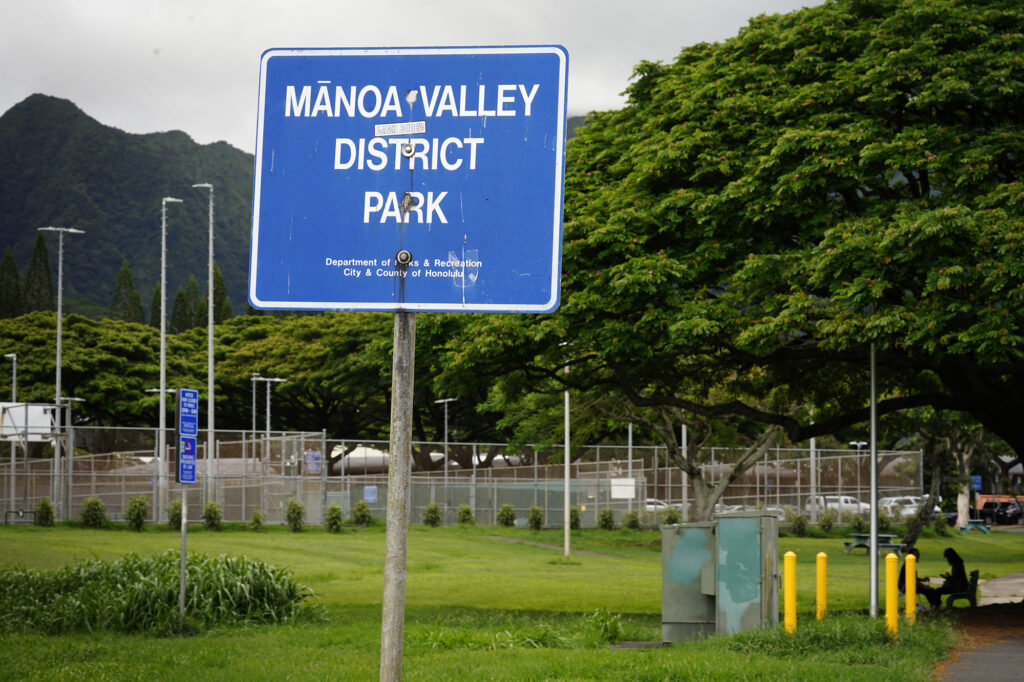
Salt Lake District Park is one of the sites that would get enhanced surveillance.
Kanemaru said those acts of vandalism and theft impacted low-income families with kids in after-school programs. The staff at the community center told her they would welcome the additional security the cameras would provide.
She said she believes the privacy issue was resolved through the requirement that additional cameras must not face private property. The city says that the cameras would be in overt public locations with prominent signage and not inside bathrooms or buildings where there are expectations of privacy.
But the use of public parks like Kapolei District Park and Old Stadium Park as locations for temporary shelter services for unhoused people could create additional privacy problems because of the services offered, which can include family reunification.
The ACLU’s Kim said it “would be very concerning if one of the decisions is to surveil an actual temporary housing site.”
The project would also require HPD to provide statistical data to the City Council at the end of the year-long pilot that would help it assess whether to expand, modify or terminate the program.
Lee couldn’t confirm if HPD had analyzed the effectiveness of the current camera program.
Another issue is the retention of the massive amount of information the enhanced network would capture.
Honolulu statute says that footage or digital equivalents should be erased or destroyed after 30 days, unless a city official finds a reason to maintain the file for a criminal investigation.
Piza said that recent data shows that post-incident enforcement is not greatly enhanced by the footage. “A lot of work needs to happen within a 30-day retention schedule for investigators to make meaningful use of the footage,” such as identifying potential witnesses.
The best examples of footage enhancing investigations were in closed transportation networks like subways, Piza said.
HPD investigators are aware of the need to obtain significant footage prior to deletion, Lee said.
Kim said the ACLU had concerns about the potential for misuse of footage, especially given its recent lawsuit alleging HPD officers had been arresting people on suspicion of driving while intoxicated without probable cause or due process.
“It’s critically important that the city ensures there are guardrails in place to ensure that this surveillance apparatus is not abused by police,” Kim said.
The map below shows parks included in the new video monitoring plan.

