Breast Cancer In Hawaiʻi: Some Women Are Diagnosed Too Late
Micronesians are less likely to get mammograms than women overall in Hawaiʻi. Community advocates say public health officials need to break down barriers to early screening.
Ermina George was lying on her stomach one evening last spring when she felt it — an uncomfortable lump in her right breast.
It made her nervous, but she didn’t run to the doctor.
Like many Micronesian women, the 64-year-old was used to putting the needs of her family above her own, even when it came to her health. She was working as a custodian at Ala Moana Center, and she put some of her money toward her five grown children. Her husband was preparing to become a lay minister in their church and she wanted to support him, too.
But in the coming weeks, the lump grew and became more painful.
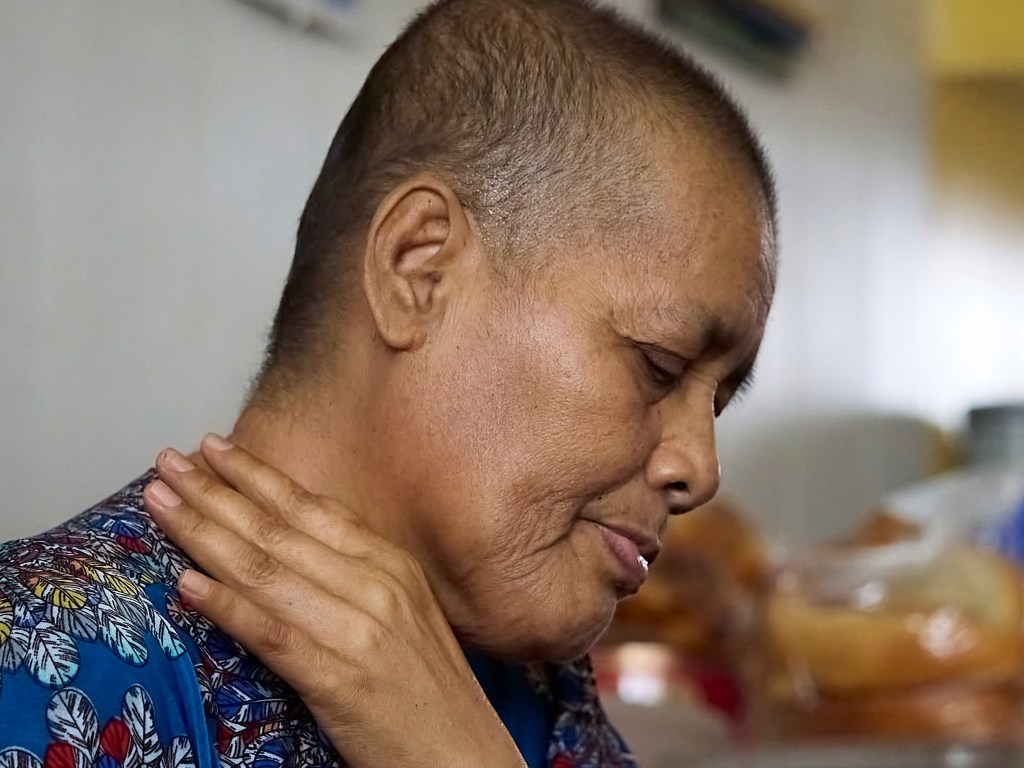
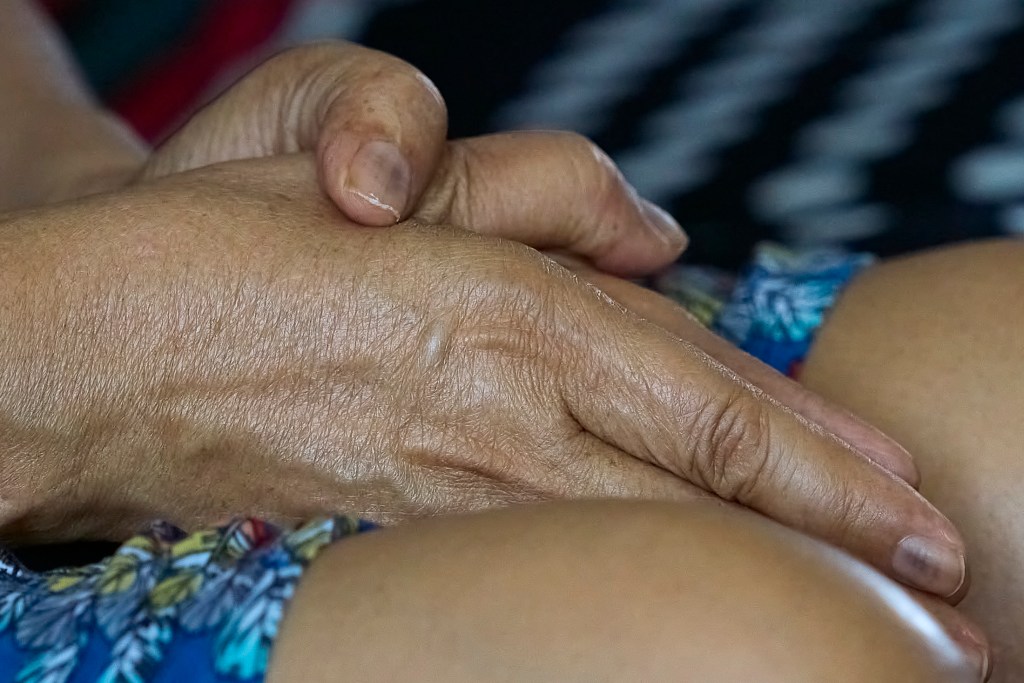
Finally, about a year ago, she went to a doctor. She was diagnosed with stage 3 breast cancer; it had spread to other parts of her body.
For Micronesian women, George’s case is not unique. Community advocates say Micronesian women in Hawaiʻi are suffering from advanced cases of breast cancer even though screening tools including mammograms are widely available. They say the state needs to do more to help these women.
Women in the Pacific Islands, particularly the Federated States of Micronesia, are diagnosed with breast cancer later than those in the United States, which means the cancer is more likely to have spread to other organs and is more difficult to treat, according to a study published last year by cancer researchers, including three from the University of Hawaiʻi.
There’s a similar disparity among Pacific Islanders living in Hawaiʻi, although those statistics don’t usually break down rates by country of origin.
Researchers say breast cancer is diagnosed late in Pacific Island nations because those countries have limited access to mammography machines and other screening technology. But even Micronesian women in Hawaiʻi, where such tools are readily available, have low rates of breast cancer screening.
That’s due to a variety of factors, according to community advocates, including limited access to health care, language barriers, lack of awareness about cancer screening and discrimination in the health system.
A bill introduced this year would have prohibited insurers from charging copays for breast examinations, but it didn’t pass. Nor did a resolution that would have asked the state auditor to assess the cost of that change.
Srue Wakuk, a community health educator with the University of Hawaiʻi Cancer Center, said eliminating fees for mammograms and other screening would make them more accessible for Micronesian women. But she also said state health officials need to educate those women about the importance of early screening and help them get to those appointments.
When “they feel something — probably a lump or pain or any issues — that’s when they’re going to see the doctor for help,” said Wakuk, who is from Kosrae in the Federated States of Micronesia. “We are hardworking women; sometimes we put our health last. But if we cannot take care of ourselves first, then we cannot take care of our family.”
Missed Annual Mammogram After Moving
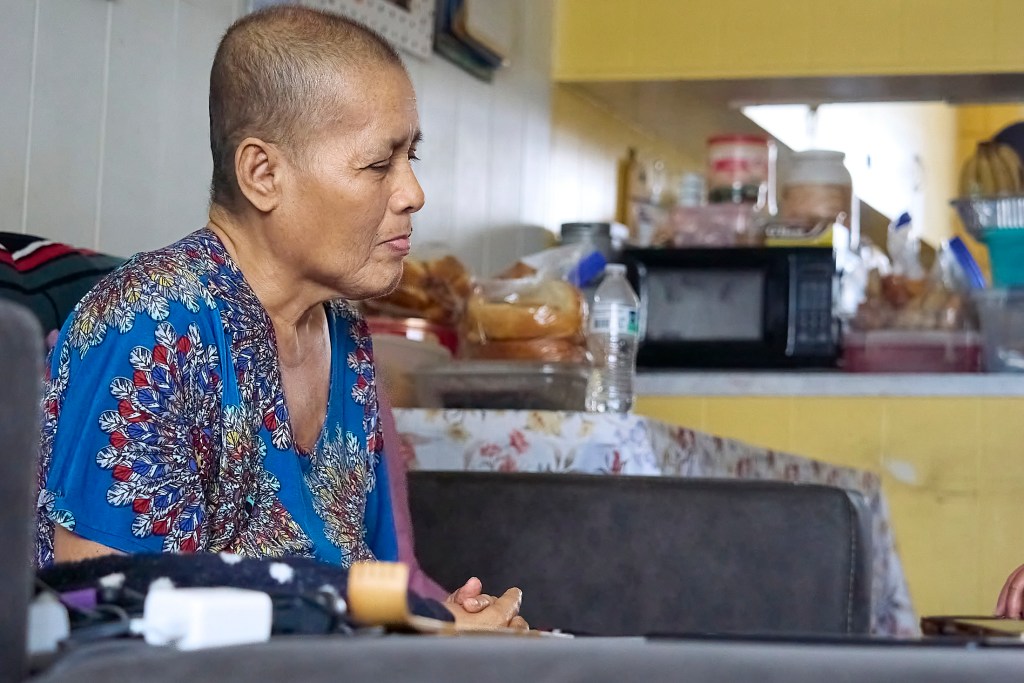
George sat on a sofa in her Honolulu apartment this week, surrounded by framed photos of her children, grandchildren and other relatives.
Speaking quietly in Kosraen, she described how the chemotherapy, first weekly and then monthly, weakened her and caused her to lose her appetite. Wakuk, who knew George back in Kosrae, interpreted.
George said she got regular mammograms until 2022 or so, when she moved apartments. She said her doctors had told her they’d follow up to schedule her next appointment. But if they sent letters, she never received them.
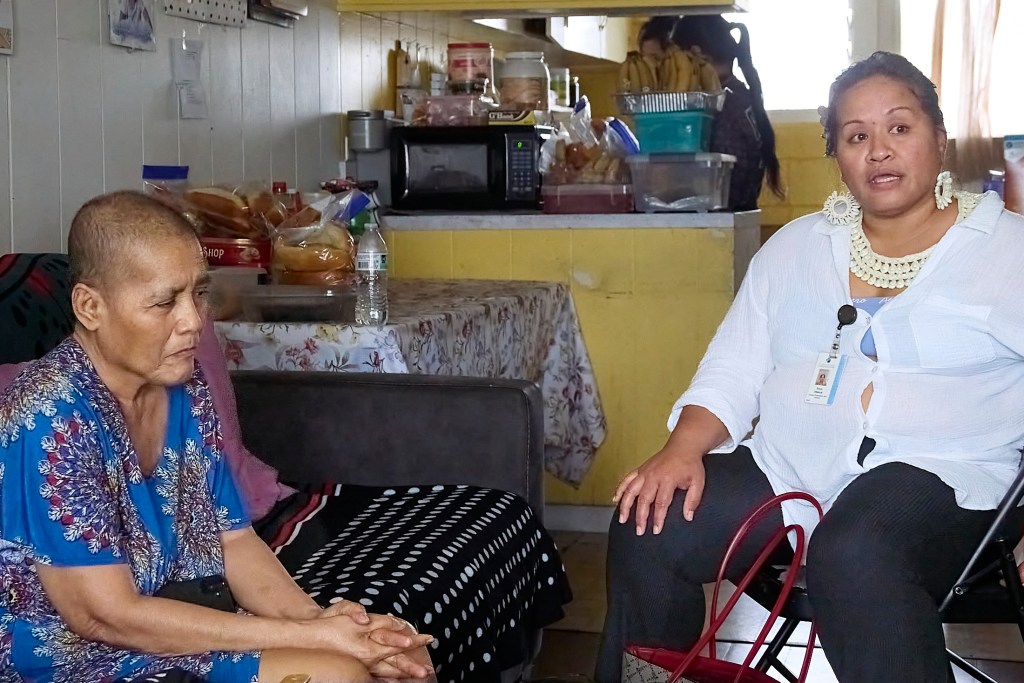
It’s common for Micronesians to move a lot, Wakuk said. And because many Micronesian families share cellphones, they can be hard to reach by phone.
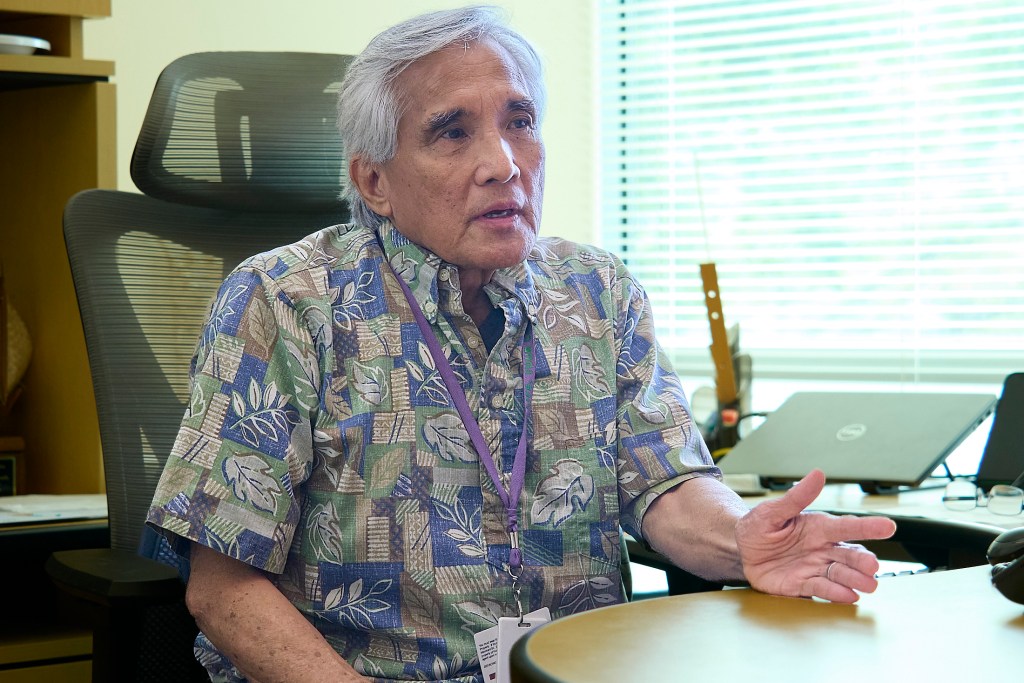
Regular screening is important because it’s much easier and more effective to treat cancer when it’s caught early, said Dr. Neal Palafox, a professor of cancer research at the University of Hawaiʻi and the author of multiple studies on breast cancer in the Pacific. When it’s diagnosed later, breast cancer often has spread to the lungs, brain, liver or other organs, and it grows much more quickly.
Countries with higher rates of late-stage diagnosis have higher death rates, according to a study published in April by Palafox and other cancer researchers with the University of Hawaiʻi. In Guam, where 39% of breast cancer cases weren’t detected until a late stage — typically stage 3 or later — 10% of patients died within five years of diagnosis. In the Federated States of Micronesia, where the rate of late-stage diagnosis is about twice as high Guam’s, 48% of patients diagnosed between 2007 and 2022 were dead within five years of diagnosis.
Treatment and screening in the Federated States of Micronesia are practically nonexistent, Palafox said. He knows of just one mammography machine in the country, located in a private clinic in the state of Pohnpei. But even in Hawaiʻi, where screening is readily available, Micronesian women are less likely than those of other racial and ethnic groups to get annual mammograms, Wakuk said.
A study published in 2012 by the Centers for Disease Control and Prevention found that only 26% of Micronesian women over 40 in Hawaiʻi have ever had a mammogram. Among all races and ethnicities in Hawaiʻi, 74% of women 40 and older have had a mammogram within the past two years, according to the health policy research organization KFF.
Barriers To Care
The bill to require insurers to cover the full cost of breast examinations would have especially benefited Micronesian women, Wakuk said, because they are generally poorer than others in Hawaiʻi.
More than half of people in this state who are from the Compacts of Free Association nations — which include the Federated States of Micronesia, the Republic of the Marshall Islands and the Republic of Palau — live in poverty. For the general population, it’s 10%, according to a 2020 report from the state Department of Business, Economic Development and Tourism.
It’s also difficult for many Micronesian women to get time off from work to attend appointments, Wakuk said.
State Rep. Darius Kila, who was one of the lawmakers who introduced the resolution seeking to evaluate the cost of the insurance-related bill, said in a text message that he expects it to be reintroduced next year.
“When we talk about lowering cost of living for Hawaiʻi residents, it involves also removing barriers to healthcare,” he said.
The barriers facing Micronesian women aren’t just financial. Dr. Seiji Yamada, a professor and director of medical student education at the University of Hawaiʻi, has studied discrimination against Micronesians in the health care system. He said many complain of unfair treatment that makes them wary of seeking medical care.
The discrimination can manifest in different ways, he said: Micronesian patients hear derogatory comments at hospitals, or they are offered appointments at undesirable times because providers assume they won’t show up.
“People recognize when they’re not wanted and when their health care workers are not keen on serving them,” he said. “I think there’s a good amount of distrust on the part of Micronesian folks because they anticipate that they’re not going to be treated fairly.”
That’s why, Wakuk said, it’s important for public health officials to build trust in the community. This can be done by hiring community liaisons to meet Micronesians where they gather, such as at church, she said.
Wakuk gives regular presentations on breast cancer awareness at Micronesian churches around Oʻahu and helps women schedule appointments.
“That’s also where I meet some of these people that I couldn’t get ahold of via phone,” she said.
George said she’s been speaking to women in her community and encouraging them stay on top of their mammograms. Her chemotherapy is on hold for the moment, as she prepares for an upcoming mastectomy.
“Back home, we don’t have this kind of access,” she said. “It is important. If it’s detected early, there’s a lot of chances for treatment.”
Civil Beat’s community health coverage is supported in part by the Atherton Family Foundation.