

New Lawsuit Raises Concerns Over Labeling Of ‘Reef-Safe’ Sunscreens
Experts say labeling sunscreens “reef-friendly” is deceptive since even chemicals that aren’t banned can do widespread damage to coral reefs.
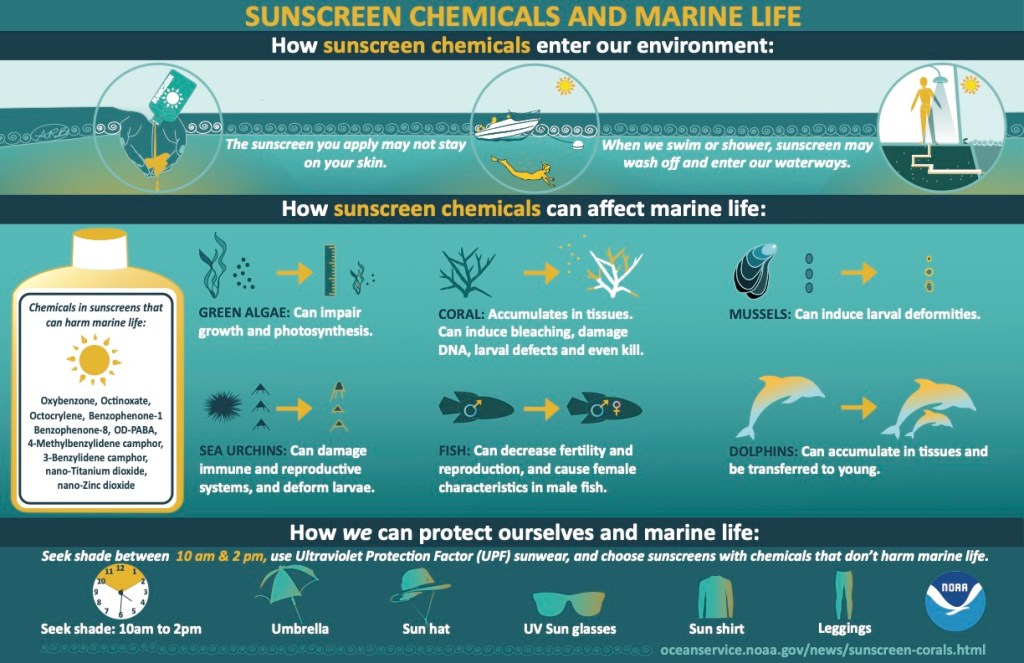
In recent years, a growing number of eco-conscious beachgoers, including those who travel to Hawaiʻi, have started to avoid using sunscreens with ingredients known to damage fragile reefs and marine life —chemicals such as oxybenzone and octinoxate that help filter UV rays.
Hawaiʻi went so far as to ban those chemicals beginning in 2021, but questions arose right from the start about enforcement and whether other ingredients are also harmful. Maui and the Big Island later banned anything but mineral-based sunscreens, such as those that contain titanium and zinc.
Popular sunscreen brands responded to the 2021 ban by labeling bottles that appear on store shelves across the island state and abroad as “reef-friendly” and sometimes “Hawaiʻi compliant” as well, giving the impression that they won’t harm the environment if worn while swimming in the ocean.
However, a lawsuit filed by the Santa Clara County District Attorney in California state court last week alleges Edgewell Personal Care, the parent company of Hawaiian Tropic and Banana Boat sunscreens, engaged in false advertising by calling some of its products reef safe.

The company removed oxybenzone and octinoxate from those sunscreens as required, the suit states, but it kept other ingredients such as avobenzone and octocrylene that have been found to harm coral reefs and their inhabitants. It also noted the “Hawaiʻi compliant” labels were inaccurate since Maui and the Big Island had prohibited chemical sunscreens altogether.
“An environmental catchphrase may be profitable to the company’s bottom line,” Santa Clara County District Attorney Jeff Rosen said in a statement. “But our bottom line is the law that protects consumers from irresponsible advertising.”
While the sunscreens have since removed the “reef safe” labeling from their bottles in favor of a more precise “Oxybenzone free” label, the lawsuit highlights the challenges of what makes a sunscreen truly eco-friendly. Representatives of Edgewell did not respond to a request for comment.

On Friday, none of the sunscreens on display at the Longs Drug at the Kāhala Mall said “reef-safe,” but they all contained octocrylene, which while not banned was included by the National Oceanic and Atmospheric Administration on a 2020 list of of sunscreen chemicals that can harm marine life.
“A lot of these chemicals are endocrine disruptors that need relatively small concentrations to have a negative impact,” said John Starmer, chief scientist with the Maui Nui Marine Resource Council, a nonprofit group dedicated to protecting reefs and the nearshore ocean environment.
Studies also have shown that many sunscreen chemicals can be absorbed through the skin and have been detected in both blood and breast milk, although advocates say more research on the impact is needed. Ocean emergency responders, field researchers and other crews out on the water often opt to just cover up or use a mineral-based sunscreen to avoid potential toxins.
The lawsuit seeks civil penalties from Edgewell and a court order to prohibit any future “reef friendly” or “reef safe” advertising of its chemical sunscreens.
While sunscreen has been proven to help prevent skin cancer and sunburns, experts say beachgoers should choose more environmentally friendly options.
“We like to stay covered up in the sun,” said Alika Garcia, executive director of the nonprofit Kuleana Coral Restoration and a member of the Honolulu Fire Department, “Whether the sunscreen has oxybenzone or not, fewer synthetic chemicals on our reef is better.”
Consumers looking for an alternative to chemical sunscreens, including those listed in the California lawsuit, will find that mineral sunscreens have come a long way from the days of their pasty white reputation.
But even those sunscreens, Starmer said, must also be properly vetted to determine whether they’re reef-safe. Nano particles from mineral sunscreens can lead to oxidative stress for coral reefs, putting them at higher risk of bleaching, according to Starmer. He said mineral sunscreens labeled as “non-nano” are better.
It makes sense that many beachgoers want to sunbathe or even need to wear sunscreen for medical reasons, Garcia said, “but for most people covering up is much better if they can” — with sun hats, neck sleeves, rash-guard shirts and other clothing that staves off the sun.
Civil Beat’s coverage of climate change and the environment is supported by The Healy Foundation, the Marisla Fund of the Hawai‘i Community Foundation and the Frost Family Foundation.
Read the lawsuit below:

