Every summer, approximately 1,200 keiki spend a week in the Honolulu Ocean Safety Department’s Junior Lifeguard Program. The locations are spread across Oʻahu and fill to capacity almost as soon as registration opens in May.
Photo Essay: These Keiki Might Save You From Drowning One Day
Every summer, approximately 1,200 keiki spend a week in the Honolulu Ocean Safety Department’s Junior Lifeguard Program. The locations are spread across Oʻahu and fill to capacity almost as soon as registration opens in May.
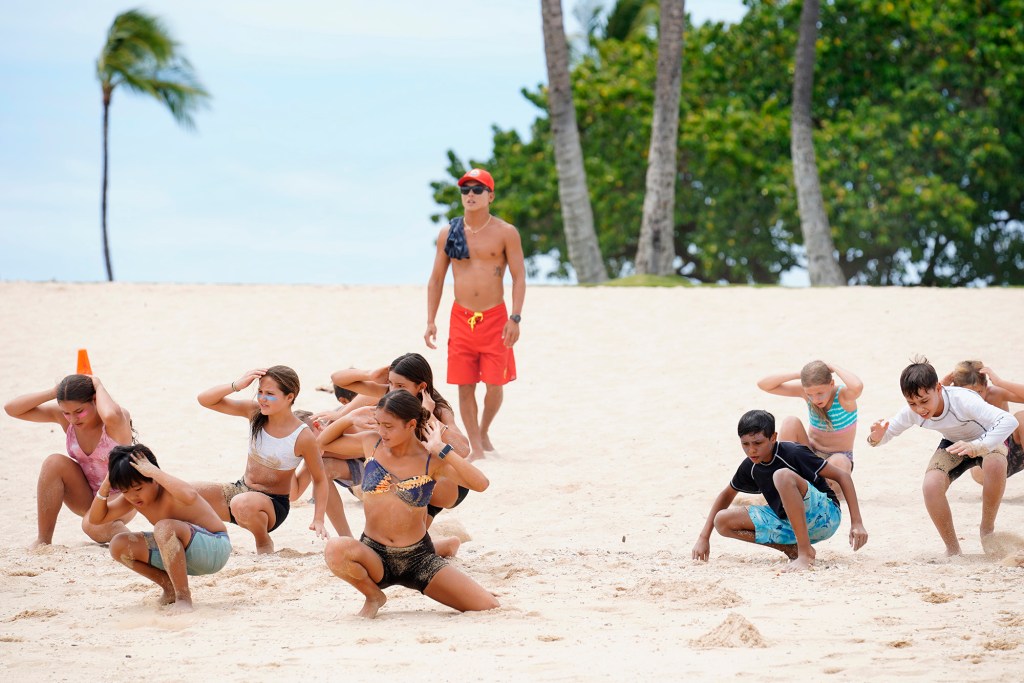
Honolulu Ocean Safety lifeguard Jedidiah Wataru runs Junior Lifeguard Program participants through squats at Ko’olina Resort Wednesday in Kapolei. (Kevin Fujii/Civil Beat/2025)
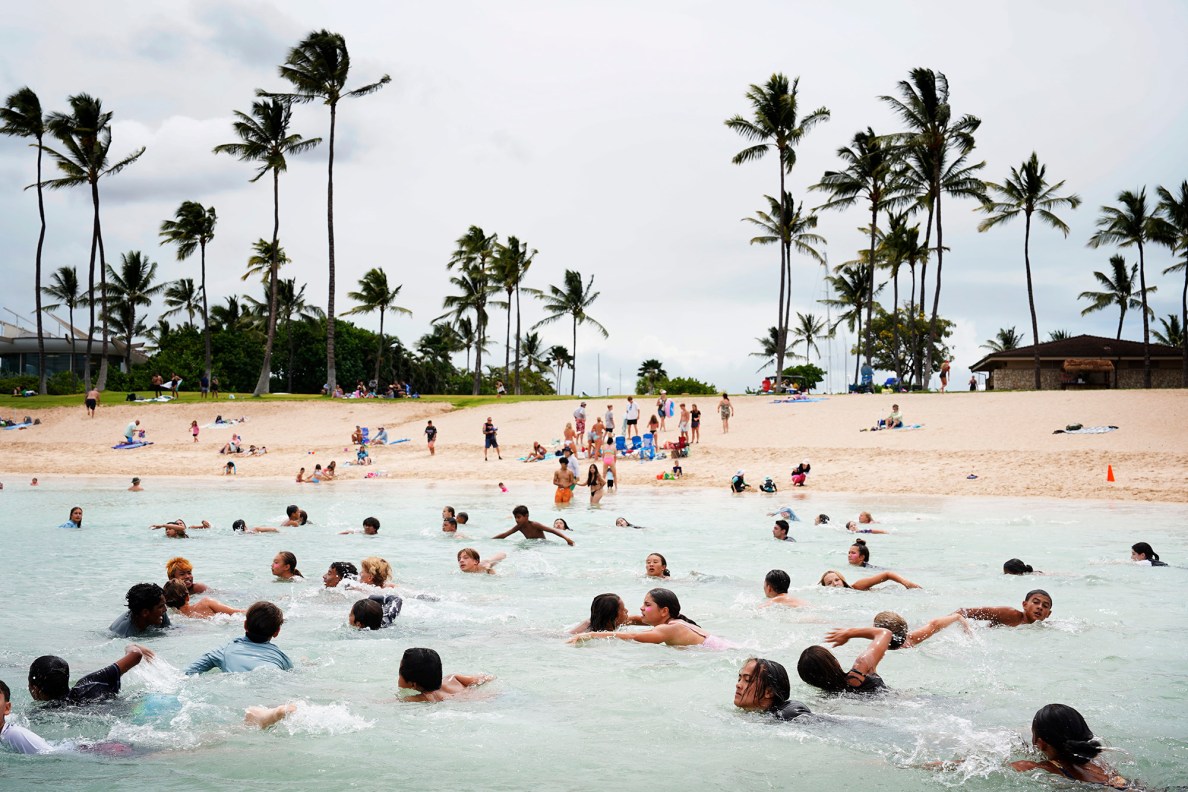
A junior lifeguard gives a surf report with wave height, wind speed and wind direction — similar to the way the professionals do it. Then drills known as “The Burn” begin: squats, crunches, runs, swims and a game participants call “Capture the Fin.” That was the scene every morning last week at Ko‘olina Resort’s Lagoon 4, also known as the Ulua Lagoon, and at other beaches across Oʻahu throughout the summer.
—
Honolulu’s Ocean Safety Department added another Waiʻanae Coast location to its free annual Junior Lifeguard Program this year as well as a new Windward venue at Kokololio in Hau‘ula, bringing the total venues to seven.
“Ocean Safety is continuing to look at ways that it can improve and expand its program to accommodate more keiki and of various ages,” Director Kurt Lager said. “We want to teach as many of our keiki practical life-saving skills that will help them or someone else survive in the ocean.”
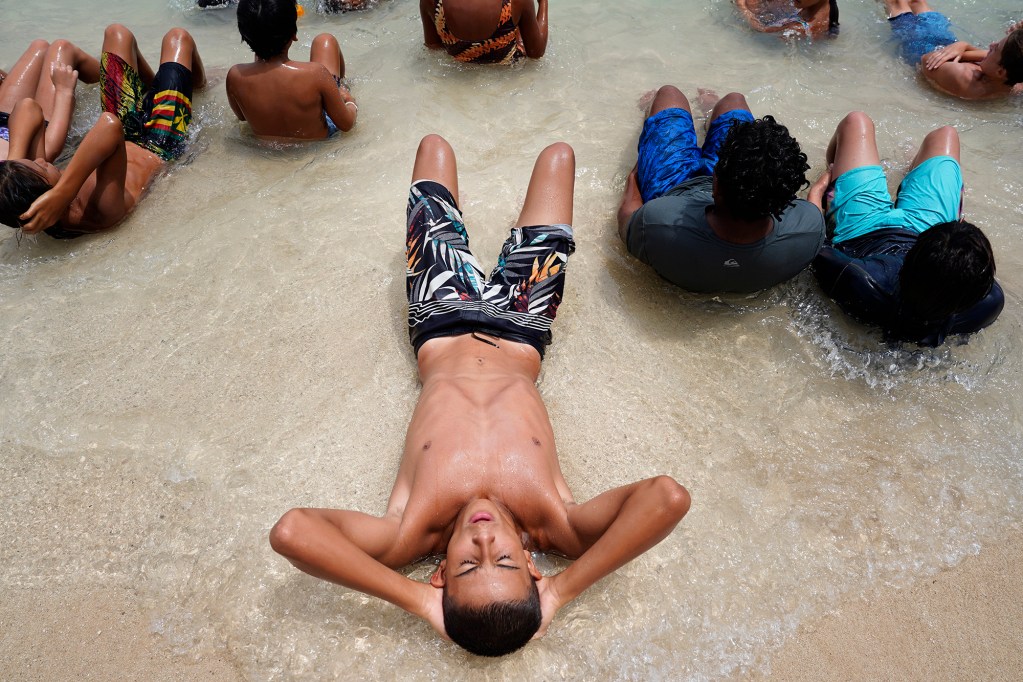
Junior lifeguard participant Jeremiah Fritz, 12, runs ahead of the boys pack in their daily run-swim-run warmup. (Kevin Fujii/Civil Beat/2025)The waters of Ko‘olina’s Ulua Lagoon fill with Junior Lifeguard Program participants during a beach fitness exercise that Kainoa McGee calls, “The Burn.” (Kevin Fujii/Civil Beat/2025)
Bentley Collman, 15, sprints on the sand Wednesday. (Kevin Fujii/Civil Beat/2025)
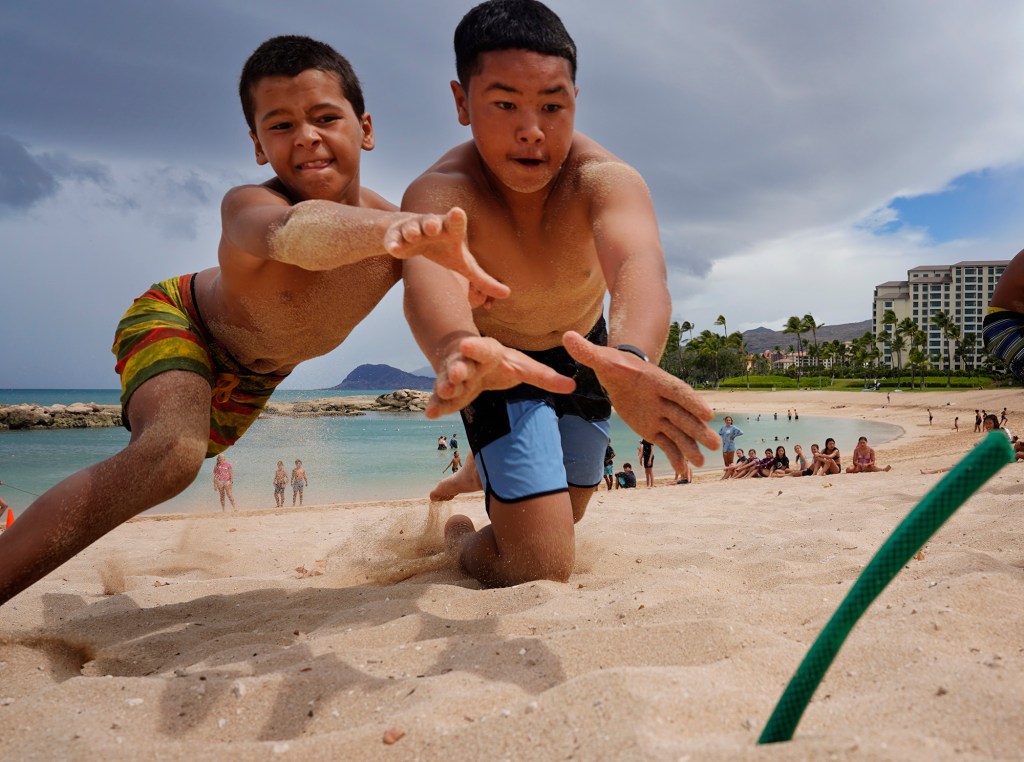
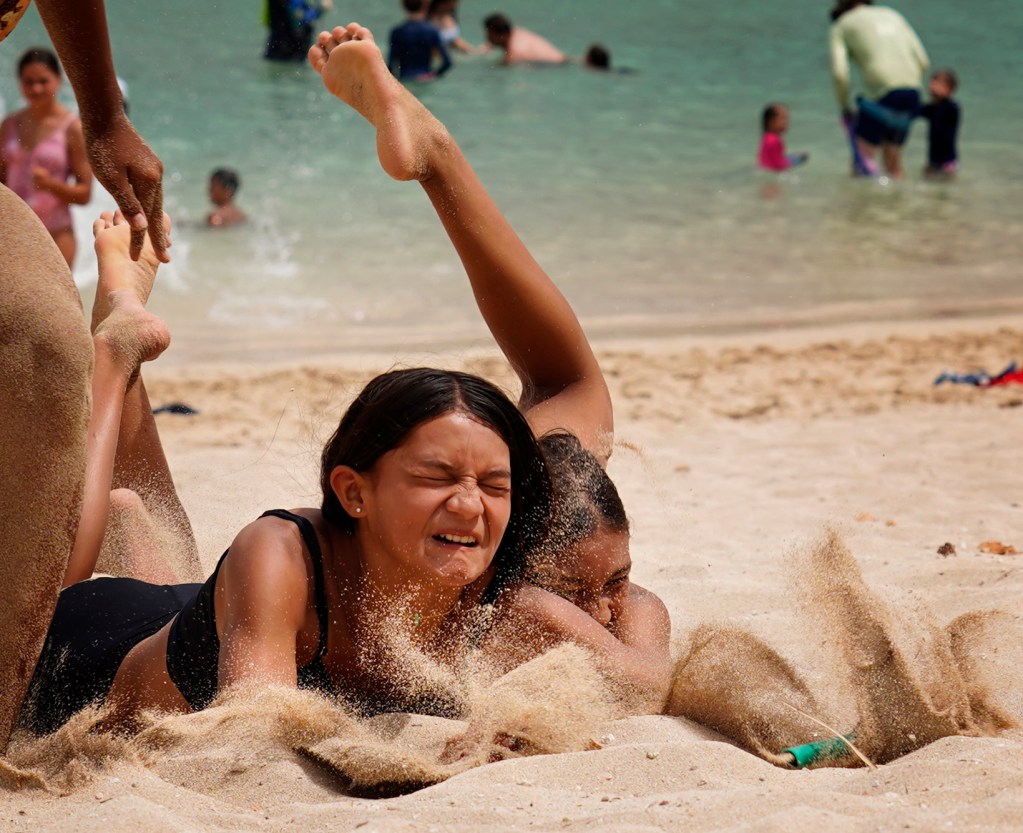
Elijah Mero, 12, left, and Raider Lee, 12, dive for a beach “flag.” (Kevin Fujii/Civil Beat/2025)
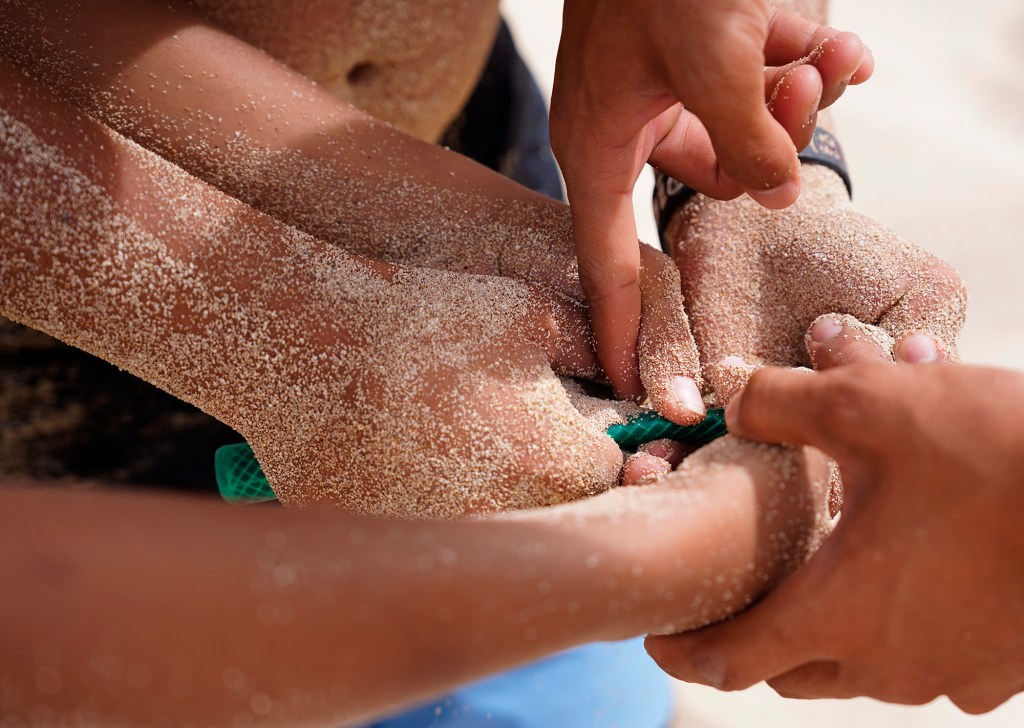
Ocean Safety lifeguard Jedidiah Wataru checks who has their hands on the tape between Elijah Mero, 12, left, and Raider Lee, 12, during the “Beach Flag” competition Wednesday. (Kevin Fujii/Civil Beat/2025)
Similar to musical chairs, the beach flag drill tests listening, reaction, fitness and speed where there’s fewer flags — actually foot-long sections of a water hose with tape wrapped around its middle — than competitors each round.
Sisters Gabby and Lanakila Patterson, 11 and 12 respectively, battle for a beach flag. Their father, an Ocean Safety lieutenant, suggested the participants run up the beach’s incline. (Kevin Fujii/Civil Beat/2025)Lead instructor Kainoa McGee, an Ocean Safety lifeguard, shows Junior Lifeguard participants a proper squat, one of the many exercises the participants do during “The Burn” for beach fitness. (Kevin Fujii/Civil Beat/2025)
Bentley Collman, 15, does crunches on the shore during lead instructor Kainoa McGee’s beach fitness exercise he calls “the burn” during the weeklong program. (Kevin Fujii/Civil Beat/2025)
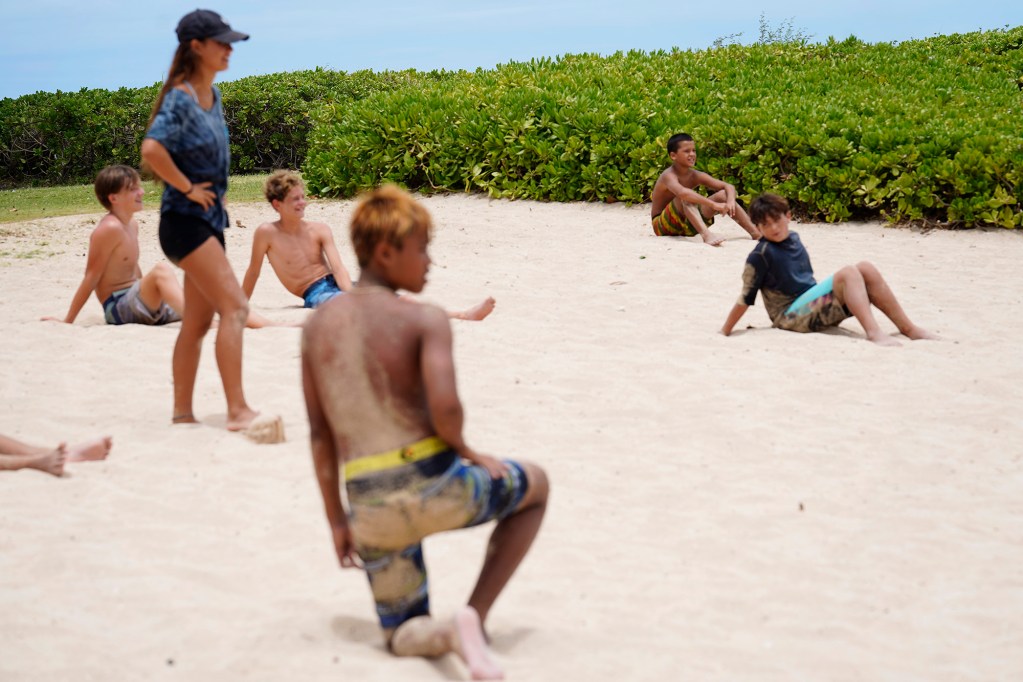
Junior Lifeguard boys sit frozen during a game of Capture the Flag, which they re-named Capture the Fin, as Autumn Burbage guards the girls team’s fin. (Kevin Fujii/Civil Beat/2025)
“They love this game!” lead instructor Kainoa McGee said about Capture the Fin. “It teaches them critical thinking, strategy, team work and leadership. They start figuring things out on their own.”
A Junior Lifeguard participant checks for a radial pulse during the CPR discussion. (Kevin Fujii/Civil Beat/2025)Micah McNiel, 12, does chest compressions on a CPR dummy as lifeguard Jedidiah Wataru counts and snaps his fingers for timing. “The person you’re most likely going to do CPR on is someone you know,” instructor and lifeguard Tanner Williams said. (Kevin Fujii/Civil Beat/2025)
The skills they learn are vital, especially in an island state where drownings happen regularly, including among locals.
“Every year there are persons who make rescues while being in the water using skills they learned from the junior lifeguard program,” Lager said, “as well as helping family members at home.”
Properly cleaned and wrapped rescue tubes are ready for action. The lifeguard instructors stressed the importance of properly wrapping the strap so that anyone with lifeguard training could grab a rescue tube on the run and deploy it easily as they begin to swim for a rescue. (Kevin Fujii/Civil Beat/2025)
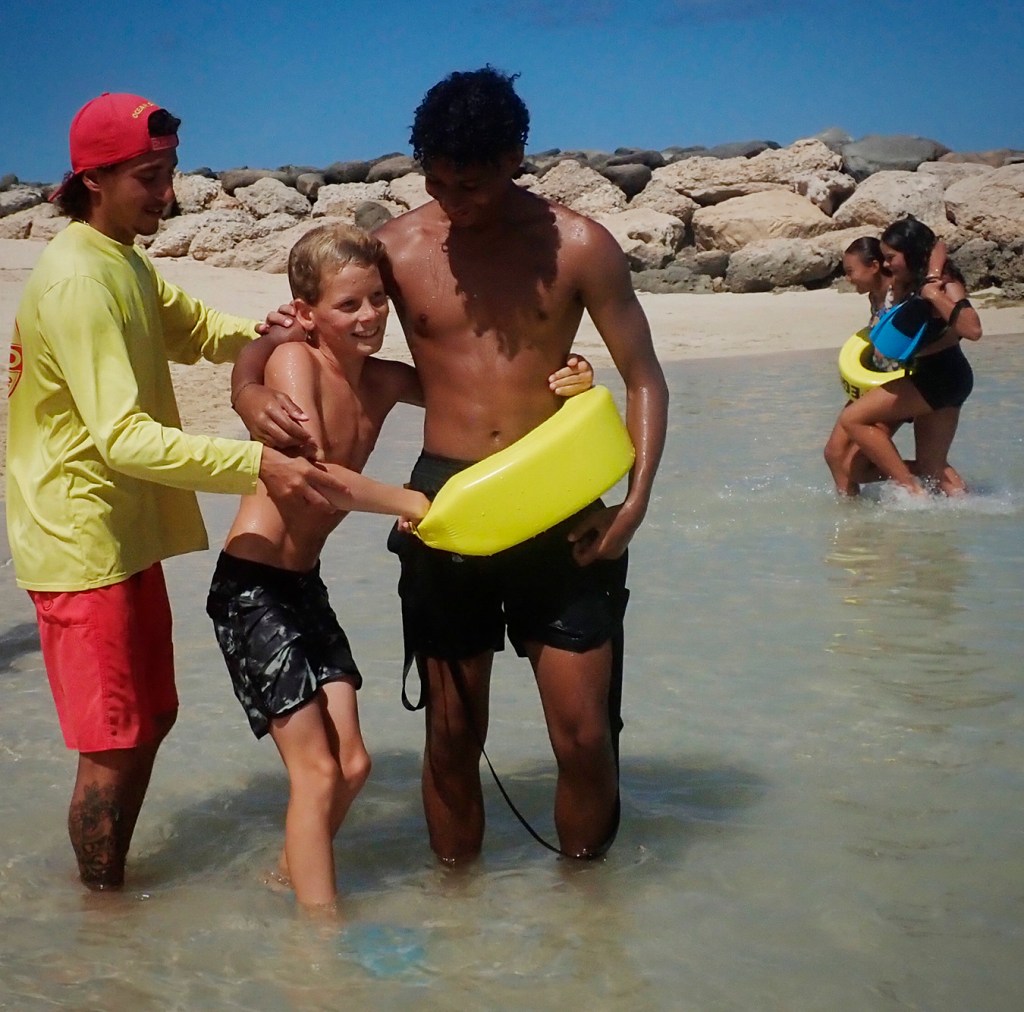
Honolulu Ocean Safety lifeguard Tanner Williams shows Ezra Fritz, 11, how to rescue a taller patient like Isaiah Smith, 16, with a rescue tube at Ko’olina Thursday. (Kevin Fujii/Civil Beat/2025)
Junior Lifeguard Program participants Noah Katakura, 11, right, rescues Matthew Heppner, 11. (Kevin Fujii/Civil Beat/2025)
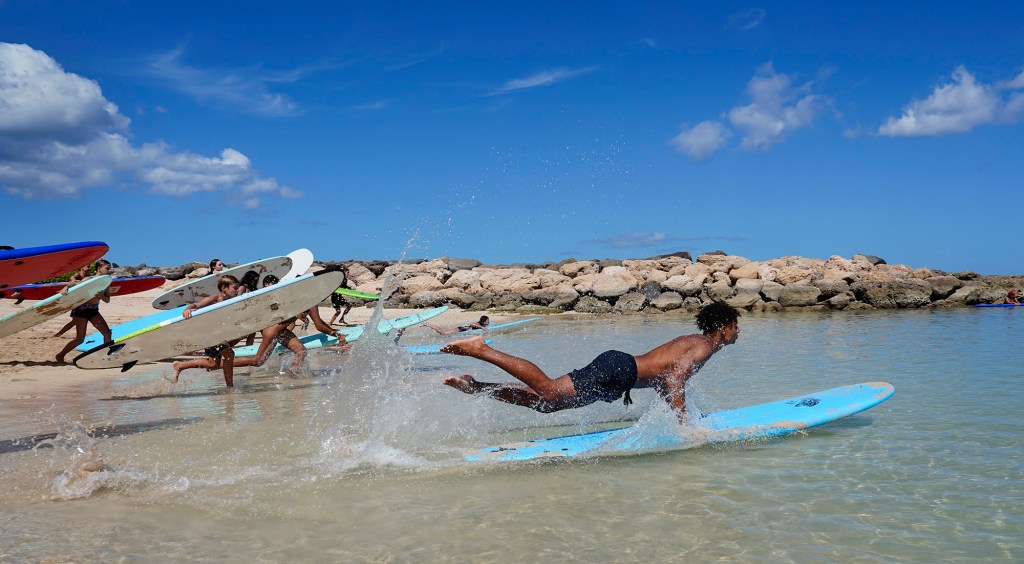
Isaiah Smith, 16, flies into action to practice a surfboard rescue at Ko’olina Lagoon. (Kevin Fujii/Civil Beat/2025)
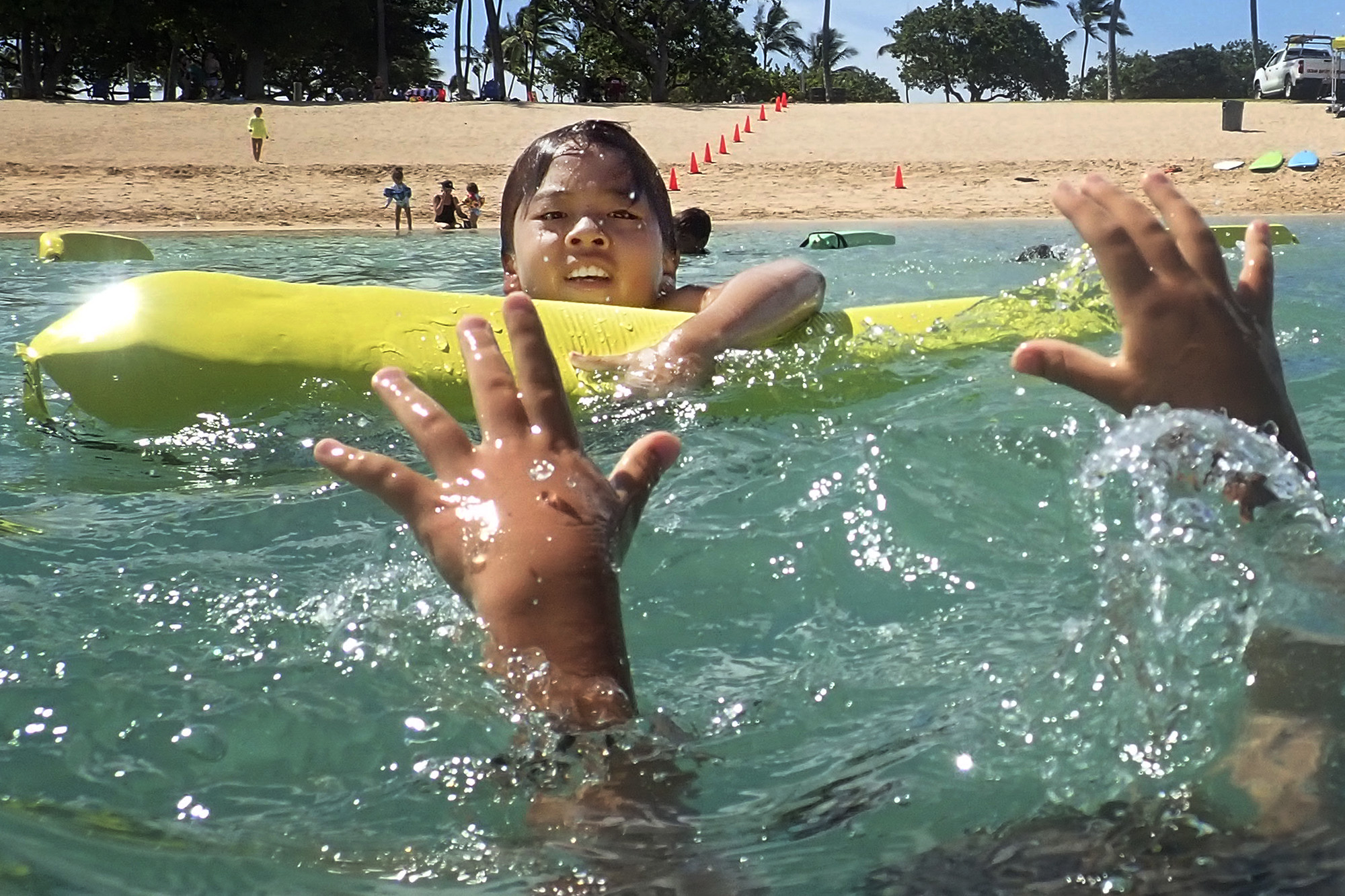
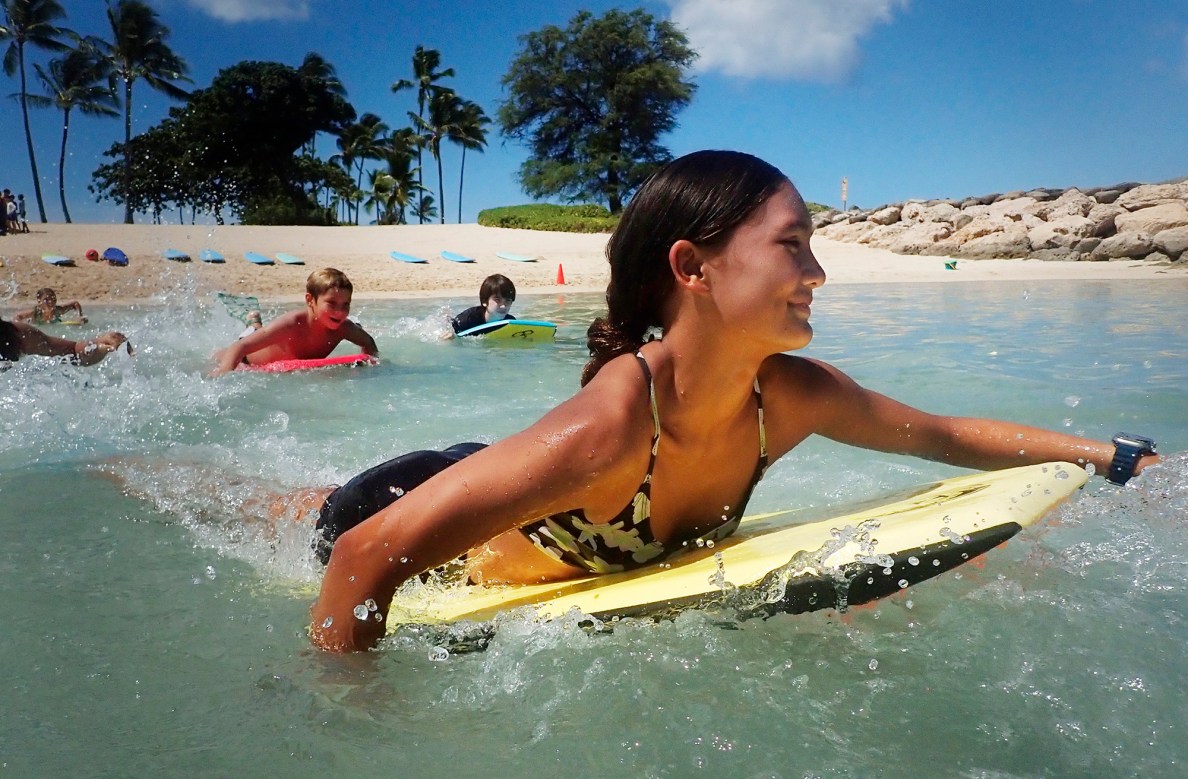
Lanakila Patterson, 12, leads the charge using boogie boards for a water-rescue drill. (Kevin Fujii/Civil Beat/2025)
The boogie board rescue practice is a practical approach, lifeguard and instructor James Bradley said, “because that might be the only thing they have with them” at the beach when someone needs help.
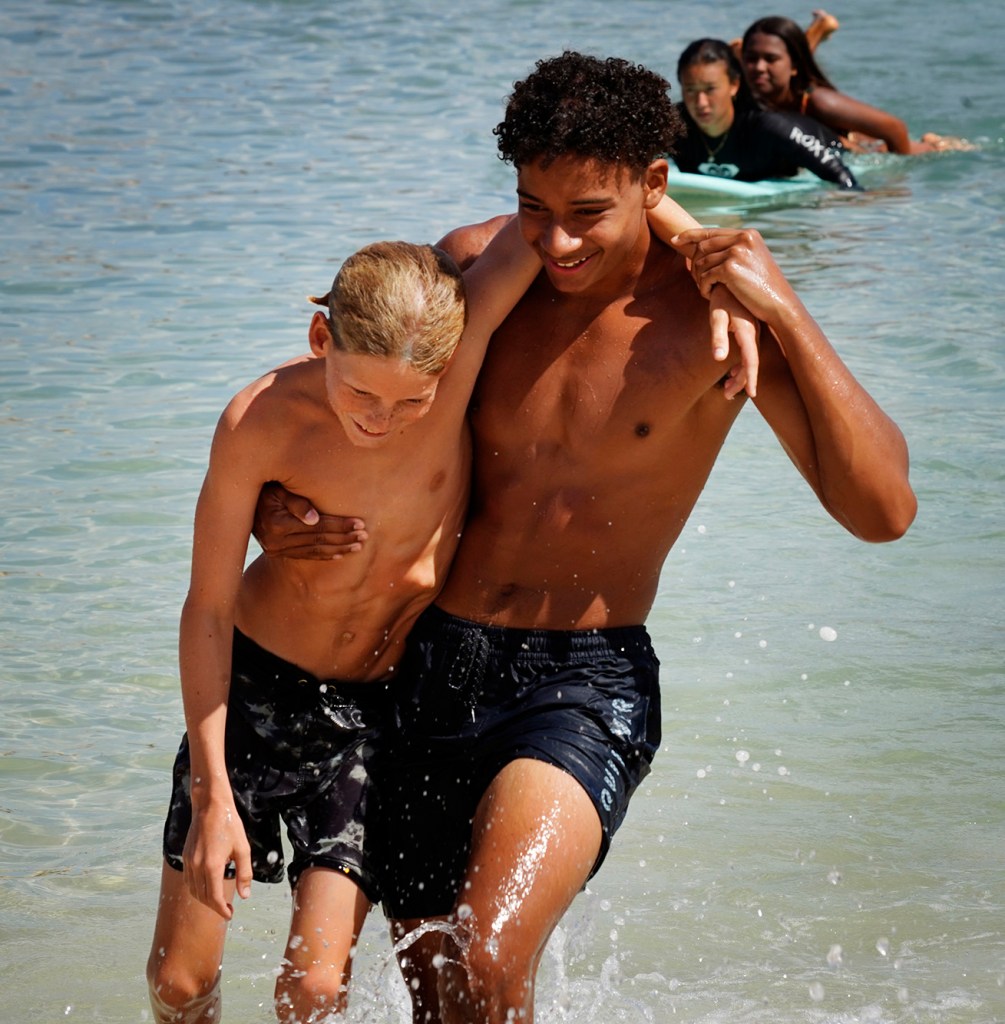
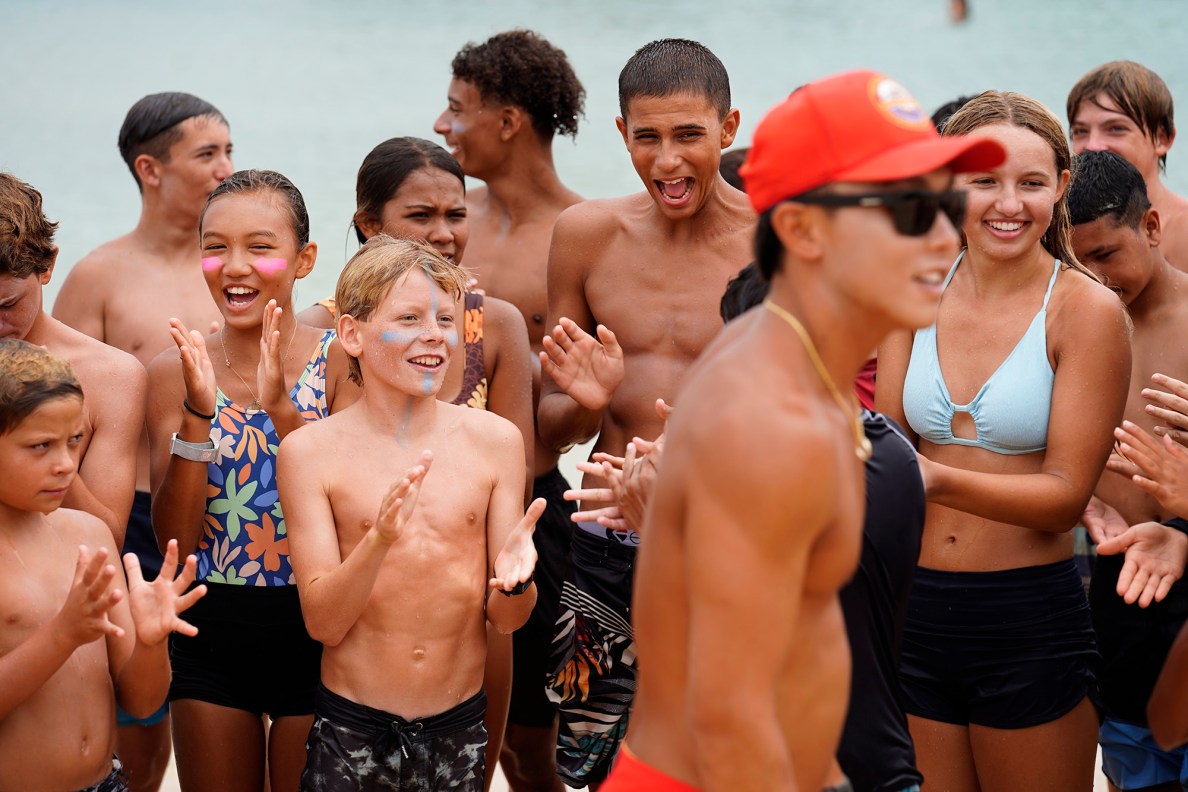
Ezra Fritz, 11, gets rescued by Isaiah Smith, 16, during water-rescue practice. (Kevin Fujii/Civil Beat/2025)After catching their breath and debriefing with instructor and lifeguard Jedediah Wataru, foreground, Junior Lifeguard participants cheer for lead instructor Kainoa McGee’s “The Burn” beach exercise so they wouldn’t have to do another round. (Kevin Fujii/Civil Beat/2025)
Lifeguards Kaylani Pascua and Jedediah Wataru, who helped run this week’s program at Ko‘olina, went through the Junior Lifeguard Program as keiki. The end goal isn’t necessarily to educate a new crop of lifeguards, but to teach about ocean conditions, rescue techniques, basic first aid, CPR, physical fitness, discipline and teamwork.
CORRECTION: This story has been updated to adjust the location of new programs this summer.
As a local newsroom, Civil Beat has a unique public service role in times of need. Your support ensures that we can pivot when emergencies arise and get vital information out to everyone, from all communities.
Support timely and accurate breaking news stories as well as impactful coverage across the state. Donate today.