Police Set Out To Curb Violence On West Oʻahu. Traffic Citations Soared
Honolulu police said they stepped up traffic enforcement on the Westside last summer to help them find criminals and guns. Some residents said they felt harassed.
After a series of shootings on the Westside last August, Honolulu officials promised to increase police presence on the Leeward Coast, where residents have long said they feel ignored by city government.
The department paid overtime and brought in reserve officers so patrols were better staffed. Narcotics and vice divisions conducted special operations.
But residents said the most visible part of the effort was traffic enforcement, with more drivers being stopped on the roads and in their neighborhoods.
Court records reviewed by Civil Beat bear that out. The number of traffic citations issued in District 8, which stretches from ʻEwa to Kaʻena Point, jumped from July to December, according to an analysis of a sample of cases. Meanwhile, the number of citations issued on the rest of Oʻahu dropped dramatically.

Police say increased traffic enforcement was part of their plan. More traffic stops, they say, tamps down criminal activity and can lead to the arrests of people with outstanding warrants and the recovery of illicit firearms.
Though many residents welcomed traffic enforcement, others said their community was being unfairly targeted with costly tickets when the goal was to stop violent crime in their neighborhoods.
And after a shooting in Mākaha left a 19-year-old man dead late last month, some residents said their community is no safer than it was before the surge.
Philip Ganaban, chair of the Waiʻanae Coast Neighborhood Board, questioned whether all those citations accomplished what police said they were out there to do.
“It didn’t slow down the gun violence; it didn’t slow down the kids being out there,” he said. “What it did, it just took them off the streets and put them in the residential areas.”
Police Step Up Presence After Shootings
In early August, three shootings in 10 days on the Westside led Honolulu police Chief Joe Logan and Mayor Rick Blangiardi to announce on Aug. 16 an increase in police patrols in the area.
Two weeks later, a mass shooting involving a dispute between neighbors at a home on Waiʻanae Valley Road left four dead, including the shooter. In the ensuing days, Logan said his department would keep up its attention on the Westside.
The department has not answered questions from Civil Beat about how many officers were present in the district during the surge or how much was spent on overtime and special operations.

Patrol positions in District 8 went from being about 70% staffed before the surge to between 80% and 100%, department officials have said. During some periods, two to four additional traffic officers were assigned to key corridors and school zones.
Civil Beat reviewed traffic cases on Oʻahu involving 15 violations — including driving without a license, speeding and distracted driving — during, before and after the surge. The analysis found that the number of those traffic citations in District 8 doubled from 146 in July to 294 in December. During that same timeframe, they declined on the rest of the island, dropping 41% through November before rising again slightly in December.
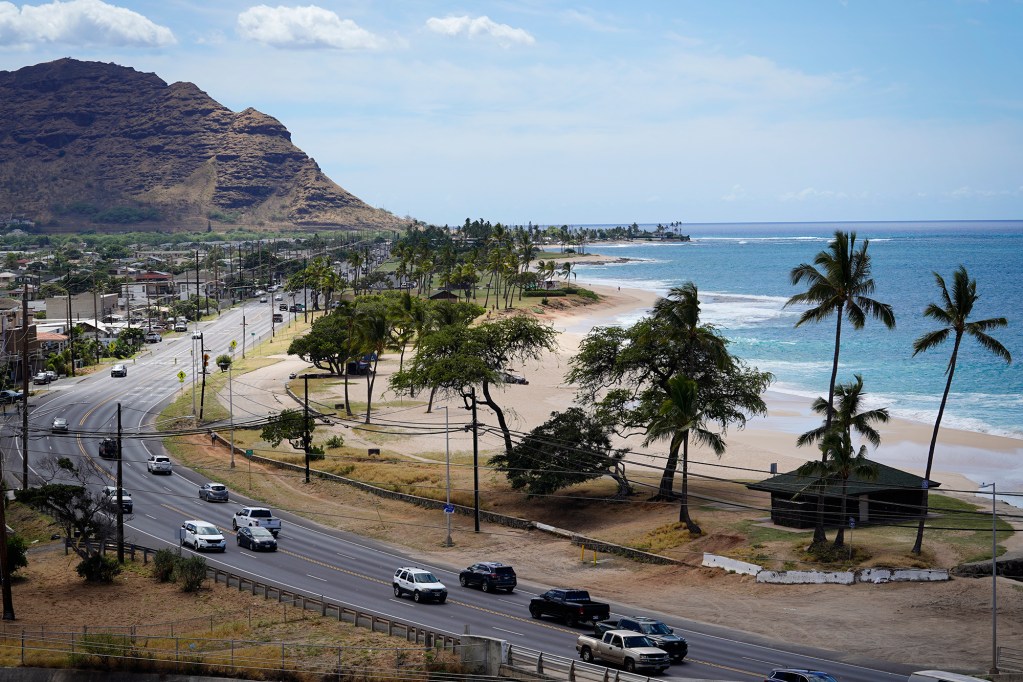
Many of the stops reviewed by Civil Beat occurred on Farrington Highway, the main road running up the Waiʻanae Coast, as well as on other thoroughfares such as Kapolei Parkway in Kapolei and Fort Weaver Road in ʻEwa Beach.
Some Westside residents said they were glad to see it, given how many reckless drivers and unsafe vehicles are on the roads.
“Some of these people really do need to be pulled over,” Waiʻanae resident Peter Soares said.
Others said this wasn’t what they wanted when they asked for more police.
Shawna Pitolo, who runs a weekly church fellowship program in Nānākuli, said she noticed more people being pulled over on Farrington Highway. Police “should’ve been more patrolling in the community, where the houses are,” she said.
City Council member Andria Tupola, who represents several districts on the Westside, said traffic enforcement isn’t a long-term solution for the violence the community has experienced.
In some cases, she said, the enforcement negatively affected people who were involved in the community in positive ways, such as parents who told her their cars were ticketed while they attended their kids’ flag football game near Waiʻanae Boat Harbor.
“The active and involved parents, you’re going to go around and ticket their cars?” she said. “What does that do for anybody?”
Did It Work?
Police said the increase in citations was part of their strategy, and it worked. “The surge did its job showing people we’re here,” Honolulu police Cpl. Roland Pagan said.
Traffic enforcement “dissuaded criminal activity, and resulted in several notable arrests,” Maj. Gail Beckley, who oversees District 8, told Civil Beat in a written statement. “While citations alone constitute a limited crime reduction measure, traffic stops have facilitated the recovery of illicit firearms and narcotics and the apprehension of wanted individuals.”
Civil Beat asked for details of the notable arrests and the number of illicit firearms that were seized, but Beckley didn’t provide them.
The department provided arrest figures for District 8, which show they increased by about 12% from July to December.
However, reports of violent crime — aggravated assault, murder, robbery and sex offenses — don’t show a clear trend. After spiking in August, they dropped sharply in September, the first full month of the surge. They crept up over the next two months before falling again in December.
Avoiding The ‘Poor People’s Tax’
Other police departments around the country have stepped up traffic enforcement in response to violent crime, said Peter Moskos, a professor at John Jay College of Criminal Justice in New York City. And residents of high-crime communities have complained of being unfairly targeted.
Milwaukee is among the cities that did this. But it took a different approach.
Edward Flynn, who served as its police chief from 2008 to 2018, said his department often increased traffic enforcement when crime went up in an area. But because high-crime areas were often poor communities of color, he said he was careful not to saddle those residents with costly citations and fees.
Otherwise, “we’re going to end up with a poor people’s tax if we’re not careful,” he said. “And what we’ve achieved is messing up somebody’s life for this higher good.”

He said he directed officers to issue warnings as much as possible for minor infractions, which helped the department’s relationship with the public.
He hoped that would keep his officers from being accused of discrimination. But his department was sued anyway.
In 2017, the American Civil Liberties Union accused the Milwaukee Police Department of racial and ethnic profiling and making baseless stops of Black and Latino drivers and pedestrians.
The ACLU found that Black people were stopped six times more often than white people between 2010 and 2017, according to an expert’s report cited in the suit. The ACLU also claimed in its lawsuit that officers made hundreds of thousands of stops without reasonable suspicion.
In his interview with Civil Beat, Flynn defended his officers’ actions, saying they were focused on high-crime areas, not race. He also said the ACLU interpreted a lack of citations as evidence that the stops weren’t proper, not as a step to reduce the harm to poor communities.
The city settled the lawsuit in 2018 and agreed to eliminate racial disparities in stops, improve officer training and maintain a committee that seeks community input on policing strategies.
How We Reported This Story
To report this story, Civil Beat filed a public records request for data from the Hawaiʻi State Judiciary on 15 types of traffic cases across Oʻahu, including the location of the stop, from Jan. 1, 2023, through Jan. 14, 2025.
Based on what community members cited as their concerns, we asked for cases involving the following violations:
- Distracted driving
- Excessive speeding
- Speeding in a school zone or construction area
- Racing on highways
- Noncompliance with speed limit
- Basic speeding
- Disobedience of police officers
- No valid vehicle registration
- Operating a vehicle under the influence of an intoxicant
- Habitually operating a vehicle under the influence of an intoxicant
- Operating a vehicle after license and privilege have been suspended or revoked for operating a vehicle under the influence of an intoxicant
- Operating a vehicle after consuming a measurable amount of alcohol (for people under the age of 21)
- Driving without a license
- Failing to show a license or insurance identification card
- Driving while license suspended or revoked
Civil Beat analyzed the locations cited in each case. Because locations were recorded inconsistently, we worked with Big Local News, an organization at Stanford University that supports local newsrooms with data analysis, to standardize and map the locations of the stops. About 10% of the locations couldn’t be mapped with a high level of confidence, so they were excluded.
Rosie Cima of Big Local News contributed reporting.
Civil Beat’s community health coverage is supported in part by the Atherton Family Foundation.