Prison Meth Smuggling Case Raises Questions About Hiring
In a bid to get a lesser sentence, a former staffer in an Arizona prison where hundreds of Hawaiʻi inmates are held claims she was hired despite her history of mental illness.
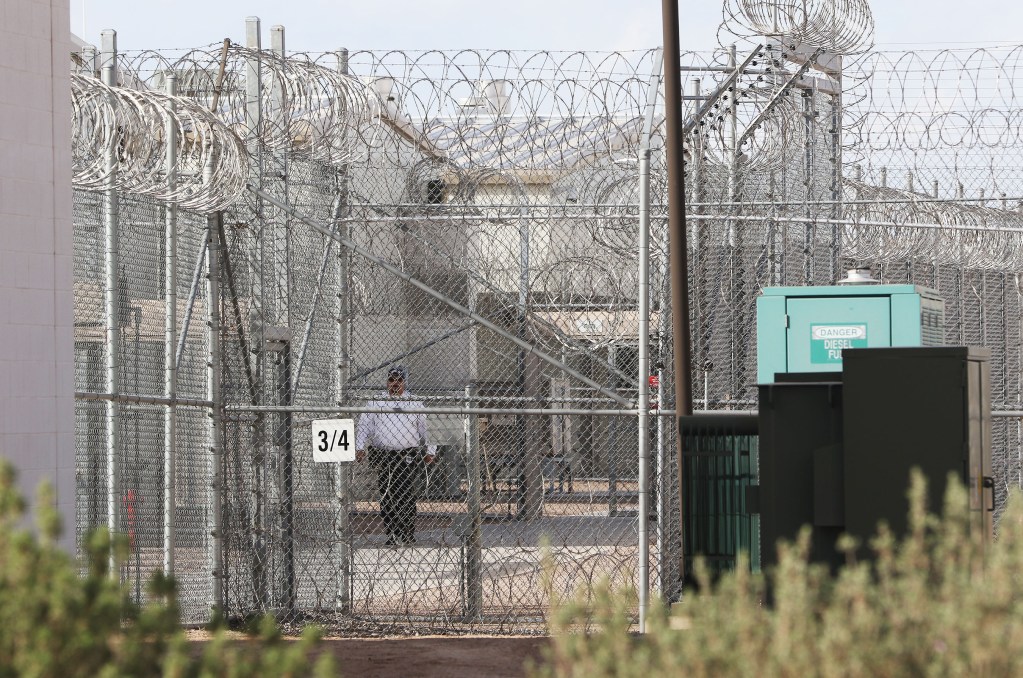
A former prison staffer caught smuggling methamphetamine into the privately run Saguaro Correctional Center in Arizona says she was hired as a corrections officer there even after she told prison officials she had been hospitalized for serious mental illnesses.
That claim was made in a memorandum seeking to mitigate the sentence for Patricia Fay West, 57, who pleaded guilty last month to two felony charges after she was found trying to bring more than 6 ounces of meth into the Saguaro facility last year. A search of her home later turned up more than 2 pounds of the drug, according to court records.
West’s defense said that in handing down a sentence, the court should weigh the fact that West has a well-documented history of mental illness and should not have been hired in the first place.
“There is significant mitigation in the fact that CoreCivic hired a person known to suffer from a schizoaffective disorder and other mental illnesses to work unsupervised, in close daily contact with some of the most dangerous inmates in the country,” the sentencing memo said.
Prison operator CoreCivic on Friday denied West told the company about her mental illnesses, and Hawaiʻi Department of Corrections and Rehabilitation Director Tommy Johnson said he doubts West would have been hired if she had disclosed her mental health history.
“I think CoreCivic has a pretty robust background check in their hiring process,” Johnson said. “I can’t imagine they would have hired her if she actually disclosed that information to them.”
In addition to saying West had informed CoreCivic, the defense outlined a history of her diagnoses including an official designation of serious mental illness, known as SMI, in 2013.
‘A Large Influx Of Drugs’
West’s arrest was made during a crackdown on drug smuggling after the deaths of two inmates were blamed on methamphetamine use.
She was stopped at Saguaro prison on June 20 when a drug-sniffing dog called attention to her car. Inspections of cars and people entering the prison were being done that day “due to a large influx of drugs entering the facility,” according to court records.
That was three days after Clark Jackson Cleveland, 39, of Idaho, was found dead in his cell there. Hawaiʻi inmate Richard Keokeo Taylor, 51, of the Big Island died in the prison on Oct. 22, 2023. Cleveland’s autopsy blamed his death on “methamphetamine toxicity,” and meth abuse was listed as a contributing cause in Taylor’s death. Both deaths were classified as accidental.
Under the terms of her plea agreement, West was sentenced on May 19 to probation for seven years on a prison contraband charge, and 2.5 years in prison on a charge of attempted possession of dangerous drugs for sale.
The sentencing memorandum filed by West’s lawyer Joshua Wallace said West, a former nurse, was diagnosed with a “schizoaffective disorder, bi-polar and PTSD.”
She was deemed to be seriously mentally ill in 2013, and was hospitalized for mental illness “several times” from 2011 to 2018, according to the memo. The Social Security Administration deemed her to be permanently disabled in 2018, it said.
West then applied for a job with CoreCivic in early 2023, and “although Ms. West informed CoreCivic of her mental illness and SMI designation, CoreCivic still hired her to work as a corrections officer,” according to the filing by Wallace.

After about a year of working as a corrections officer, she got a new job as a program facilitator, which she held until her termination after the arrest. She had been struggling with addiction to methamphetamine and alcohol for about a year before her arrest, according to the memo.
Wallace’s court filing said West should not have been working so closely with inmates.
“Inmates serving long sentences for serious crimes like those at the Saguaro Correctional Facility are known to be expert manipulators who seek to exploit the weak,” Wallace wrote.
He also alleged that her position “had no oversight or supervision from other corrections experts.”
CoreCivic Public Affairs Manager Brian Todd denied West worked without any oversight, saying “Saguaro staff are supervised by a facility leadership team and department heads.
“Ms. West did not provide any information that indicated that she had a mental health condition prior to or during her employment at our facility,” he said in a statement.
Hiring Practices Questioned
Todd said CoreCivic “follows the most stringent screening and hiring practices allowed under applicable state and federal law” and applicants are subject to “a thorough background and clearance process that includes a criminal background check and a drug screen in addition to any security clearance process required by our government partners.”
Wanda Bertram, spokesperson for the Prison Policy Initiative, a nonprofit advocating for criminal justice reform, said both public and privately run prisons in many states are “lowering their hiring requirements” as they struggle with staff shortages.
In many cases facilities have resorted to lowering the educational and age requirements for prison workers, she said, and those changes have been announced publicly.
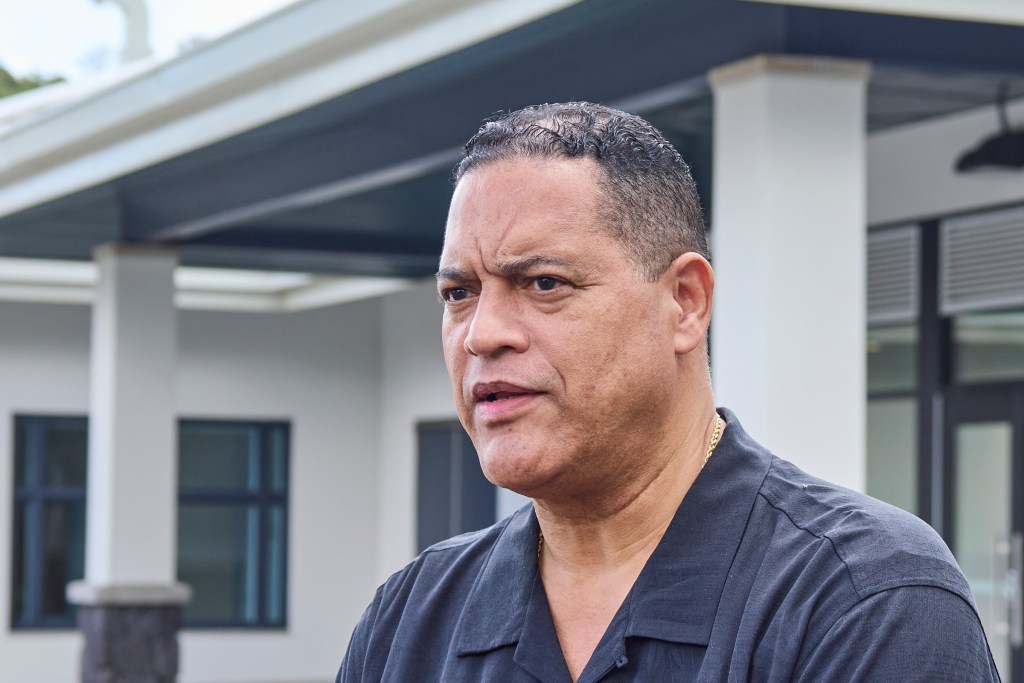
Johnson said this is the first time this sort of issue with hiring has come up, and “we haven’t had any instances where a CoreCivic employee was found to have some type of a record in the past” that involved mental health issues.
He said all correctional jurisdictions have problems with contraband coming into their facilities, “and unfortunately the vast majority of the time it is the staff. Hawaiʻi is no different.”
The state has been holding inmates at privately run prisons on the mainland for decades because there is no room for them in Hawaiʻi facilities. Johnson said it costs $111,325 per year to hold an inmate in the Hawaiʻi prison system, compared with $32,568 at Saguaro.
Civil Beat’s community health coverage is supported in part by the Atherton Family Foundation.