See A Birds-Eye View Of Maui’s Massive Fire Debris Transfer
County officials and residents said the first day of hauling went smoothly, but the enormous project is just getting started.
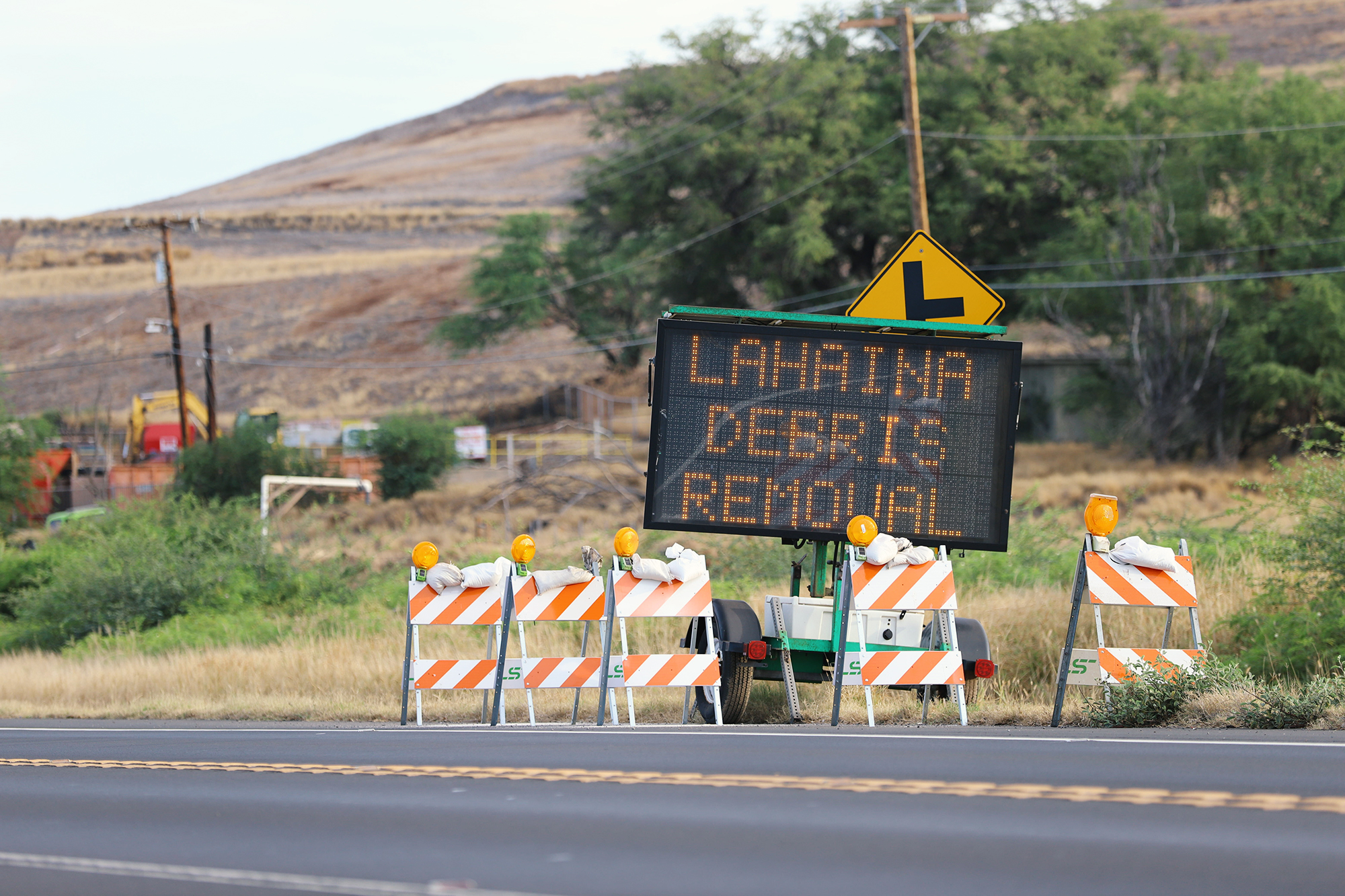
The sun was still low in the sky when the first dump trucks and tractor trailers labeled with “Lahaina wildfire debris” decals exited the temporary disposal site at the Olowalu landfill.
It was the start of a major monthslong effort that marks a new phase in the island’s recovery from the 2023 fires: transfering 400,000 tons of ash and debris to the new permanent wildfire landfill in Central Maui.
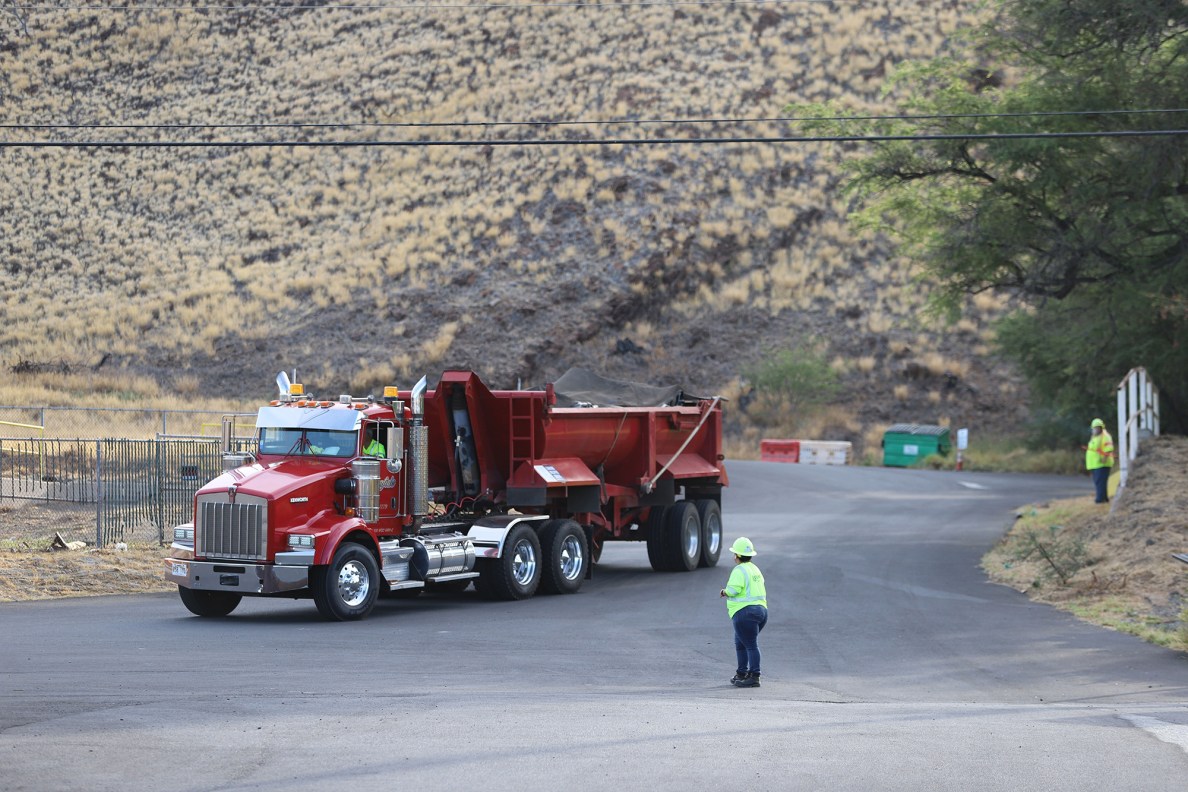
Over the next five months, up to 50 trucks a day will traverse back and forth from nearly dawn to dusk — seven days a week — to complete the task.
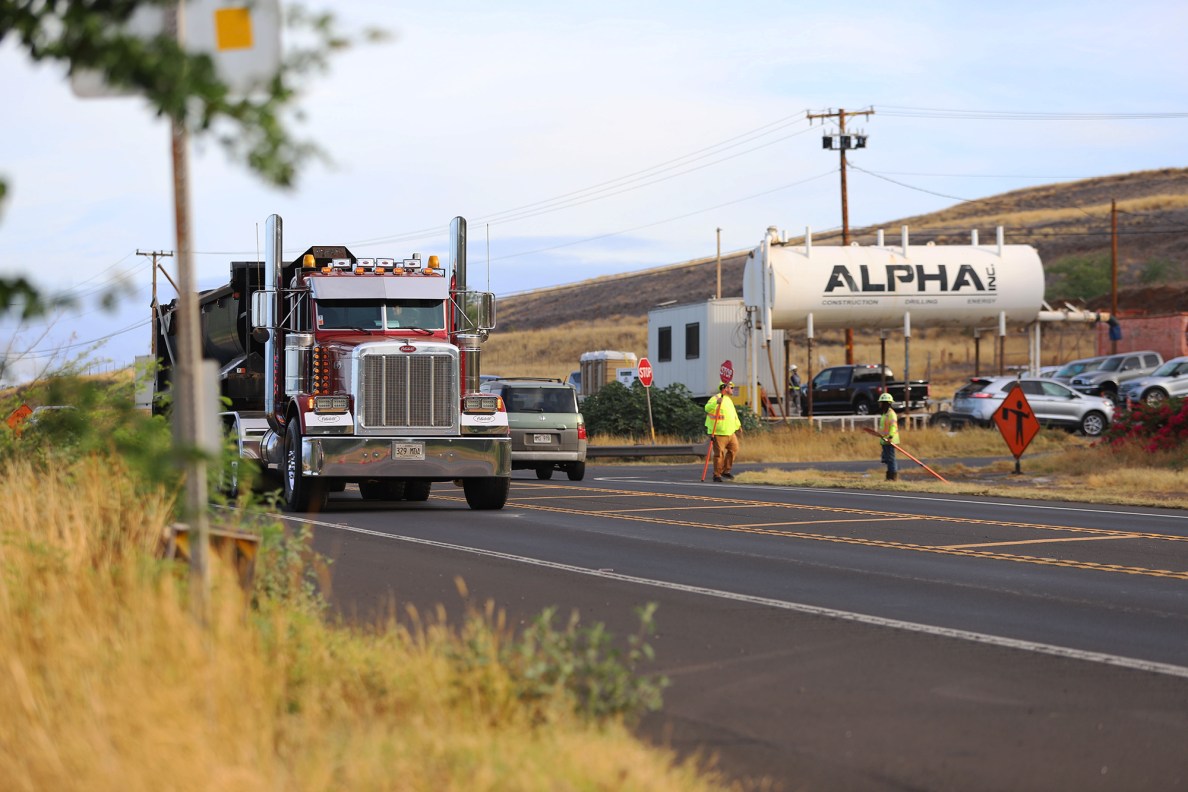
On Monday, workers wearing bright highlighter yellow vests directed traffic near the facility, occasionally bringing Lahaina-bound traffic to a brief standstill.
The trucks roared and smelled of diesel as they made their way down the narrow, winding Honoapi‘ilani Highway. They drove by the beaches in Olowalu and Ukumehame, traveled through a cliffside tunnel and past the Maui Butterfly Farm.
On The Road
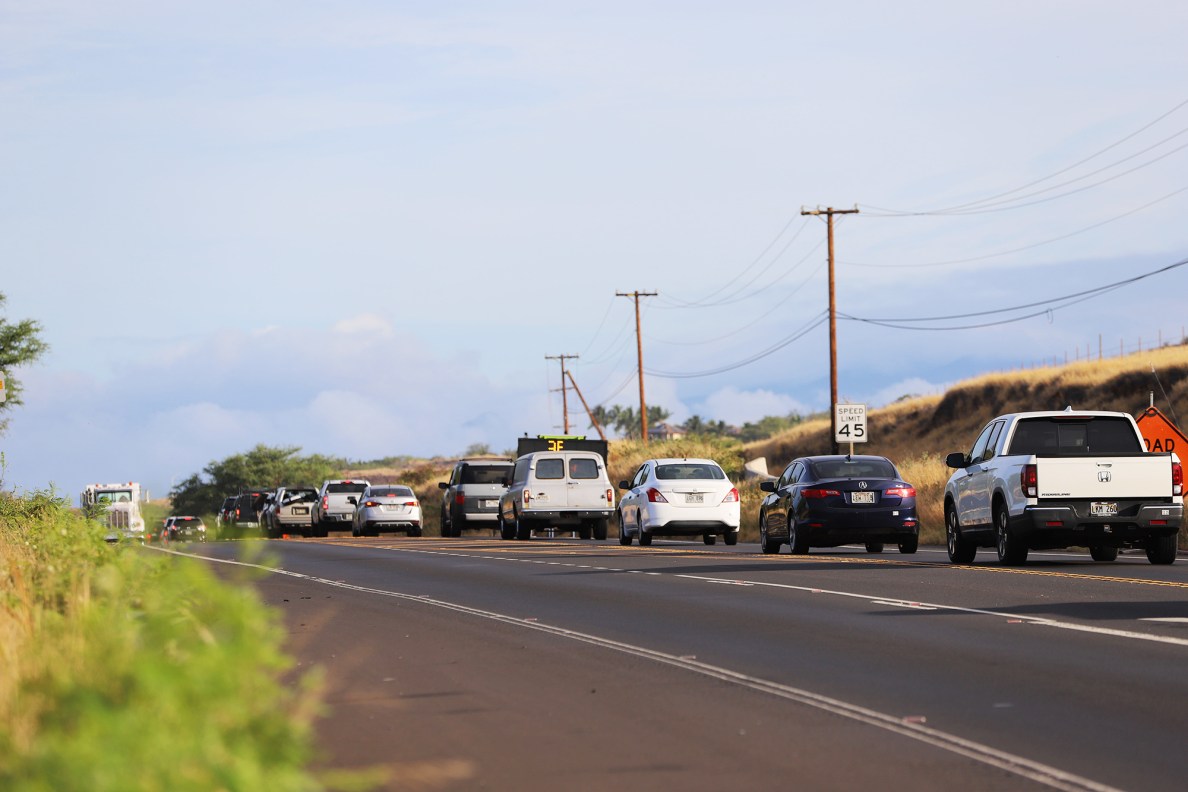
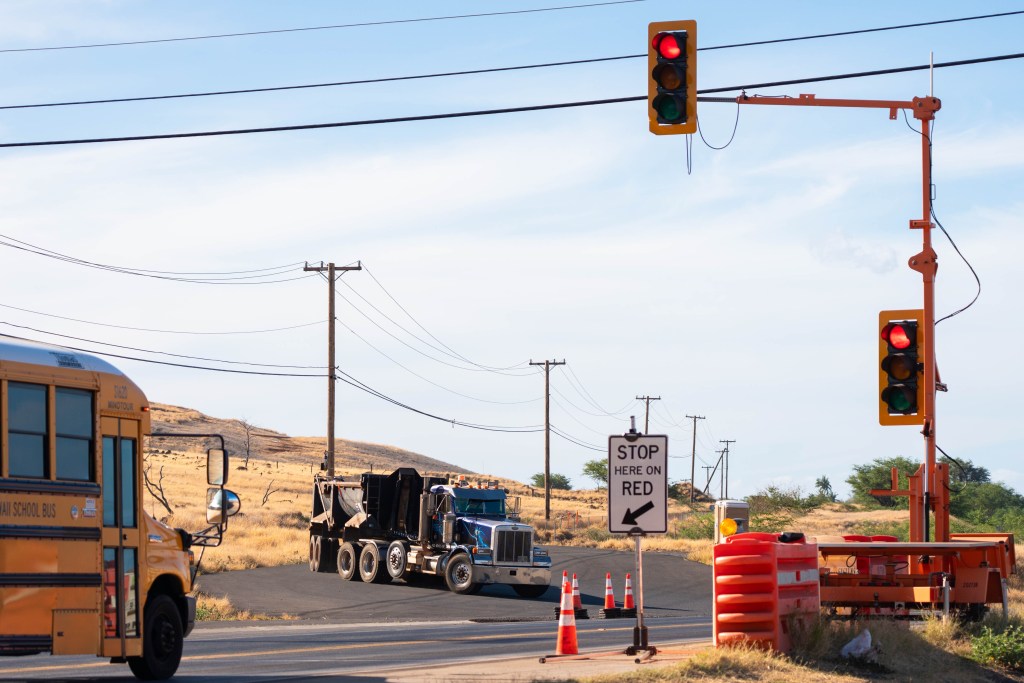
Near Māʻalaea, the trucks turned onto Kūihelani Highway before taking advantage of a former cane haul road for the remainder of the approximately 19-mile journey.
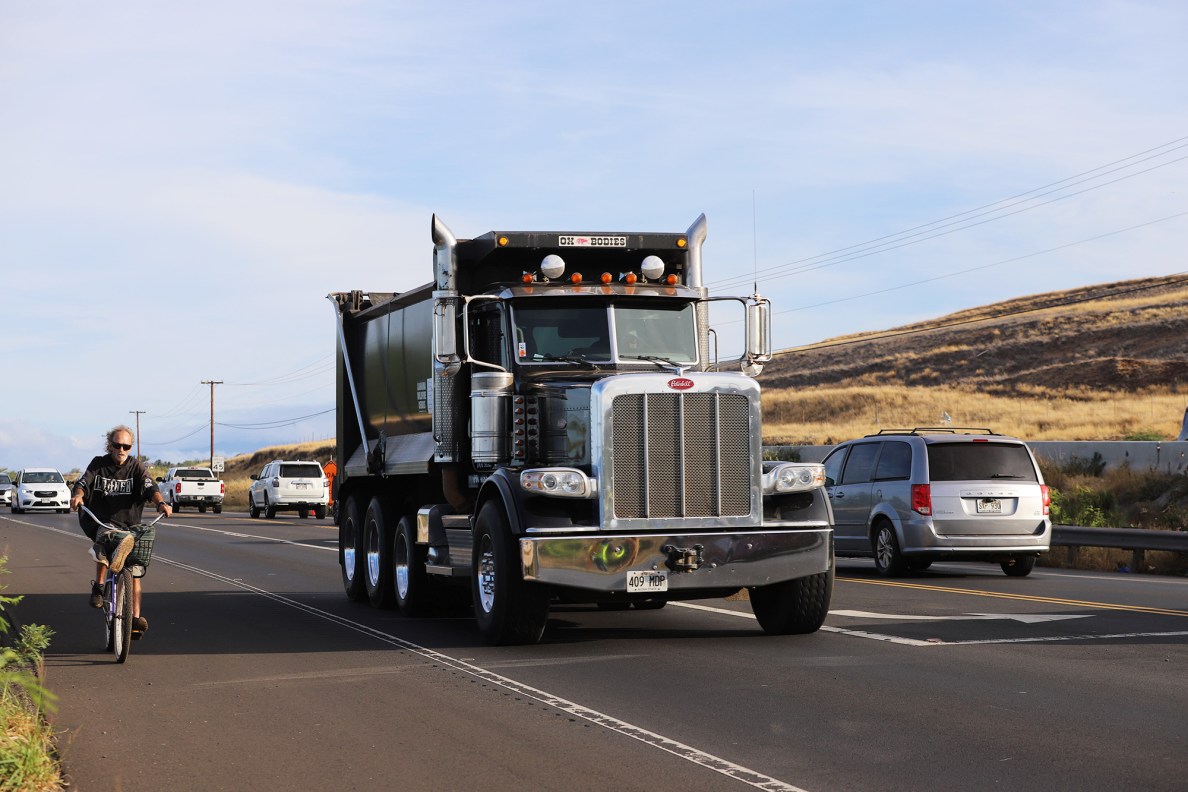
At around 7:30 a.m., David Alboro and Dandres Cabiles, both 33 and Maui residents, were fishing on the shoreline just across the Honoapi‘ilani Highway from the temporary dump site in Olowalu.
They were prepared for the debris transport operation to begin that morning, the fishermen said, and they were a little nervous about the potential for increased traffic or other disruptions. But after the first trucks rolled through, they said the noise and traffic was comparable to most other days.

“It hasn’t been too bad,” Alboro said. “There are always some trucks here.”
The hauling operation certainly hadn’t scared the fish away, as they’d just caught an invasive toʻau or blacktail snapper. Alboro’s dog, Honeygirl, lay calmly next to his truck while the two friends placed more bait onto their hooks.
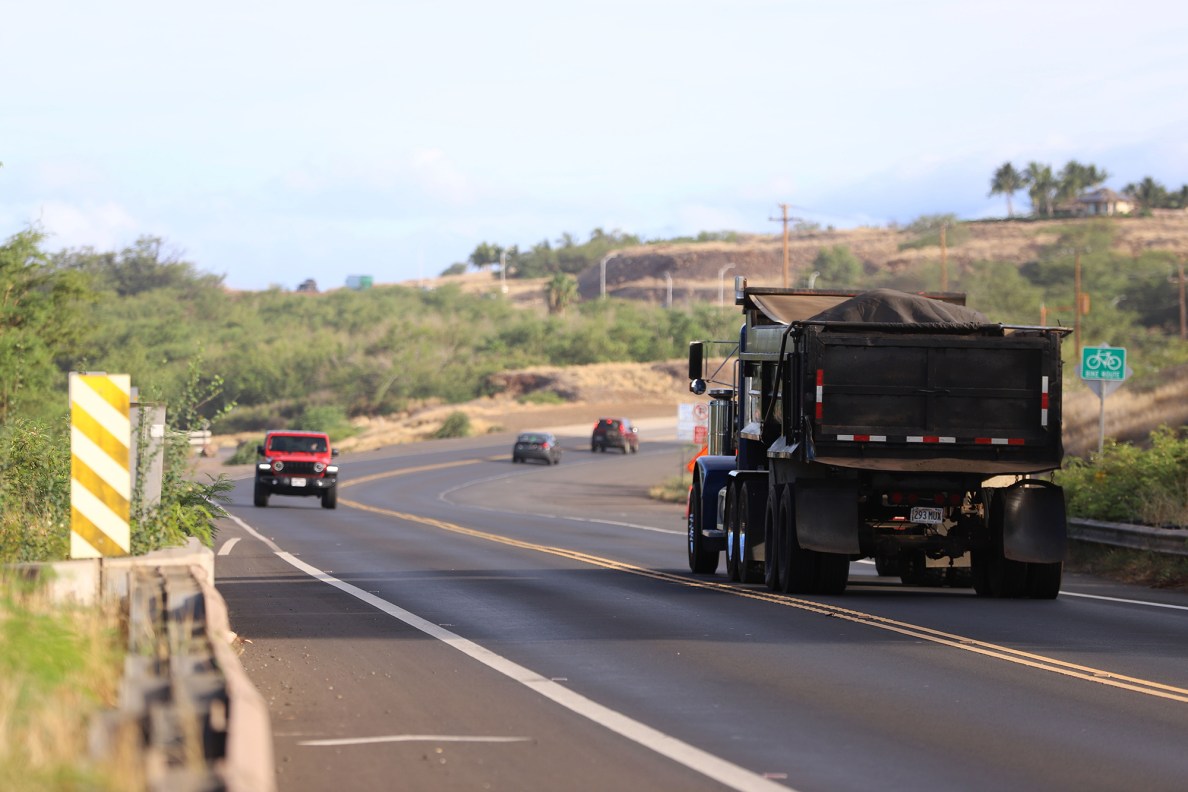
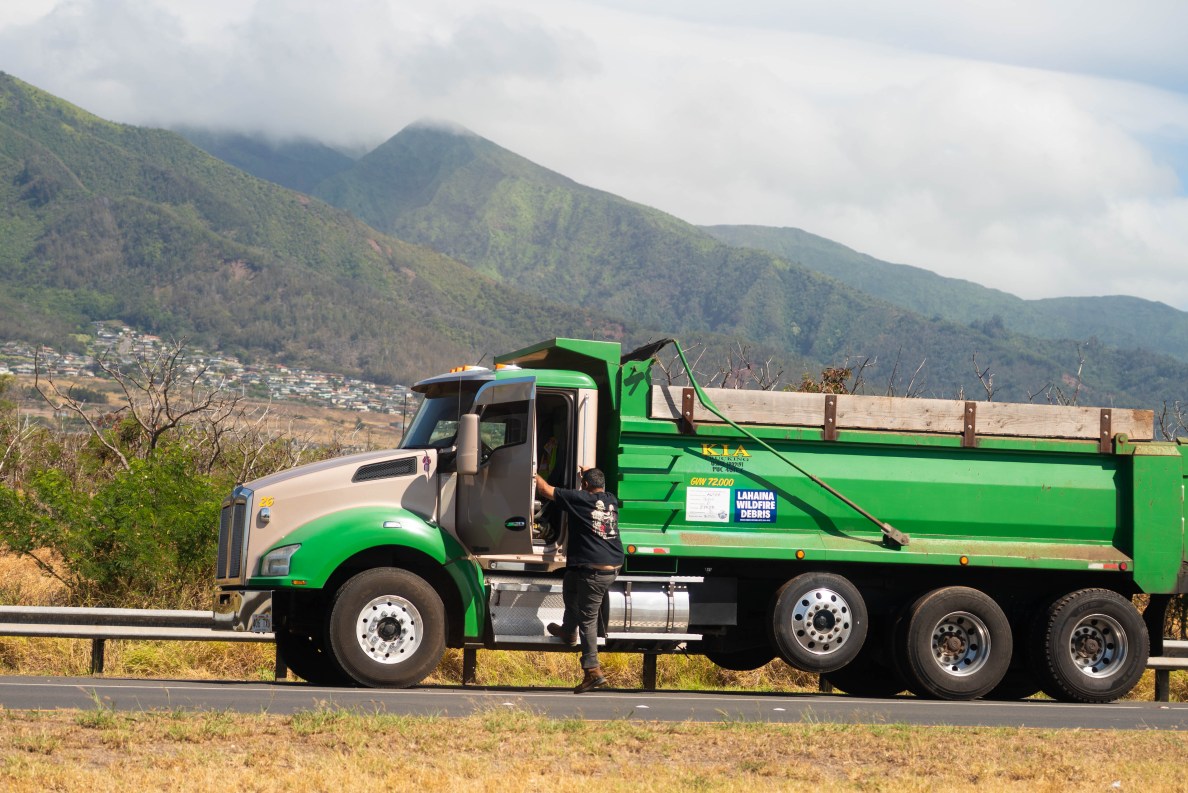
The hauling operation is the coordinated effort of Maui County, the Federal Emergency Management Agency, the U.S. Army Corps of Engineers, the U.S. Environmental Protection Agency, the Hawaiʻi Department of Transportation and the Hawaiʻi Department of Health.
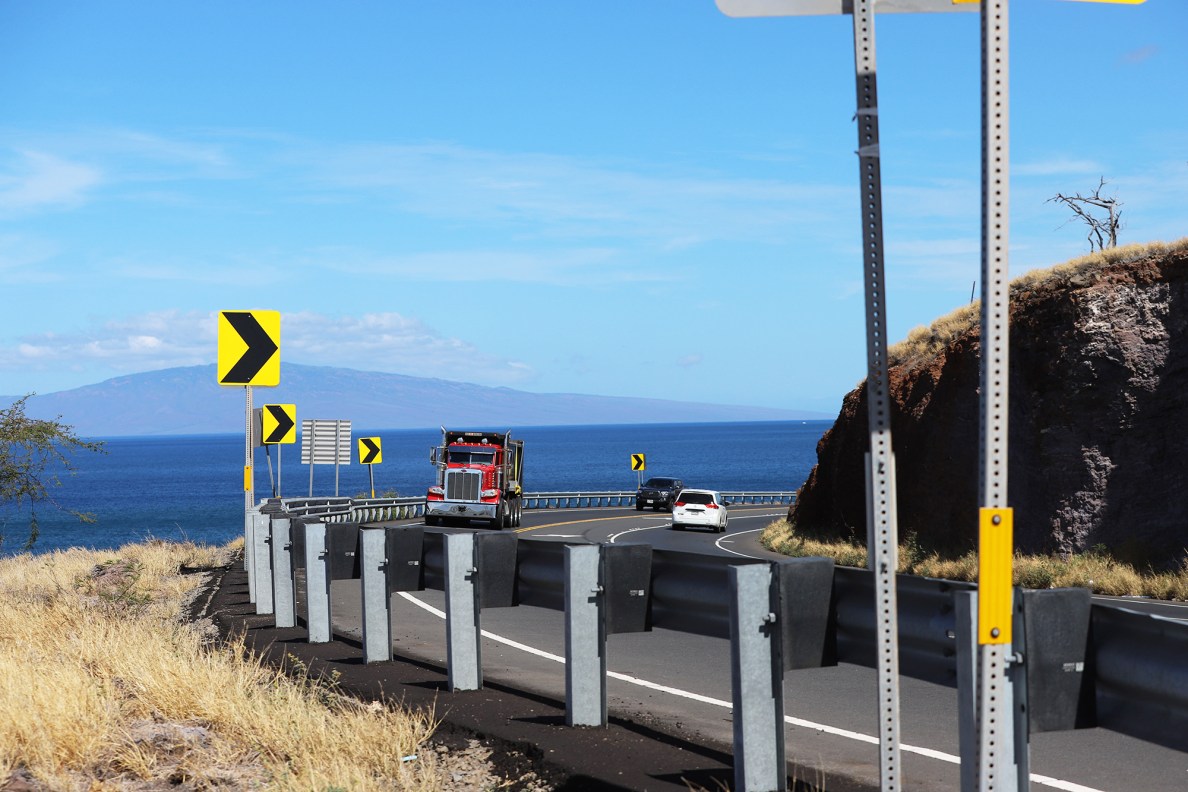
The U.S. Army Corps of Engineers contracted Environmental Chemical Corporation to help it carry out the operation, which is expected to occur throughout daylight hours, seven days a week, according to Cortland Henderson, a spokesman for the Corps.
“We anticipate that the process will become more efficient, and the total number of truckloads will increase over time,” Henderson said in a statement.

On Pūlehu Road near the Central Maui Landfill, the wind violently whipped up dust and gravel, occasionally casting a reddish hue over the entire area and obstructing visibility for drivers. Along the road, bright orange cones and signs warned motorists of potential slow downs and trucks turning into traffic.
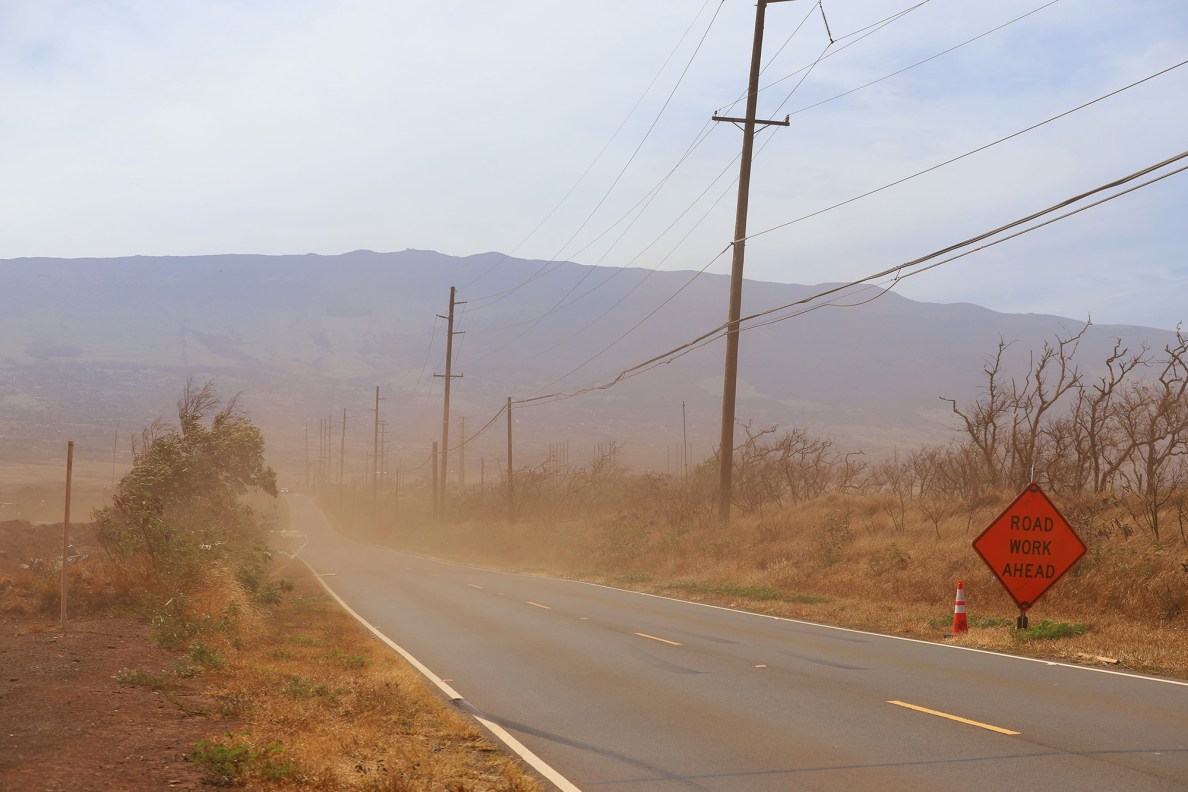
Some workers wearing hard hats and neon vests could be seen continuing to work on the still-under-construction permanent disposal site, using bulldozers to shovel what looked like dirt from large piles before hauling it deeper into the dump. Other workers wore sunglasses and gaiters pulled up over their noses as they waved their arms to direct excavators and dump trucks to various locations or used a rope to hoist a massive tarp into place.
In the distance, trucks rolled through mountains of trash, debris and earth, kicking up a trail of red dust behind them.
Federal and local officials said the massive hauling operation kicked off without a hitch.


Around 5 p.m., there were noticeably fewer trucks involved in the operation on the road.
Nicholas Anders, 37, was hanging out with a friend visiting from Argentina at Pāpalaua State Wayside Park, which sits along the hauling route. Anders comes to the beach to surf at least once a week, he said, and he probably wouldn’t have noticed the trucks transporting debris if it hadn’t been brought to his attention.
“There is always noise. It’s not worse than normal,” he said.
By the end of the day, the trucks — each carrying an average of 20 tons and making multiple trips — carried a total 4,292 tons of debris to the dump in Puʻunēnē, according to Henderson, the Corps spokesman.
Civil Beat’s coverage of Maui County is supported in part by a grant from the Nuestro Futuro Foundation.