State Must Pay $124.4 Million In Pandemic Hazard Pay For Prison Staffs, Others
Guards and thousands of other state workers still haven’t been paid, and interest has started accruing.
Hawaiʻi corrections officers will receive hazard pay worth 25% of their wages, including thousands of hours of overtime they worked during the pandemic, under a series of arbitration decisions that will cost the state an estimated $124.4 million.
Arbitrator John Mukai also imposed interest charges of 10% per year on the back pay beginning May 16 to prod the state into paying promptly. United Public Workers union members who work for the state, including corrections officers, have waited years for the hazard pay called for in their union contracts.
Mukai’s rulings amount to one of the largest awards of hazard pay in connection with the pandemic, second only to the $450 million Gov. Josh Green’s administration agreed to pay to members of the Hawaiʻi Government Employees Association and others last year.
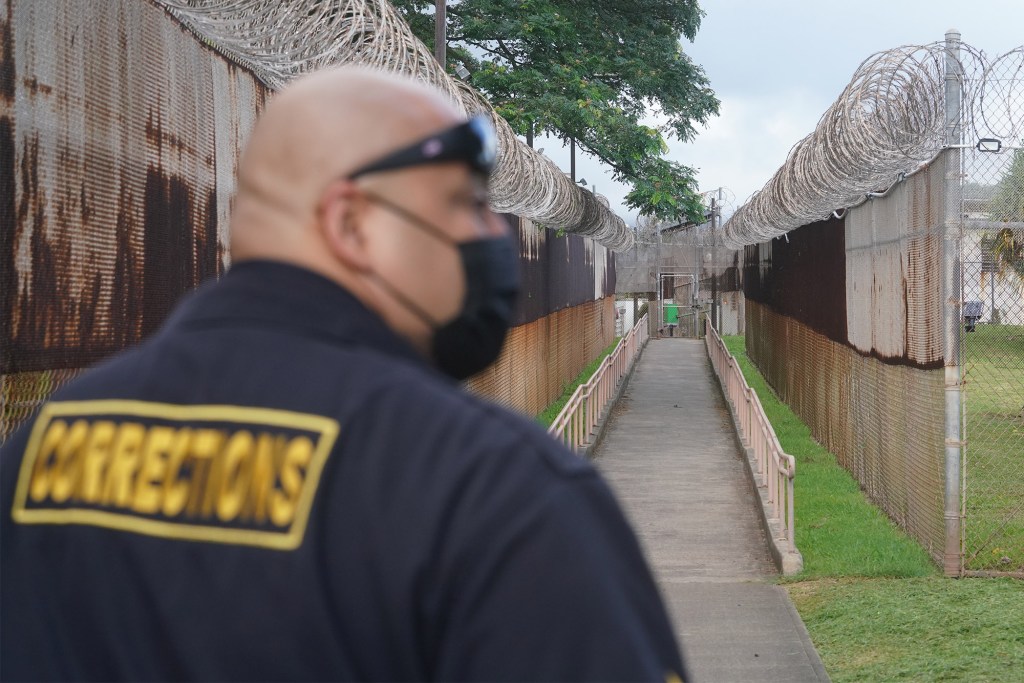
Mukai ruled in April that all UPW members working for the state Department of Public Safety during the pandemic qualified for the “most severe” 25% hazard pay for their work from March 5, 2020, to March 25, 2022.
He awarded UPW members in Units 1 and 10 who work for other state departments more modest hazard pay of 15% of their wages and overtime for the same period.
Civil Beat obtained the April 3 arbitration decision and a subsequent supplemental award by Mukai dated May 16 from the state Attorney General’s Office under a public records request.
It is unclear exactly how many employees Mukai’s decisions will cover, but 4,649 UPW members worked for the state as of June 30, 2024. That included about 1,100 corrections officers in Hawaiʻi’s eight prisons and jails.
Corrections officers were deemed essential workers during the pandemic, and often supervised prisoners in confined spaces for long hours. The correctional system was short-staffed even then, which meant officers sometimes had to work 16- or 24-hour shifts, or even longer.
Lawyers for the state told Mukai the Department of Public Safety spent more than $21.3 million to protect its employees and prisoners from Covid-19, but longtime corrections Sgt. Paul Kyles said the protective gear in the early phases of the pandemic was mostly limited to cloth masks.
Gloves and cleansers to sanitize living areas in the jails were in short supply, so Kyles and other officers would bring their own cleaning supplies to work, he said.
“It was just like being set on a desert island with a deadly fucking disease that can get you any time at will,” Kyles said, “but you’ve still got to be here, and you’ve still got to deal with it.”
It was impossible to isolate in the crowded facilities, and by August 2020, the virus was sweeping through the Oʻahu Community Correctional Center. At times it seemed like everyone at the state’s largest jail was infected, Kyles said, and about a half dozen corrections officers became so ill they were hospitalized.
Kalani Werner, a corrections sergeant who was later elected state director of UPW, was one of the first corrections officers to test positive for the virus at OCCC. He was hospitalized, but later recovered.
The coronavirus was blamed in the deaths of a half-dozen prisoners at Hālawa Correctional Facility the following year. Hālawa is the state’s largest prison.
“It was just a real unfortunate event, and then to add salt on it is to wait this long for our compensation,” said Kyles, who is chief union steward at OCCC. “That really gave a bad taste, and created bad morale that was already bad.”
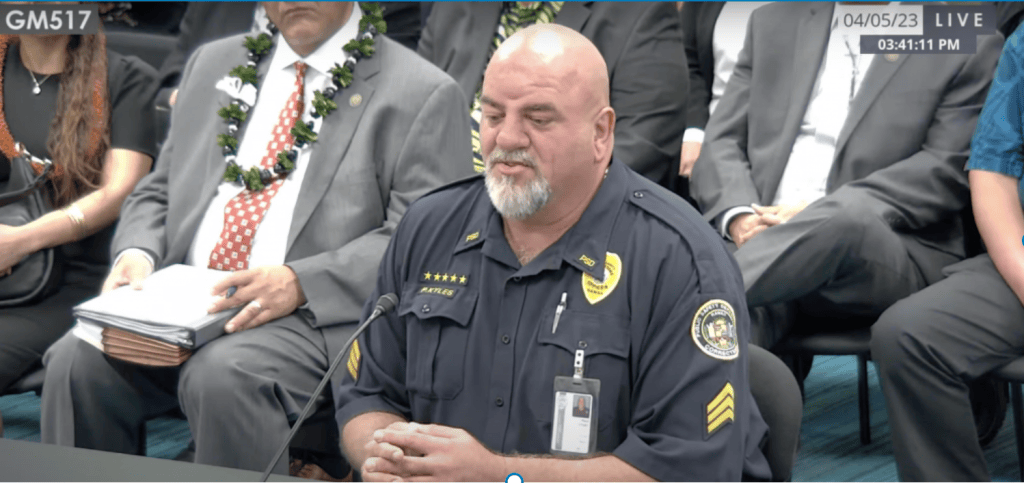
Tommy Johnson, director of the Department of Corrections and Rehabilitation, said corrections officers and others in his department will receive a total of about $30.9 million in hazard pay as a result of the arbitration decisions. He said the long delay in hazard payments was caused by the arbitration process, not by the department.
Johnson wasn’t running the department in early 2020, but said the department provided N-95 masks in later phases of the pandemic along with other protective gear such as gloves, goggles, jumpsuits, head coverings and foot gear.
He said it was “difficult to get a lot of the staff to comply” and wear the protective gear properly, “but the majority of the staff did take it seriously, and I think it saved us quite a bit.”
He said the hazard pay is “well deserved.”
Contract language calling for hazard pay has been in UPW contracts for decades, but the state argued during arbitration that UPW members should all receive the “severe” hazard pay equalling 15% of their wages, not the “most severe” hazard pay compensation of 25%.
Mukai wrote in the April 3 decision that “the Employer’s attempt to downplay or redefine the severity of the COVID-19 hazard is not only inconsistent, but self-serving.” He quoted at length from then-Gov. David Ige’s emergency proclamations, which cited the extreme danger posed by the virus.
“The Employer may now attempt to rewrite history, but the catastrophic impact of the COVID-19 hazard is clearly documented by its own words and actions,” Mukai wrote.
He then awarded the “most severe” designation — which triggers hazard pay of 25% — to all employees in the Department of Public Safety. That department includes all state correctional facilities. It was re-named the Hawaiʻi Department of Corrections and Rehabilitation last year.
“The severity of exposure within DPS far exceeded what was experienced in other state departments,” Mukai wrote. Working conditions for employees there “involved frequent, prolonged contact with infected individuals, inadequate protective measures, and a significantly heightened risk of incapacitation and long-term harm.”
Werner and the UPW did not respond to requests for comment on the arbitration decisions, and Green was vacationing this week and unavailable for comment.
Johnson said the hazard pay will be distributed to current employees on the next regular state payday, which falls on July 3. He said checks will be distributed to former employees or retirees at about the same time.
Read the documents in full: