Dogs vs. Jogs: Neighbors Jostle For Space At Prized Oʻahu Park
Dog walkers complain that a group of young Chuukese runners isn’t sharing Makiki District Park. The coach says he’s trying to respect others while making room for his runners.
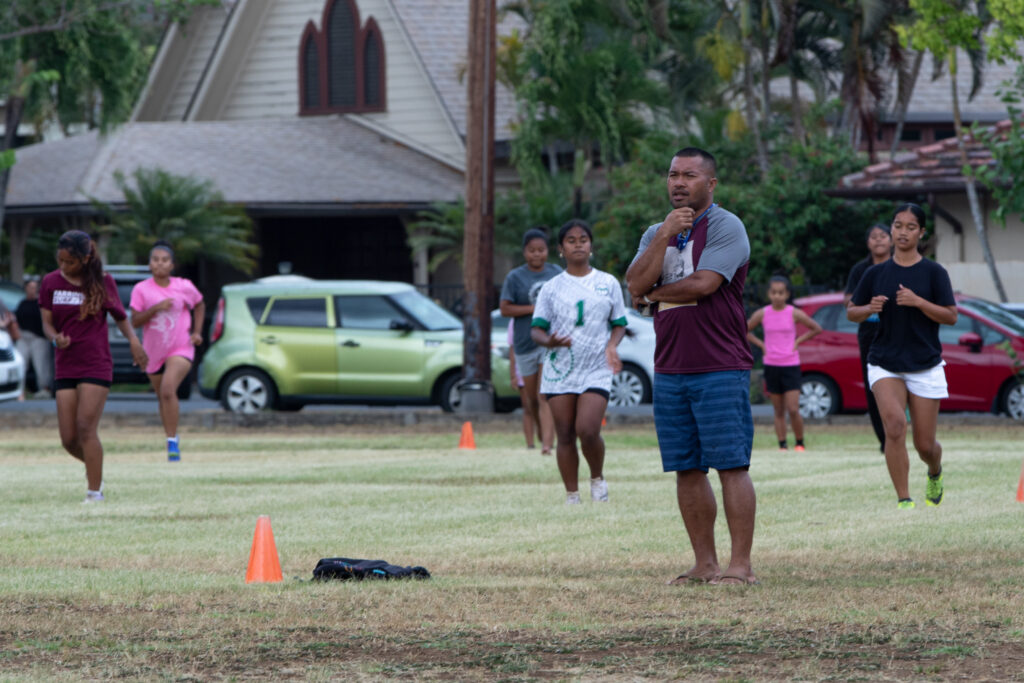
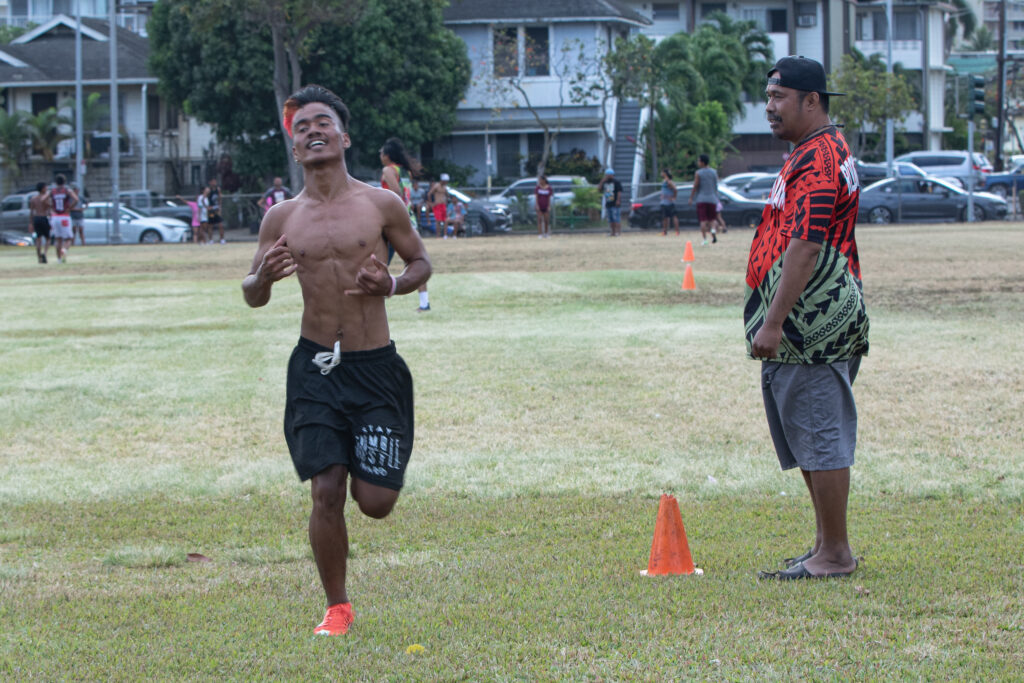
For a couple of hours every weekday evening, about 50 young people run laps around a field at Makiki District Park and sprint across the middle. Ranging from elementary schoolers to people in their mid-20s, they are preparing for a track and field competition at the end of the month.
It may seem like a wholesome way to spend time together and a typical use of public green space. But if you ask some of the park’s longtime dog walkers, it’s a big nuisance.
In their telling, the runners have taken over the field. Dog owners say they’ve narrowly avoided collisions with mouthy teenagers who’ve hounded them to get out of the way.
“Somehow or another, I’ve gotten in their path, but I don’t know that they’re coming,” said dog owner Paul Caster, 75. He lives close to the park and walks his 11-pound, 15-month-old emotional support dog Willie, a maltese, there at least once a day.
“We just want to share the park,” Caster said. “But they don’t share. They don’t share. They take over the whole damn thing.”
Greg Fritz, one of the running coaches, said the 50 or so participants are training for a Catholic Chuukese track meet, reminiscent of the field days they would have back in Chuuk. He said his group has the right to use the field and that they try to make room for others by moving the cones that mark their practice area when they’re done with a drill.
Pass by other urban Honolulu parks like Thomas Square Park, Old Stadium Park, Mōʻiliʻili Neighborhood Park or Pawaʻa In-Ha Park and you might see more homeless people sleeping there than people playing baseball, splashing around a fountain or otherwise enjoying the outdoors.
But Makiki District Park is lively. It has a swimming pool, tennis courts, a community garden, a skatepark and the big, much-sought-after field.
‘Didn’t You See Me?’
Each side blames the other for not paying more attention. Caster said he was almost hit by runners one day while walking Willie around the field. He remembers asking one of them, a middle-schooler, “Didn’t you see me?”
When Fritz saw it, he came over to intervene. “If you want to fight someone, you should fight me,” Fritz recalled saying to Caster.
Fritz, 35, told Civil Beat that he didn’t actually want to fight, especially because Caster is much older. His point, he said, was that if anyone were to get into trouble, it should be him rather than a young participant.
Fritz acts as the team’s point person when conflicts arise at the park. He said he is the only one of the group’s four coaches who grew up in Honolulu speaking English.
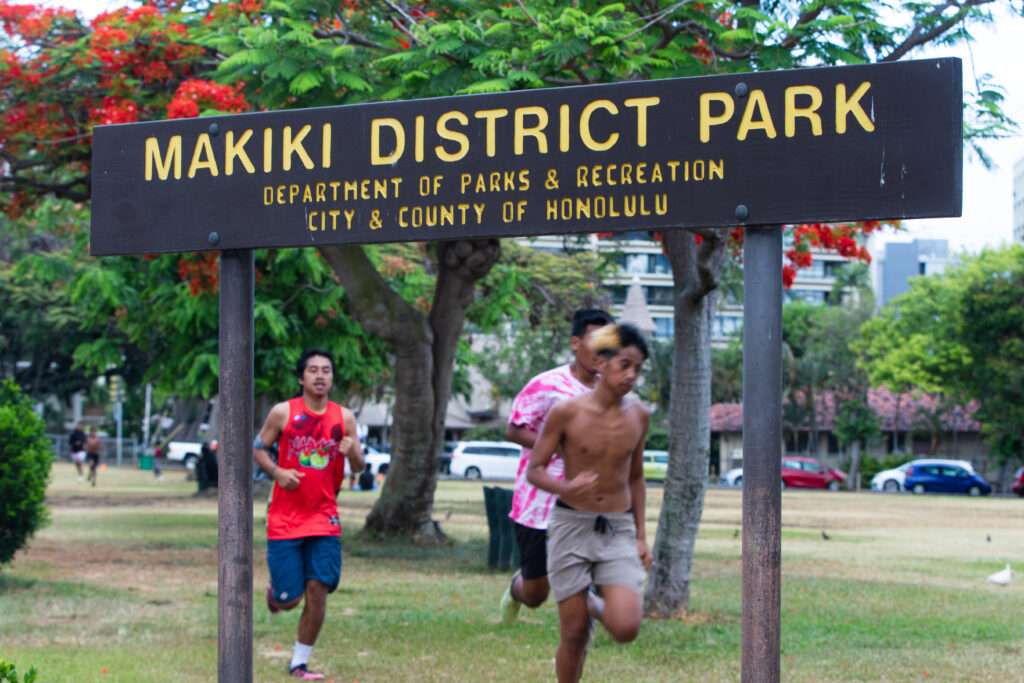
He acknowledged that his runners sometimes yell at dog walkers, but he contended that’s only when those folks walk past the orange cones and into the path of runners barreling down the field. Yelling is safer and faster, he said, than trying to slow down or swerve.
Some dog walkers have asked why the runners can’t change their route, Fritz said. That’s possible, he told Civil Beat — but the field’s perimeter is about 400 meters, the distance of an official track.
Athletic Groups Are Allowed; Dogs Aren’t
Some of the dog walkers have questioned whether the track runners have a permit to be there. Casual groups technically don’t need one, city parks spokesperson Nate Serota said, although the city encourages sports groups to get a permit if they hope to use a space regularly.
“If you don’t have a permit for a park facility, it’s open on a first-come, first-serve basis,” he said.
Even so, the running group obtained a permit last week for their regular practice time, Serota said.
Dogs, on the other hand, aren’t allowed at most of the island’s municipal parks, including this one. A sign posted at the park lists all the things that aren’t allowed, including booze, golfing, open fires, camping and animals.
Serota said in an emailed statement that the city allows people to walk through a park with a leashed dog, but “you cannot remain in a park with your dog unless (the park) has an on-leash or off-leash designation.”
But the prohibition on animals at Makiki District Park seems to be more bark than bite.
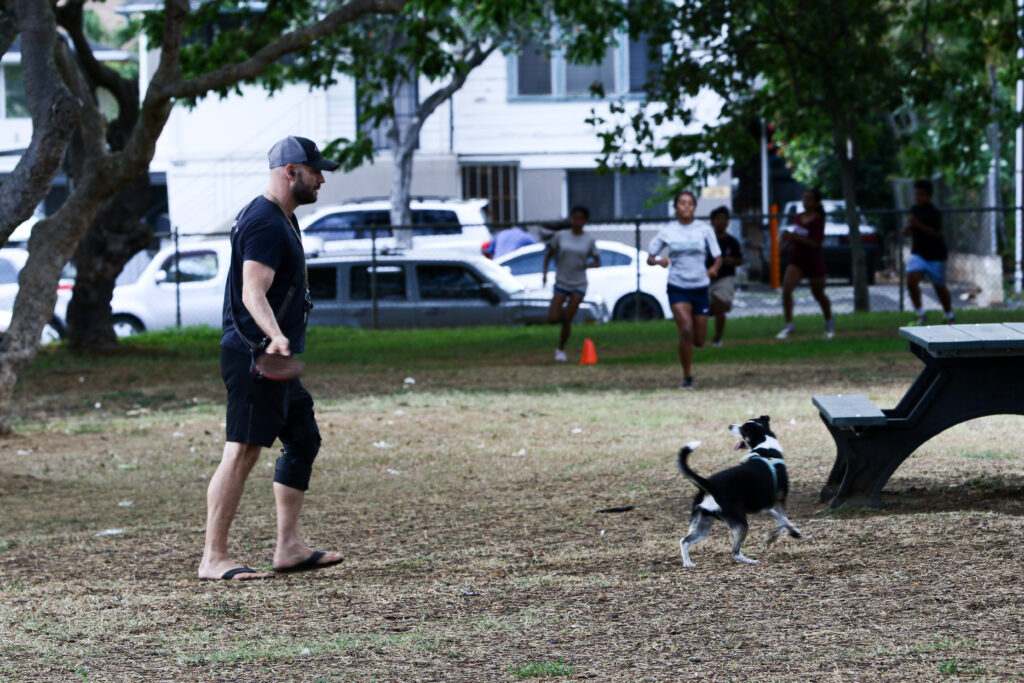
Caster said about 20 dog owners regularly convene there. Many of them were there under the drizzle Monday evening, playing fetch and chatting. Some said they have been coming for years.
Caster said he brings Willie to Makiki District Park because there aren’t many other options nearby.
“Am I just going to walk him on the sidewalk?” Caster asked. “I want him to feel the grass, and feel the wind, and be outside.”
Less than 15% of Honolulu city parks allow dogs; the Department of Parks and Recreation plans to increase that number. Serota said department employees are talking with people on the city’s neighborhood boards about where to expand dog privileges islandwide. In this part of town, city officials are working with the Makiki-Tantalus Neighborhood Board to establish an off-leash dog park at Punahou Square.
The Archie Baker mini-park up the road allows dogs if they’re on a leash, but Dayton Wong, 46, said it tends to have bigger dogs in the afternoons. His 12-year-old pug/beagle mix, Guinness, gets nervous around them, Wong said. So he comes to Makiki District Park instead.
The community of dogs is part of the appeal of this park, Wong said. And the community of people? Wong doesn’t have a problem with the runners. He just thinks people should be respectful of one another.
“The park should be for everybody’s enjoyment, not just for one particular group,” he said. Now that the group has a permit, “of course they have a right to be here.”
Despite his complaints, Caster said he doesn’t object to what the young athletes are trying to do either.
“They’re out here running and exercising,” he said. “These are kids that could be on their phone, or doing something they’re not supposed to be doing.”
With the interview over, Caster walked across the field with Willie, back toward the other dog owners and the runners doing their drills.
Correction: An earlier version of this story mischaracterized what Caster said happened between him and one of the runners.