

ICE Is Moving Immigrants Arrested On The Mainland To Honolulu
Immigration lawyers contend that people who are sent far from where they were detained are being denied effective legal representation.
As one of a handful of pro bono immigration lawyers in Hawaiʻi, Neribel Chardon is used to getting calls from people seeking help after they’ve been detained for being in the country illegally. Almost always, she said, they had been arrested in Hawaiʻi.
But about four weeks ago, she received a call from someone with no ties to Hawaiʻi — a California resident who had been transferred to Federal Detention Center Honolulu.
That’s happening more and more since the Bureau of Prisons agreed to set aside space at the Honolulu detention center for people detained by U.S. Immigration and Customs Enforcement, according to immigration lawyers and U.S. Rep Jill Tokuda.
Tokuda said that during a two-hour visit to the detention center on Friday, Bureau of Prisons staff told her that 77 ICE detainees were there.
“My biggest concern is, we could quickly see these numbers go up because they’re not just pulling from Hawaiʻi, they’re going to be pulling from across the country,” Tokuda told Civil Beat.
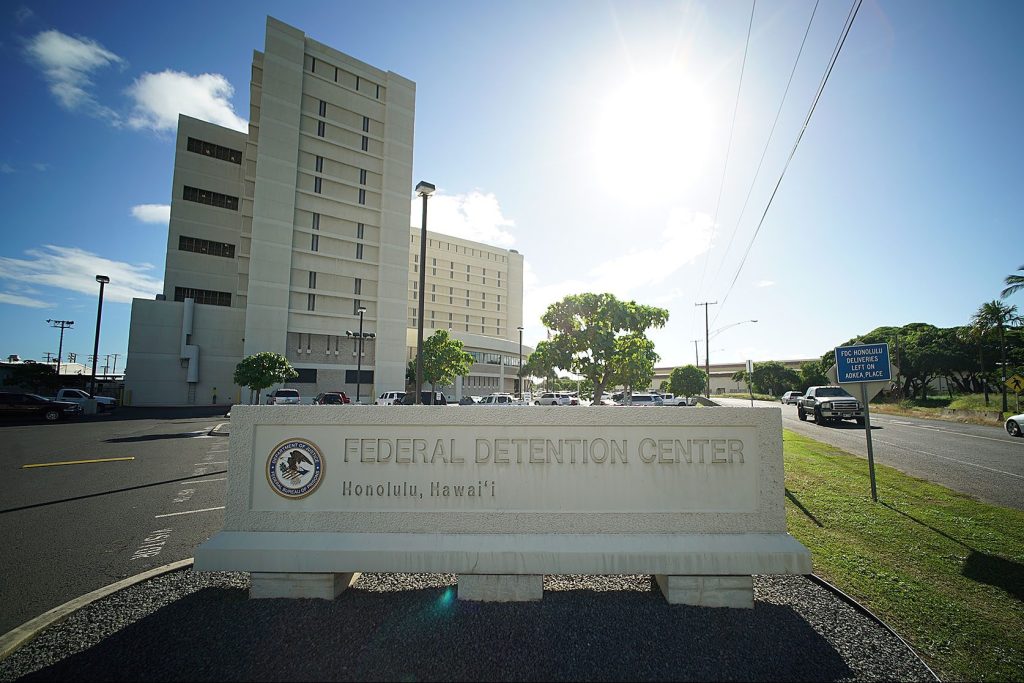
Chardon said The Legal Clinic, where she is senior staff attorney, now has 15 clients in the Honolulu detention center, five of them transferred from out of state. One day she met with 11 detainees, including five who came 4,500 miles from Florida. Most of the people she’s encountered are originally from Mexico.
Tokuda, Chardon and the Hawaiʻi Coalition for Immigrant Rights contend that immigrants transferred to Hawaiʻi from the mainland are being denied access to effective counsel. Some had been represented by attorneys on the mainland, Chardon said, but their lawyers are having trouble staying in touch with them here.
“It’s almost impossible to meet with clients remotely,” Chardon said. FDC Honolulu allows people access to a telephone only by appointment, she said, and calls have to be scheduled more than a day in advance.
In a written statement from ICE’s western states office, the agency said all detainees at the Honolulu detention center have opportunities to communicate with their family members and lawyers. ICE did not respond to a request for the number of people transferred from the mainland to FDC Honolulu and where they came from.
ICE Is Running Out Of Space
ICE doesn’t have a dedicated detention center in Hawaiʻi. Instead, it places people facing immigration proceedings at FDC Honolulu. It’s among the federal and state facilities around the country that will hold ICE detainees, typically for short periods of time, if there’s room.
But the increase in ICE arrests under the Trump administration means the agency is running out of places to put people on the mainland.
The vast majority of detainees are held in contracted facilities; as of June 29, the agency had nearly 58,000 detainees in 181 contracted facilities, close to the approximately 63,000 beds available under contract, its data shows.
To address the space crunch, ICE signed an agreement in February with the federal Bureau of Prisons setting aside space at nine federal detention facilities, including the one in Honolulu. ICE will prioritize those nine facilities over other contracted facilities, and detainees can be kept longer at those nine.

In its emailed statement, the department said, “ICE has worked diligently to obtain greater necessary detention space while avoiding overcrowding.” The statement said Bureau of Prisons “facilities are a vital piece of the national detention system enabling ICE to successfully execute its mission.”
Tokuda said bureau staff told her that 125 beds will be designated for ICE detainees in a separate unit. From Jan. 21 to June 23, the latest date for which data is available, the average daily number of ICE detainees in Honolulu’s federal facility rose from 15 to 38, the highest in at least five years, agency data show, but they are still being held alongside people awaiting trial or serving short sentences.
The agreement with ICE also allows the bureau discretion to accept more than 125 detainees at a time at the Honolulu facility. There’s plenty of room: FDC Honolulu can hold 992 people while the average daily population from July 2023 to July 2024 was 290, according to the Government Accountability Office.
Four of the nine federal facilities covered by the agreement, in Miami, Atlanta, Philadelphia and Leavenworth, Kansas, have seen similar increases since early February, data shows. Data for the four others — in Los Angeles; Berlin, New Hampshire; Lewisburg, Pennsylvania; and Brooklyn, New York — was not available.
Under the agreement, there are supposed to be at least two ICE officers at each facility, but Tokuda said she was told by bureau staff in Honolulu that ICE agents are there only a couple of days a week. ICE didn’t immediately respond to a Tuesday afternoon request to respond to that allegation.
Tokuda and fellow Hawaiʻi Rep. Ed Case are questioning whether there’s enough staffing at federal detention facilities to handle the number of immigrants being arrested.
In a written statement, Case said he has asked ICE for more information about its increased use of FDC Honolulu. He said he is concerned about whether the Bureau of Prisons “has the capacity, equipment and staffing to safely and securely address any increased ICE temporary detention needs and the health and safety of all detainees.”
Far From Lawyers And Family
ICE moves detainees from one facility to another for many reasons, including space, and it doesn’t take into account where someone was detained when doing so, according to its policies and immigration lawyers.
Every time a detainee is moved, it’s harder for their lawyer to represent them, according to Chardon and Kevin Block, a Maui immigration attorney.
“You can’t video conference with them. They can’t sign things. They can’t review applications that you’re going to submit on their behalf,” Block said. ”You really do need to be able to have face-to-face contact with them.”
More often than not, detainees must get another attorney who practices wherever they are transferred, the lawyers said. For instance, Block said, to contest someone’s detention through a writ of habeas corpus, the writ must be filed in the federal district court where that person is being held.
“So if my client gets arrested and I’m preparing to file a writ of habeas and then they suddenly get moved to a different jurisdiction, then I need to find a lawyer there who’s willing to file a writ who is admitted at their district court,” he said. “And that’s difficult.”
Some courts allow remote hearings, but Chardon said it’s hard for attorneys to become familiar with the practices of far-off immigration judges.
She said one of her clients was taken into custody in Florida and went to two detention centers there before he was transferred to Louisiana, Arizona and two facilities in California before finally coming to Hawaiʻi.
All that happened without him being served with the charging document, which Chardon said is a violation of his due process rights. He was picked up by ICE on May 4, she said, and he wasn’t served until he was in court in Honolulu sometime in the last month.
Being transferred far from where people were detained — especially Hawaiʻi — means immigrants can’t see their families either, Chardon said. They may not even be able to call them if they don’t have money in their detention commissary account.
And there are finite legal resources in Hawaiʻi for detainees who are transferred here. Only three nonprofit organizations in the state defend people facing deportation at low or no cost, Chardon said. Her group would find it difficult to take on many more cases.
Block said he isn’t worried only about legal representation for people who are transferred to Hawaiʻi.
If ICE starts to move more detainees around the country, he said, “I would be concerned about them taking folks that are arrested in our counties and moving them to the mainland.”
ICE Moves To Keep Immigrants Locked Up
Reserving space in federal prisons and prison camps for ICE detainees is in line with a major shift in agency policy.
The Washington Post reported that ICE Acting Director Todd Lyons issued a memo to staff last week saying that illegal arrivals are no longer eligible for bond hearings. He said they should be detained “for the duration of their removal proceedings,” which in some cases can take years.
Previously, ICE took that position only for people who had arrived in the country recently. Lyons wrote in the memo that he expected the policy change to be challenged.
Block said he has already noticed that immigration judges in Hawaiʻi recently are denying more bond applications or setting high bond amounts. He said the American Immigration Lawyers Association has reported the same thing around the country.
Many of the people detained in two major sweeps on Maui in February and April are still in the Honolulu detention center, according to Block, who called that unusual.
Normally people are released on bond if they aren’t a flight or a public safety risk, he said. In the recent sweeps, people who have lived in the community for years and have reported to ICE regularly have been denied bond, he said. “They’re obviously not a flight risk.”
Civil Beat’s reporting on economic inequality is supported by the Hawaiʻi Community Foundation as part of its work to build equity for all through the CHANGE Framework; and by the Cooke Foundation.

