

Last Miske Defendant Gets 30 Years As Huge Organized Crime Case Ends
Judge: “I don’t think it’s an exaggeration to say he terrorized this city and this county to a greater extent than anyone I can remember.”
Editor’s note: This article was originally published on iLind.net and is republished with the author’s permission.
The hearing for the sentencing of Lance Bermudez, the last of about 18 co-defendants and associates of the late Michael J. Miske Jr., was held this week in the federal courtroom of Chief Judge Derrick Watson. It was five years, almost to the day, since a grand jury indictment was unsealed and Miske was arrested in a pre-dawn raid on July 15, 2020, and co-defendants tracked down.
With strong words for the defendant and his attorney, Watson sentenced Bermudez to a total of 30 years in federal prison. Nearly 20 family members and friends sat quietly in the courtroom as the sentence was announced.
Bermudez’s sentencing marked the end of the case that broke up a racketeering organization controlled and directed by Miske, who over the course of two decades, grew from a runaway kid from Waimānalo living on the streets in Kailua into a prolific car thief and drug dealer. Miske would become a widely feared crime boss who owned multiple well-known businesses, several homes — including a luxury home in Portlock overlooking the ocean — and had a reputation for violence that silenced critics, scared off business competitors, and protected his associates from retaliation when they assaulted, robbed, or cheated their victims.
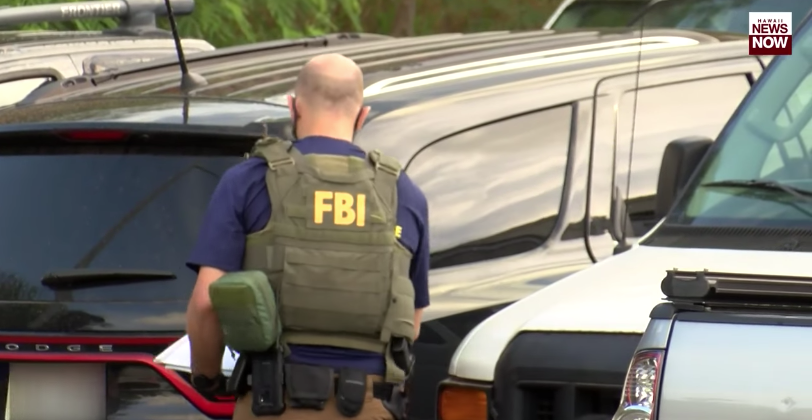
The case became the most complex criminal case in the history of Hawaiʻi and this judicial district, eventually involving over 2 million pages of documents, including almost 300,000 pages of accounting records from his business and personal finances. Hundreds of gigabytes of digital files included data extractions from 150 digital devices such as phones, computers, hard drives, thumb drives and DVDs with over 200,000 video clips and masses of text messages, and more than 200 hours of audio and video recordings.
Bermudez pleaded guilty in September 2022 to being part of Miske’s racketeering conspiracy, meth and cocaine trafficking, and armed robbery, and agreed to cooperate with prosecutors.
Assistant U.S. Attorney Michael Nammar opened the hearing by describing Bermudez as an important member of what prosecutors dubbed the Miske Enterprise, an “incredibly violent” individual, a “loose cannon” who Miske relied on, and who thought he was untouchable because he was protected by his association with Miske’s organization.
Special Report
 Read all of Civil Beat’s coverage on the Michael Miske case. Subscribe to our free Morning Beat newsletter to never miss an update.
Nammar recited a litany of crimes attributed to Bermudez. Eighteen racketeering offenses. Three drive-by shootings. The attempted murder of a Waimānalo man, and burning of the van believed to have been used in the kidnapping and murder of Johnathan Fraser. Eight “brazen” armed robberies of drug dealers and illegal game rooms in which some victims “were tied up, pistol-whipped, punched, and stomped.” And more.
“Everybody had their role,” Nammar said, “his was as a shooter.”
Given this offense history, Nammar said the government recommended a sentence of 327 months, at the high end of applicable federal guidelines. He said it would be a fair sentence, even after a several step reduction from federal sentencing guidelines for providing “substantial assistance” while cooperating with prosecutors.

Myles Breiner, Bermudez’s attorney, emphasized that his client cooperated with prosecutors despite repeated threats. He termed the proposed 327-month sentence “outrageous,” and instead asked for a lesser sentence of 10 years, the mandatory minimum sentence for conviction on the drug trafficking charge.
Breiner compared Bermudez to Delia Fabro-Miske, Mike Miske’s daughter-in-law, who received an 84-month sentence. By comparison, giving Bermudez a 120-month sentence would be fair, Breiner argued.
But Watson was not swayed by Breiner’s comparison of Bermudez to Fabro-Miske, and scolded Breiner for suggesting it.
“Fabro-Miske was no angel,” Watson said. “But nor was she violent, there was no allegation she engaged in a single act of violence much less the 18 Mr. Nammar identified.”
Bermudez was the most violent of all of Miske’s 18 co-defendants and associates who pleaded guilty in this and related cases.
“Others were violent,” Watson said, “but the number of different violent acts, the brazenness, it would not be incorrect to say it was unprecedented.”
Bermudez was “running amok” during a crime spree in 2016 and 2017, Watson said.
“I don’t think it’s an exaggeration to say he terrorized this city and this county to a greater extent than anyone I can remember,” he said.
Watson pointed out that the 120-month sentence requested by Breiner was the minimum sentence allowed by law on the drug charge alone.
“It’s an asinine recommendation, that’s exactly what it is, and insulting, among many others things,” Watson told Breiner. “It’s outrageous, ridiculous, and any other adjective you can think of to describe something that is patently not going to happen.”
Watson also noted Bermudez was not the only Miske associate to be threatened for cooperating with prosecutors.
“Many others faced threat of retribution by Miske and members of his enterprise,” Watson said, and “others faced greater theats of retribution” but appeared as witnesses anyway.
And although Bermudez initially cooperated and provided useful information to prosecutors about several crimes, he ultimately refused to testify against Miske during the trial, “contrary to his plea agreement and contrary to statements to the government.”
With that, Watson imposed a 30-year sentence on the drug charge, which carried a maximum possible sentence of life in prison. Additional 20-year sentences were meted out for both the racketeering conspiracy and armed robbery charges, both to run concurrently with the longer sentence.
And that was the end of the criminal case against Mike Miske and his gang. Miske was convicted last year by a jury on 13 counts, including several carrying mandatory life sentences, but died of a fentanyl overdose while in Honolulu’s federal detention center pending sentencing. At least 18 others were convicted, most of them now serving sentences in federal custody.
“It is the culmination of a long road,” Watson said.
But although the criminal case before Judge Watson is concluded, there are still several open proceedings.

Hours after the hearing, Breiner filed a motion to withdraw as Bermudez’s attorney. In an accompanying sworn declaration, Breiner said Bermudez wants to appeal his sentence, and that there is a “potential for a conflict of interest upon appeal, based on a potential claim for ineffective assistance of counsel.”
Breiner asked the court to appoint another attorney to handle the appeal to the 9th U.S. Circuit Court of Appeals.
John Stancil, Mike Miske’s younger half-brother, also has an appeal of his 20-year sentence pending at the 9th Circuit. The appeal has been delayed several times at his attorney’s request.
And the government’s civil lawsuit seeking forfeiture of Miske’s personal and business assets, estimated to be worth about $25 million, is currently on hold pending settlement negotiations between the government and the attorney representing the trustees of the Michael J. Miske Jr. Revocable Living Trust.
In a joint status report on the case filed by Acting U.S. Attorney Kenneth Sorenson and attorneys representing the Miske trust, as well as two of the three financial institutions holding outstanding mortgages on Miske properties, the parties said there are ongoing discussions between the government and the trust regarding the sale of some assets while the case is pending.
Meanwhile, an unnamed successor trustee of the Miske trust has been appointed “and is working to obtain relevant account information from the Financial Institution Claimants.”

