New UH Agriculture Dean Wants To Help Hawaiʻi Grow More Of Its Own Food
During 16 months on the job, Parwinder Grewal has hired more faculty, secured millions in funding and started setting up a new undergraduate degree in farming.
The new dean of the University of Hawaiʻi’s agricultural research college inherited an institution with staff shortages, deteriorating facilities and two decades of funding decline.
After assuming his post in March 2024, Parwinder Grewal hit the ground running to build support for the college and its mission of helping Hawaiʻi become more self-sustaining — a lofty goal considering the Pacific island state imports as much as 90% of its food.
So far, the college under Grewal’s leadership has hired over a dozen faculty, started making headway on a new farming degree and secured millions from the state.
His long-term parameter of success is more elusive — helping the state achieve the ambitious goal to purchase 50% of its food locally by 2050.
Hawaiʻi has made little progress in efforts to grow local agriculture and help families struggling to put food on the table. Last year, the state put together a temporary working group to create a plan to build Hawaiʻi’s food economy.
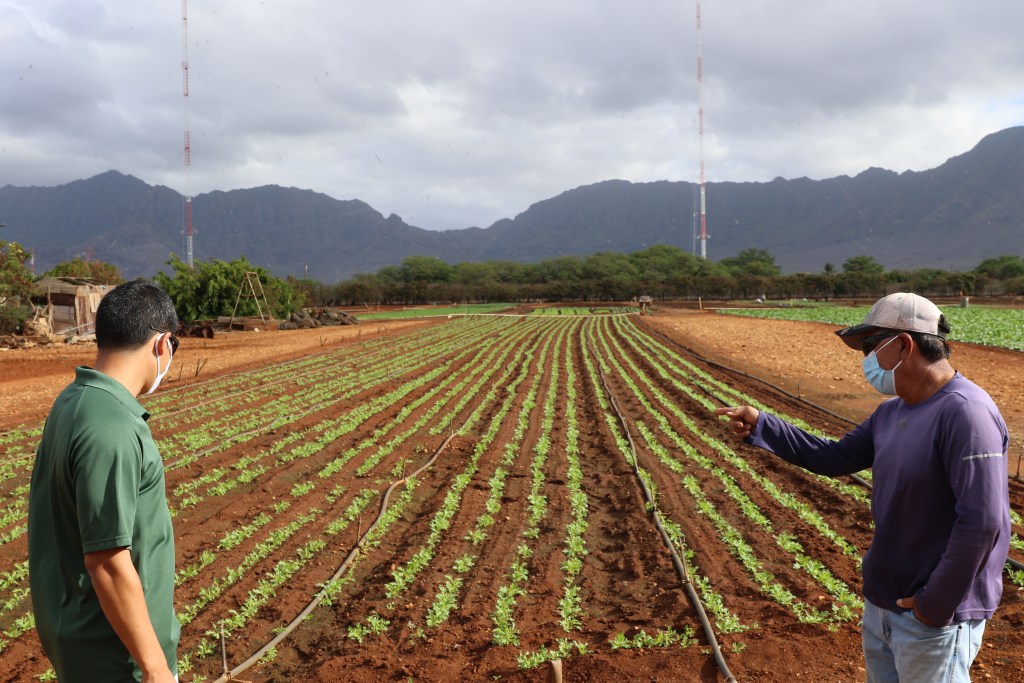
In its final report issued in December, the group identified priorities to ensure progress. It highlighted challenges the state should address, including insufficient farm labor, high production costs, limited access to land and capital, and invasive species.
New Name Reflects New Focus
Grewal recognizes the difficulties but is confident that he can help the state deliver.
“Fifty percent by 2050 is a perfect goal for Hawaiʻi to have, and in my capacity as the leader of this college, I am moving all of my resources (and) faculty to align with that,” Grewal told Civil Beat during an interview in his office at UH Mānoa. “I want to deliver on that goal.”
One of his first steps as dean was to change the institution’s name from the College of Tropical Agriculture and Human Resources to the College of Tropical Agriculture and Human Resilience. It retained its well-known acronym CTAHR.
The new name reflects his efforts to build a cohesive focus across the college, which hosts 25 degrees ranging from fashion design to bioengineering. That focus: ensuring Hawaiʻi residents’ basic needs are met locally.
“We want to infuse the concept of resilience into all our work; into agriculture production to the fashion industry,” Grewal said.
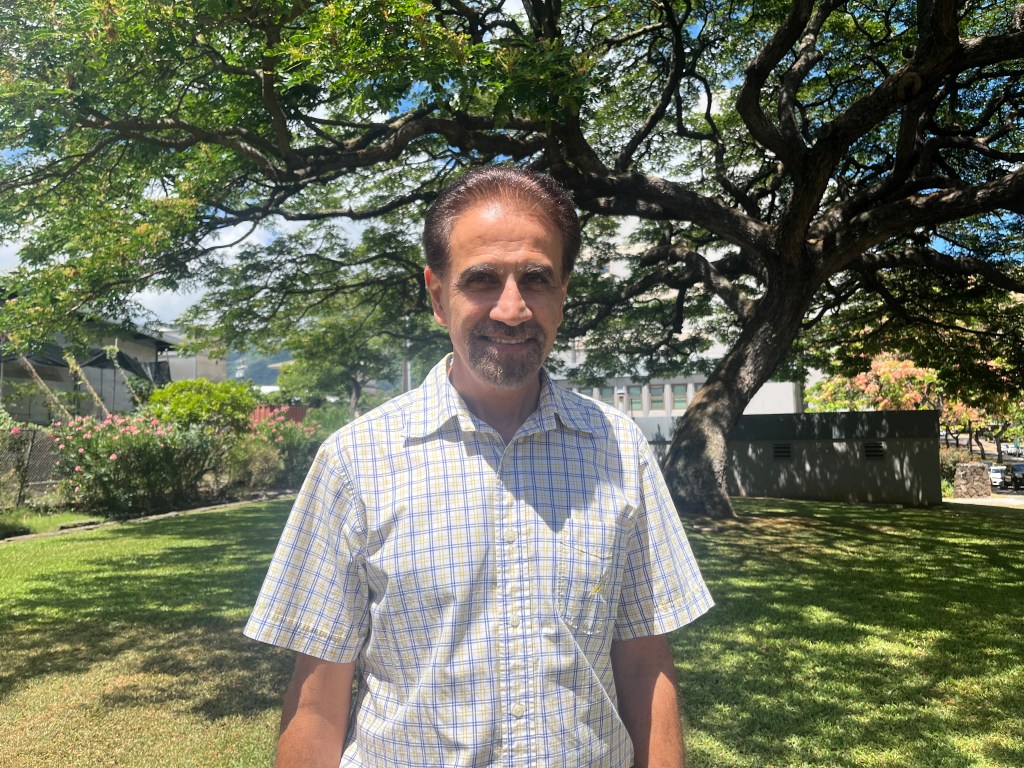
To build his vision for the college, the dean met with hundreds of faculty members, farmers, stakeholders and legislators. Those conversations also helped bring in money.
Lobbying For Support
Rep. Kirstin Kahaloa, a member of the House Committee on Agriculture and Food Systems, said Grewal’s consistent presence in the community and at the Capitol was likely the reason for the Legislature’s recent investments in the college.
He has been able to “garner a lot of cross-sectional support across the industry,” she said. “And one of those ways to do that is being present, to share what CTAHR’s role should be.”
“We have lost agricultural engineers, and we did not replace them. We lost plant breeders who produce new varieties.”
CTAHR Dean Parwinder Grewal
Grewal’s vision of delivering on the state’s goals has also helped, she says.
“It’s not just about what’s good for CTAHR, he wants to do what’s good for all of agriculture and food systems,” she said.
The college has seen a decline in enrollment and budget allocations since the coronavirus pandemic began in 2020. But it has a strong local presence, with Hawaiʻi residents comprising 43% of its students and Native Hawaiians representing 13% of the student population.
Grewal helped secure $12 million to go toward revitalizing the college’s network of more than 20 extension stations, which serve as hubs for agricultural research, education and community engagement.
The school’s facilities and infrastructure, some of which date back to the early 1900s, are deteriorating, the House Committee on Higher Education found. Most extension stations have seen minimal repairs over the years.
“Without proper staffing, CTAHR will be unable to support its agricultural research and extension stations, which serve as hubs for region-specific agricultural research, education, and community engagement and support local farmers and ranchers,” lawmakers found in a bill last session to provide more funding. The measure died after passing out of the House Committee on Higher Education, but provisions were put into other bills that passed.
The extension stations and the faculty who staff them act as a bridge between research and farmers. But farmers have seen fewer extension representatives — known as agents — in recent years.
Hunter Heaivilin, the advocacy director at Hawaiʻi Farmers Union, said the extension agents’ presence has also changed over the years, and they may not be able to provide the hands-on technical assistance farmers need.
“There’s been a lot of primary research that may not always be able to draw a clear line to how it influences producers in Hawaiʻi,” he said. “I would hope that the expansion would be supporting family farmers, be supporting the majority of producers across the state to help them expand their production.”
Grewal is on the same page. He wants to move his faculty from simply researching and publishing studies to implementing their findings and providing necessary information to farmers in Hawaiʻi.
“That collaborative partnership will make us a model land grant institution,” Grewal said.
The state gave the college $4 million for repairs and maintenance to the Waimānalo station. Another $6 million will fund an indoor controlled environmental farm at the Mānoa station. He’s also secured money for a permanent agent at the station in Kona.
Grewal said indoor agriculture takes up less land and water and can be located closer to urban areas.
Heaivilin, however, expressed skepticism about the indoor farming idea.
The facility “holds promise to enhance the agricultural sector by fostering innovation,” he says. But the high capital investment in these types of farms, “can be prohibitive for Hawaiʻi’s small-and mid-sized farmers. Therefore, the focus of research should include cost-effective solutions and scalable models that these farms can feasibly implement.”
More Capacity Needed
In the past decade the college has seen a dramatic reduction in its faculty and services. The college shut down its soil analysis lab six years ago, cut down on agents for its extension stations and lost researchers in various fields.
“We have lost agricultural engineers, and we did not replace them,” Grewal said. “We lost plant breeders who produce new varieties.”
CTAHR could quickly build solutions to the invasive species devastating ecosystems, he said, but not with the capacity the college has now.
The dean said he’s requested a few new agricultural engineers who could help develop tractors fit for Hawaiʻi’s smaller ag plots and unique crops — and cut down on labor costs. New agronomists could work on increasing production, reducing its cost and making agriculture more resilient in the face of climate change.
Revitalizing services CTAHR used to provide is also on his mind. Bringing back the soil analysis lab is first on Grewal’s list. Soil analysis can provide farmers with key information on their dirt’s characteristics, the best fertilizers to use and soil health and fertility.
Farmers must currently send samples to labs on the mainland, which takes more time and makes it difficult to provide proper analysis for scientists not familiar with Hawaiʻi’s volcanic soil.

This ongoing series delves deep into what it would take for Hawai‘i to decrease its dependence on imported food and be better positioned to grow its own.
Restoring a soil analysis lab would be incredibly valuable, Heaivilin said, especially since years of plantation agriculture scarred the land.
“The ability to have the producers that we’re hoping to put on those lands actually understand and work with cultivating their soil is critical,” he said.
It’s in the Legislature’s hands, Grewal said, to expand the college’s pest and disease diagnostic center and the seed lab, which produces locally relevant, climate- and pest-resilient seeds. But passing legislation to fund the college is no easy task, Kahaloa said, particularly as the state loses federal funds and priorities shift.
It’s also on the university to support Grewal’s goals, she says. But, “what CTAHR wants doesn’t always align with the larger university’s priorities.”
Grewal is counting on the university to help solve the state’s farm labor shortage.
The average farmer is over 60 — the oldest in the country. Budding producers face steep barriers to start. Many didn’t grow up working the land.
“Many of the farmers’ children have left,” Grewal said. “They have encouraged them to leave because there may be a better life elsewhere, but somebody still needs to produce food … we need to bring in new people into farming.”
That’s a key reason the college is preparing to launch a new three-year undergraduate degree aimed at training the next generation of producers. Grewal hopes to have the program ready by 2027.
“Young students now want to farm,” he said. “They want to change the world. They want to do it more sustainably.”
He knows not all challenges can be overcome. His new program to train farmers could increase the available workforce and with it the state’s production. But a lack of affordable housing for laborers remains.
Still, he remain optimistic that the state is headed in the right direction.
“Wherever I go,” Grewal said, “we focus on increasing Hawaiʻi’s food and agriculture product self sufficiency … focusing on family, community and ecosystem resilience.”
“Hawai‘i Grown” is funded in part by grants from the Stupski Foundation, Ulupono Fund at the Hawai‘i Community Foundation and the Frost Family Foundation.