

With No Federal Halfway House in Hawaiʻi, Inmates Remain Far From Home
The state’s only halfway house for people convicted of federal crimes closed six years ago so those who qualify for supervised release must stay on the mainland.
When Ken Lawson was released from federal prison after serving two years for fraudulently obtaining prescription medications, he returned to Hawaiʻi to finish out his sentence in a halfway house.
For seven months in 2010, Lawson lived at the Mahoney Hale facility in Kalihi. He took a bus to his job as a research assistant at the University of Hawaiʻi’s William S. Richardson School of Law, checked in with the halfway house by phone during the day and returned there at night. After a few weeks he was even allowed to spend weekends at home.
Despite years of practicing as an attorney, Lawson said he needed the structure and support of a halfway house like Mahoney Hale.
“I think people underestimate what it’s like coming out of prison, where everything is taken care of,” he said. “I can’t say strongly enough how much they help you reintegrate.”
Inmates leaving prison today can’t go to Mahoney Hale; it closed in 2019, leaving Hawaiʻi without a residential halfway house for federal inmates. Six years later, it hasn’t been replaced, leaving Hawaiʻi as one of only two states without a residential halfway house for people released from federal prison. Vermont is the other.
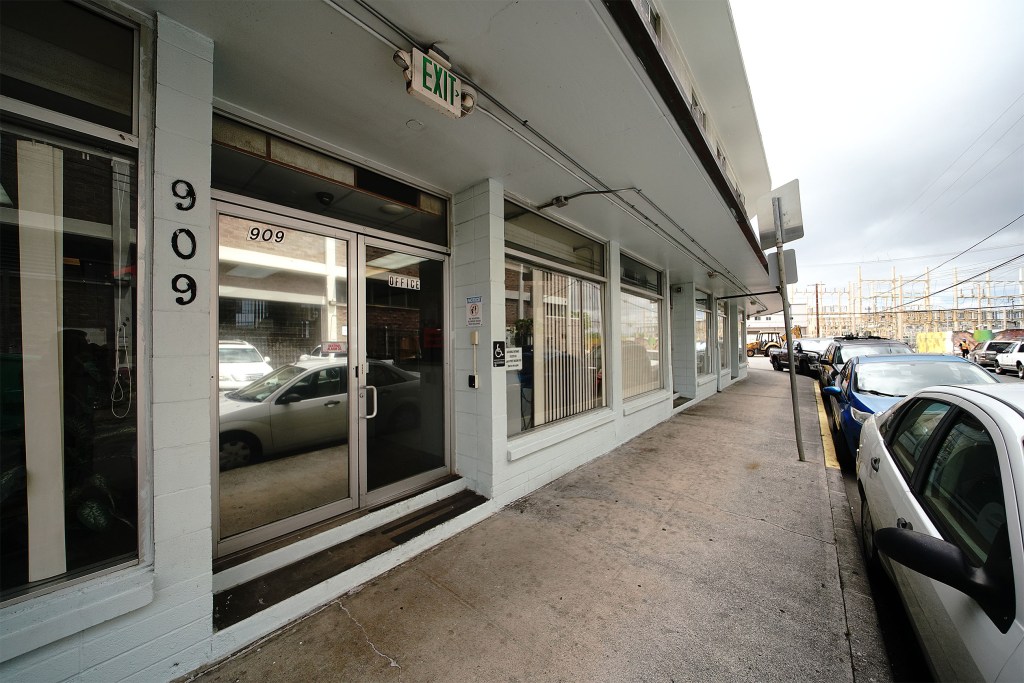
Instead, Hawaiʻi residents who qualify for release from federal prison are sent to halfway houses on the mainland, far from their families, their communities and the long-term jobs that halfway houses are supposed to help them find.
Nationwide, thousands of inmates remain incarcerated months after they’ve qualified for release, according to the American Civil Liberties Union.
The lack of a reentry facility in Hawaiʻi delays people’s reintegration into the community, according to Tim Jenkins, the state’s chief federal probation officer — especially for those who need more supervision and services because they have a higher risk of reoffending.
Nationally, the federal Bureau of Prisons is under pressure to release more inmates to halfway houses to comply with the First Step Act, signed by President Donald Trump in 2018. It builds on the Second Chance Act, passed in 2008 to provide more funding for reentry programs.
The First Step Act allows federal inmates to reduce their time behind bars in exchange for participating in programs designed to reduce the chance of reoffending, including vocational courses and drug treatment. Among the goals: cut back the size of the federal prison population and save money by putting inmates in privately run facilities.

But across the nation there isn’t enough room in halfway houses to handle all the inmates eligible for release under First Step Act, according to The New York Times.
Lawson, now co-director of the Hawaiʻi Innocence Project, said the lack of a halfway house in Hawaiʻi is a problem because such facilities hold inmates accountable as they adjust to life after incarceration. The rules at Mahoney Hale, he said, were strict.
“When they put you into a halfway house, they assist you to do two things: Get a Social Security card, and get a job,” he said. “You had to find a job, or you could be sent back to prison.”
Law Expanded Role of Halfway Houses
Halfway houses, also known as Residential Reentry Centers, provide a way for inmates to transition from prison to eventual release.
Typically run by nonprofits that contract with the federal government, they provide services including financial management, job placement and in some cases drug monitoring and behavioral health treatment.
Halfway houses have become more important to the federal prison system due to the First Step Act.
Inmates can receive 10 days of credit for every 30 days in a First Step program. Once an inmate’s credits equal the time remaining in their sentence, the inmate is supposed to be released with supervision, which can include a halfway house or home confinement.
Research shows inmates who have participated in First Step Act programs are far less likely to reoffend.

The nonprofit Council on Criminal Justice analyzed Department of Justice data and found that the recidivism rate for inmates released under the First Step Act between 2020 and 2022 was 12.4%. That was significantly lower than the previous 19.8% rate of reoffending.
But complaints over the Bureau of Prisons’ management of the earned-time credits were raised soon after the law went into effect. Sens. Dick Durbin, D-Illinois, and Chuck Grassley, R-Iowa, told the Department of Justice in late 2022 that there had been “excessive delays” in implementing the law.

(Courtesy: Bureau of Prisons/2025)
In December, the ACLU filed a class-action lawsuit against the Bureau of Prisons, alleging the agency has misinterpreted the law. The ACLU says the law requires the bureau to release prisoners when they qualify; the agency’s rules say it has discretion in when to release them.
“For thousands of people, the BOP’s unlawful regulation has already resulted in additional time in prison beyond what the law allows,” the ACLU complaint alleges.
The two lead plaintiffs in the suit were inmates in federal correctional facilities who had earned enough credits to be released but were told they would remain in custody until May.
Trump administration officials have said they are committed to the goals of the Second Chance Act. In her nomination hearing in January, Attorney General Pam Bondi said the Bureau of Prisons must follow through on the promise of the law “by building more halfway houses.”
In June, BOP Director William Marshall issued a memorandum directing staff to expand the number of halfway house releases under the First Step Act. It remains unclear how the bureau can meet that challenge in the short-term.
No Halfway House In The Islands For Six Years
Mahoney Hale, the state’s only residential reentry facility, closed in August 2019 after the city and county of Honolulu purchased the building that housed it to replace it with the Sand Island drug addiction treatment center.
A few months later in November 2019, then-Bureau of Prison’s Director Kathleen Hawk Sawyer told Sen. Mazie Hirono during a congressional hearing that the state was “on the verge of getting a new halfway house for federal inmates.”
The federal government has tried to find a contractor to run a halfway house in Hawaiʻi at least three times since then, according to its procurement website. During a web event with the Council on Criminal Justice last January, Peters, another former prison director, blamed the shortage of halfway houses on a lack of funding.
“Funding is always the issue, and so the advancement of programs like in Hawaiʻi is a great example,” she said. “We have not been able to get a contract with anyone on the island for years now.”
In a written statement to Civil Beat, Hirono said “(i)t’s critical that federal, state, and nonprofit stakeholders continue working together to identify the property and operator necessary to reopen a residential reentry home here.”
Jenkins, with U.S. Probation and Pretrial Services, said the Bureau of Prisons has been slow to replace the closed facility and that he hasnʻt been updated in months.
He said the lack of a reentry center also prevents federal courts in Hawaiʻi from sentencing people who violate the terms of their probation to a halfway house in the islands. The only option is to send them to prison on the mainland.
The Bureau of Prisons declined a request for an interview about the lack of a residential reentry facility in the state. Spokesperson Scott Taylor said the the latest solicitation for bids to open a facility closed in April; information on any bids received isn’t publicly posted.
In 2023, a solicitation for either a residential reentry facility or a Day Reporting Center on Oʻahu resulted in a $14.9 million contract with DISMAS Charities to operate a Day Reporting Center.
Such facilities are not residential halfway houses but they offer assistance with job placement and financial management. The contract calls for a maximum of 30 placements; Jenkins said the center handles clients with a lower risk of reoffending.
When the Day Reporting Center opened in February 2024, the Bureau of Prisons said in a written statement that it remains “committed to expanding residential reentry services in Hawaii, and this initiative marks a significant step in that direction.”

