Hawaiʻi Inmate Charged For Killing His Cellmate At Hālawa Prison
Raita Fukusaku’s lawyer alleges his client was “targeted for assassination” by the prison gang Murder Inc.
A Hawaiʻi prison inmate has been charged with first-degree murder in the killing of his cellmate last year, and the victim’s lawyer is alleging the murder was tied to drug smuggling and gang activity at Hālawa Correctional Facility.
Daniel A.K. Smith was indicted May 13 on a charge of first-degree murder in the death of infamous convict Raita Fukusaku.
Myles Breiner, who was Fukusaku’s lawyer, said in an interview that he warned prison officials in writing almost 11 months before his client’s death that he had been “targeted for assassination by gang members” at the prison.
Fukusaku, 59, had served 30 years for the murders of Japanese fortune-teller Toako “Kototome” Fujita and her son Goro. That case triggered a media uproar in Japan in 1994, in part because Fujita had been consulted by prominent Japanese business and political leaders.

Fukusaku was also the first Japanese national charged with murder to be extradited to the United States, according to media reports at the time. He was eventually sentenced to two consecutive life terms for the killings.
Fukusaku was fatally attacked Oct. 14, and a weapon was recovered, according to Honolulu police. Corrections officials said he suffered head and neck injuries.
Breiner said he was told by prison staff that Fukusaku was strangled and stabbed with a pen, but Breiner said he has not been able to obtain a copy of the autopsy.
He provided Civil Beat a copy of a letter he sent to prison officials dated Nov. 30, 2023, alleging Fukusaku was in danger. The letter claimed Fukusaku’s pleas for protection “have fallen on deaf ears at the facility.”
The letter asked Department of Public Safety officials to interview Fukusaku “before he is killed on DPS’s watch.”
“That was the only protection that I could provide, was sending letters putting them on notice,” Breiner said. He said he never received a reply.
Earlier this year Breiner wrote another letter to the state Attorney General’s office announcing he was representing the estate and family of Fukusaku and is filing a claim alleging the state “breached its duty to provide reasonable care” to prevent the murder.
Department of Corrections and Rehabilitation Director Tommy Johnson declined a request for an interview about the case. Rosemarie Bernardo, public information officer, said the department “does not comment on any pending litigation.”
Breiner said in an interview that Fukusaku told him the threats came from the prison gang called Murder Inc., and he was being pressured to transport drugs within the prison. That gang, which has links to gangs outside the prison, is currently a focal point of a trial related to another inmate killing.
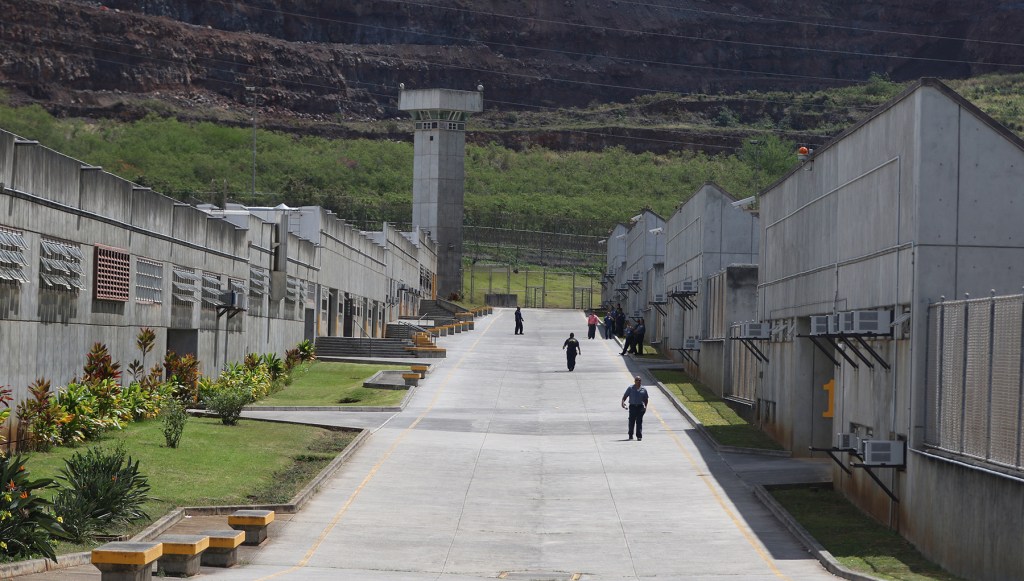
Fukusaku suffered from a brain tumor, and was moved an average of twice a day from his housing module to the prison medical unit for care, Breiner said. He also made monthly hospital visits, even when the rest of the prison was locked down.
That made him “an ideal person for a mule for the gangs,” Breiner said.
“I went to see him the Friday before he was murdered, I met with him,” Breiner said. “He was telling me he was getting all this pressure from Murder Inc. people to move drugs, and he didn’t want to.”
However, Breiner said Fukusaku told him not to contact the chief of security or other prison officials again.

Fukusaku also told his attorney he had “no issue” with his cellmate Smith, 39, who was serving a five-year prison term for non-violent crimes including auto theft, breaking into vehicles and methamphetamine possession.
“There was no indication that Daniel was a threat to him,” Breiner said.
Walter Rodby, who is Smith’s lawyer, said he will ask the court to order a mental examination of his client, saying he has a documented history of mental illness.
“He wasn’t a violent person, which struck me as being odd,” Rodby said. “I mean, he’s like a low-level (person) maybe with some substance abuse issues, and then they put him in the same cell with a convicted murderer who’s serving a life sentence,” Rodby said. “I don’t know why they did that.”
Three alleged leaders of the prison gang Murder Inc. are currently on trial in Oʻahu Circuit Court in connection with the killing of another inmate at the Oʻahu Community Correctional Center in 2023.
That case involves the death of Chris Vaefaga, 36, who died of injuries he suffered in a beating at the jail. Inmates testified during the trial that Murder Inc. and another gang called West Side essentially controlled a portion of the jail where the killing occurred.
Here is Breiner’s Nov. 30, 2023, letter to the Department of Public Safety: