Hawaiʻi Rarely Takes Guns From People In Crisis, Despite ‘Red Flag’ Law
A law enacted five years ago was supposed to help loved ones and law enforcement get a court order to temporariliy take away someone’s guns. Only 10 petitions have been filed.
Around 200 people have died by suicide using a firearm since Hawaiʻi enacted a law that gives judges the power to temporarily take guns away if they believe someone poses a risk to themselves or others.
But the law only works if people file a gun violence protective petition, known as a red flag petition, about someone they believe is at risk. Since it took effect in 2020, only 10 petitions have been filed against six people across the state, according to court records — the lowest per capita of any state. Only two of them had their guns taken away.
During that time, the number of people killed by guns in Hawaiʻi has increased at a rate outpacing the rest of the country. Suicides, which make up the majority of firearm fatalities, rose around 70% between 2018 and 2023, according to data from the Centers for Disease Control and Prevention.

Red flag laws have been shown to make a difference. In Connecticut, for example, the rate of gun-related suicides dropped by about 15% after the state doubled down on enforcement, according to a 2018 study by researchers at the University of Indianapolis.
For people concerned that someone in a mental health crisis might turn to gun violence, there was no obvious place to turn prior to the red flag law, said Sen. Karl Rhoads, who spearheaded the bill. It was intended to save lives.
“That’s the whole point,” Rhoads said. “You need to give as many opportunities to people to head off mass shootings or suicides that you can.”
Experts and bereaved parents blamed the infrequent use of the red flag option on a lack of awareness of the law and the stigma around mental health. The state’s suicide prevention task force does community trainings, but it doesn’t include information about the red flag law, said Dr. Deborah Goebert, who co-chairs the group.
“I don’t think we’re telling people,” Goebert said. “Can’t utilize it if you don’t know about it.”
Others say that Hawaiʻi’s array of strict gun laws already keep guns out of the hands of people who shouldn’t have them, reducing the need for these petitions compared to the other 20 states with red flag laws. One example is the requirement to get a permit to purchase a firearm.
“That’s a really good safeguard,” said Olivia Li, senior counsel at Everytown for Gun Safety, “and it means that there’s going to be less dangerous gun ownership in general.”
Limiting Access To Firearms
On paper, red flag laws are straightforward. If there are concerns that someone with access to a gun might be at risk, people around them can seek the court order.
While in some states only police can file these petitions, that’s not the case in Hawaiʻi. Family members, romantic partners or medical professionals — even co-workers and teachers — can also ask the court to intervene by providing details of why they think someone is in danger.
That person could lose access to their guns for up to two weeks until the court hearing takes place. Then, if it is determined that they are a risk to themselves or others, the judge can order their guns taken away for a year and bar them from purchasing a new one.
Because these petitions can be filed even if someone isn’t otherwise prohibited from having a firearm, red flag laws fill a gap in other gun laws, said Kelly Drane, who leads research at the Giffords Law Center, a nonprofit working on gun control issues.
“People that threaten harm but haven’t yet acted on it, it is harder to prohibit them from having firearms,” she said. “This creates a pathway to ensure they don’t have access to firearms.”
Red flag petitions are more widely used in other states. New York, which enacted its red flag law in 2019, filed more than 5,000 petitions last year alone — a per capita rate 135 times bigger than Hawaiʻi’s. Massachusetts has had 10 times as many petitions since its law went into effect in 2018.
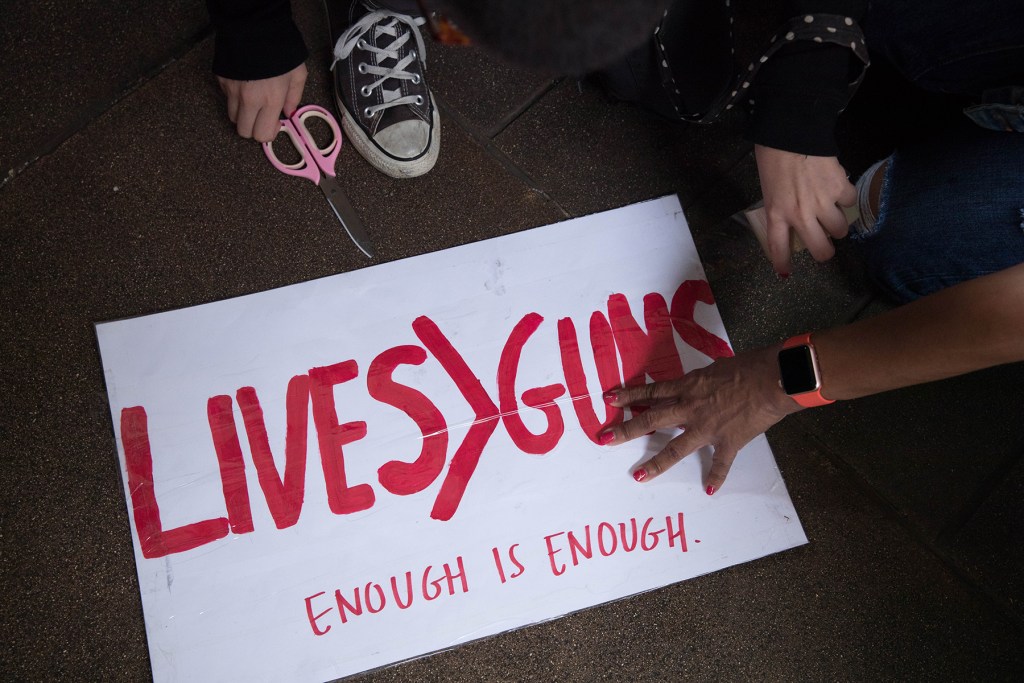
Nationally, these petitions are often more likely to be granted when filed by law enforcement officers who know how to make a stronger case than family members, Drane said.
But police in Hawaiʻi haven’t utilized the red flag law often. Honolulu and Kauaʻi police haven’t filed any petitions since the law was enacted. The Honolulu Police Department doesn’t train all of its staff on the law and information on how to file the petitions is tough to find publicly available online, even for police, according to Maj. Carlene Lau, who oversees the records and identification division that includes the firearms section.
Instead, HPD opts to refer people for mental health evaluations, which Lau says is more efficient for law enforcement. But that process is more intensive and can result in someone being involuntarily committed to a state hospital.
Out of the 10 petitions filed since 2020, four came from law enforcement across the state. Only two of those have been granted, including one filed against a Maui County police officer who was allegedly having a sexual relationship with a minor.
In another case, a Hawaiʻi County police officer asked the court to take away a man’s guns after he sent his girlfriend a photo of himself with a gun in his mouth and threatened one of his colleagues. The petition was ultimately dismissed because the officer didn’t show up for the court hearing.
Experts don’t think the low numbers of red flag petitions filed in Hawaiʻi are necessarily cause for alarm because there are other ways that someone who is at risk of hurting themselves or others can lose access to guns. Domestic violence protection orders and temporary restraining orders are both much more widely used in Hawaiʻi, and they provide a greater swath of protections for victims in addition to restricting the possession of firearms, according to Drane.
People also find ways to work things out themselves, locking guns in someone else’s safe, or even handing them over to federally licensed gun stores or police to hold temporarily. But unlike the red flag petitions, those strategies don’t prevent people from buying another gun.
Red flag laws, experts say, are just one tool for combating gun violence, one that provides a way for concerned loved ones to ask for help.
Family members “don’t have to interact with law enforcement to get the ball rolling on that, and they can describe the facts and their concerns in the way that makes sense to them,” according to Li, with Everytown. “They’re just kind of telling their story and saying, ‘I think that this person is in crisis and is therefore in danger.’”
Reducing The Stigma
In the spring of 2022, about five months before he died by suicide, Tautua Reed told his father that he had an unregistered gun locked in a small safe at their home.
Given his son’s puzzling recent behavior, Jonathan Reed was worried. The 30-year-old Army reservist was the middle of three kids, a solid football player, a dad to two young kids.
Looking back, Reed recognizes the signs. Tautua was withdrawn, sitting by himself at family gatherings and wearing the same clothes day after day. Reed remembers his son would say things like “make sure you take care of my kids.”
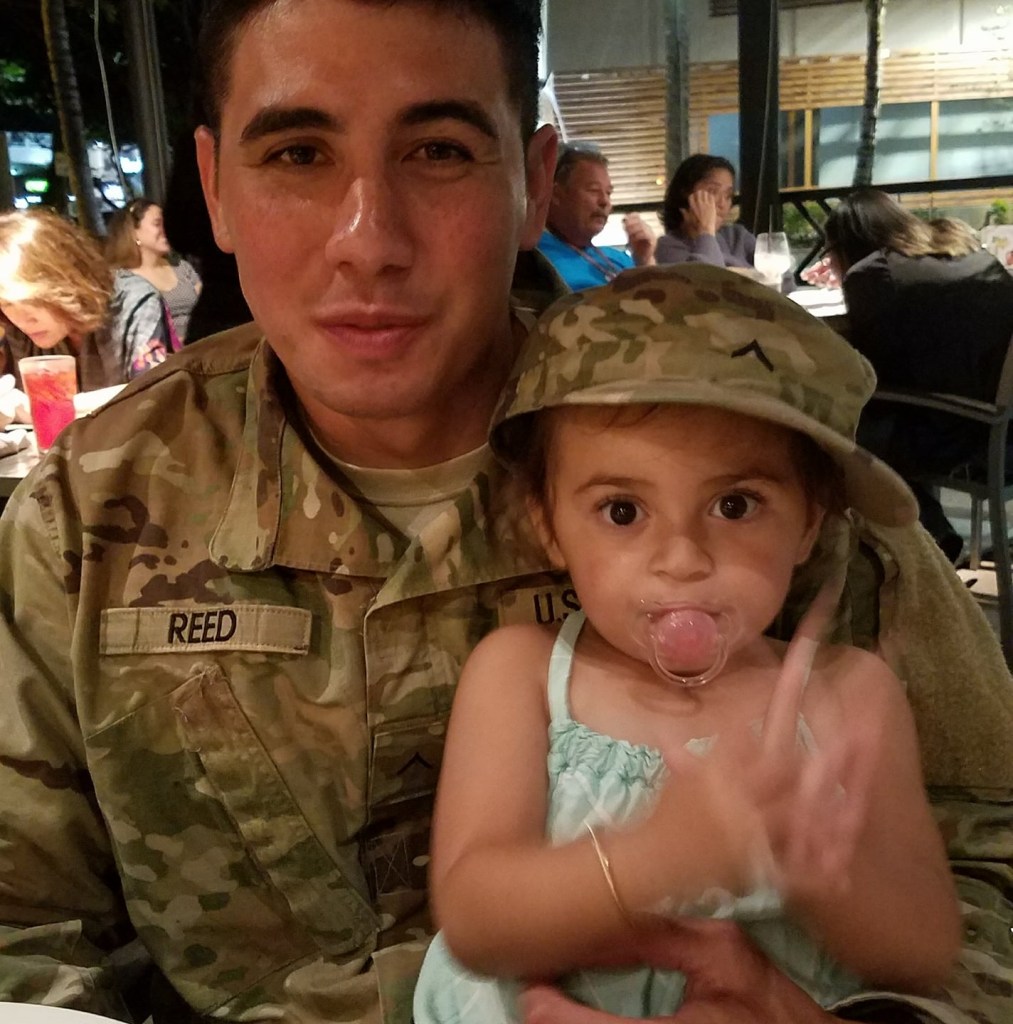
Reed immediately took his son’s gun and locked it in his own gun safe — one for which Tautua didn’t have the combination.
As his mental health declined, Tautua was hospitalized and diagnosed with bipolar disorder. Reed tried desperately to get his son help when he was released from the hospital, but he quickly learned there aren’t enough resources for people struggling with mental health in Hawaiʻi. Reed found it tough to find a psychologist for his son.
When he asked his son to get rid of the gun, Tautua did. But by October, Tautua was gone anyway.
Even though his son didn’t die from a gunshot, Reed says more people need to know how to get weapons out of the hands of people in the middle of a mental health crisis. Gun-related suicides are some of the most common.
Reed doesn’t think enough people know the red flag option exists. Others might be reluctant to bring such a personal and difficult issue to a public venue, preferring to keep things private.
“They think this is a family issue,” Reed said. “‘We solve our own problems’ kind of thing.”
After his son’s death, Reed says people came up to him to ask for advice helping their own kids struggling with mental health. That motivated him to form a nonprofit, Tautua’s Mission, to talk to people about the warning signs, show them where to turn to help and “get past the stigma.”
If you or someone you know is struggling with thoughts of suicide, you can dial or text 988 to be connected to help.