

Hawaiʻi’s High-Priced Geothermal Consultants Are Getting Heat
Hawaiʻi wanted to educate Big Island residents about geothermal energy. So far, the plan seems to be backfiring.
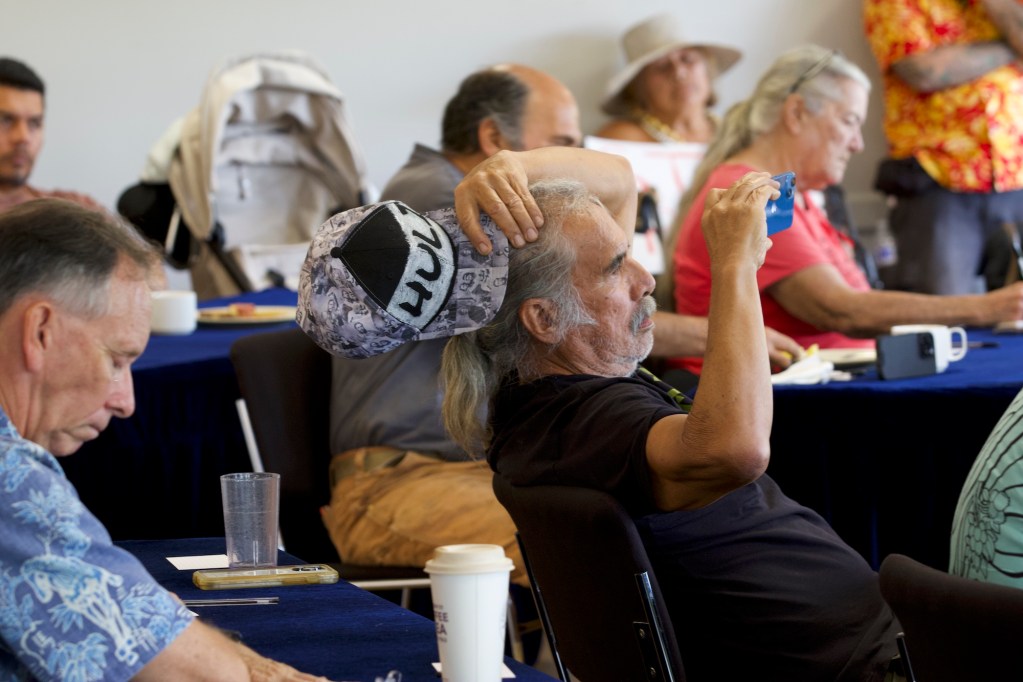
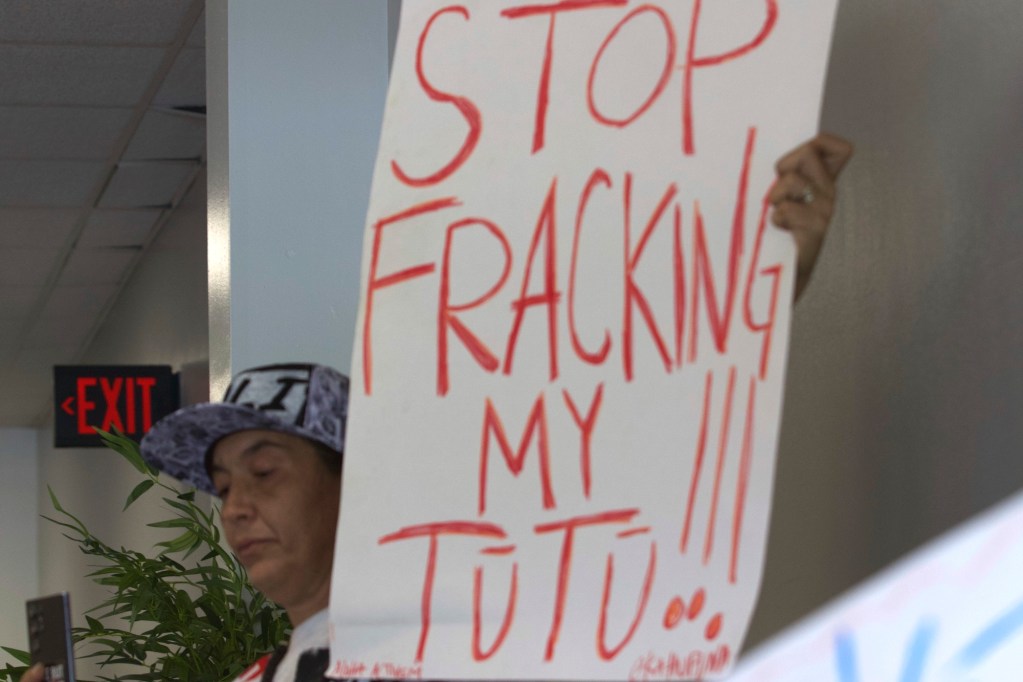
At a community meeting this spring, geothermal consultants and audience members argued over who had stronger ancestral ties to the volcano goddess Pele. Then, Waikā Consulting made a case that volcanic heat on Hawaiʻi island should be harnessed for energy production. Many in the audience disagreed, calling the consultants sellouts.
In one particularly intense moment, the event moderator slammed his fists on the table and told everyone to shut up.
The meeting was the public kickoff of a $3 million taxpayer-funded campaign to sell the idea of geothermal energy to residents of the Big Island, where similar projects have faced stiff opposition in the past.
The state awarded Waikā Consulting the no-bid contract last October not just to educate the public about future geothermal developments but to coordinate research and create a plan to develop more plants. With at least half the money spent on things such as social media campaigns, foreign experts, op-eds and paid consultants posing as community supporters — in addition to eight other town halls like the one in May — so far the campaign seems to be falling flat.
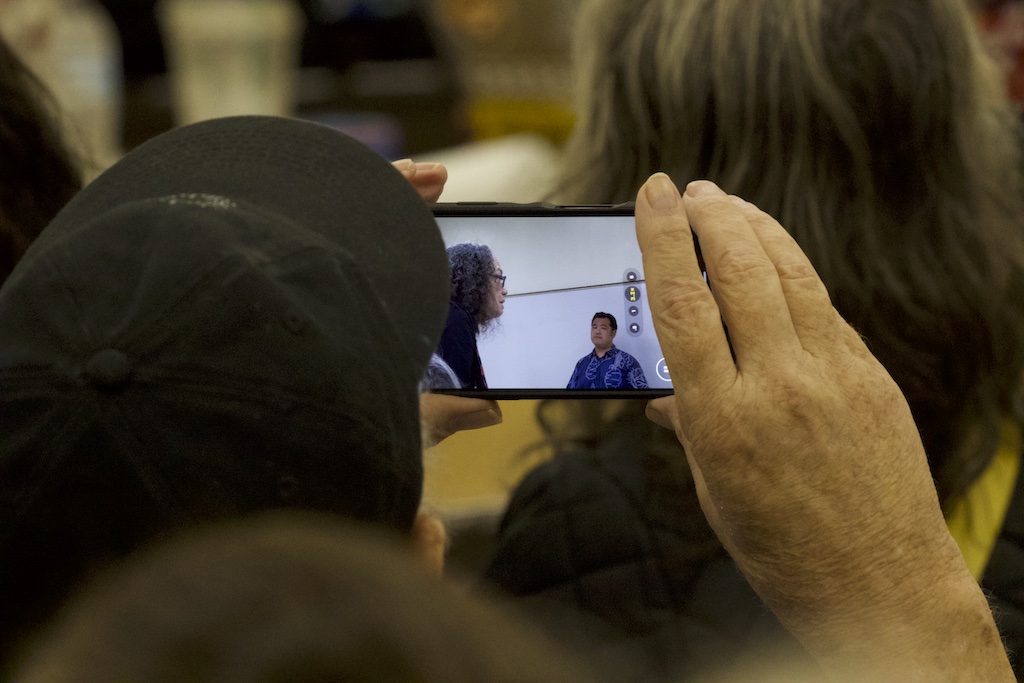
Project leaders said the campaign’s messaging was created in concert with Hawaiian cultural practitioners. Robbie Cabral, founder of Waikā’s parent company and an adviser on the project, wants to push an economic model that ensures that communities hosting geothermal plants receive a share of the revenues. It’s an approach she says has worked for Māori communities in New Zealand.
But that cultural messaging isn’t landing with everyone. The chairman of the County Council called one presentation — which leaned heavily on the use of Hawaiian deities — offensive.
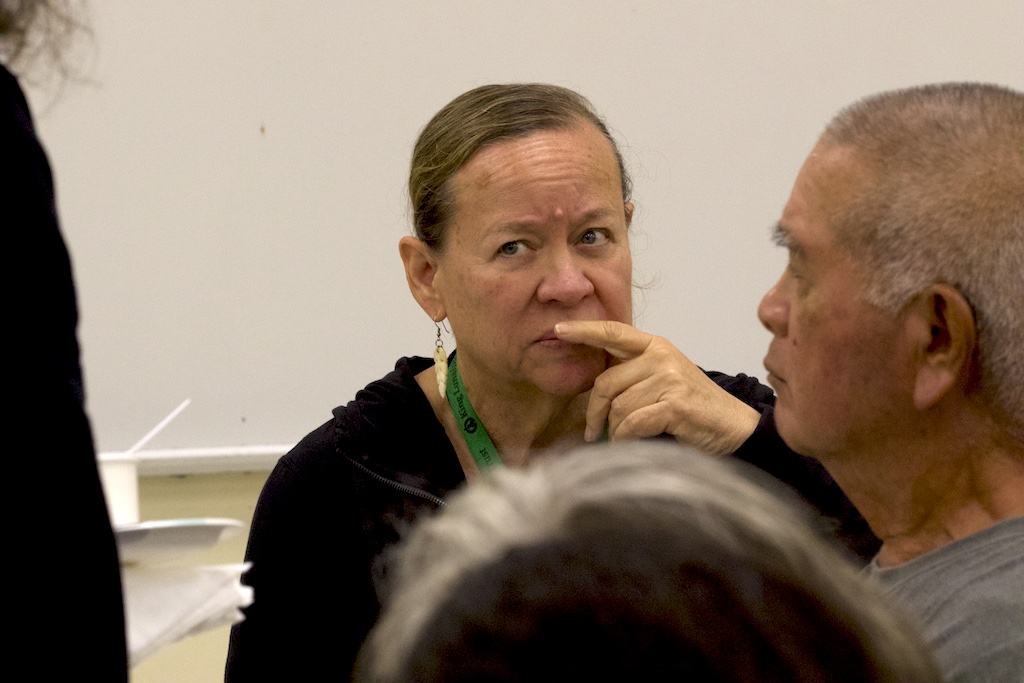
After the faceoff at the first meeting, organizers limited the back-and-forth at subsequent meetings, leaving attendees saying they didn’t have enough time for open dialogue.
Waikā has hired geologists from New Zealand. Yet those experts are not at meetings where audience questions about the technical aspects of geothermal plants, exploration and the state’s development plans were left hanging.
Geothermal consultants and social researchers without ties to this project contacted by Civil Beat all agreed that it’s a good idea to engage with communities before research starts and before developers get involved, as Waikā is doing. But they also stressed the importance of including objective experts who could answer technical questions, especially those concerning drilling and plant operations.
“Trust is very important,” said Alice Friser, a social scientist working with researchers and Indigenous groups in Canada. “If the process of getting their concerns or giving information looks biased or is not well put together, that endangers trust and that endangers the whole process.”
Contract Awarded Without Competition
Money for Waikā’s contract wound its way through several agencies, circumventing the usual procurement requirements for projects of this size. It was a chain reaction that started in the Legislature.
Waikā participated in a presentation to the Senate Ways and Means Committee in late 2023. It was hosted by the state Department of Hawaiian Home Lands as part of a pitch to lawmakers for $6 million to conduct geothermal exploration. But funds for the Hawaiian homes department failed to gain traction during the 2024 session.
Instead, the chairs of the Legislature’s appropriations committees — Sen. Donovan Dela Cruz and Rep. Kyle Yamashita — introduced companion bills to fund geothermal exploration and community outreach. The money in those bills was intended for the Hawaiʻi Technology Development Corp., a state agency.
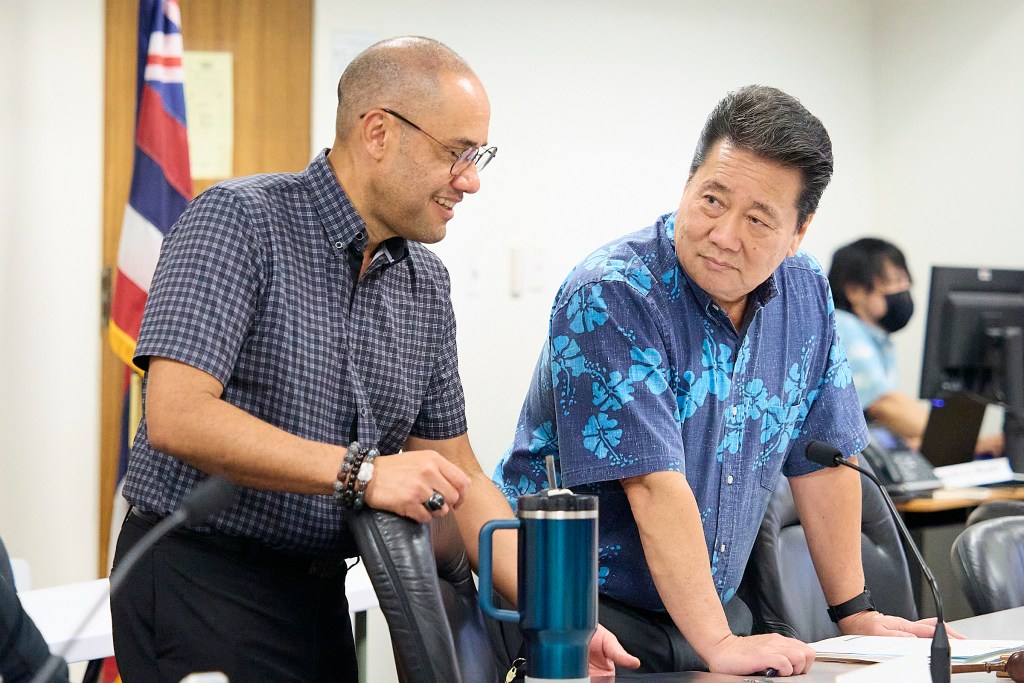
Those measures stalled, but the committees headed by Dela Cruz and Yamashita agreed in late April 2024 to insert $6 million for geothermal energy exploration directly into the tech agency’s budget. Gov. Josh Green later slashed that funding in half, to $3 million.
The tech agency awarded the geothermal contract to the University of Hawaiʻi in October and cited a provision in state law exempting the contract from competition because it was awarded directly to another government agency.
A week later, records show UH issued a subaward for $2.7 million to Waikā.
In fact, by then the tech agency had already identified Waikā as the company to do outreach work on the Big Island, according to Vassilis Syrmos, a former UH vice president whose office oversaw the subaward to Waikā. He described Waikā as the agency’s “preferred company.”

Cabral also acknowledged that Waikā had been working with the tech agency, and that Matt Kobayashi, its aerospace coordinator, was Waikā’s “conduit,” facilitating introductions to officials including those at UH.
Syrmos, who is now the provost of UH Mānoa, said the university agreed to be a pass-through entity for the funds since it already has geothermal research projects underway. The idea, he said, is for UH to be the state’s geothermal clearinghouse.
Waikā has been paid more than $1.4 million so far and according to quarterly progress reports submitted to UH and the state it has:
- Written 10 op-eds that have appeared in local media
- Lobbied state lawmakers to continue funding its work
- Written grant applications to the Office of Hawaiian Affairs and the U.S. Department of Energy for additional funding
- Created a three-page “roadmap” to commercial development — one page has an actual picture of a road that zigzags between the different stages of development
- Created a website populated with blog posts on geothermal
- Launched a social media campaign
- Developed a community engagement plan
- Hosted town hall events and other presentations
Principals of Waikā and its parent company declined to provide a detailed breakdown of costs for the items listed in its progress reports, citing proprietary vendor price information and the fact that its contract does not require the company to provide that level of financial detail to the state.
Kobayashi, who is listed as the state’s contact for Waikā’s contract, did not respond to requests for an interview. But a high-level budget detailing Waikā’s expected expenses to UH has the following breakdown:
Campaign Gets A Chilly Reception
The meeting in May was a rough night for the Waikā Consultants.
Cabral, alongside prominent lawyer and Hawaiian-rights activist Mililani Trask, spent a good portion of the evening arguing with the two dozen people who had come to listen to a presentation on geothermal energy. They came with questions, too.
Tensions peaked when anti-geothermal activist Terri Napeahi recalled a state official telling lawmakers that Puna — the site of the state’s only geothermal plant, which is controversial among residents — could be targeted for future other geothermal developments.
“I heard them say Puna,” Napeahi said.
“Bullshit,” Trask told her.
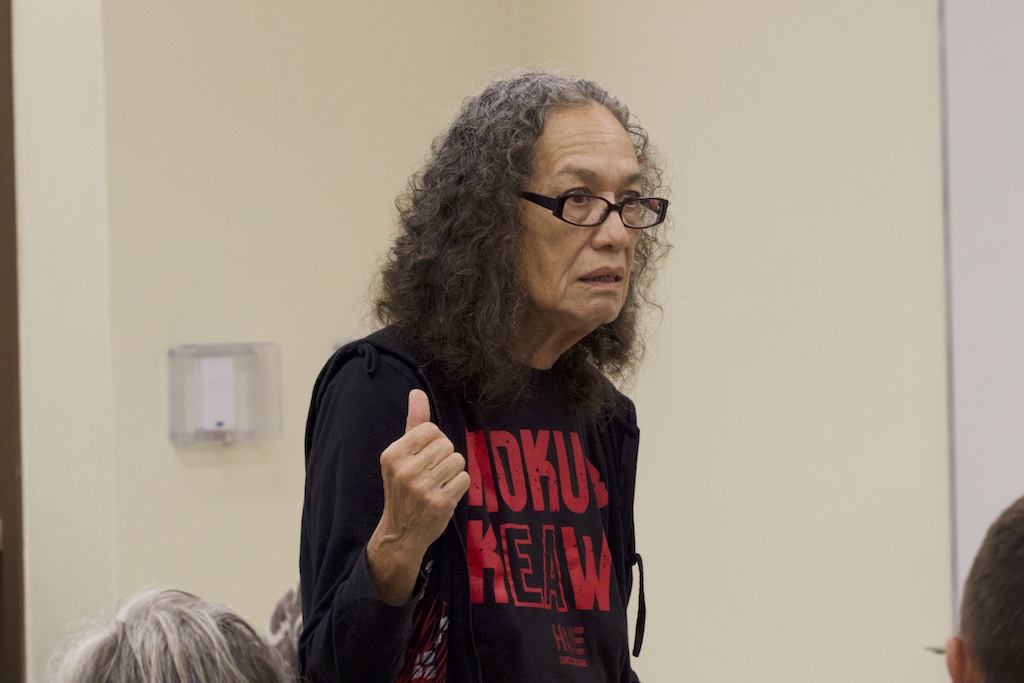
It was in fact not bullshit. A state official had said during hearings earlier this year that Puna as well as other locations on the Big Island could be considered for future projects.
The conversation devolved from there. Napeahi said Trask was in it for the money. Trask and Cabral yelled over Napeahi, saying “that’s not how it happened” and that Hawaiʻi needs clean energy.
Trask is a paid consultant for Waikā. But in meetings and panel discussions, it’s never explicitly stated that Trask and others who have appeared before the public are actually on Waikā’s payroll.
Take a panel hosted by Waikā in June as an example. Billed as a conversation with renewable energy and cultural experts, it was stacked with Waikā contractors.
Besides Trask, it featured former Sen. Malama Solomon, who is a paid Waikā adviser. Cy Bridges, a kumu hula from Oʻahu, joined in to provide a cultural justification for the use of geothermal energy on Hawaiʻi island. He is set to collect a salary of $62,500 for work on the Waikā contract this year.
Undergirding the debate over geothermal energy on the Big Island is the goddess Pele, who legends say made her home in the Kīlauea volcano after fleeing Tahiti.
Residents revere her; there are stories of the tempestuous deity incinerating spurned lovers and torching her sister’s gardens. Many who oppose geothermal developments believe that the act of drilling into a volcano to tap its heat is a desecration of Pele.
Waikā has hired advisers like Bridges to counter those beliefs.
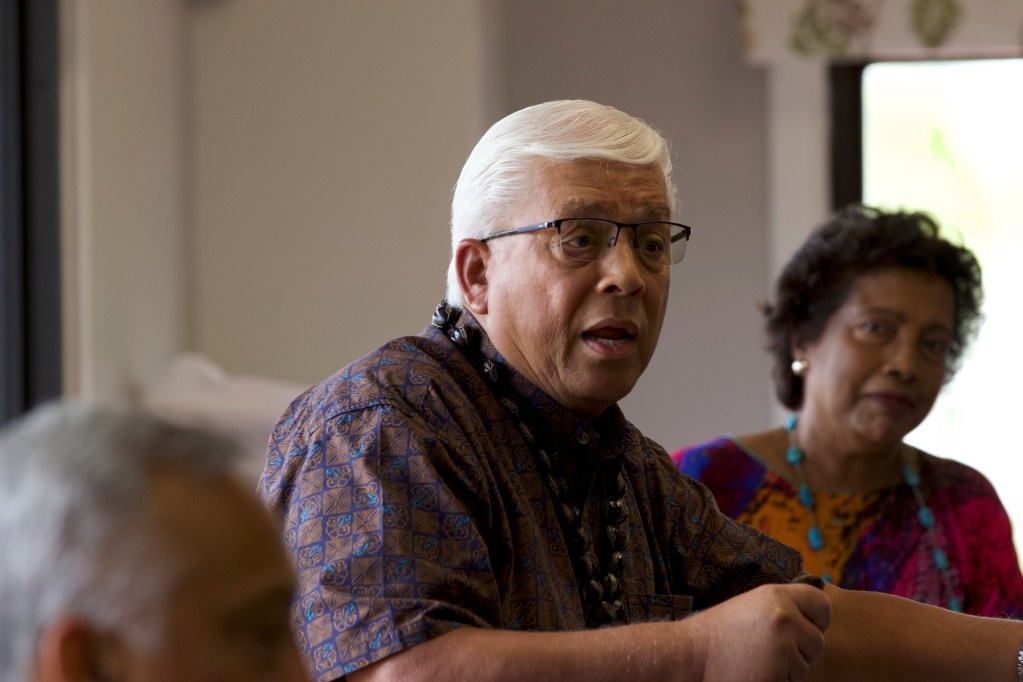
Speaking at the panel in June, he said geothermal heat is akin to the wind and the rain, which are already harnessed for renewable energy projects. Putting a spin on a newspaper story recounting a meeting between King Kalākaua and Thomas Edison, Bridges said Hawaiʻi’s penultimate king would have supported geothermal developments.
Regarding concerns that drilling disrespects Pele, he said that residents need not worry: Old religious practices were abandoned by Hawaiian monarchs and their priests long ago.
A written question from an audience member at that meeting accused Waikā of using Hawaiian culture to further commercial interests.
“If that’s what they’re feeling then so be it,” Solomon said in response to the question before reiterating that they intend to create a model that benefits Hawaiians.
The cultural messaging isn’t landing with everyone, including some key politicians in the county.
“I get leery when Hawaiian culture gets proselytized to pitch a corporation.”
Council member Rebecca Villegas
In early July, a Waikā contractor gave a presentation to the Hawaiʻi County Council tying the economic benefits of geothermal energy to Hawaiian culture. It was met with a swift rebuke from some council members.
“I found your presentation slightly redundant,” council member Matt Kanealii-Kleinfelder said.
“I get leery when Hawaiian culture gets proselytized to pitch a corporation,” council member Rebecca Villegas said during another part of the hearing.
Holeka Inaba, the council chair, took issue with a slide that said: “The fires of Lonomakua grants access to incinerate waste for energy.” Lonomakua controls volcanic fires and is a relative of Pele.
“To use our akua (god) in the sense of granting access to incineration for waste is disgusting,” Inaba said.
Waikā’s outreach efforts are backfiring in another way, too: Geothermal opponents, many of whom live near the Puna Geothermal Plant that they blame for health issues in the community, hosted their own town hall on July 25 as a direct response to Waikā’s campaign.
Presenters raised concerns over past violations at that plant and advocated for more solar energy as an alternative. But in the absence of clear information from the state about the operations and technical aspects of geothermal plants, misperceptions of how they actually work were allowed to persist.
‘You Can’t Just Start Exploring’
Cabral figured in a series of scandals in the early 2000s that involved defrauding the labor services organization Unity House.
In that case, she testified against a group of businessmen and attorneys who tried to steal money from Unity House through an elaborate banking scheme. Then she pleaded guilty to charges of tax evasion and wire fraud in a related case of a television special that never got off the ground.
Prosecutors alleged that the show was part of a kickback scheme intended to direct $150,000 to Cabral’s Honua Group — which she still runs today and which will be paid from the Waikā geothermal contract. That scheme did not succeed.
Cabral began working with Māori groups soon after completing her prison sentence. She said her company, Innovations Development Group, was integral to securing an agreement between a New Zealand energy developer and a Māori land trust that later saw revenues go to the Indigenous group.
She hopes to replicate that here in Hawaiʻi.
In an interview with Civil Beat, Cabral acknowledged that the community meetings on Hawaiʻi island have been difficult but she characterized that as part of the plan.
“It’s really an exercise to talk to the opposition, to give them a voice,” she said.
Yes, a majority of people who have attended Waikā’s meetings oppose geothermal, she said, but she doesn’t believe that’s representative of public opinion on the Big Island. A statewide energy survey in 2024 found that 55% of respondents there supported geothermal.
Of the clashes over culture, Cabral, who is Hawaiian herself and claims to be a descendant of Pele, said “we agree to disagree.” In her view, natural resources are the providence of the gods that have been made available for human use.
Waikā President Ryan Matsumoto said opposition has come primarily from the Puna district, where the current geothermal plant is located. Reaction has been more positive in areas like Kona, he said, on the opposite end of the island.
Matsumoto said that Waikā plans to allocate more time in future community meetings to have more dialogue and answer questions. Feedback gathered from the meetings will be used as the state narrows down potential development sites, Matsumoto said. But that won’t happen without additional state funding for more testing that has so far failed to clear the Legislature.
Cabral said that Waikā originally planned to allocate funds for surface and subsurface exploration that could potentially lead to development in the future, but believed it would be safer to focus on community engagement after the governor cut the Legislature’s allocation in half last year.
“You just can’t start exploring,” she said. “People have all these preconceived notions of what it’s going to do. You’ve got to correct the record.”
Syrmos, the UH Mānoa Provost, hopes Waikā’s work will lay a foundation in the community for researchers to begin a deeper exploration of geothermal resources on Hawaiʻi island, which is necessary to determine if another geothermal plant is even viable.
If another plant does become commercially viable, he said he’d also like to see the university get a cut of revenues to help fund college education for Native Hawaiian students.
Waikā’s contract requires it to coordinate with UH geologists, but that hasn’t happened yet because scientific exploration hasn’t been funded for the Big Island. Instead, Waikā has retained the geologists from the University of Auckland in New Zealand to assist with long-term development plans.
Cabral said the New Zealand geologists can provide business expertise as the state gets closer to a commercially viable plant. But whether Waikā will be part of any of that work going forward is yet to be seen: Its contract expires at the end of October.
Civil Beat’s coverage of environmental issues on Hawaiʻi island is supported in part by a grant from the Dorrance Family Foundation.

