

Hawaiʻi Needs Lawyers. Now, Mainland Attorneys Can Practice Here
Attorneys licensed in other states and in good standing can practice in Hawaiʻi without taking the state bar, as long as they work in criminal litigation for a government agency.
To help address serious staffing shortages at the state public defenders’ and county prosecutors’ offices, the Hawaiʻi Supreme Court is allowing licensed attorneys from other states to work at these agencies without taking the state bar exam.
The court issued an order in June establishing a two-year pilot program to allow lawyers who are licensed and in good standing in other states to work in Hawaiʻi without getting their state license. The program will only apply to those working in criminal litigation at government agencies, including the state Attorney General’s Office, the county prosecutor offices or the Office of the Public Defender.
All four county prosecutors, as well as Attorney General Anne Lopez and state Public Defender Jon Ikenaga, signed a letter that was sent to the court in January proposing the idea as a way to help them recruit more attorneys.

The lack of lawyers “now threatens the integrity of Hawaiʻi’s criminal justice system,” the letter says.
Last year, the Kailua-Kona Public Defender’s Office was so short-staffed that it had to stop accepting drunken driving cases and the most serious felony cases. Seven positions are still vacant in public defenders offices statewide.
“We believe this will be a great opportunity to expand recruitment and to invite people to come to Hawaiʻi who want to be here to serve the community through that type of work,” First Deputy Public Defender for the state Hayley Cheng said of the reciprocity program.
While attorneys in Hawaiʻi overwhelmingly see the move as a positive step, some say they want to see more focus on recruiting within the state.
“I believe we have to raise up our local kids, we have to give them opportunities,” said Megan Kau, a former Honolulu prosecutor who now has her own practice. “I feel like this is a drastic step, but I guess in drastic times, these leaders believe that drastic measures are warranted.”
‘We Just Don’t Have Enough Lawyers’
The number of students graduating from the University of Hawaiʻi William S. Richardson School of Law has remained relatively consistent over the past 20 years, hovering around 100 annually.
Applications for the upcoming fall semester were up 44% over last year, according to Dan Meisenzahl, spokesman for the university.
But the number of new lawyers joining the Hawaiʻi State Bar Association each year has gone down. In 2011, 206 new attorneys were admitted to the association compared with 138 in 2023, according to the association’s annual report.
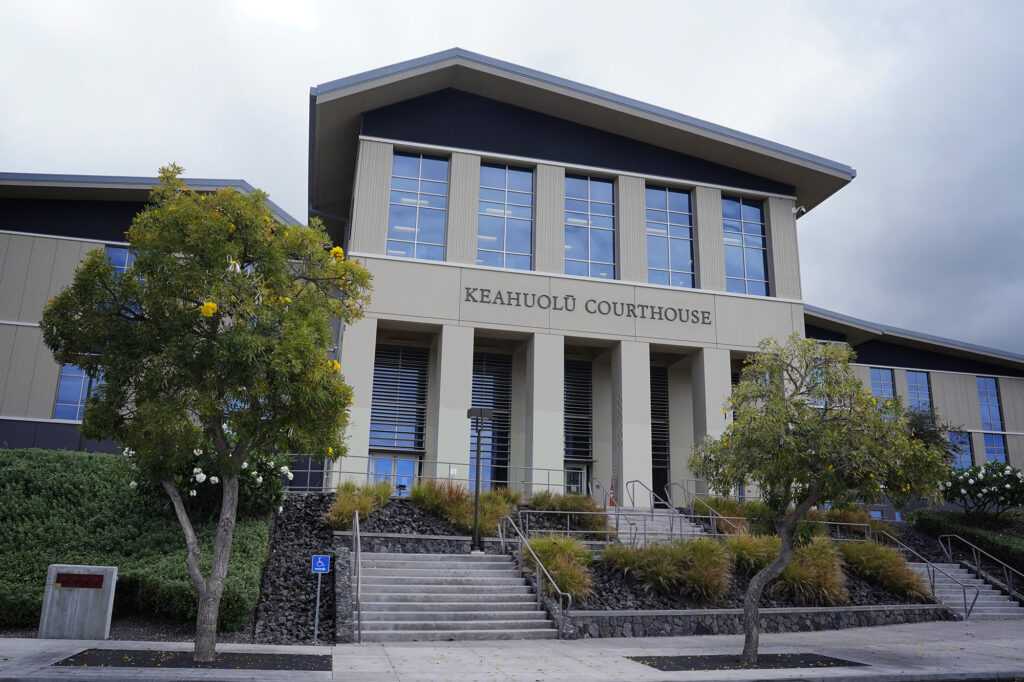
Association president Mark M. Murakami said the association hasn’t been getting enough new applicants to replace the older attorneys who are retiring and transitioning to inactive status.
Some other states have reciprocity programs, but they vary by state. Alaska, for example, as reciprocity agreements with 41 states, meaning attorneys licensed in those states do not need to take the Alaska bar exam to practice there.
In 2011, the bar association had 4,632 active members compared to 3,884 last year.
“We just aren’t getting as many, for whatever reason, to fill the gap,” Murakami said.
Of the active members, only 1,087 are government attorneys, according to the bar association.
The lack of attorneys is even more acute on the neighbor islands. Many people on the Big Island who need representation struggle to find someone who can take their cases, said Kori Weinberger, vice president of the West Hawaiʻi Bar Association.
“The shortage of attorneys is not just in the area of government lawyers,” she said. “We just don’t have enough lawyers in the state of Hawaiʻi.”
Joanne Hicks, a private criminal defense attorney on Maui, said government agencies also need to work on retention. Hicks, who formerly worked as a prosecutor on Maui, Kauaʻi and in Honolulu, said low pay and a lack of work-life balance can lead to high turnover.
Government agencies have tried raising their salaries to help with recruitment.
Lawmakers passed a 20% raise for public defenders this year for the first time in two decades, Cheng said. The salary for an entry-level public defender is now $91,000.
The Honolulu City Council approved a 5% salary bump for deputy prosecutors starting Sept. 1, bringing their minimum salary to $98,120, according to Honolulu Prosecuting Attorney Steve Alm’s office.
The salary range for deputy prosecutors in Maui County is now $122,000 to $213,000 after they got a 38% raise approved by the county salary commission this year.
Deputy prosecutors on the Big Island earn between $98,508 to $177,288 and on Kauaʻi they earn $120,000 to $141,289.
Increased Interest From Out Of State
But the pay hikes alone haven’t been enough to fill vacancies.
Since the state Supreme Court announced the reciprocity pilot program for lawyers licensed in other states, county prosecutors say they’ve already seen increased interest.
Maui County Prosecuting Attorney Andrew Martin said his office has so far received 70 applications since the program announcement in June, which he said is “unheard of.” Some of the applicants are local, but the majority are from out of state. The office is seeking to fill five vacancies.

Honolulu Prosecuting Attorney Steve Alm said his office is in the process of hiring seven out-of-state law clerks and deputy prosecutors through the reciprocity program. Once the new hires begin, the office will have two deputy prosecutor vacancies remaining.
Hawaiʻi County Prosecuting Attorney Kelden Waltjen said in an email that in the past, many out-of-state applicants seeking to relocate to the Big Island had applied to his office, but they were not willing to put themselves through another bar exam. He said he believes the reciprocity program will help him fill his office’s seven vacancies.
Kauaʻi County Prosecuting Attorney Rebecca Like said in an email that she’s hopeful her office will be able to attract more qualified candidates, but she wants to ensure they have an understanding of the state’s history and are a good fit. Her office has three vacancies.
The reciprocity program is set to expire Nov. 30, 2027. The government agencies will submit a report to the state Supreme Court by June 1, 2027, with recommendations on whether it should be permanently adopted.
“The shortage of attorneys is not just in the area of government lawyers. We just don’t have enough lawyers in the state of Hawaiʻi.”
Kori Weinberger of the West Hawaiʻi Bar Association
The president of the state bar association said he would prefer attorneys working in Hawaiʻi to be licensed in the state and to reflect the gender, ethnic and social demographics in the islands.
But, Murakami said, given the serious need to address staffing shortages, he thinks the move to recruit from out of state is a good one. Agencies like the public defenders’ and prosecutors’ offices need to be fully staffed so the criminal justice system can function properly.
“The criminal justice system is a core feature and a necessary feature of an ordered society and a civilized society,” he said. “We and the Judiciary just cannot tolerate long-term vacancies in these criminal litigation offices.”
Martin said he understands the desire to hire locally, but his office hasn’t received much interest from Hawaiʻi attorneys. The vacancy rate has hovered around 15%-20% since he became prosecutor over four years ago.
He said he will be “methodical” in choosing the right people for the job.
“It’s got to be the right fit,” he said. “People really need to understand what it means to come here and be a part of the community.”

