

Immigrant Sent Cash To Family In Mexico; ICE Used That To Nab Him On Oʻahu
Experts say it’s the first time they know of that money transfer records have been used to trace someone purely for reentering the U.S. illegally, in this case 17 years ago.
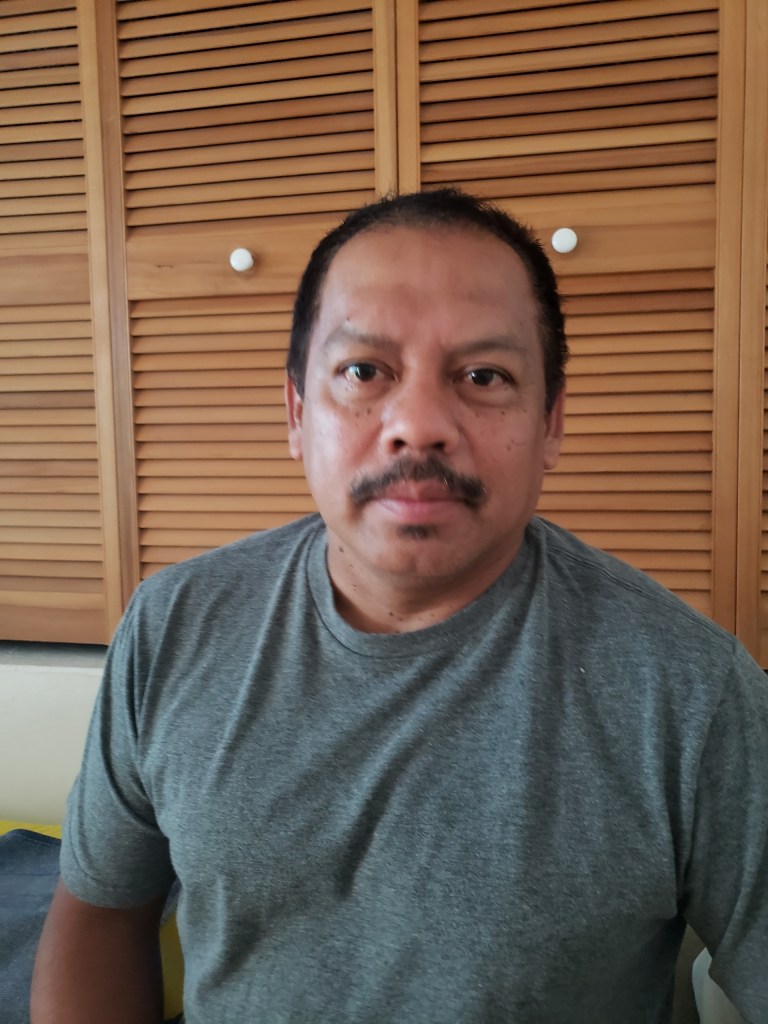
He lived quietly with his fiancée, tended to his tile and counter business, coached an adult soccer team until he suffered a leg injury. And when Gregorio Cordova Murrieta went to a MoneyGram in Pearl City to send cash to his family in Mexico — one of millions of people across the United States who regularly make similar transactions — he never imagined it would one day upend the life he’d built in Hawaiʻi.
But federal immigration agents have access, in part through an obscure database run by an Arizona nonprofit, to records of millions upon millions of money transfers made in the U.S., including names, addresses and other details identifying the senders.
And in what several experts said is the first such instance they know of that data being used to investigate a solely immigration-related offense, Homeland Security Investigations used it to track down Cordova, 48, a Mexican citizen, on Oʻahu.
Sending cash abroad through money transfers is perfectly legal, and the basis for a multibillion-dollar industry. But Cordova was being sought for illegally reentering the country after being stopped at the border for a third time — 17 years ago.
The tools that trapped him were originally intended to stop crimes such as money laundering and drug trafficking.
“We have not been aware of particular instances in which HSI was using this to enforce purely improper entry or reentry statutes,” said Daniel Werner, senior staff attorney at Just Futures Law, a Washington, D.C.-based law firm, who has researched the database and previously filed suit to try to block the government’s access to the records.
On June 15, immigration agents staked out the duplex on a dead-end street in ʻAiea where Cordova lived with his fiancée. They photographed him — in the criminal complaint, he was described as a “middle-aged male, tan skin, approximately 5-foot-4-inches to 5-foot-6-inches” — then used an anonymous source to confirm his identity.
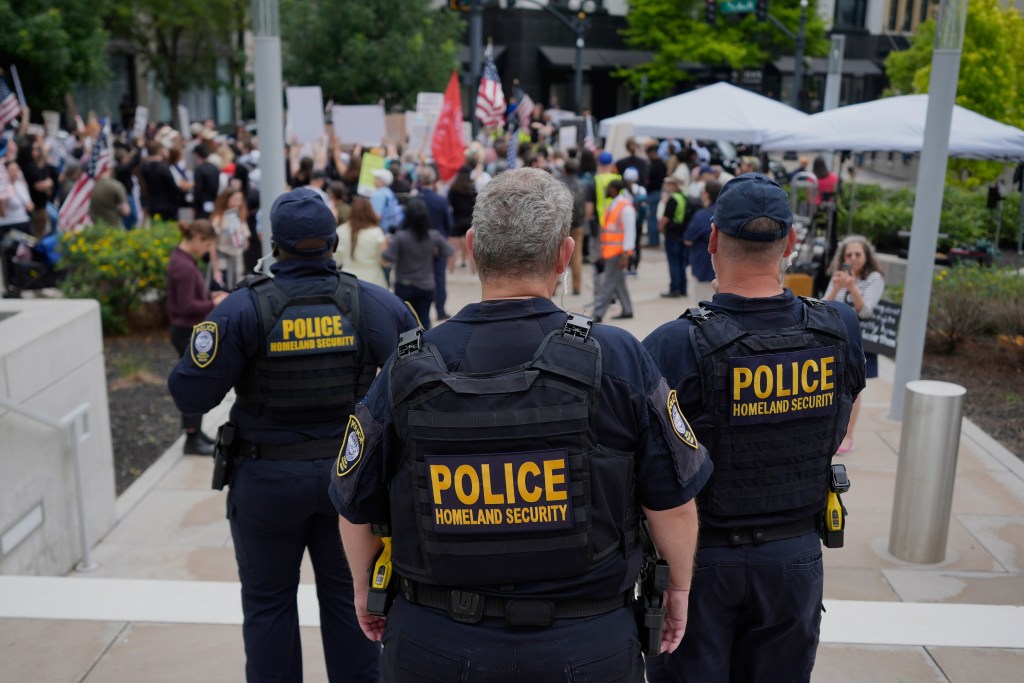
On Thursday, June 26, at 6:30 a.m., agents banged on Cordova’s door, in a scene replayed countless times nationwide as President Donald Trump’s mass deportation campaign continues to gain force.
“Then he kissed me, and they took him away.”
Grace Perez Parra
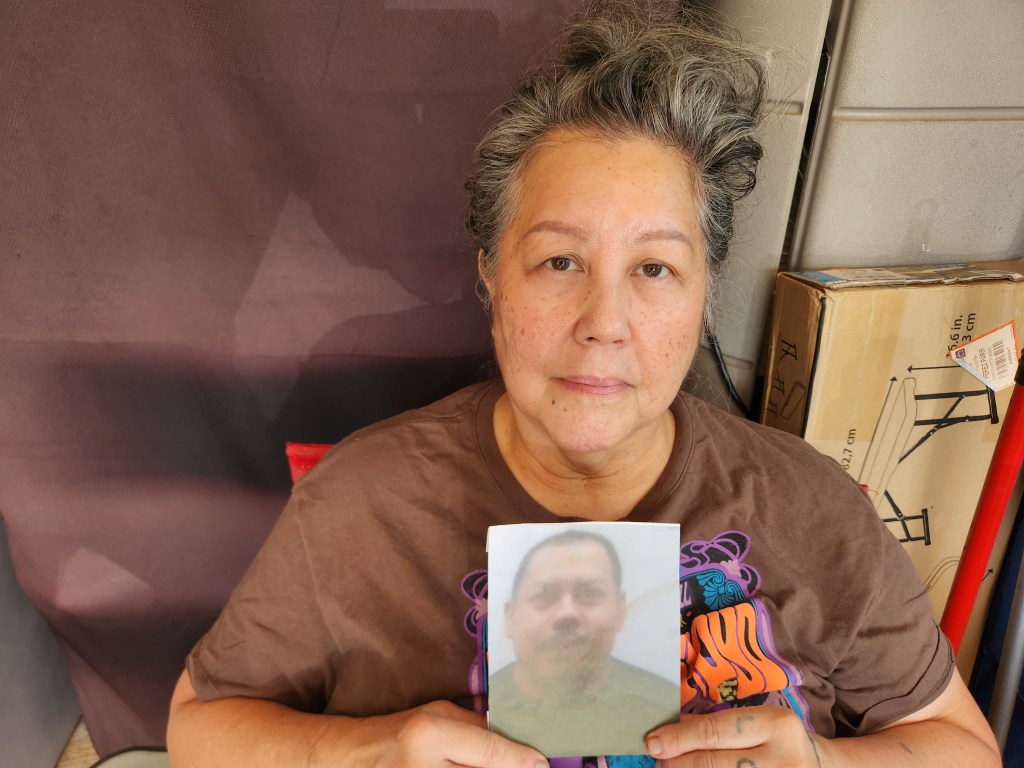
Grace Perez Parra, Cordova’s fiancée, recalled the events in an interview with Civil Beat: “He said, ‘Mama, that’s ICE.’ He knew already because he saw them in the security camera.” Then, she said, agents taped over the cameras.
Parra opened the door and asked to see a warrant. The agents showed her one, entered and handcuffed Cordova.
“He said ‘Mama, no worry,’” Parra said. “Then he kissed me, and they took him away.”
Collecting Data In Bulk
The U.S. Immigration and Customs Enforcement agency’s most likely access to Cordova’s money transfer information came through a database maintained by the nonprofit Transaction Record Analysis Center, to which companies such as Western Union and MoneyGram have submitted transaction data.
TRAC was set up in 2014 following a 2010 settlement between the Arizona Attorney General’s Office and Western Union, which was required to send information about transfers over $500 — including details that identify the sender — to TRAC. That settlement came after the office investigated the company for facilitating money laundering and it covered transfers to and from Mexico. In the U.S., they were limited to the border states: Arizona, California, New Mexico and Texas.
“When that got unveiled, we’re talking about a sweeping system going after people really for nothing more than spending their own money,” said Nick Anthony, a policy analyst for the Libertarian Cato Institute who specializes in financial surveillance.
Since October 2021, Cordova had sent cash to people in Mexico 11 times in a practice known as making a remittance, according to the criminal complaint an HSI agent filed in support of the arrest warrant. He used his Mexican passport for identification and gave his ʻAiea address.
Remittances from the U.S. totaled $93 billion in 2024, two-thirds of which went to Mexico, according to the Niskanen Center, a public policy and research organization that positions itself as a bridge between polarized political ideologies about the government’s role and the marketplace.
Globally, migrants send an average of 15% of their income home to their country of origin, said Cassie Zimmer-Wong, a Niskanen Center immigration policy analyst. “That money is funding education, putting a roof on a house, making sure a family is fed, helping them invest in a small business. So this is really important on the individual level.”
The federal government also has access to money transfer records through the Bank Secrecy Act, said Anthony of the Cato Institute. That law requires financial institutions including banks and money service companies to submit detailed data about a range of financial transactions — more than 27 million reports a year at last count — to the federal Financial Crimes Enforcement Network, or FINCEN. Those are generally larger transactions, but the institutions can disclose smaller transactions, too.

When he sent cash to Mexico from the MoneyGram office in the Pearl City Walmart, or the Western Union branch operating at the customer service counter at the ʻAiea Safeway, Cordova typified an immigrant population that relies on money service businesses. Such storefront operations charge lower fees than banks, offer more collection points in the destination country and provide an option for people without bank accounts.
For many years, Cordova’s money went to his five children in the Mexican state of Puebla, Parra said. Now that most of them are grown, she said he supports his elderly parents and youngest daughter, helping with rent and tuition at the cosmetology school she attends.
Life Got In The Way
Parra, originally from Mākaha, met Cordova 15 years ago during a Cinco de Mayo event at Aloha Tower. He is from Teziutlan, a city in Puebla in central-east Mexico. While he calls her Mama, she usually calls him Pa.
Parra and Cordova never had children themselves, she said, but he was always generous to hers from a previous marriage.
“He wasn’t scared, because people do it all the time. He wasn’t walking on eggshells.”
Grace Perez Parra
While she knew he was undocumented, it was not something they generally talked about. And though they meant to marry and sort out his residency status, life and all the things it requires interfered.
“We got caught up in how years go by so fast,” she said.
In their early years together, she had encouraged him to stay away from drinking to excess, she said, and he had focused on his business, setting tile and fabricating and installing counters for clients around Oʻahu.
“He’s a hard worker, a good person, a sincere person,” she said. “Just a typical Hispanic male trying to make a good living.”
He paid his taxes every year, she said; ICE seized those tax returns when they arrested him. Never, Parra added, had he been in trouble with the law. Cordova’s federal public defender, Jacquelyn Esser, confirmed that he has no criminal record other than the illegal reentry charge.
The criminal complaint filed in U.S. District Court in Honolulu described how after being detained at the border and sent back in 2004, Cordova was discovered trying to enter the country with fake documents on April 1, 2008, and banned from reentry for five years.
According to a copy of the interview conducted with him at the time by a Customs and Border Patrol agent, Cordova said he had left home to find work and was headed for Atlanta, where he had friends.

Cordova didn’t give up. Two days later, he was caught and banned from reentering for 20 years. The complaint includes no details about when Cordova managed to successfully make it to the U.S., and when he came to Hawaiʻi. Parra said she doesn’t know for sure either.
Parra said that on many occasions, she would send money to Cordova’s daughter on his behalf, using the Western Union phone app. But when Cordova went to the store himself to send cash — usually between $1,700 and $2,200 — he never thought twice.
“He wasn’t scared, because people do it all the time,” said Parra, a franchise restaurant manager. “He wasn’t walking on eggshells. ‘No, Mama, they’re gonna get criminals.’”
Fears Of 4th Amendment Violations
Critics believe the practice of collecting massive amounts of data about financial transactions without evidence that they were in service of, for example, money laundering, violates the Fourth Amendment. That provision in the U.S. Constitution protects people from unreasonable search and seizure by the government.
That means law enforcement is generally required to get a warrant based on probable cause before conducting a search or seizing property such as money transfer transaction records.
“We’re talking about a sweeping system going after people really for nothing more than spending their own money.”
Nick Anthony, The Cato Institute
“They are sidestepping that constitutional requirement,” said Emerald Tse, an associate at the Georgetown University Law School Center on Privacy and Technology who focuses on immigrant communities and surveillance.
The records offer a massive potential resource for immigration agents. As of summer 2024, TRAC contained records of 337 million transactions, according to an October 2024 Homeland Security Investigations bulletin.
In 2022 and 2023, Oregon Sen. Ron Wyden, a Democrat, announced he had learned that HSI had collected records of about 6 million remittance transactions since 2019 using the database, from Western Union, MoneyGram, Viamericas and others. Those transactions involved a wider region than allowed in the original Arizona settlement, too — tying in transfers across the U.S. with countries around the globe, ranging from Malaysia to Panama to Canada.
Homeland Security Investigations, Wyden said, had issued what are known as customs summonses for the data in bulk — instead of seeking information about specific individual transactions — even though by law those types of subpoenas only apply to investigations related to merchandise imports and customs duties.
“This unorthodox arrangement between state law enforcement, DHS and DOJ agencies to collect bulk money-transfer data raises a number of concerns about surveillance disproportionately affecting low income, minority and immigrant communities,” Wyden wrote, referring to the U.S. Department of Homeland Security and the Department of Justice.
Rich Lebel, TRAC’s executive director, responded to Civil Beat in an email, saying that “the majority of cases TRAC has historically, and continues to be utilized for, is money laundering related to drug trafficking.”
TRAC data, Lebel said, “is not conducive to immigration related investigations” because the amounts being transferred are typically under the $500 threshold and transaction records don’t identify immigration status.
He declined to answer questions about how many transaction records TRAC currently holds, whether ICE and Homeland Security Investigations are using it for investigations or whether data is collected through subpoenas or voluntary means.
In his 2023 letter to the U.S. Department of Justice Inspector General, Wyden said that once he raised concerns, HSI — which for at least one year also helped fund TRAC — halted the practice to review it for privacy violations.
However, observers said the agency appears to have started it up again.
“With money transfer companies, specifically, my understanding is that (HSI agents) have a regular practice of making bulk data requests,” Tse said.
Cordova’s case, she said, “might give us insight into the lengths that this current administration is going to and how it’s acting differently with how it wants to carry out immigration enforcement.”
In Court, A Changed Plea
On Aug. 6, Cordova was scheduled to appear in U.S. District Court on Ala Moana Boulevard. A sign outside the courtroom’s door said it was named Aha Kaulike, or Place of Equity.
As Parra waited for her fiancé to enter the courtroom, a man leaned over the bench seat from behind her. He introduced himself as an HSI agent involved in Cordova’s arrest. He held out a small plastic bag containing a red, woven bracelet that Cordova wore for good luck, one he’d had to surrender when he was arrested.
The agent, Murray Acosta, said Cordova had asked that it be returned to Parra.
She thanked him and put the bag in her pocket. Seconds later Cordova entered the room wearing a white jumpsuit. He looked somber but as he glanced at her, he winked.
“I returned to the United States knowing I wasn’t supposed to enter the United States again.”
Gregorio Cordova Murrieta
Later, as he sat next to his interpreter and Esser, his public defender, Cordova turned and blew Parra a kiss.
He was there to change his plea — from not guilty to guilty.
Judge Micah Smith asked Cordova a series of questions, which he answered through an interpreter.
He had attended school in Mexico through second grade. Yes, he understood the court proceedings. His most recent employment was as a tiler. He’d taken no drugs, prescribed or not, in the last 24 hours. He was satisfied with his legal representation.
The indictment stated that after being removed from the U.S. in 2008, he was found in Honolulu this summer. It had been read to him in Spanish, he said. He understood that he faced a penalty of up to two years in prison, a fine of as much as $250,000 and almost certain deportation.
He knew that by pleading guilty, he was waiving his right to a trial by jury that would have had to find him guilty beyond a reasonable doubt. He knew, he told the judge, that despite pleading guilty he was still eligible for any or all of the potential penalties.
Smith asked Cordova to explain “in your own words what makes you guilty.”

“I returned to the United States knowing I wasn’t supposed to enter the United States again,” Cordova said.
Moments later, he pleaded guilty.
As he left the courtroom, Cordova turned to Parra and mouthed some words. They were imperceptible to most observers, but Parra understood.
“He was saying, ‘No worry, Mama. No cry. I love you. Be strong,’” she explained.
She said he changed his plea for simple reasons: His parents are sick and he wants to see them before they die. “And he just wants to go home.”
She will visit him there, of course, she said. Perhaps she will move there one day, too, who knows.
“It’s very overwhelming for me,” she said. “It just makes me so angry.”
Cordova is scheduled to be sentenced on Sept. 9. Until then his home is the fourth floor of the Federal Detention Center on Elliott Street in Honolulu. He gets a limited number of minutes daily for phone calls, Parra said, and saves those for her and his family in Mexico.
ICE did not respond to requests for comment about his case or HSI’s use of money transfer records to track people down.
Civil Beat contacted the America First Policy Institute and The Heritage Foundation — architects of the Project 2025 roadmap for the current immigration clampdown — to ask about the appropriate balance between privacy and national security in the context of immigration enforcement. Neither responded.
In terms of privacy, Zimmer-Wong, the immigration analyst with the Niskanen Center, said there are various factors to consider.
“To search financial transactions without cause or warrant feels like a massive overstep,” she said, but she also questioned the use of federal immigration resources.
“What does it mean,” she said, “when we take the people who are supposed to be tracking terrorism and global organized crime, when we take them away from their desks and put them on tracking Western Union transactions?”

