

The First Ke Iki Beach Turtle Hatchlings In Four Years Head For The Waves
The first of seven turtle nests on the North Shore beach have emerged after volunteers raised alarms about disturbance from beachgoers and houses nearby.
As the sun rose on July 27, a volunteer from the conservation group Mālama i nā Honu made her way down Ke Iki Beach and discovered thousands of tiny marks dotting the sand near one of the Hawaiian green sea turtle nests there, officially dubbed KEBE #2.
The tracks all led in the same direction: the ocean. It appeared that this highly anticipated nest emergence had a happy ending. But it would take some digging to confirm the hatchlings had all made it out during the night.
In the past, the group’s volunteers would have taken night shifts to watch the nests. But the poor behaviors of nighttime beachgoers led them to cancel the shift for safety reasons — the same behaviors that threatened the turtles.
For weeks, illegal activities at Ke Iki Beach on the North Shore of Oʻahu have driven concerns for the safety of seven honu nests: bonfires, light pollution and beach driving.
While there had been the occasional nest on this beach in the past, this is the first time they have appeared on this scale. All seven nests, likely laid by a single female who herself was born on Ke Iki Beach, created a unique challenge for conservation groups, residents and, most importantly, her offspring.
Soon after learning that her first hatchlings had emerged, Mālama i nā Honu volunteer coordinator Debbie Herrera and her team returned to dig up the newly emerged nest in search of information about the new turtles and their species. Sometimes they find hatchlings still buried in sand that they can send on their way.
When sea turtle hatchlings emerge, they do so together, according to Herrera. She said that when the first turtle starts to peck at its eggshell from the inside, it sets off a chain reaction and all of them know it’s time to go.
First, Find Your Exit Buddy
The timing is important, because the ping pong ball-sized turtles must use each other as a ladder to push their way through several feet of sand to the surface. A late hatchling could find itself with no way to escape on its own.
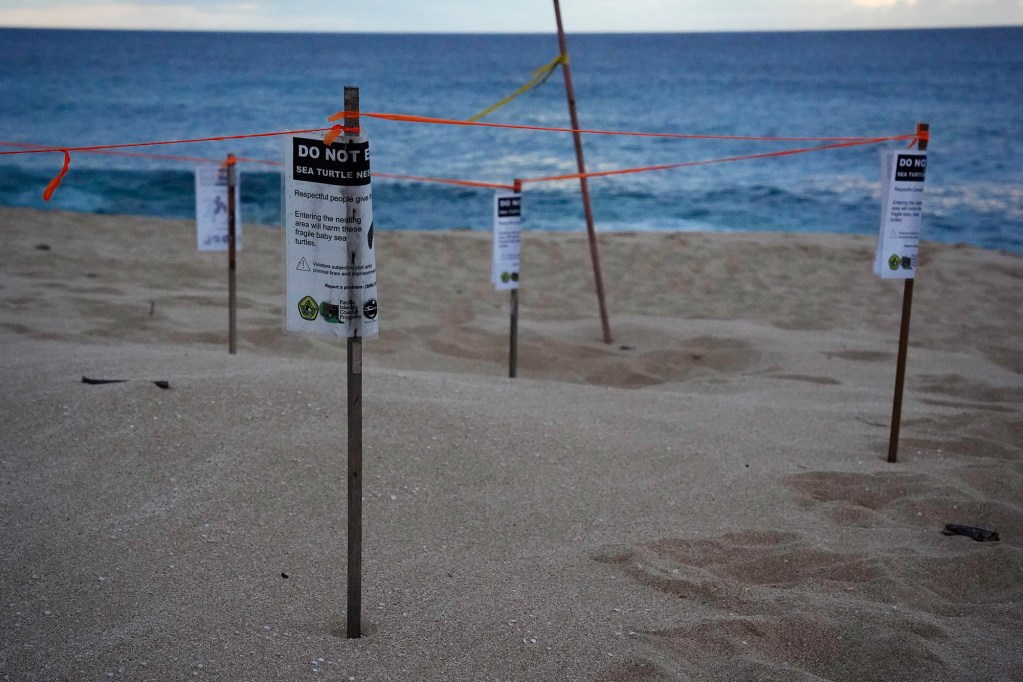
That is assuming that the sand has not been compacted by someone driving on the beach, trapping the entire clutch — or group — beneath the surface. That’s been an issue at Ke Iki and other hatching sites across Oʻahu, Sheldon Plentovich of the U.S. Fish and Wildlife Service said, largely due to people illegally driving trucks, ATVs and golf carts across the sand. Lifeguards regularly patrol beaches in their vehicles, but they’ve been trained to avoid the nesting sites.
Once the hatchlings surface, Plentovich said, they use the light of the moon and stars reflecting on the ocean to orient themselves for the journey. If they are not disoriented by the lights of beach rentals and bonfires, or caught by crabs along the way, the turtles enter the water and disappear into the open ocean to mature, only returning if they reach adulthood.
Rip It, Roll It and Punch It
Mālama i nā Honu works with volunteers to excavate the nests that have already emerged within three days of an initial hatching event. In most cases they try to allow 72 hours so that the hatchlings can emerge naturally. However, due to the increased threats at the Ke Iki Beach site, they received permission to dig up the nest 24 hours after the first emergence.
The group holds an official turtle excavation permit from the U.S. Fish and Wildlife Service and the National Oceanic and Atmospheric Administration to do their work. Without that, engaging with a federally recognized threatened or endangered species is a federal crime with a fine of up to $50,000 and/or a year in jail.
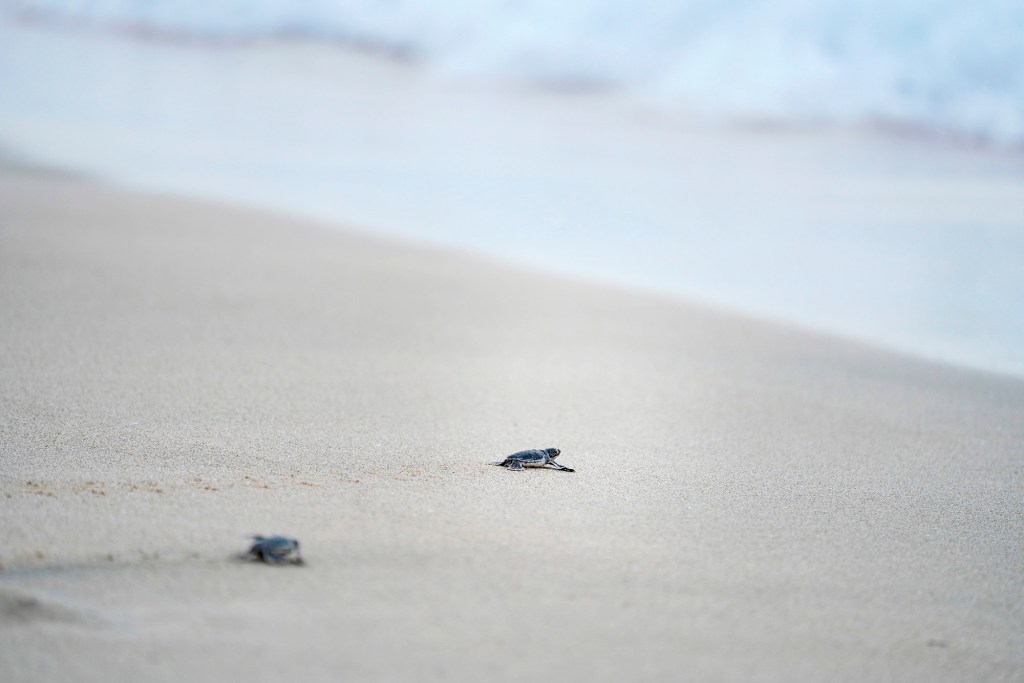
Herrera arrived at Ke Iki Beach at 5 p.m. on July 27 and waited for the volunteers to join her. She engaged with people on the beach and invited them to watch the process. A family staying nearby jumped at the opportunity.
After an hour of digging and several sand collapses, the team confirmed its assumptions: All of the fertilized eggs not only hatched, but made it out of the nest and toward the ocean, sending 56 new baby turtles into the ocean. Only time will tell if any of them will be among the 1 in 1,000 sea turtles to reach adulthood.
As for the remaining nests, having made it safely through Hawaiʻi’s recent tsunami event, which brought higher than normal waves, they will continue to hatch over the coming months.
Civil Beat’s coverage of climate change and the environment is supported by The Healy Foundation, the Marisla Fund of the Hawai‘i Community Foundation and the Frost Family Foundation.

