

Chick-Fil-A Plans To Expand. Is Honolulu Traffic Ready?
A permitting loophole means the popular fast-food chain known for creating traffic snarls isn’t required to do traffic studies, and the city can’t make them.
Neighborhood boards and Honolulu residents are renewing calls for the city to address traffic and safety issues they say continue more than two years after Chick-fil-A opened its drive-through restaurant in the dense neighborhood of Makiki.
They’re asking the city to enforce a traffic management plan the fast-food giant submitted with its building application, meant to ensure that traffic didn’t back up onto one of Honolulu’s busiest traffic corridors.
While long lines at fast-food restaurants are nothing new, residents say the problems surrounding the Makiki Chick-fil-A are unique and could have been foreseen if a proper traffic study had been conducted before the operation opened.
But a permit loophole means that the company was able to sidestep the detailed traffic studies that often accompany its new operations elsewhere.
The situation illustrates a bigger problem with the lack of a consistent city policy for managing high volume traffic generated by a drive-through business known for creating traffic problems on the mainland.
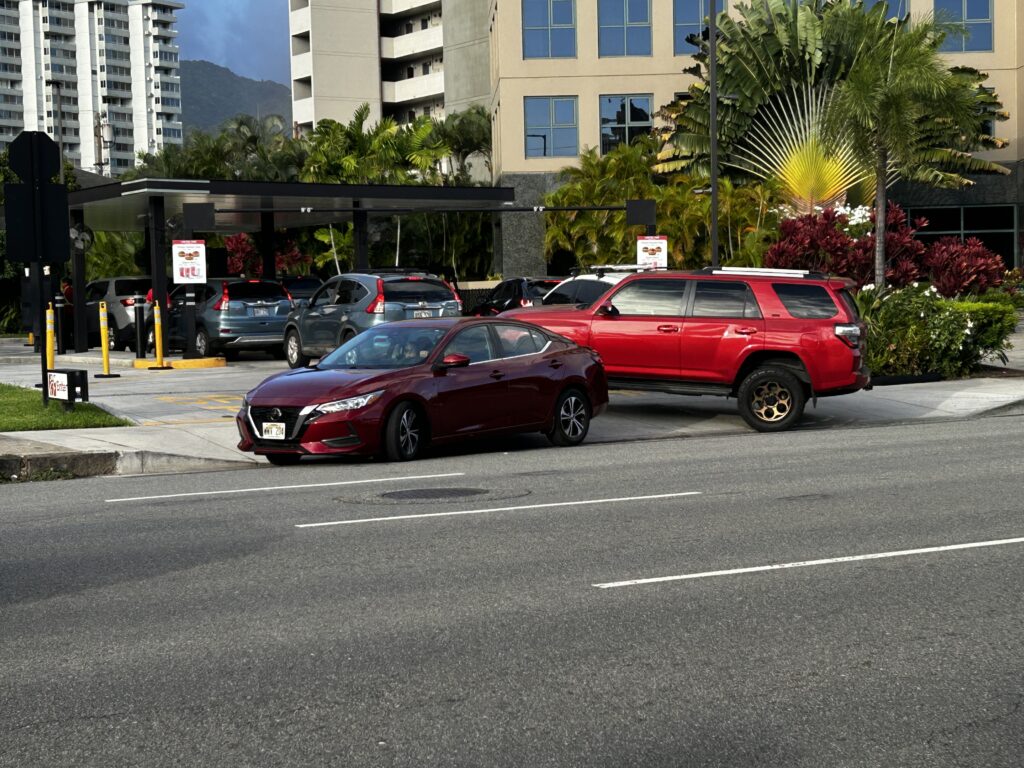
Traffic congestion has “significantly worsened” since the Chick-fil-A opened in July 2023, according to a resolution adopted in May by the Downtown-Chinatown Neighborhood Board, “creating hazardous conditions for motorists and pedestrians.”
At that time, the board asked the city to conduct a study of the traffic and safety conditions around the restaurant, a resolution similar to one the Makiki-Lower Punchbowl-Tantalus Neighborhood Board looks likely to adopt at a special meeting on Thursday.
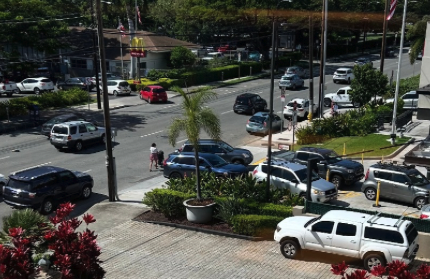
“During peak hours, the entire first lane of Beretania, stretching between Pensacola and the driveway entrance to Chick-fil-A, is a Chick-fil-A customer line,” Peter Stone, a resident of the condominiums that overlook the restaurant, told Civil Beat.
The problem is particularly bad between 11 a.m. and 1 p.m. and between 5 p.m. and 8 p.m., he said, and worse on Fridays.
Traffic Magnet
The biggest issue for condo residents, according to Stone, is that the line into the driveway of Chick-fil-A often blocks the exit to their building.
“Drivers have no consciousness of the fact that they are blocking our driveway,” he said. “They’re usually on their phones.”
He has sent four letters to the South Beretania Street franchisee since last October asking to meet to discuss the issues, but received no response. Stone said the company needs to do more to address the adverse conditions that the 100% drive-through operation creates.
“I’m astonished, because I’m a lawyer,” Stone said. “If you create a traffic hazard and you are being given notice that there’s a traffic hazard, then you should meet with your neighbors. There could be a very serious accident.”
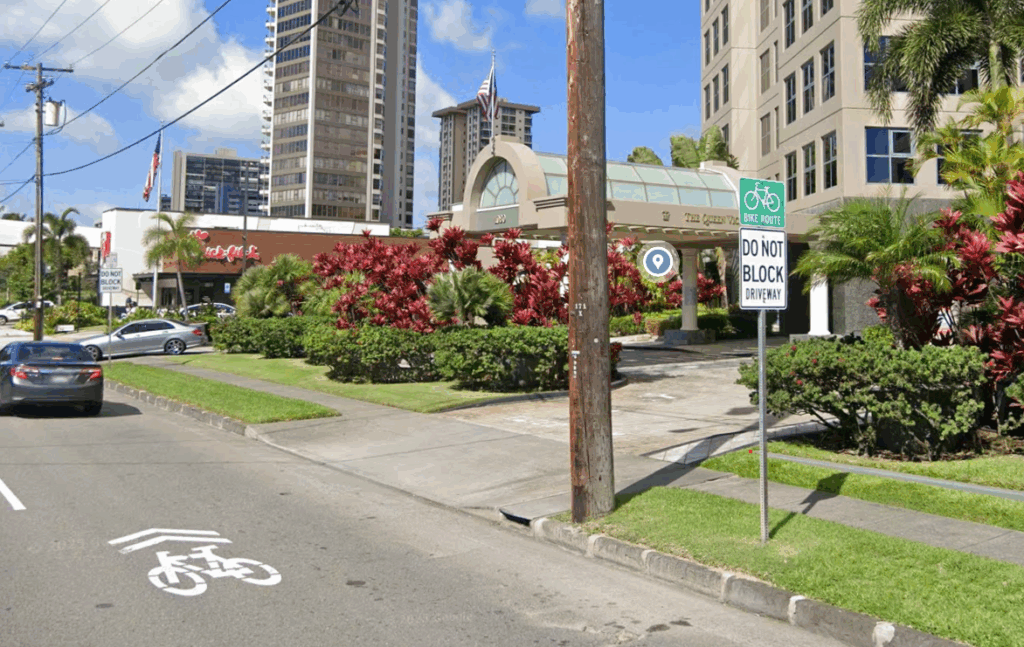
Deborah Uemura, who also lives in the Queen Victoria Residences and runs all her errands on foot, said she often walks around customers blocking the entrance to the Chick-fil-A driveway, and has seen mothers with strollers weave out onto Beretania to get around vehicles.
“Fortunately we haven’t had an emergency vehicle situation yet,” she said.
Kevin Fung, community relations director for the Beretania Street Chick-fil-A, referred all media requests to the corporate media office. Don Ikeler, Chick-fil-A’s West Region development manager who wrote the traffic management plan, did not respond to voicemails and emails seeking comment.
The popular chain has nearly half of the fast-food chicken market in the U.S., and generated some $23 billion in sales in 2024. It also has an outsized impact on traffic wherever its located because it relies on drive-through orders.
Local governments have used a range of solutions to address the issue including public nuisance threats, lawsuits, lengthy traffic studies and in one instance in North Carolina, a complete demolition and rebuild to address the traffic congestion.
Chick-fil-A stores in 20 sites across Florida generated nearly twice the trips as McDonald’s restaurants in similar locations, according to a Florida Department of Transportation study.
The 2024 study specifically noted impacts on surrounding traffic, “including queueing from drive-throughs spilling over onto adjacent roadways.”
Traffic Studies Vs. Management Plans
Traffic studies analyze existing capacity of streets and intersections as well as potential impacts the project may have on those conditions, while traffic management plans focus on how site managers will handle drive-through operations and minimize impacts.
In this instance, a workaround in local zoning laws meant Chick-fil-A wasn’t required to do a formal traffic study for Makiki because the building plans only had to show they conformed to the existing zoning. That applies to other fast-food outlets as well.
“If only a building permit is required, and they have the zoning, then there are no avenues to require a traffic study with the building permit,” Department of Planning and Permitting spokesman Davis Pitner said in an email.
A traffic management plan was more appropriate anyway in this case since Beretania Street “has more than enough capacity,” he said.
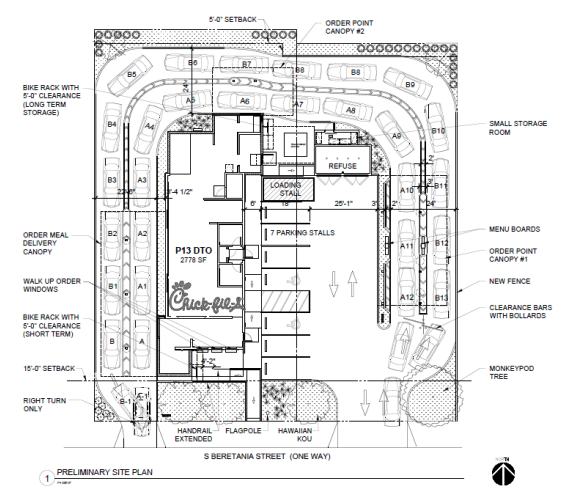
Chick-fil-A’s temporary five-page Traffic Management Plan from 2023 showed how it would redesign the site to increase vehicle capacity in the drive-through from 13 to 30, using two lanes to “minimize the potential for vehicles to back-up on Beretania.”
But Stone said the restaurant isn’t adhering to the plan. The operation instead forces vehicles to merge into one lane to collect their orders before they drive off. “The worst driveway from the safety point of view, is the exit driveway,” he said.
The operation also eliminated seven parking spots for mobile order pickup, meaning it’s now a 100% drive-through operation. That has led some customers to park illegally or block right-of-way, Stone said. He says he has a video showing a car blocking the fire hydrant in front of the restaurant while the occupants collected their order.
DPP’s Traffic Review Branch works with the Department of Transportation Services and the owner to implement the traffic management plan, Pitner said. A traffic management plan is a living document, he said, so alterations can and do occur.
‘Traffic Is A Huge Issue For Us’
In response to the concerns, employees from the Traffic Review Branch have conducted several site visits but found nothing so far that “warrants additional traffic engineering measures at this time,” the cityʻs deputy director of customer service Megan Johnson told the Makiki-Lower Punchbowl-Tantalus Neighborhood Board in May.
However, Department of Transportation Services spokesman Travis Ota told Civil Beat in an email that the agency had installed additional signage including “Do Not Block” driveway signs at the Queen Victoria Residences following the site visits and would continue to monitor the situation.
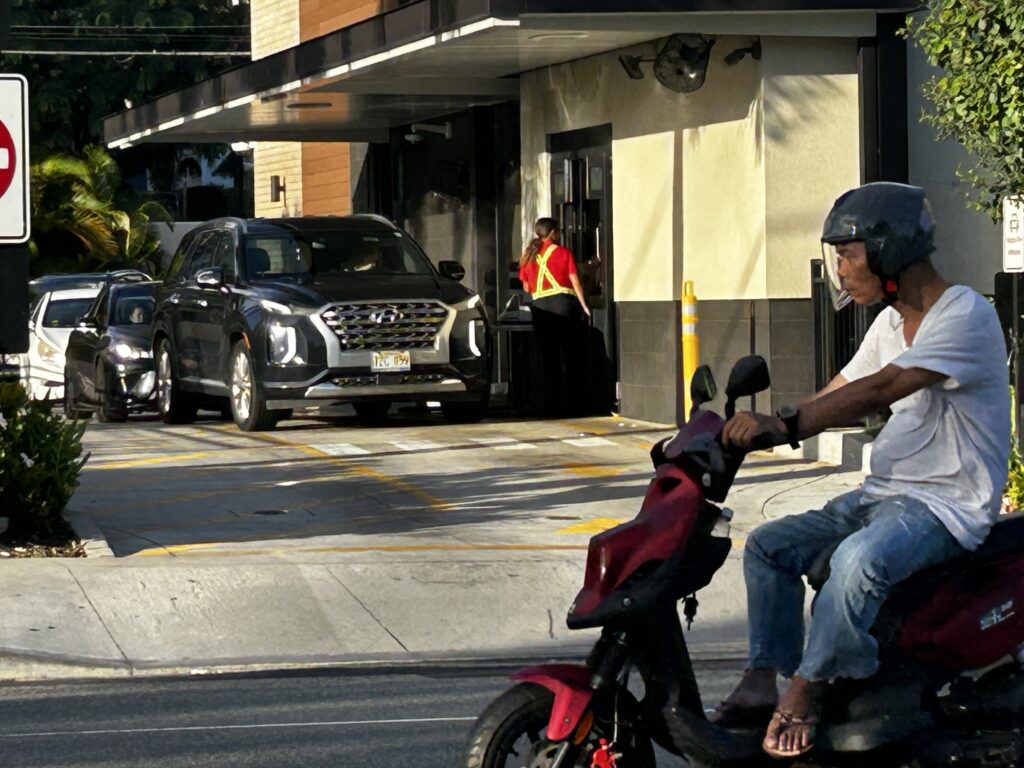
Makiki board chair Nathaniel Char told Civil Beat that he is hoping the city steps up to do more.
“Traffic is a huge issue for us,” Char said. “Our corridor of Beretania and King Street has been identified in the city’s Complete Streets plan as the most dangerous on Oʻahu.”
Char said up until about six months ago he had been in good communication with the local Chick-fil-A operators. He said the company had presented its plans to the Makiki board a year before the store opened and had been responsive to local concerns.
“Chick-fil-A has proposed and actually carried out a number of attempts at solutions” including paying for additional signage, he said. But other board suggestions, including striping on the curbs outside the Queen Victoria condo building, had been shot down by the city.
In an email, Ota said “the area in front of the condominium is not an appropriate location for painted curbs under current City guidelines.”
Growing Concerns
The number of fast-food businesses in Hawaiʻi has grown by 2.4% annually since 2020, and in 2025 the more than 1,670 outlets here are expected to generate around $2.2 billion in sales, according to market researcher IBISWorld.
Other fast-food companies are also eyeing the growth potential in a state that already has among the highest number of fast-food restaurants per capita: 97.5 restaurants for every 100,000 people according to the U.S. Census Bureau.
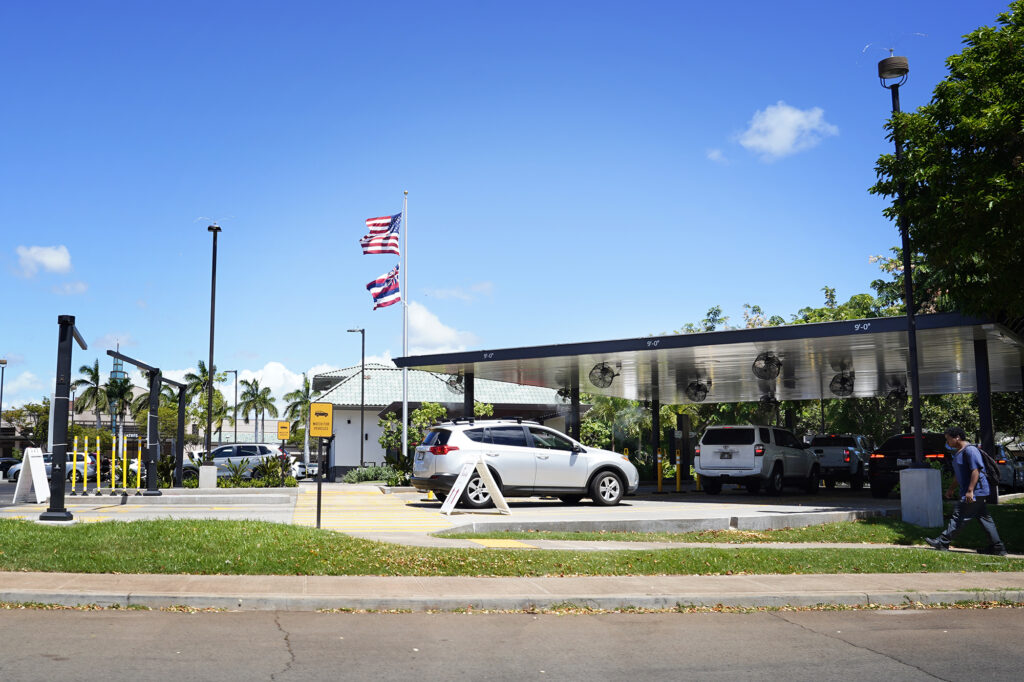
Sonic Drive-in, already operating on Maui, is scheduled to open its first Oʻahu store on the corner of Fort Barrette Road and Kapolei Parkway early in 2026, and Shake Shack is making its first foray on Oʻahu at an as-yet unannounced location in 2027.
The Makiki location was the third Chick-fil-A to open in the islands and the first drive-through operation on Oʻahu, according to the company’s website, with the others at Ala Moana Center and Kahului on Maui.
Two other standalone Chick-fil-A restaurants have opened in Kapolei since the Makiki operation, but they were in shopping malls so the traffic concerns didn’t apply, Pitner said.
Chick-fil-A wasn’t required to do a traffic study for its upcoming Oʻahu store, on the corner of Kalākaua Avenue and Kapiʻolani Boulevard either, even though the intersection is currently undergoing infrastructure improvements to address ongoing traffic and pedestrian safety issues.
The new store however won’t have a drive-through and conforms to zoning on the former site of the Honolulu Coffee Co. Pitner said DPP did review the building permit to “help reduce traffic impacts around the site.”

